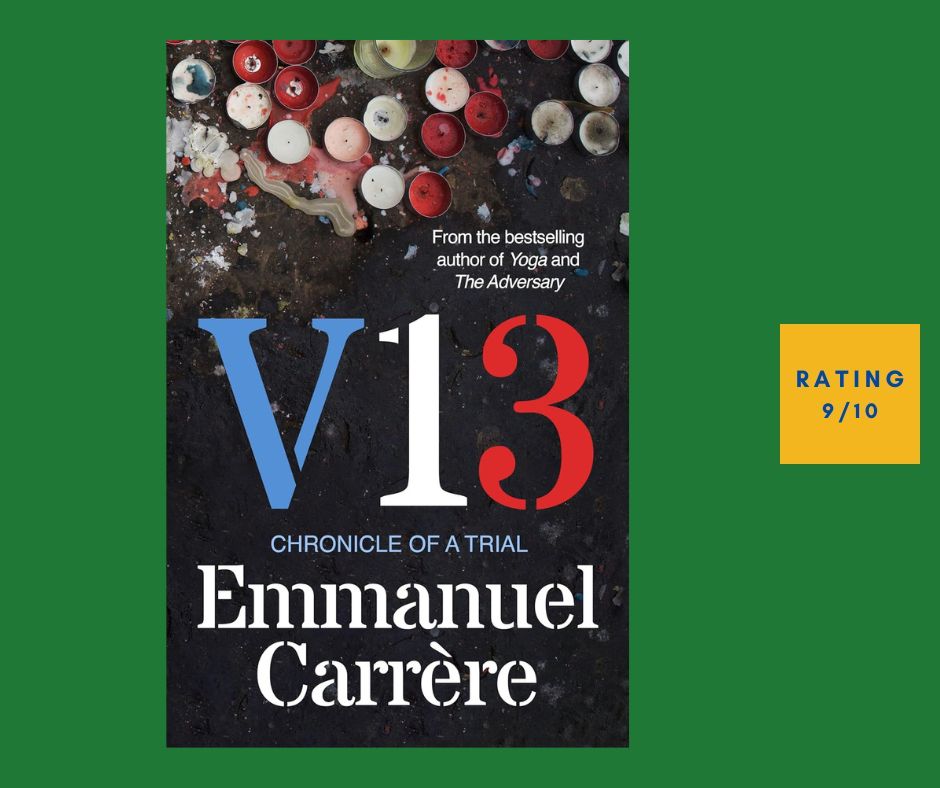
V13: Chronicle of a Trial by Emmanuel Carrère [9/10]
Emmanuel Carrere V13 review

My first Emmanuel Carrère book, V13: Chronicle of a Trial, has made me an instant convert. The esteemed author asked to be commissioned to write weekly about the sensational, grueling nine-month-long 2021-2022 trial in Paris of fourteen defendants of the horrific multi-location terrorist attack in 2015 that killed 130 and maimed hundreds. He missed very few days of the court sessions and grew to know many of the plaintiffs, lawyers, and even defendants. At the start of the book, the author’s plain, smooth, open-hearted style suggests the book will miss something vital about the case’s dramas or themes but great skill is at play. The reader becomes drawn in, until the feeling is of sitting on the author’s shoulder. Whilst never downplaying the dumb savagery of the attackers’ motives and tactics, he manages to draw each of the fourteen as an individual. Tragedies upon tragedies, either for survivors or families of the dead, are sketched with wonderful empathy. As we approach the climax of the judge’s verdicts and sentences, washes of emotion flood the court, including Carrère, who writes that what he anticipated as a “vain, colossal judicial spectacle,” instead morphed into something much more: “No: this was something else: a unique experience of horror, pity, proximity and presence.” V13: Chronicle of a Trial is a gently riveting and brave nonfiction chronicle that reminded me of Helen Garner at her best; I can offer no greater recommendation.

Nine Minds by Daniel Tammet [9/10]

Daniel Tammet Nine Minds review

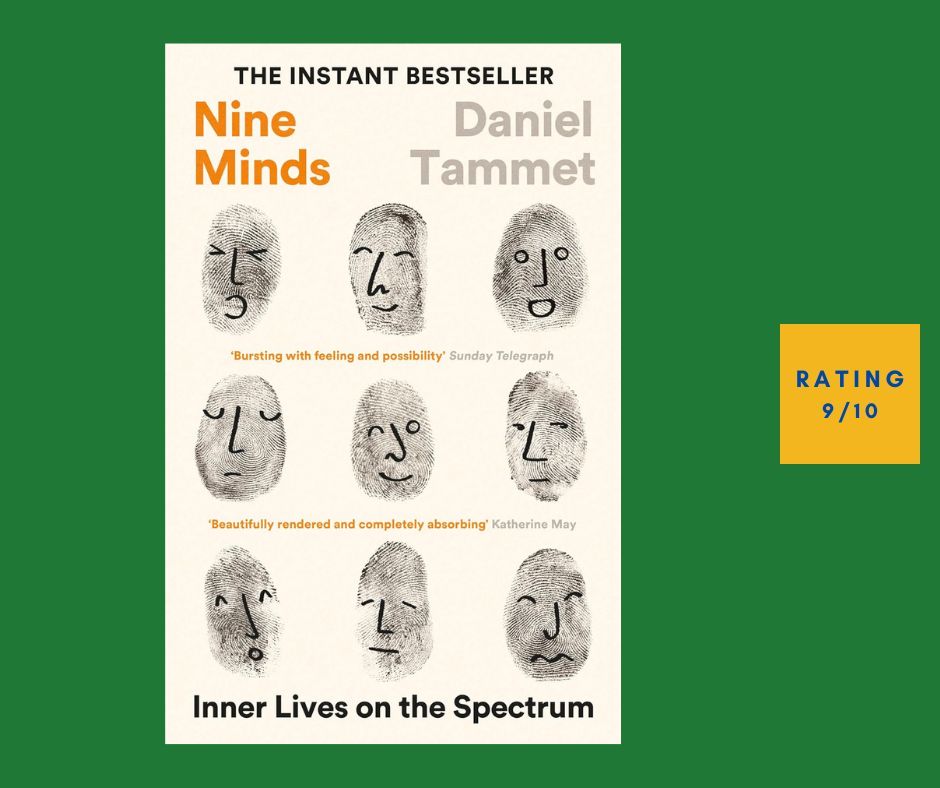
In his extraordinary ode to neurodivergence, Nine Minds: Inner Lives on the Spectrum, Daniel Tammet, neurodivergent himself, plies language in the service of nine very different minds. Eschewing direct quotation, he gently (often oh so gently) retells their experiences (relying on copious interviews of and around his subjects) now and in the past, happy and sad, showing us innermost fears and joys while sketching the public personas involved. Some of the “minds” are super functioning in the way we imagine for autistic savants: a hand and wrist surgeon of international repute who nonetheless cannot remember faces; freakish comedian Dan Ackroyd, so different in humor and in life from an early age; a “murder detective” with an uncanny ability to solve crimes others give up on; a freakishly talented mathematician; a blind woman attuned to famous Australian poet Les Murray, himself autistic: a nonverbal man reared with extraordinary love by his mother. Never preaching, never even teaching, Tammet is a deeply sympathetic stylist whose nine stories all differ but all reinforce the central message of universality of love and connection and hope. Nine Minds is a special read, one I commend.

Joy [9/10]

Joy review

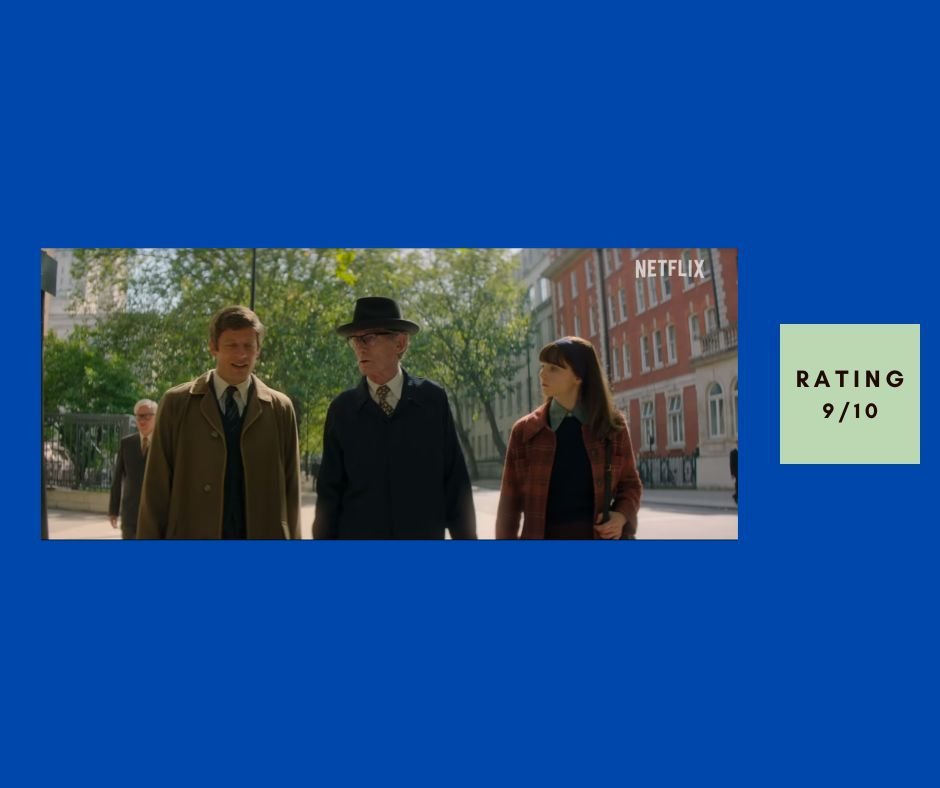
A most English movie replete with restrained acting performances and muted drama and lush countryside and old-school laboratories, Joy recounts the story of the birth of Louise Brown, the world’s first IVF baby, in 1978. Spanning a decade, the movie revolves around the trio of maverick biologist Robert Edwards (a wonderful slightly neurodivergent performance by James Norton), obstetrician Patrick Steptoe (with Bill Nighy perfectly cast: dry-witted, fustily elegant, morally strong), and embryologist nurse Jean Purdy (a sparkling subtle portrayal by Thomasin McKenzie). It might be difficult for a young person of today to comprehend the controversial nature of their long, difficult journey and the reactionary bile thrown at the trio … but no, we still see the same demonization occurring in the U.S. abortion battles. Jack Thorne’s script is clean and builds gradually to the climactic birth scene, retaining suspense throughout, and the sentimentality that creeps in feels entirely justified. Biopic-style movies like this often discard vibrant story techniques but Joy works quietly yet beautifully, producing a minor triumph.

Conclave [9/10]

Conclave review

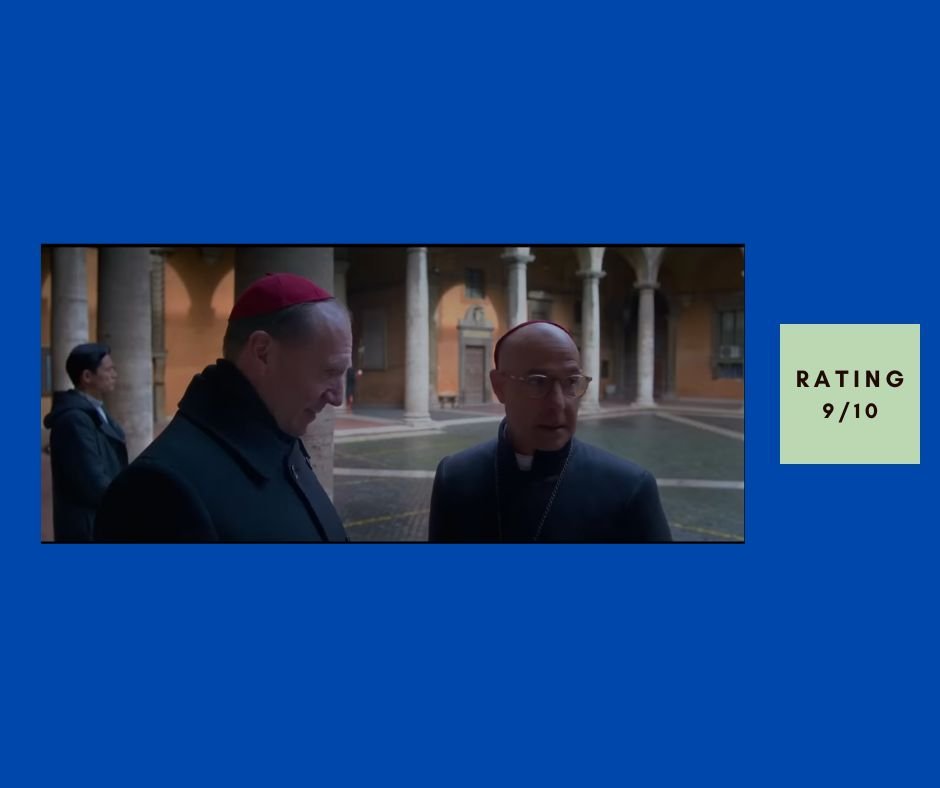
One of the highlights of novelist Robert Harris’s career is undoubtedly the 2016 Vatican election thriller Conclave. Now, nearly a decade later, it has come to the big screen and wow, has it ever come big… Conclave, directed by Edward Berger, is lush with the opulence and somberness of the Vatican, enriched by the intense, close-up cinematography of Stéphane Fontaine and a memorable soundtrack. The plot, in which we become rapidly immersed, is simple: the Pope has died and a cardinal (played with awesome veracity and force by Ralph Fiennes) must manage a complicated, sequestered process of all the cardinals voting for a new pope, iteration after iteration until a 75% majority agrees. It turns out there is as much or more intrigue and deceit among the holy cardinals as in a mafia movie, and Robert Harris’s book, and this film, unwind the plot twists with consummate care. Besides Fiennes, the actors are superb, with a special mention going to Carlos Diehz as a somewhat mystifying late entrant cardinal. Conclave is a memorable two-hour-long viewing experience.

The Room Next Door by Pedro Almodóvar [7/10]

The Room Next Door review

Pedro Almodóvar bravely tackles the euthanasia issue, modernly called VAD or Voluntary Assisted Dying, in his recent film The Room Next Door. Accustomed to working with brilliant actors, he is particularly well served on this outing. Tilda Swinton is strange and bewitching as a war correspondent fading and dying of cancer, Julianne Moore is nuanced and real as her old friend (now an author) called upon to spend last days together in a country rental as the cancer victim psyches herself up to take a black-market death pill. If the friend sees the red door to the room next door is shut, that signals death has occurred. The film lingers on moments together, on the author with her boyfriend, on revelations about the correspondent’s estrangement from her daughter. Almodóvar explores the fraught nature of the death, the need for the other to be detached from it or be quizzed by the police (as she eventually is). The Room Next Door does not plumb any new emotional depths nor are the existential issues of life and death explored fully but the controversial topic of VAD receives a layered treatment. A film to brew over.

Precipice by Robert Harris [6/10]

Robert Harris Precipice review

Just as one of his novelistic triumphs, Conclave, hits the big screen, Robert Harris offers us a seemingly fascinating but in the end bloodless stopgap novel, Precipice. It is based on the almost fantastical real-life letters, over three years, between manipulative, upper-class British Prime Minister Asquith, in his early sixties, and an attractive, aristocratic twenty-six-year-old, Venetia Stanley. The correspondence is almost brazen in its intensity and frequency, and clearly Asquith was besotted. Harris plonks this sexual obsession into the agonies of Britain stumbling into the horrors of World War I, using the device of an invented lowly intelligence officer assigned to surveil and eavesdrop, and, as ever, his plotting is first rate. So too is the weaving of fraught domestic and international politics into the mix, and the upper-class shenanigans of the ruling class. This overview of Precipice suggests a typical thrilling read of a Harris outing but unfortunately, the plot is uneventful, the characters seem removed from the reader, and the affair itself lacks any frisson on the page. As ever, Harris remains readable, but Precipice presents as a mere diversion.

The Lincoln Lawyer Season 3 [8/10]

The Lincoln Lawyer Season 3 review

Name me one writer/creator whose book/movie series extends over many outings who can sustain her creation’s energy in the long term… They do exist, those creators, but they are few and far between, and when Michael Connelly’s unreasonably durable Bosch book series morphed into the series about perky, corner-cutting LA defense lawyer Mickey Haller (yes, he occasionally drives a blue Lincoln), and both migrated to the screen, I for one predicted mundanity. The first two seasons of The Lincoln Lawyer crackled with energy, crime thrills, and motion (see my review of Season 1 and that of Season 2) but I almost skipped Season 3 because … well, because it would surely flag. Not at all. This time Haller finds an old client murdered and an innocent man framed for the crime, and in pursuing justice he brings down hell upon himself and nearly gives up trying for the truth. Manuel Garcia-Rulfo is note perfect as Mickey and the supporting cast around him does not miss a beat, but the real engine of this wonderful 10-episode show is the intelligent script powered by Michael Connelly’s intriguing book plot. If the genre of justice sought in and outside the courts, the legal crime fiction genre, appeals to you, Season 3 of The Lincoln Lawyer is happy viewing from start to finish.

The Heart in Winter by Kevin Barry [8/10]

Kevin Barry The Heart in Winter review

A quixotic, very Irish stylist, Kevin Barry ran rampant in his brilliant 2019 novel, Night Boat to Tangier (see my review), and his stopgap short story collection, That Old Country Music (see my review), kept us from pining too much for his latest novel, The Heart in Winter. And what a treat this latest gothic western is! In 1891, a doomed, druggy, handsome young Irishman, marooned in Butte, Montana, falls hard for the new bride, arrived from the big smoke, of the town’s fanatically religious mining overlord. The two of them purloin a horse and lurch westward in a blur of love and lust. Sent to kill one and return the other are a scarcely believable trio of vigilante Cornish horrors. The author’s stylistics are so, so Irish and overt that every paragraph is a pleasure to the readerly eye, and his grip on the doomed-lovers plot is ironclad. If The Heart in Winter might strike some as almost a step too far in terms of outlandishness, it is, nonetheless, a triumph of style and substance over mundanity, and a pleasure to read.

Silo Season 2 [10/10]

Silo Season 3 review

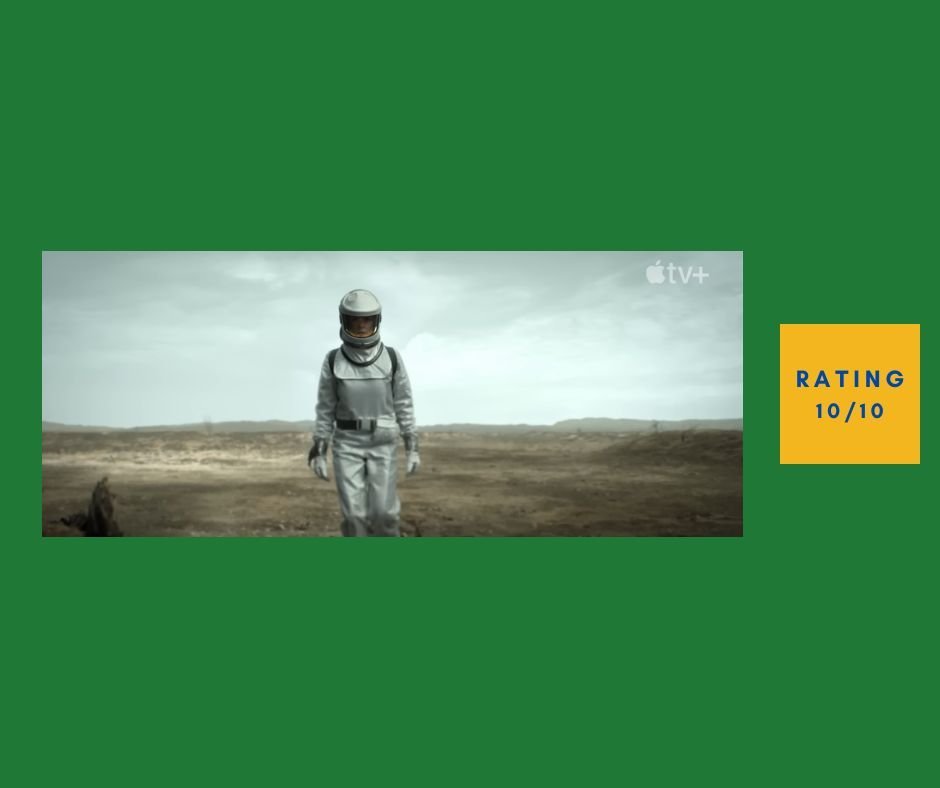
Some science fiction books/films hinge upon their world-building and many fall short. Silo was the brainchild of indie author Hugh Howey and his book trilogy launched with 2012’s Wool and later became known as Silo. The screen treatment of Silo is a lush multi-part TV series that is utterly unafraid of unwinding Howey’s fascinating plot slowly and atmospherically, like a pocket watch. The first season (see my review) crowned my 2023 viewing and was a blinder, at once capturing (somehow, how is it possible?) the claustrophobic dystopian world of ten thousand folks living in a multi-level underground bunker and commencing the heroic tale of Juliette Nichols (Rebecca Ferguson has carved out an unforgettable performance here) digging at the truth of the silo and then being sent out to die in a radiation-blighted world as punishment. In Season 2 (ten episodes), Juliette (spoiler alert) stumbles into another, very different silo and tries to make progress amidst chaos, while back in her silo a rebellion slowly brews. A large tapestry of memorable characters incubates with every carefully choreographed episode, the gloomily tinged cinematography is sublime, and the plot mysteries seem to expand with every revelation. Season 1 of Silo was exemplary, Season 2 is just as thrilling.

Bad Sisters Season 2 [9/10]

Bas Sisters Season 2 review

The first season of Bad Sisters was superb (see my review), a blithe mix of comedy and thrills and family dynamics, but the essence of its plot (four Irish sisters tackling the fifth sister’s hell-spawned husband) seemed to foreclose an encore. No one told talented actor/writer Sharon Horgan who has guided Season 2. This time around the formerly abused sister again falls foul of love and a church elder (played wonderfully by Fiona Shaw). Horgan and her three sparring sibling-role-actors, Sarah Greene, Eve Hewson, and Eva Birthistle, are again flawless. A bit player in the opening season, the investigating policeman, is now elevated with a fine performance by Barry Ward, and Thaddea Graham does a fine job as his clumsy recruit assistant. The plot of Season 2 feels a little less organic but what keeps lifting this television is a cracking script, complete with seemingly endlessly inventive dialogue. Every episode is a treat to watch, in that time-honored category of “entertainment,” and, while Bad Sisters undoubtedly will not return in a third incarnation, its second outing was most welcome.