The first season of Bad Sisters was superb (see my review), a blithe mix of comedy and thrills and family dynamics, but the essence of its plot (four Irish sisters tackling the fifth sister’s hell-spawned husband) seemed to foreclose an encore. No one told talented actor/writer Sharon Horgan who has guided Season 2. This time around the formerly abused sister again falls foul of love and a church elder (played wonderfully by Fiona Shaw). Horgan and her three sparring sibling-role-actors, Sarah Greene, Eve Hewson, and Eva Birthistle, are again flawless. A bit player in the opening season, the investigating policeman, is now elevated with a fine performance by Barry Ward, and Thaddea Graham does a fine job as his clumsy recruit assistant. The plot of Season 2 feels a little less organic but what keeps lifting this television is a cracking script, complete with seemingly endlessly inventive dialogue. Every episode is a treat to watch, in that time-honored category of “entertainment,” and, while Bad Sisters undoubtedly will not return in a third incarnation, its second outing was most welcome.
Blitz by Steve McQueen [8/10]
Recent Netflix release Blitz is the only film by acclaimed filmmaker Steve McQueen that I have watched but I knew when I sat down in the cinema that I could expect visually striking cinematography. I was not disappointed; the opening scene, showing various angles on a Third Reich bombing raid on London, takes one’s breath away. Indeed the Blitz of 1940 itself remains a potent character of sorts throughout the film. The plot premise is straightforward: a biracial nine-year-old boy is sent north for safety but rebels and runs away, on a quest to somehow reunite with his single mum back in London. Saiorse Ronan does a fine job as the plucky mother (singling her out in the cinematography with bright red clothes works really well) but the movie’s standout performance is Elliott Heffernan as the unstoppable kid. His passage through the underworlds of London (literally, when sheltering in the underground during a raid, and figuratively when snared by a Dickensian evildoer) is wonderfully paced and filmed. In the end, Blitz can seem unambitious but McQueen is clearly a master auteur, for the two screen hours whizz by and wonderful scene follows wonderful scene. Recommended.
Edenglassie by Melissa Lucashenko [6/10]
A boisterous retelling of a fragment of Australia’s indigenous history, woven into the present time, Edenglassie radiates theatre. The story connects mid 1850s Brisbane, involving a young indigenous stalwart and his new bride, with a centenarian at the time of a bicentennial celebration in 2024. Replete with local dialect, never afraid to describe the racism and authoritarianism then and (regrettably now), Lucashenko’s prose never rests for a moment, bursting with a realism that will delight many (but which wearied this reader). The characters are rawly and humorously portrayed, the worlds centuries apart are well depicted, and the politics is heartfelt. Well worth a read for many, I found Edenglassie to be excessively overpowering, blunting its impact, but I suspect I would be in a minority in this regard. By all means buy and read over the Christmas season.
Black Dog by Guan Hu [9/10]
Chinese filmmaker Guan Hu mixes up genres and styles with his gentle indie film, Black Dog. The storyline revolves around a jailed murderer released into a dog-catching patrol in the Gobi Desert, who eventually catches the “black dog” and discovers that the two outsiders bond as friends. Part revenge western, part sentimental drama, part social commentary, Black Dog tosses in myriad subplots and rushes through the main story, but this is less a Hollywood “classic journey” than a journey in a stunningly filmed Wild West of blighted towns, hooting trains, bureaucratic loudspeaker announcements, and roaring motorbikes, with backdrop the alien blue peaks of western China. Atmospheric, indie instrumental and vocal music provides the perfect accompaniment. Taiwanese acting/singing star Eddie Peng is perfect in the role, opting for near total silence and brooding, forbearing suffering; a final scene with him on a roaring bike is guaranteed to raise a tear (or some form of emotion). This is not for everyone, its arthouse singularities guaranteeing mainstream market failure, but for anyone seeking revelatory cinema, Black Dog is already a 2025 highlight.
The Day of the Jackal [8/10]
Frederick Forsyth’s 1971 debut, The Day of the Jackal, reinvented the thriller, and the 1973 movie adaptation was a revelation for this reader. Now, half a century on, we have a 10-episode remake that updates the plot but lovingly retains the aura of the ruthless assassin being desperately hunted. The Day of the Jackal ends up as a meld of the James Bond action movies set in exotic places and a character study of the Jackal, brilliantly portrayed by Eddi Redmayne, and sometimes that melange slows the pace down too much. The series is best with its intricate portrayals of the incredible assassinations concocted and executed by a ruthless, invincible Redmayne. The background plot of the Jackal’s true love, his family hidden in Greece, works surprisingly well and, of course, sets up Season 2. All in all, The Day of the Jackal is a high-octane, intelligently executed rush of adrenaline.
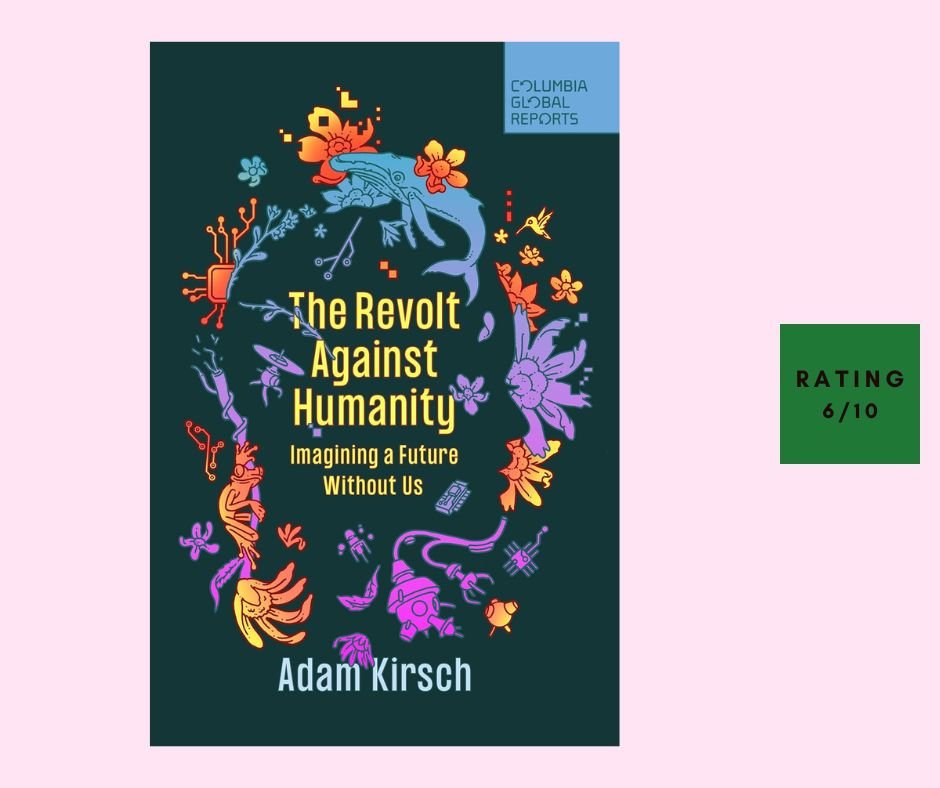
The Revolt Against Humanity by Adam Kirsch [6/10]
American poet/critic Adam Kirsch is a man of the moment, seizing an insight in his slim book of commentary and philosophy, The Revolt Against Humanity: Imagining a Future Without Us. Once presented, his idea is obvious: many writers and thinkers are imagining a future world without corporeal humans, within two camps at first remote from each other. Anthropocene antihumanists can picture a world where climate change sends humanity extinct (or near enough to). Transhumanists see us transcending our bodies and either “uploading” our brains into digital networks or evolving into artificial intelligences ruling the world. Both strands are, of course, pessimists in one sense, yet both portray futures full of hope (but not human hope). Kirsch steps through six ideas-packed chapters with verve and cool style, offering a heady read. A particular pleasure of this book is the author’s synthesis of recent authors on these subject, ranging from David Wallace-Wells and Vernor Vinge to Toby Ord. For this reader, additional insights arrived from less lauded authors such as Leon Katz, Timothy Morton, David J. Chalmers, Michio Kaku, and Claire Colbrook (her idea of “preliminary mourning” struck me as apt). Another insight was that both of these adversarial streams of thought see the present as “the hinge of history.” Not for everyone, The Revolt Against Humanity will delight those tossing up between doomism and ultra techno-optimism.
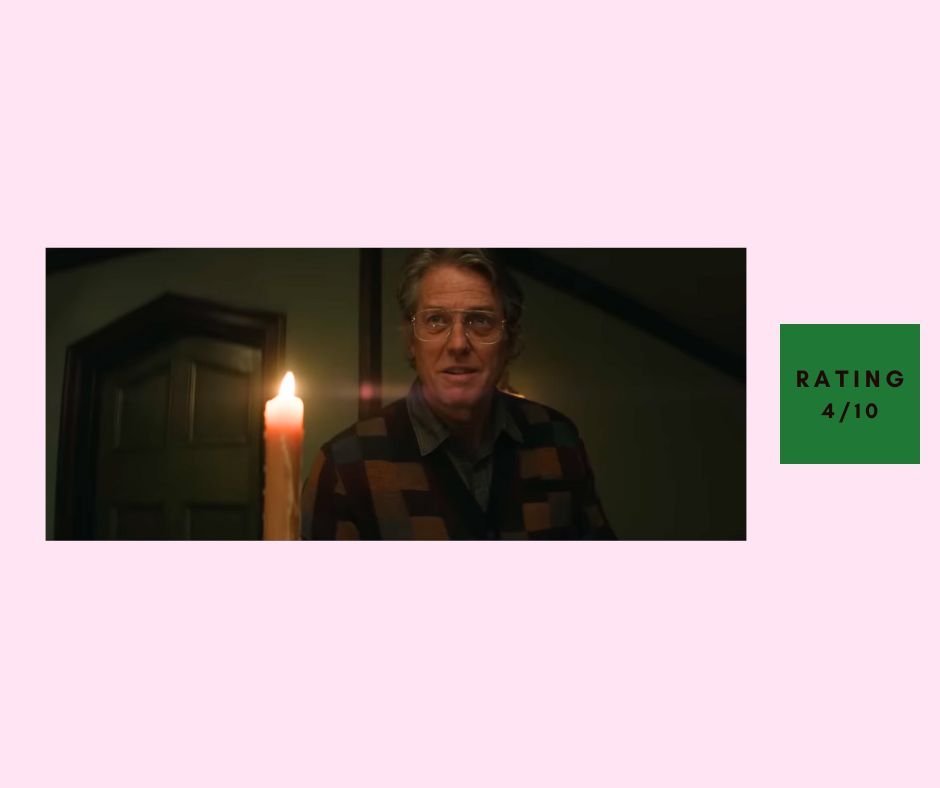
The Heretic by Scott Beck & Bryan Woods [5/10]
It has not escaped me that I have no idea how a horror movie afficionado would respond to The Heretic, an atmospheric film that seems to me, as no fan at all, genre-typical. Written and directed by a tag team of Scott Beck and Bryan Woods, the movie wove quite some magic on me for the first two thirds, moving ominously, creepily, replete with spooky sounds and excellent music. The cast is excellent. Hugh Grant excels as the owner of a remote house who invites in two young, unsuspecting Mormon women selling their message, but he is upstaged by tone-perfect Sophie Thatcher and Chloe East. With a precision script and brilliant direction, more than a half of the film grips and tantalizes. But for this viewer the finale third rapidly veers into grotesquerie and (at least for this non horror fan) indulgent horrors, before closing with a well executed climax. A mixed bag.
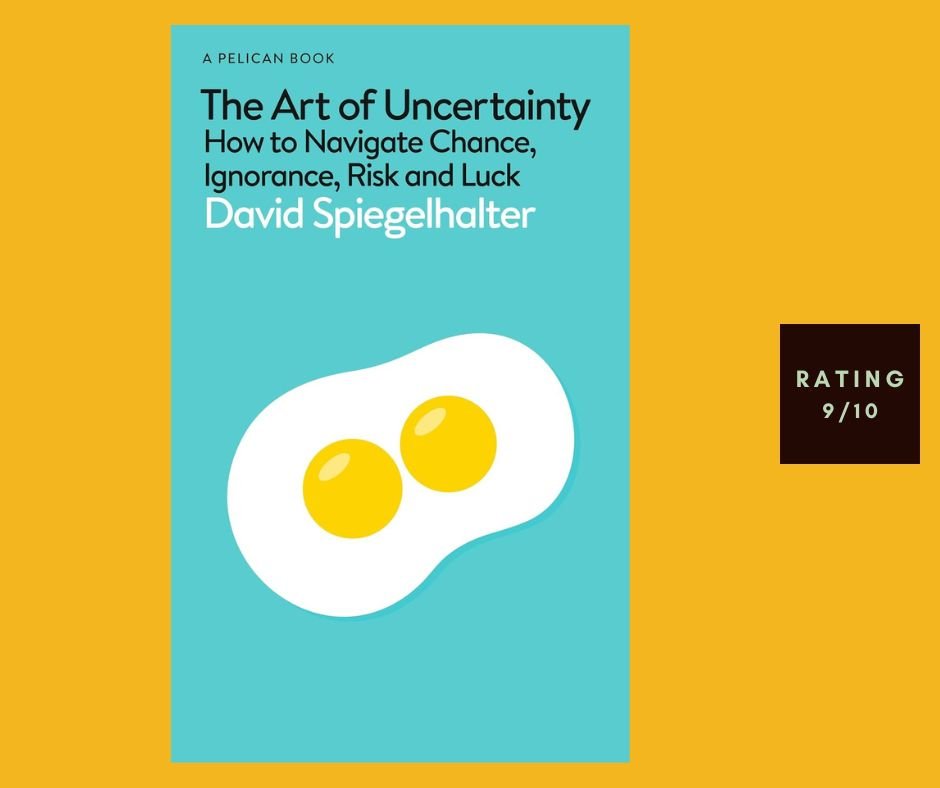
The Art of Uncertainty by David Spiegelhalter [9/10]
Veteran British statistician and author of numerous books ranging across his field of expertise, David Spiegelhalter has now penned his magnum opus. The Art of Uncertainty: How to Navigate Chance, Ignorance, Risk and Luck sums up a lifetime’s thinking on uncertainty, lack of knowledge, basic probability theory, randomness, fortune/luck, risk, prediction, and much more. With impeccable clarity he teaches even as he illuminates with fascinating examples, major and minor, real world and theoretical, many of them drawn from his own experience. His cool, deft prose is a delight to read. As an ex-actuary, I thought I was an expert on risk and analytics, but it turns out I had only a shallow grasp on the philosophical and intellectual underpinnings of my field. Anyone enjoying the first thirteen chapters will emerge with a clear handle on the myriad aspects of this intoxicating field, often picking up numerical fluency, and even then the adventure is incomplete. After teaching, Spiegelhalter spends two chapters on the best practices (according to him but it seems so sensible) of communication of uncertainty, risk, and advice and also the job of rational decision-making. The Art of Uncertainty will form, I am certain, part of the core library of any student of statistics or analytics.
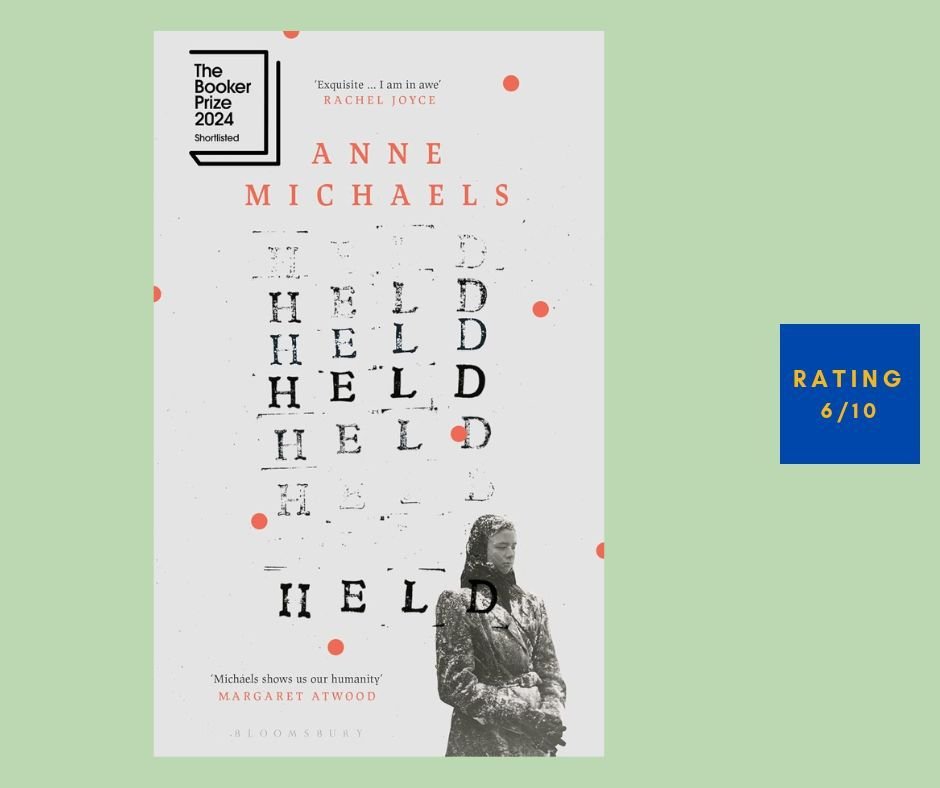
Held by Anne Michaels [6/10]
Canadian poet Anne Michaels has written three novels over two decades. Her latest, Held, is a slim lyrical set of twelve mini tales spanning 1902 to 2025 and four countries. Each story is a wisp of a tale, an impressionistic collection of fragments evoking love, suffering, longing and impermanence. The tales jump all over the timeline and their interconnections are sometimes clear and sometimes indeterminable. Michaels is a sweet, sweet stylist and reading any one page is a pleasure but some of the narratives left this reader cold. Highlights include the opening story about a soldier wounded amidst mud on a French World War I battlefield, a piece centering around a war zone combat nurse, and the harrowing story of an Estonian musician sent to exile. There is much to swoon about in Held but your reading experience will hinge around your capacity for indeterminacy and gossamer thin connections.
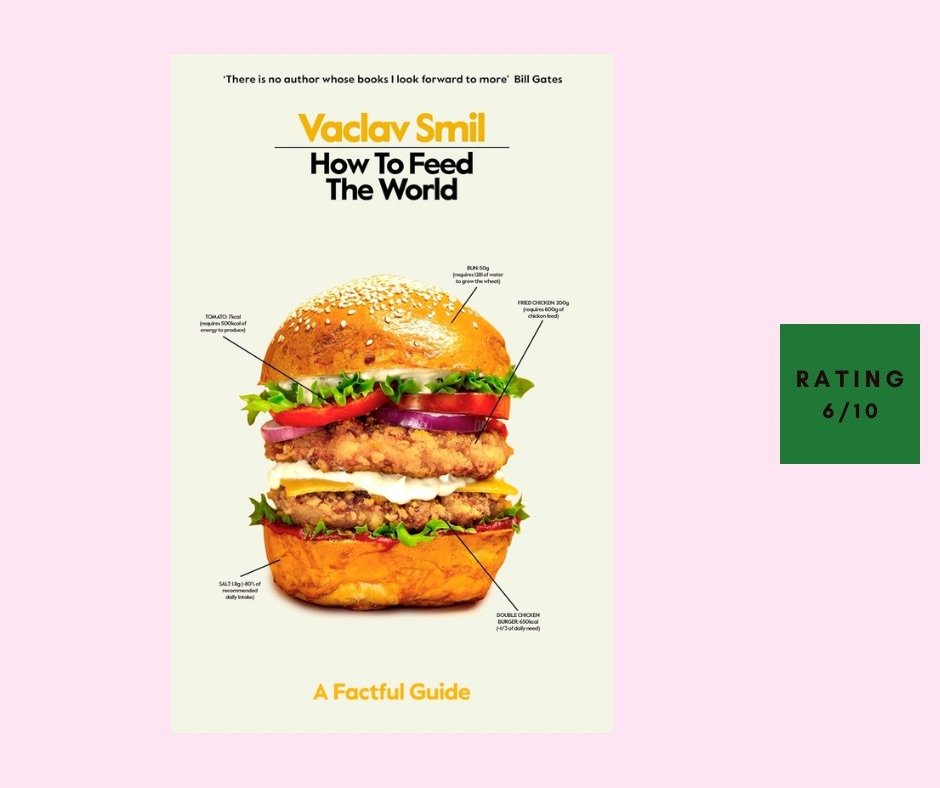
How to Feed the World by Vaclav Smil [6/10]
If you think with numbers and sense how crucial our food systems are to solving the climate crisis, Vaclav Smil is the man for you. On any of the many topics he covers, especially energy, he seems to have the ultimate comprehensive data set, historical and current, and his relentless mathematical mind churns until the numbers make sense to him. He writes in remorseless informal but precise prose that probably best suits readers willing to dig in; I doubt if many of his books could serve as primers. In 2024, he returns to another favorite topic of his, food, especially food energetics, and How to Feed the World: A Factful Guide is the outcome for us to devour. The book is a remorseless catalog of different foods’ energy requirements/efficiencies, land and water imposts, delivery systems, waste dimensions, and environmental costs (including carbon footprints). He pours scorn on mass veganism and the paleo diet. Perhaps one flaw, if it can be called that, is his insistence, based on history, that all change takes place gradually and incrementally, so he debunks miracle solutions such as organics, lab meat, and perennial grains. Overall, How to Feed the World will delight analysts and analytical readers, but any reader needs to bring their own brain to bear on these important issues, for Vaclav Smil is not afraid to prognosticate boldly.