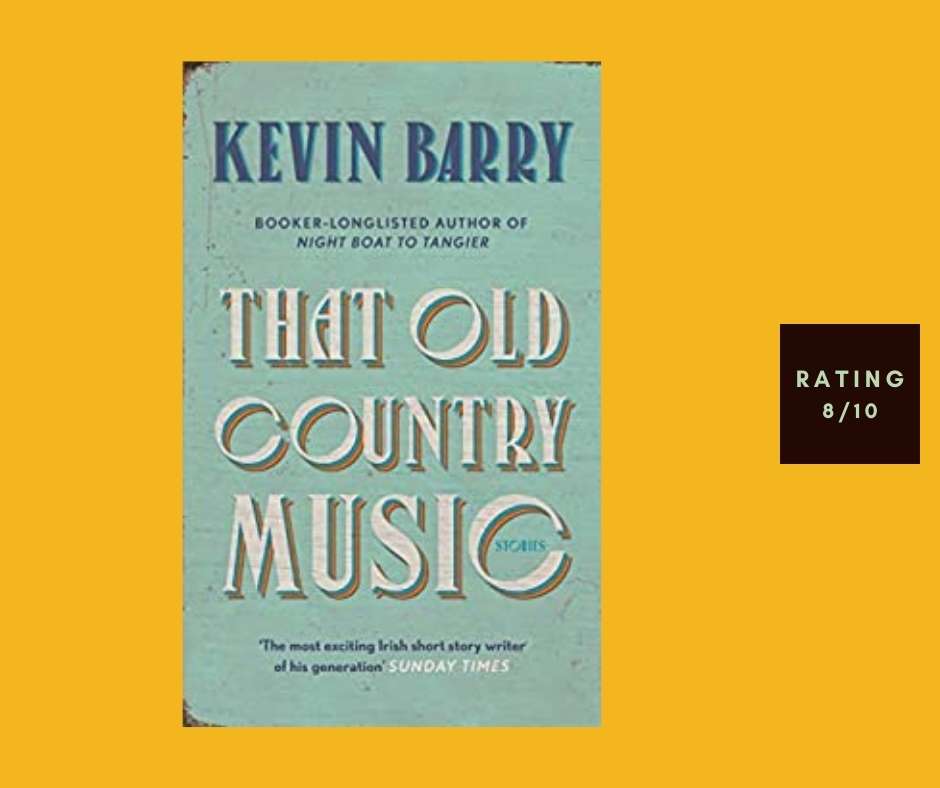
I cannot summon up another writer whose prose makes me swoon as much as Kevin Barry’s does. A masterful mix of Irish scutty and lyricism, any Barry page just feels so damned pleasurable to absorb! Especially powerful is his knack of capturing places and moods. His dialogue is an object lesson for lesser writers. Therefore, even though I am not a short story fan, I devoured the eleven tales in “That Old Country Music” and can vouch for every one of them. Most notable are “The Coast of Leitrim,” a love story that can break a heart; the glorious drunken mayhem of “Toronto and the State of Grace”; and the slapstick of “Who’s-Dead McCarthy.” Read all eleven, dear reader, That Old Country Music is a joy.
Evermore by Taylor Swift [7/10]
Such a welcome surprise! Five months after Folklore beguiled me, now we have “Evermore,” a luscious reprise of her new softly melodic, world-weary folk rock. Evermore follows Folklore in its style, all lulling piano, percolating keyboards, trembling guitar figures, allied to her emotive soft-whispery voice and intelligent storytelling lyrics. The sure touch of Aaron Dressner at the production desk matches Swift’s songs like lock and key. Highlights among the generous fifteen tracks include the gorgeous “‘Tis the Damn Season,” on which Swift croons “it always leads to you in my hometown”; the stunning recollections of an abandoned relationship in “Coney Island” contrasts Swift’s honeyed vocals with Matt Berninger’s gravely baritone; and another super sonic collaboration with Bon Iver on the title track.
The Cold Millions by Jess Walter [8/10]
A captivating, swaggering literary novel about the American battle for unionism and workers’ rights in the cruel hard times of the early Twentieth Century, “The Cold Millions” showcases Jess Walter at his scintillating peak. Channeling E. L. Doctorow, he focuses on Spokane in the northwest, on two brothers at the rough edge of capitalism, one passionate about the Wobblies (the International Workers of the World), the other one younger and protective of his sibling. Careening events put them in the path of a fascinating, sinister tycoon and police thugs and assassins, and ally them with a female socialist firebrand. Jess Walter, like Doctorow, seamlessly plonks the small pawns of the world amongst real-life, outsized makers of history, and he seems capable of writing from the point of view of all the protagonists and antagonists. Roughhouse America springs to life in his scenes and the plot propels and surprises. All in all, The Cold Millions is a triumph and a hell of a fine read.
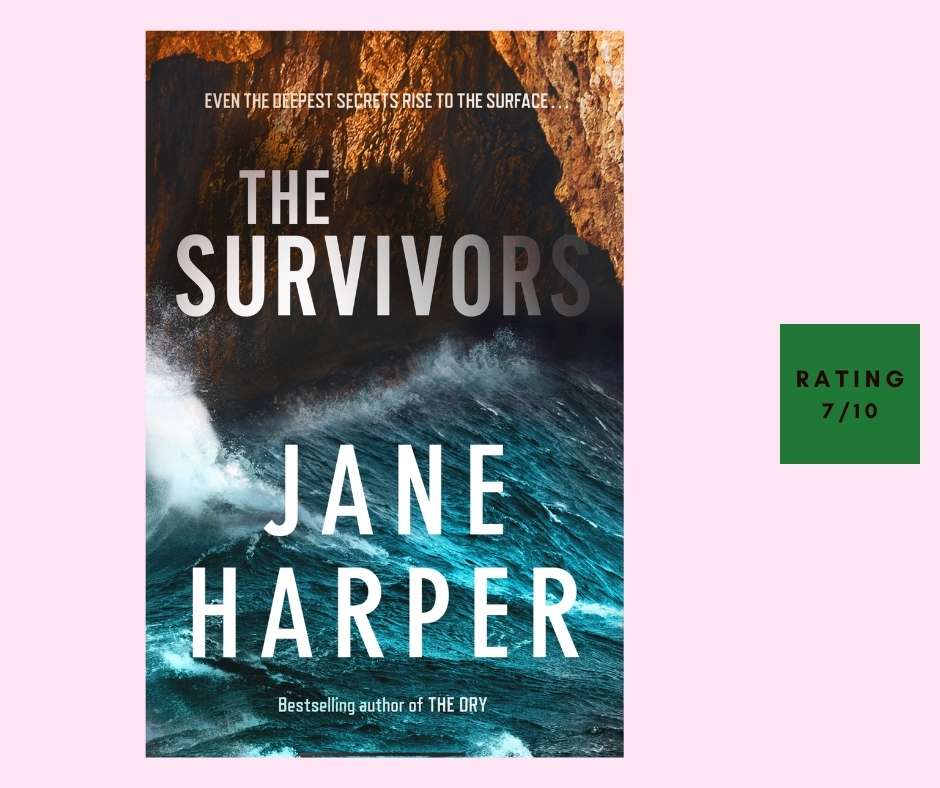
The Survivors by Jane Harper [7/10]
A mystery writer with fine motor control of a book’s pace, Jane Harper’s previous best sellers were evocatively imbued with their landscapes, whether the harsh Australian bush, a lush Australian rainforest, or a cattle farm. “The Survivors” takes place in a small Tasmanian coastal town and once again, the author nails the locale: the beach, rocks, and fishing boats. When Kieran, who had fled for the big smoke after tragedy had struck, returns to his home town, and a body turns up on a beach, the past and present collide as he digs into both. The character roster, immediately recognizable from such a town, is skillfully realized, the plot turns are gratifyingly opaque, and the background of disaster and guilt is almost palpable. As with Harper’s first three novels, I read The Survivors in one sitting, and if I questioned whether the climax sold the earlier engrossing pages short, I can still heartily recommend it.
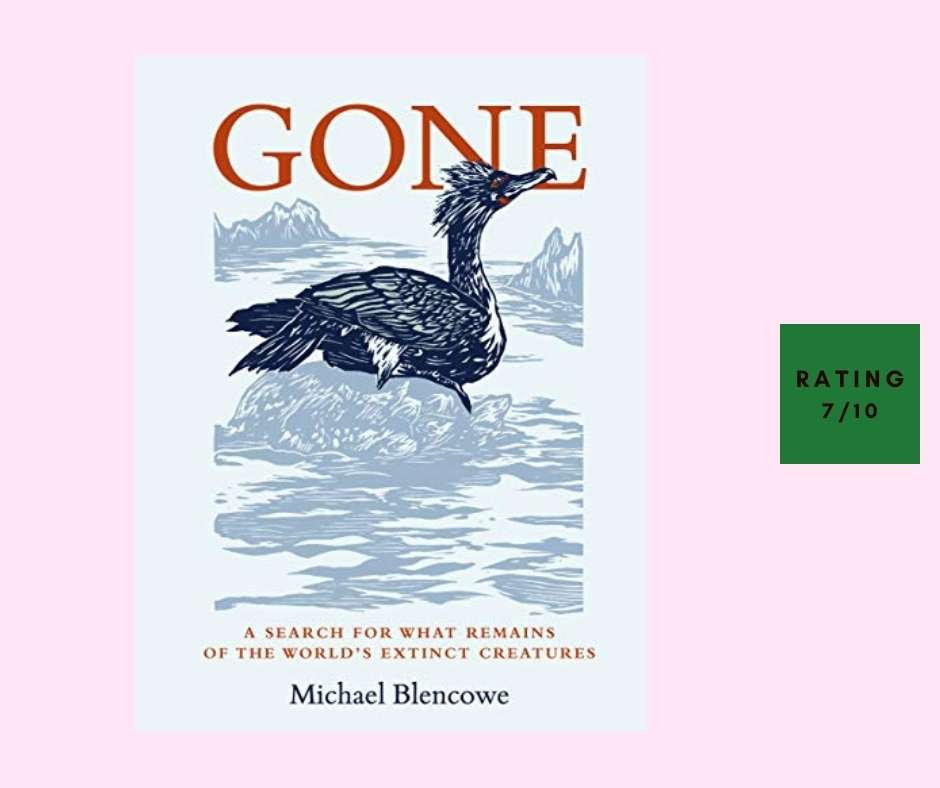
Gone by Michael Blencowe [7/10]
Extinction of species is taking place at a rate one or two magnitudes greater than evolution’s outcome, with humans the immediate and background cause. As a child, naturalist Michael Blencowe was fascinated, as only children can be, with tales and pictures of near-mythic animals, birds, and butterflies that have disappeared from our plant. “Gone: A Search for What Remains of the World’s Extinct Creatures” is his passionate, engaged tale of finding what traces are left of eleven vanished species. A most determined historian of doom, Blencowe travels from the Bering Sea to the Galapagos isles, from Finland to San Francisco. The onsite trips are evocative, but even more so are his reverent forays into museums with their fossils, skeletons, and preserves carcasses. He pursues the leftover remnants of the last Great Auks on a forsaken Devon island and in a Danish museum. New Zealand’s sad history of its isolated, vulnerable birds killed and eaten is told thrice by the author, with the Moa’s demise striking me as most tragic. The Dodo, he writes, “has achieved a dubious immortality: the smiling face of extinctions.” The tone throughout is a convivial mix of pithy recounting of histories and flights of easygoing lyricism. Towards the end, he expertly weaves in wider questions enmeshed with global warming. For anyone brewing over our fate and Earth’s fate, Gone is a welcome, enjoyable feast.
Kill Them Cold by J M Dalgliesh [7/10]
The seventh of the Norfolk ensemble police procedural series starring Detective Inspector Tom Janssen, “Kill Them Cold” is polished and devious. J M Dalgliesh fashions his smartly paced mysteries with plain, subtle prose, and something of Norfolk’s coastal melancholy percolates the pages. Janssen himself is a smart, commanding, yet uncomplicated hero, and his associates and team make up a diverse crew. In this outing, skeletal remains of a young woman are unearthed near an archaeological dig site., and speedy investigative teamwork results in a suspect shortlist that baffles Janssen. The last third of the novel accelerates in tension and the twisty outcome culminates in a dramatic shock. Very much in the mold of the classic English mystery, Kill Them Cold entertains with a burnished glow.
Deep Time Reckoning by Vincent Ialenti [7/10]
Anthropologist Vincent Ialenti has stylishly penned a most intriguing book, “Deep Time Reckoning: How Future Thinking Can Help Earth Now.” Ialenti address two specific audiences: readers interested in “ancestor thinking” or “deep time,” that is, adopting a future-oriented perspective on the world and on life; and readers interested in nuclear power, specifically the radioactive waste aspect of it. An anthropologist, he embedded himself in the life and work of an army of specialists working to bury Finland’s spent nuclear fuel far below the ground, keeping the world safe from the radioactive poisons for thousands of years or longer. The patient Finnish approach is twenty five years old and completion is not planned until the next century. Deep Time Reckoning delves, analyses, and muses, with Ialenti concerned about how the Finns are tackling this monumental task and why the Finnish population wholeheartedly backs it (imagine anything similar in America!); but also how the rest of world can learn from Finland, especially in order to tackle the climate emergency. The author’s passionate, cogent voice, and his wide-ranging essaying, might also lift Deep Time Reckoning out of its specialist concerns and find it a deserved wider audience.
The Crown Season 4 [8/10]
Season 4 of “The Crown” covers the eighties, the Maggie Thatcher years, and after the slight dip of Season 3, represents a roaring return to form. Once again I find myself initially nonplussed: why am I, an anti-monarchist especially alienated from anything to do with Prince Charles and the late Princess Diana, so taken with a ten-episode show in which they loom so often? The answer, as the answer has been for the three earlier seasons, is twofold: the plotting wizardry of Peter Morgan and the consummate acting. Sure, The Crown is consistently more than those two attributes. The staging and pacing are immaculate, the royal milieu is glorified sumptuously, the cinematography (many gloomy royal abode scenes, many English countryside panoramas, many riveting clos-up scenes) is first-rate, and the dialogue crackles. But the primary reason I find myself glued to the screen each and every episode, is Morgan’s nuanced intertwining of real and imagined events, intelligent and deep. If you then throw in Gillian Anderson’s unforgettable performance as Thatcher, Olivia Coleman’s brilliance as Her Royal Highness, and Emma Corrin’s amazing inhabitation of Diana (not forgetting many other stellar performances), my devotion to this series is understandable. Do not omit all four seasons of The Crown from your cultural roster, and in particular, bask in this fourth season.
The Undoing by David E. Kelley [6/10]
A six-part series, “The Undoing” wields serious acting firepower, with the two key roles being that of a doctor involved in a brutal murder case (Hugh Grant does a superb, subtle job) and his psychologist wife (played by Nicole Kidman, who occupies most of the screen time and is occasionally unconvincing). Notable supporting role performances are delivered by Ismael Cruz Cordova and Donald Sutherland. The plot lurches between suspect reveals and does a fine job of generating suspense, ensuring that once you begin watching, you won’t dare stop, but ends up rather clunky. Direction is steady but sometimes painfully slow, and the New York scenery pales a little with repetition. The courtroom scenes are a highlight. In the end, The Undoing is a slightly off-kilter thriller that nonetheless makes for compelling viewing.
Slough House by Mick Herron [9/10]
The seventh in the engrossing, razor-sharp spy thriller series by Mick Herron, alternately labelled as the Jackson Lamb series or the Slough House series, is innocuously titled “Slough House.” If the previous two signaled a dip in helter-skelter pacing, Slough House more than makes up for them. Until around Book Four, Herron did his best to keep each book as a standalone in its own right, but by now the interlaced lives of the huge ensemble cast render that impossible, so when this juggernaut kicks off with two pages of mayhem, followed by byzantine twists involving spy assassins and MI5 skullduggery, it takes all one’s concentration to keep up. By a third of the way through, the grandeur of the story’s conceit has a grip and I read Slough House in a blur of gasps, chuckles, and admirative shakes of the head. The author’s acerbic wit is ascendant, and the two core characters of repellent but magnificent Jackson Lamb, and doughty, quick-witted River Cartwright dominate. Buckle up, dear reader of Books 1 to 6, for a brilliant ride, and if you are new to Mick Herron, do yourself the favor of a lifetime and devour all seven volumes in a sprint.