Fans of Cold War history should examine “Fallout: The Hiroshima Cover-up and the Reporter Who Revealed It to the World,” a sure-footed, elegantly written account of what might seem an obscure byway in the annals of those times. Journalist Lesley Blume relates how John Hersey came to write Hiroshima, his bracing, superbly written account of the experiences of six Japanese citizens in the atomic bombing of Hiroshima in August 1945. Blume relates how the New Yorker magazine heads plotted with Hersey (already, at the young age of 30, well-known, with a Pulitzer under his belt) to embed himself into the post-war occupation in Japan, travel to blitzed Hiroshima, fool his U.S. military minders, carry out interviews, and then, back in New York, write a full-issue article in secret. The resultant release on August 31, 1946, revealed both the Armageddon-like impact of that one bomb and its radioactive aftermath, and the American government’s successful (until then) media clamp. Without wasting a word, the author recreates the tension of the days and the article’s provenance. She must have read everything ever written about Hersey and the bomb, and the endnotes and bibliography are a role model of historical exactitude. Fallout would be rather specialist were it not for the ongoing, vital legacy of Hiroshima itself. Never out of print since 1946, John Hersey’s monument has been bought by three million people. It is available this very minute for US$7 and I recommend you read it first, weep, then sink into Fallout. And never forget.
Second Place by Rachel Cusk [7/10]
Following her brilliant, angular Outline trilogy, Rachel Cusk returns with a novel at first glance less cerebral. “Second Place: A Novel” even has a plot, a straightforward one at that, but in place of a nonlinear narrative, Cusk delves deep with prose, imagery, and inner turmoils. On an idyllic, unnamed coastline, a smart but seemingly downtrodden woman in her forties, lives with her second husband (the first one was a domineering disaster) in seclusion. But deep down, her unhappiness prompts her to invite a megastar painter, renowned for his capriciousness, to sojourn at their “second place,” a nearby cottage. When he arrives with a woman, and our hero’s daughter moves in with her lover, the stage is set for conflict and existential angst, all filtered through the notion that great art, or a great artist, can clarify the soul’s longings. The plot is, in the end, slight, but scene after scene is rendered lively and emotional by the author’s unerring, fulsome yet precise style. If you’re a Rachel Cusk fan, as I am, Second Place is a must-read. For others, it might seem unambitious, but I would counsel you to persevere. A minor-key treat.
The Darkest Evening by Ann Cleeves [7/10]
As someone who has come very late to the wonderful work of mystery writer Ann Cleeves, I’m enjoying a rather unsystematic part-catch-up: I’ve watched all the Shetland TV series (here’s my review of Season 5), without reading a book yet; have read the first book in her new Matthew Venn series (check out the review here); and have commenced Season 9 (yes, Season 9!) of the TV series of Vera. As well, I’ve lapped up the ninth offering of Detective Inspector Vera Stanhope in book form, “The Darkest Evening,” and I can report that it is an exuberant, atmospheric police procedural that makes for a captivating read. Those of you who are Vera fans will find my unfamiliarity amusing, but I’m delighted by her eccentric, bull-in-a-china-shop brilliance. In this outing, a snowbound storm stopover at a posh Northumberland mansion, one she knows from childhood, plummets her into a labyrinthine murder investigation. Cleeves plots marvelously, with just the right number of McGuffins, her supporting cast of police is splendid, and the suspects all come to life on the page. The English countryside is evocatively presented. How could I have missed out on Vera all those years?
Brolga by Adrian Powers [7/10]
A short film clocking in at sixteen minutes, “Brolga” could be overlooked in the way that most short stories flit by. May I suggest you pay heed to this minor gem from Australia auteur Adrian Powers. Resurrecting an ancient indigenous origin story about a graceful dancer morphing into a graceful brolga, but placing the story into a dystopian world of ferals fleeing killers, Brolga offers a perfectly structured story within a sumptuous, brooding, post-civilization world lit up by Tim Tregoning’s cinematography and Matt Ruduck’s score. The leads are played memorably by James Saunders and Tarnie Coupland. Brolga may well be brief but it resonates and I, for one, cannot wait for the next creation of Adrian Powers.
Rebecca [5/10]
“Rebecca” is the latest screen evocation of Daphne Du Maurier’s 1938 novel of the same name. I must have read that classic in my early teens and I can still recall the terrifying mood of the Manderley estate and the vituperative housekeeper Mrs Danvers. Set in the 1920s, Rebecca is the tale of an initially anonymous young woman who is swept off her feet by Manderley’s young scion, Maxim de Winter. When Maxim takes her back to Manderley as the new Mrs. de Winter, she discovers he and the entire community seem to be mourning beautiful, formidable Rebecca, the previous wife, drowned recently. A Gothic drama, almost a thriller, Rebecca makes for enjoyable viewing simply because Daphne du Maurier’s plot is exemplary, full of twists and turns and drama. The bleak English countryside and the sumptuous estate are filmed wonderfully, and some of the supporting actors turn in impressive performances, but both key roles are rather miscast. Armie Hammer is serviceable but wooden as Maxim and Lily James’s portrayal of our heroine is never subtle enough. Overall, Rebecca makes for an enjoyable hour and a half of screen time but does not hold a candle to the novel.
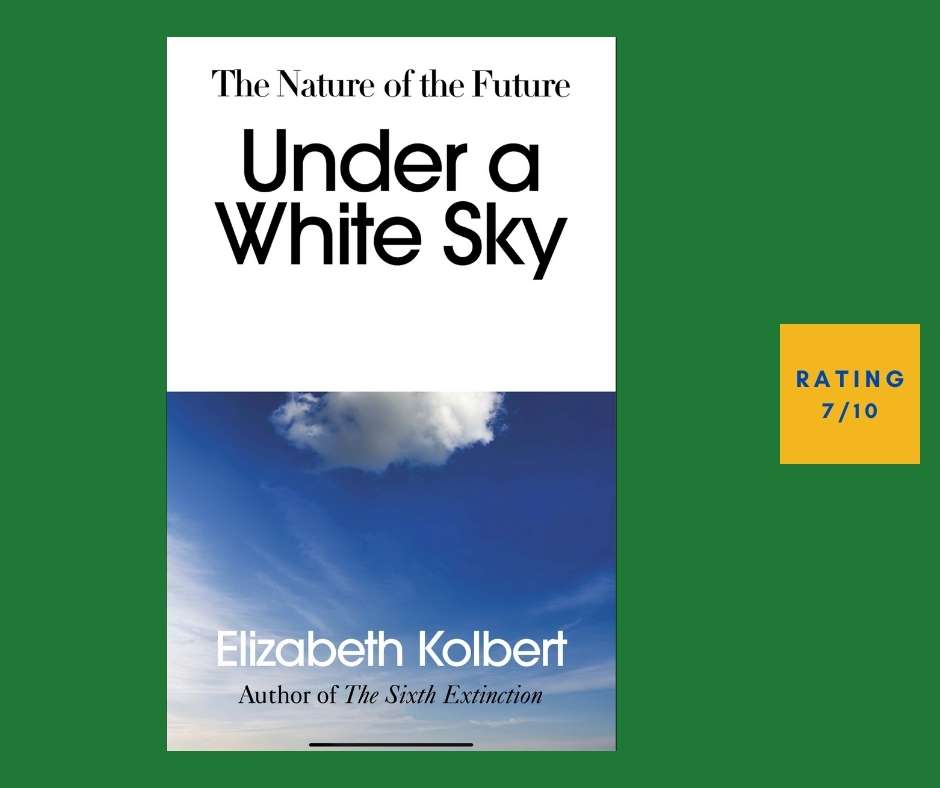
Under a White Sky by Elizabeth Kolbert [7/10]
Elizabeth Kolbert is one of a handful of consummate climate-change-obsessed journalists. As in all her books, “Under a White Sky: The Nature of the Future” shies away from polemicism, electing instead to forensically reveal truth in the actions of her human subjects. This time out, she tackles our propensity to spot how we’ve change the planet for the worse and to immediately, proactively change it back for the better. Without trumpeting the fact, with quiet understatement, Under a White Sky is about consequences, unintended and intended and unintended. Kolbert is sympathetic to both the scientist arguing we are place “under an obligation” to fix things, and to her clearly revealed evidence that “the history of biological interventions designed to correct for previous biological interventions reads like” Dr. Seuss. Kolbert works hard, writes precisely but also with understated eloquence, and she comes to know her interviewees. Topics tackled include river diversion and (yes!) electrification; extinction rescue; genetic modification; BECCS and other massive carbon capture notions; and solar geoengineering. Under a White Sky is an education, a pleasure, and a timely warning.
What Is Life? by Paul Nurse [6/10]
In a succinct synthesis, “What Is Life?: Understand Biology In Five Steps,” barely over a hundred pages long, Nobel Prize winner Paul Nurse expounds what a lifetime of work has taught him about his field. A lyrical, yet cogent ode to arguably the most important science of all, the book eschews textbook details and aims to instruct at the highest conceptual level. Five massive concepts underpin biology, according to Nurse, and what astonished me is that the final one, the most recent to be perceived by leading biologists, was unknown to me yet arrived as instantly intuitively correct. Nurse peppers his overview with modestly framed anecdotes from his storied career. Final rejoinders round up the journey of What Is Life, and here he finds room to mention our current pandemic.
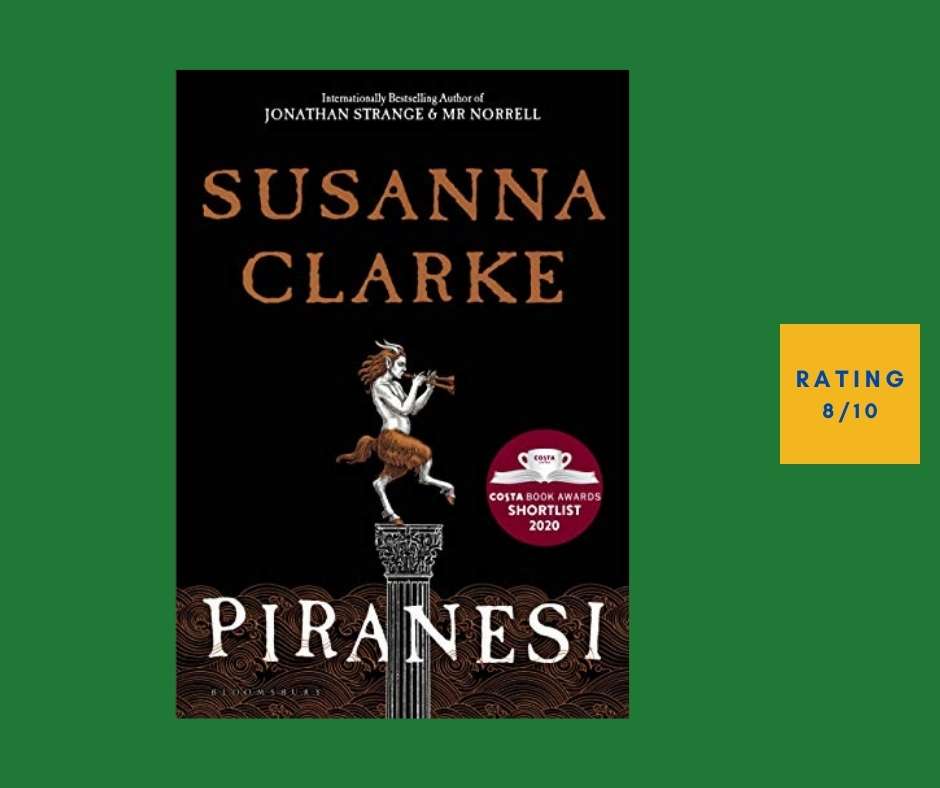
Piranesi by Susanna Clarke [8/10]
Jonathan Strange and Mr. Norrell, Susanna Clarke’s bestselling novel, left me cold, but sixteen years later, the much slimmer “Piranesi” is an accomplished, moody take on a science-fiction trope of the hidden other world. In the grand universe of the House, with its countless massive halls amidst clouds, its flooding waves, its innumerable ornate statues, a meticulous madman named Piranesi lives, roams, and scientifically records in notebooks. The only other occupant is the Other, a friend … or is he? When an intruder arrives, Piranesi’s world comes under threat. Clarke has constructed a complex puzzle requiring the reader to solve the mystery of where, who, and why, and she does with extraordinary finesse. Written in a gothic style, the novel wrapped me in the grip of a memorable hero and an almighty, intricate brain twister. And an enduring character is the House itself, evoked in atmospheric prose. The ending is wonderful and wonderfully revealed. I’m reminded of some classic I might have read half a century ago, perhaps a half-remembered Wilkie Collins novel. Unusual, eerie, and compelling, Piranesi is a fine, intelligent read that sticks in the memory.
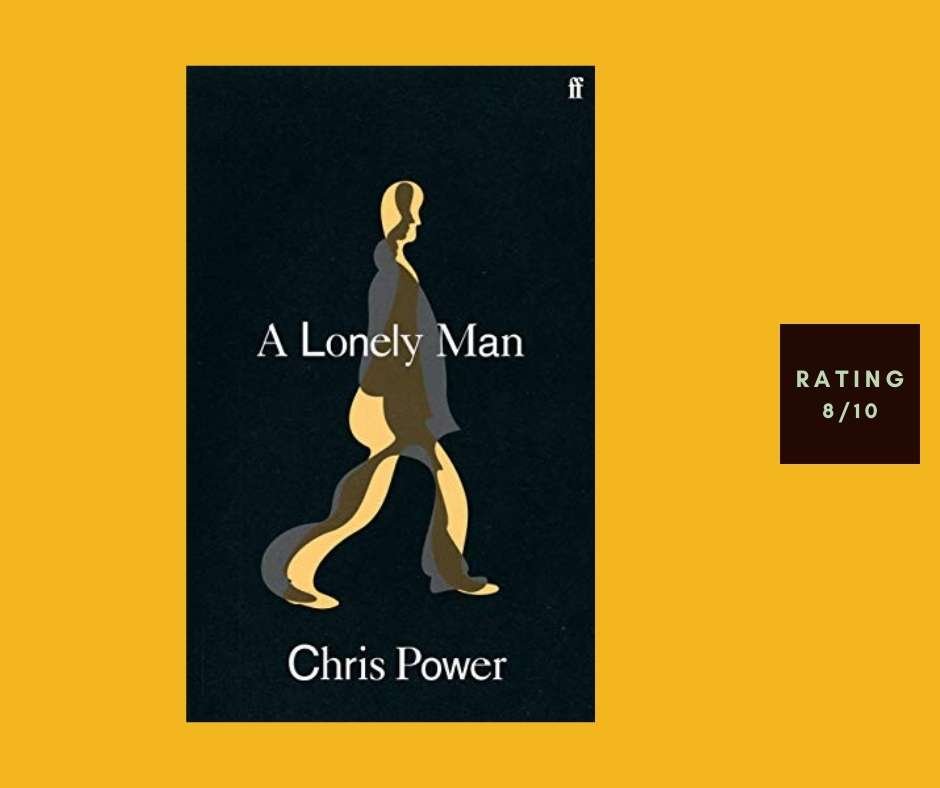
A Lonely Man by Chris Power [8/10]
A classic “writer novelizing a dangerous true tale” story, “A Lonely Man” follows Robert, a young writer in Berlin. Gestating not too much in the way of words, while with a wonderful wife and two daughters, he stumbles onto Patrick, a driven, perhaps shifty ghost writer who fears Putin’s reach because of starting a book by one of those Russian oligarchs who could only have been born from as cataclysmic an event as the end of the Cold War. Is Patrick for real or just paranoid? Why does Robert latch onto Patrick’s images and scenes so frantically? It can’t turn out well. A Lonely Man begins as a cross between a modest expatriate tale and a thriller by Robert Harris (remember his The Ghost?) but darkens and deepens, the prose precise and immersive, into an existential drama that enthralls. Domesticity nestles with opulence, violence with tawdriness. Lit thriller par excellence.
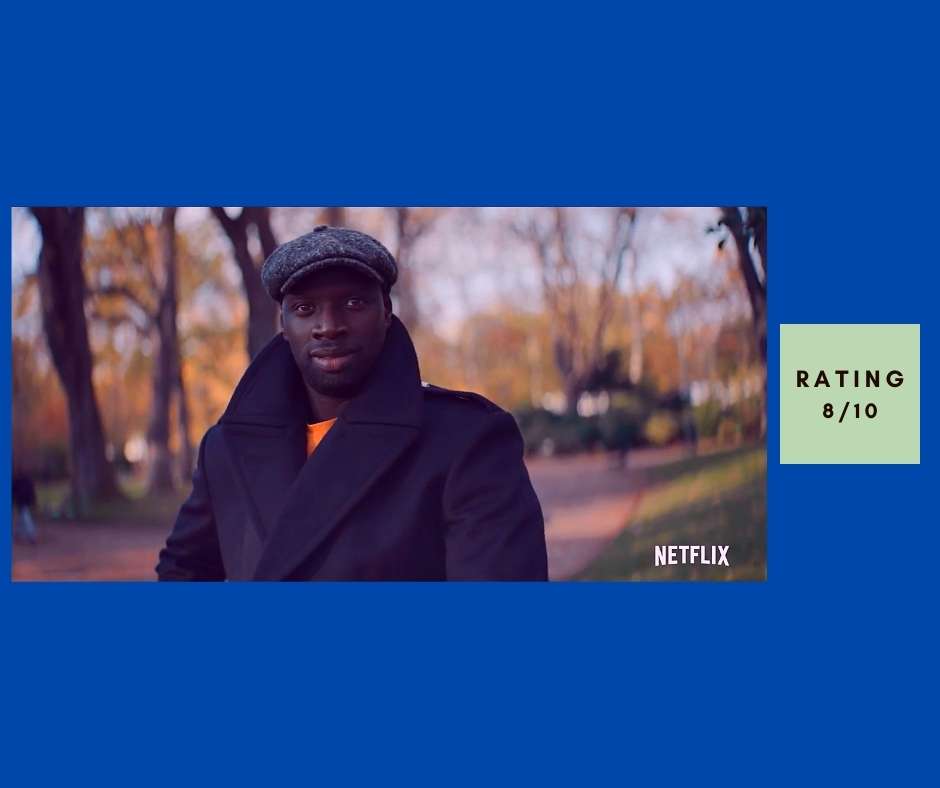
Lupin Season 1 [8/10]
A caper series based around the conceit of imitating the famous French escapologist/burglar Arsène Lupin, “Lupin” is imperfect but shines brightly where it most counts. Assane Diop, a Senagelese in Paris, is out to unravel and avenge the prison death of his father when he was a boy, and to do that, he needs to invade the world of a sleazy, powerful businessman (played wonderfully by Hervé Pierre). The first episode (of five) involves a jewel heist in the Louvre, very much in the Mission Impossible style (but, it has to be said, less hi-tech), and each episode involves deception, misdirection and trickery a la the legendary Lupin. The series is plotted tightly and directed in workmanlike fashion, but the series stands or falls with Omar Sy’s larger-than-life portrayal of both Assane, the wronged boy grown up, and Assan the incarnation of Lupin. And here I found myself wavering. Omar Sy’s huge frame and handsome smile often seemed to render him as shallow, yet at crucial times, usually in the midst of mayhem and action, his acting revved up a notch. The caper machinery of Lupin could have come across as cliched, instead it is fresh and enjoyable, and towards the end, what lifts this season above the ruck is the nuanced performance of Ludovine Sagnier as Claire, Assane’s on-again-off-again partner. The interplay between Assane and Claire elevates the inevitable cliffhanger finale into something rather special. Lupin ends up more affecting than its parts.