“All the Colours of You,” the sixteenth album in a long, stellar career, has attracted the usual “best ever” reviews, but the truth is, old men’s albums like these, even when highly skilled, can never capture early moments of genius. That said, All the Colours of You is a wonderfully entertaining, sophisticated set of songs in indie style, graced by the fluid wonders of singer/writer Tim Booth’s voice and underpinned by a smooth adventurous band backing. Each one of the eleven tracks is a joyful listen and Booth’s questing lyrics, often barbed, never flag. James’ fans are the most fanatical of all, and we will all soak this release up, but if you’ve never encountered the band, All the Colours of You would make a stylish, singalong introduction. Highlights include the anthemic, existential “Zero,” with Booth singing supreme; the radio-friendly “Beautiful Beaches,” relating California’s recent wildfires; and the lilting refrain of “I will wait” on a gentler track, “Hush.”
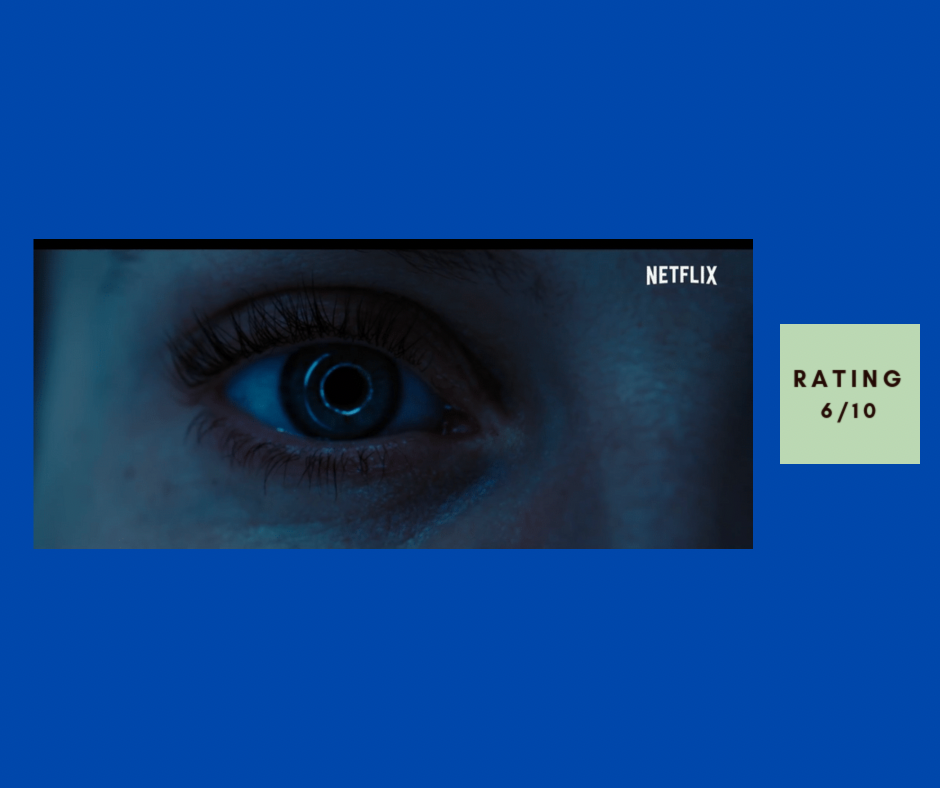
Oxygen [6/10]
“Oxygen” is a stylish French take on the buried-alive movie, one that dissipates a tad towards the end but still offers quality entertainment. A woman wakens in a futuristic cryogenic tube, hooked up with wires and catheters, surrounded by screens, with no memories. Her potential tomb’s oxygen is rapidly depleting (a fact imparted by a medically-inclined AI, voiced over atmospherically by Matthieu Alaric) and she desperately attempts escape and external communication and memory recovery. The tension is superbly choreographed by director Alexander Aja and the first half is a treat. Melanie Laurent’s solo performance is masterful. In my viewing, I was gripped until sometime during the movie’s closing half, when the plot offers a couple of stunning, yet story-sapping, twists, and a sentimental closing scene, while entirely consistent, highlighted a comedown from the star’s second-by-second push for survival. A welcome, tense horror/thriller, that’s what Oxygen can offer you, dear viewer, and you should accept and succumb.
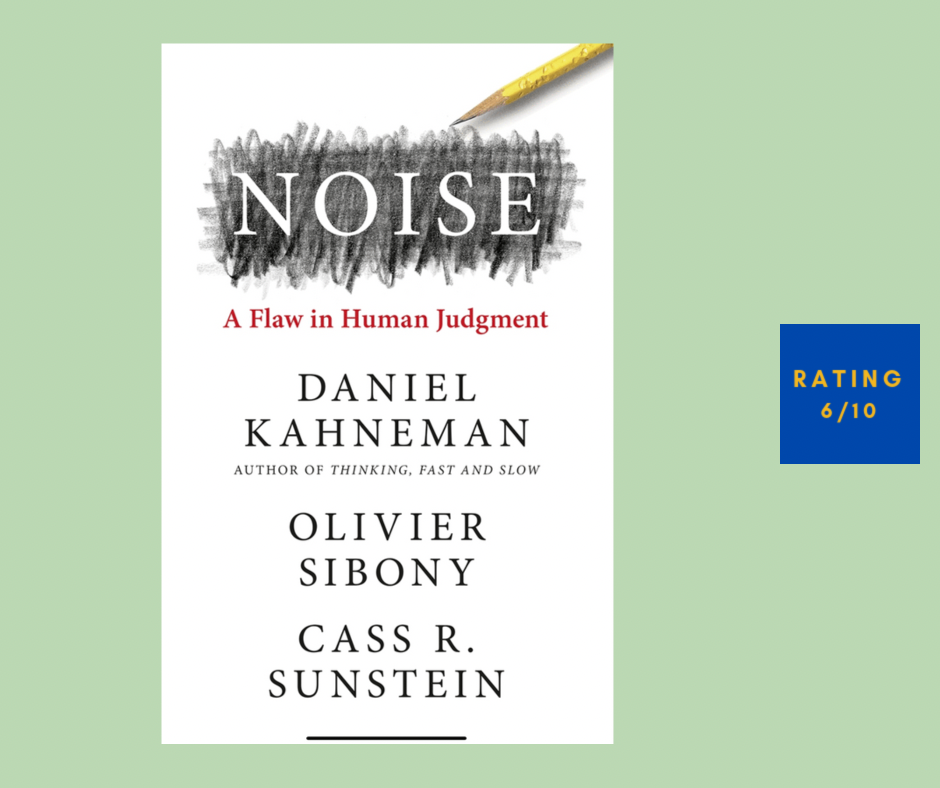
Noise by Daniel Kahneman, Olivier Sibony, & Cass R. Sunstein [6/10]
Bringing to bear the expertise of three prize-winning economists and policy thinkers, “Noise: A Flaw in Human Judgment” represents one strand in a long examination of how humans flail at proper logical thinking. Even when bias is eliminated as much as possible, decision-making, according to these mavens, is subject to random noise that can shift outcomes unconscionably or incorrectly. Two individual judges, both “unbiased,” can tilt sentences drastically. Decisions made after lunch differ from those enacted before. Variability is rife. The authors write smoothly and convincingly, offering sparkling case studies, and their prescriptions for improvement should be read by all executives and officials. A brief book in basic content terms, Noise is worth brewing over.
Redesign Your Mind by Eric Maisel [9/10]
One of the most prolific writers about creativity, the mind, and issues of the mind, Eric Maisel is always stylishly entertaining to read, a fount of wisdom, and oriented towards action. I do believe I’ve read all his books, ever since one of them changed my life. Lately, the practical use to which I’ve been able to put his output has diminished, simply because I have already incorporated so many of his suggestions into my life. All that said, “Redesign Your Mind: The Breakthrough Program for Real Cognitive Change” is Maisel’s breakthrough book for the 2020s. Brilliantly and wittily written, he approaches Cognitive Behavioral Therapy—talking to yourself to your advantage—through a metaphor of a room in your mind. A brilliant notion indeed and one that is instantly usable. He offers forty ways of utilising this concept, forty spot-on techniques for mediating and moderating your mind towards better results, and I have already used half a dozen with solid success. I have lifted my mood, curbed irritation, spurred energy, reduced bitter thoughts, and hammered in improved concentration. I cannot recommend Redesign Your Mind enough: even if you deride self-help books, please, please take a look at this.
Deadwater Fell [6/10]
“Deadwater Fell,” a four-parter set in Scotland, is an absorbing mystery series that encourages binging by setting the scene early and slowly teasing the viewer. A sturdy vehicle for David Tennant, it features a number of stalwart actors, and its production values are high. The story is classic: in an idyllic village setting, a seemingly perfect family of four is caught in a horrific house fire, with only the doctor father/husband (Tennant) surviving but only just. Almost immediately, it is clear foul play has been at work, and from there the movie rips the village apart as suspects are tabled and discarded. The screenplay unfolds in a leisurely way, which both heightens the “what next” factor but dampens the eventual reveal, and the plot dynamics work in the moment yet come across as slightly shabby once the closing credits roll. All in all, Deadwater Fell is enjoyable viewing without reaching the heights such murder mysteries aspire to.
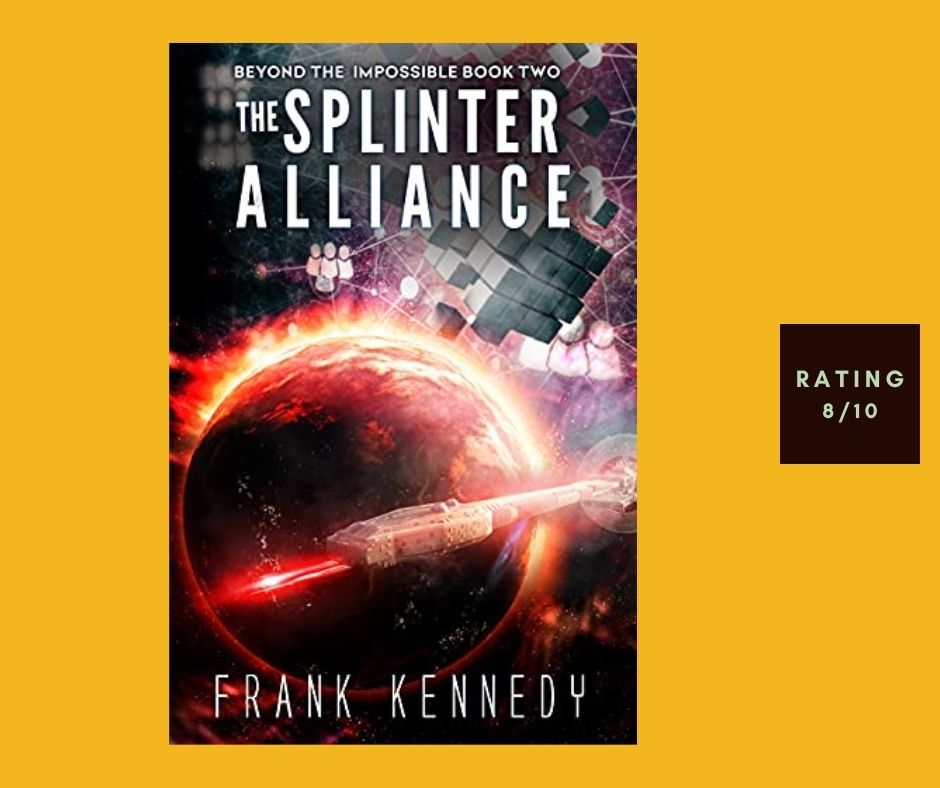
The Splinter Alliance by Frank Kennedy [8/10]
One of the modern masters of space opera sci-fi, Frank Kennedy has been fervidly unwinding his kaleidoscopic universe, The Collectorate. A new series entitled Beyond the Impossible, recounting the dying days of the once-ruling Chancellors, kicked off a fresh heroine, high-class, smart, determined Kara Syung. In “The Splinter Alliance,” Kara finds herself zooming through space to a remote planet in the company of an elite corps of soldiers from another universe; terrorists from her home planet; her uncertain ally, ex-Chancellor Ham; and an immortal warrior. Searching for clues toward the Inventor, a seemingly lunatic engineer with a terrible weapon, their sojourn on the planet plummets into a deadly chaos of intrigue and betrayal. Even more than in previous Collectorate novels, The Splinter Alliance is more about the labyrinthine politics and war strategies and sciences of the time, and the author weaves a wonderful concoction of world-building. The dialogue is whip-smart, the spaceship and planetary settings are alternately kaleidoscopic and evocative, and the plot is a rollercoaster. Buckle up: the series is superb and The Splinter Alliance is a joy to read.
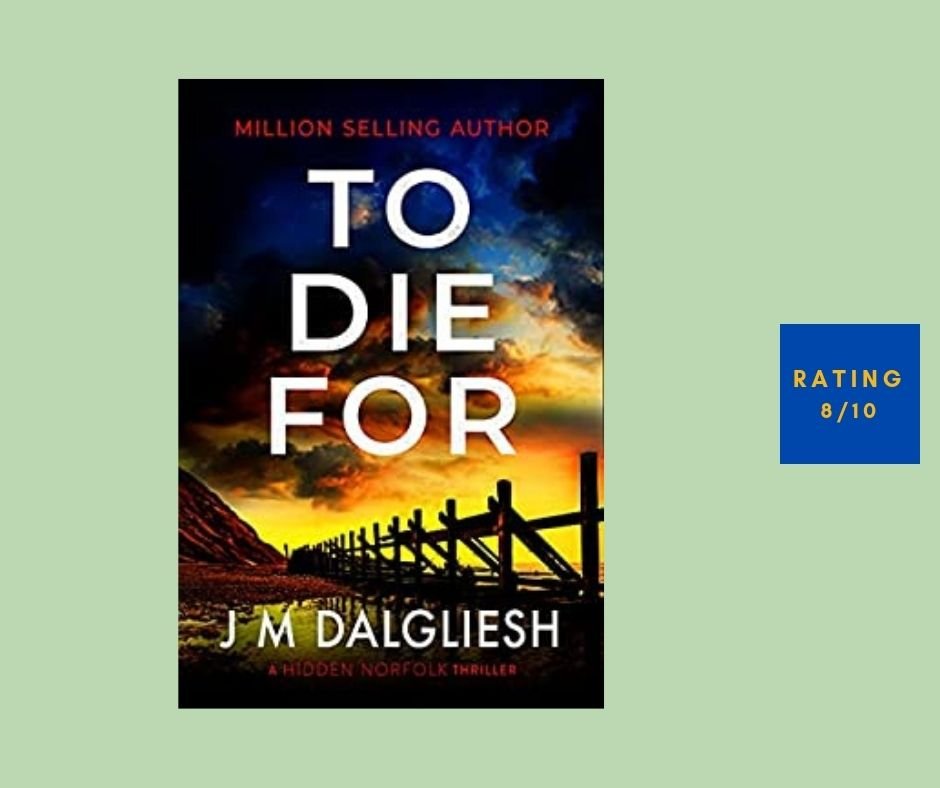
To Die For by J M Dalgliesh [8/10]
Number 9 in the DI Tom Janssen series, “To Die For,” is the most deeply rewarding since the fifth instalment, Hear No Evil. This time the focus for dependable homicide copper Janssen, together with his ensemble team, is the murder of an innocuous Norfolk semi recluse. Who would possibly wish to harm such a harmless man? In the author’s capable hands, the plot plummets into bafflement and out into twist after twist of satisfying conclusions. The entertaining storyline notwithstanding, the real pleasure is the ongoing interplay of the homicide squad’s diverse members. As with the previous eight books, Norfolk is a subtly portrayed additional character. Find a comfy chair and sink into To Die For, emerging breathless at the end.
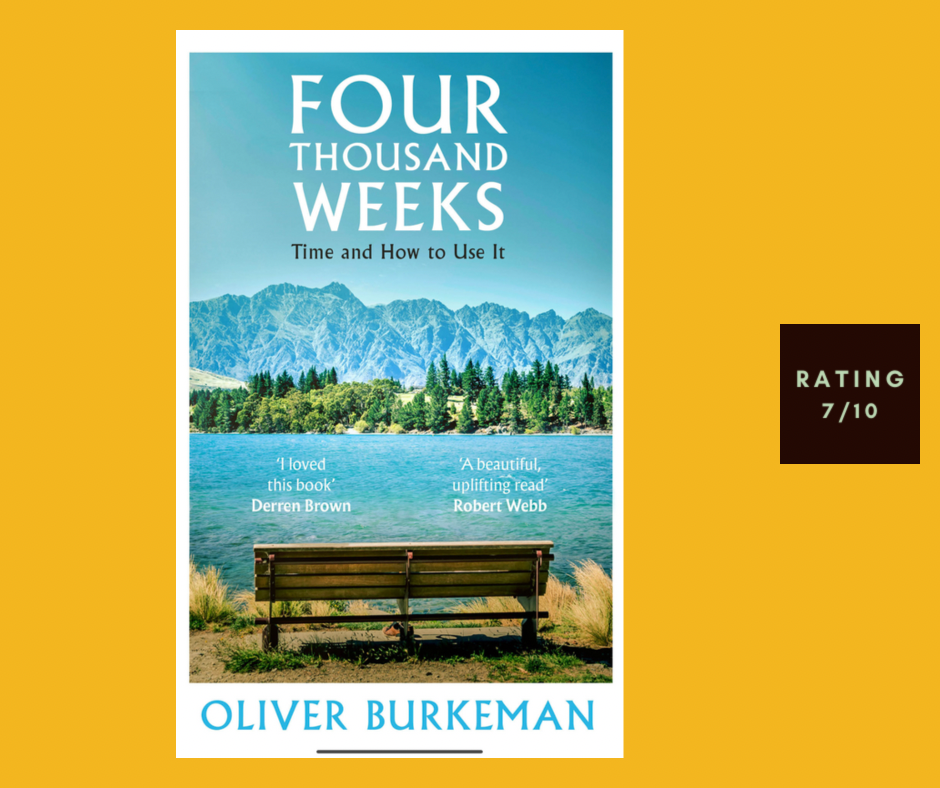
Four Thousand Weeks by Oliver Burkeman [7/10]
A battle-scarred veteran of to-do lists and relentless planning, I came to “Four Thousand Weeks: Time and How to Use It” with both hope and skepticism. How could journalist Oliver Burkeman add to all those authors I’ve absorbed and followed? It turns out that Burkeman is a superbly read, wise debunker of much of my wisdoms. Essentially (and here I interpret, possibly superficially) his advice is that attempting to master time, and to achieve everything we think we need to, are flawed goals and lead to stress and failure. Only by bending in the wind and accepting our finiteness can we find grounded peace, while at the same time accomplishing much. In coming to his subtle, Buddhist-infused conclusions, the author draws from a compendious range of sources from philosophy and modern self-help, both ancient and right up to the minute. Written during the pandemic, Four Thousand Weeks derives extra insights from it. The author is a wonderful stylist, cogent and rhythmic, often slyly humorous. Ever since Four Thousand Weeks, I have been reinventing my own relationship with time, including my daily systems. I recommend it.
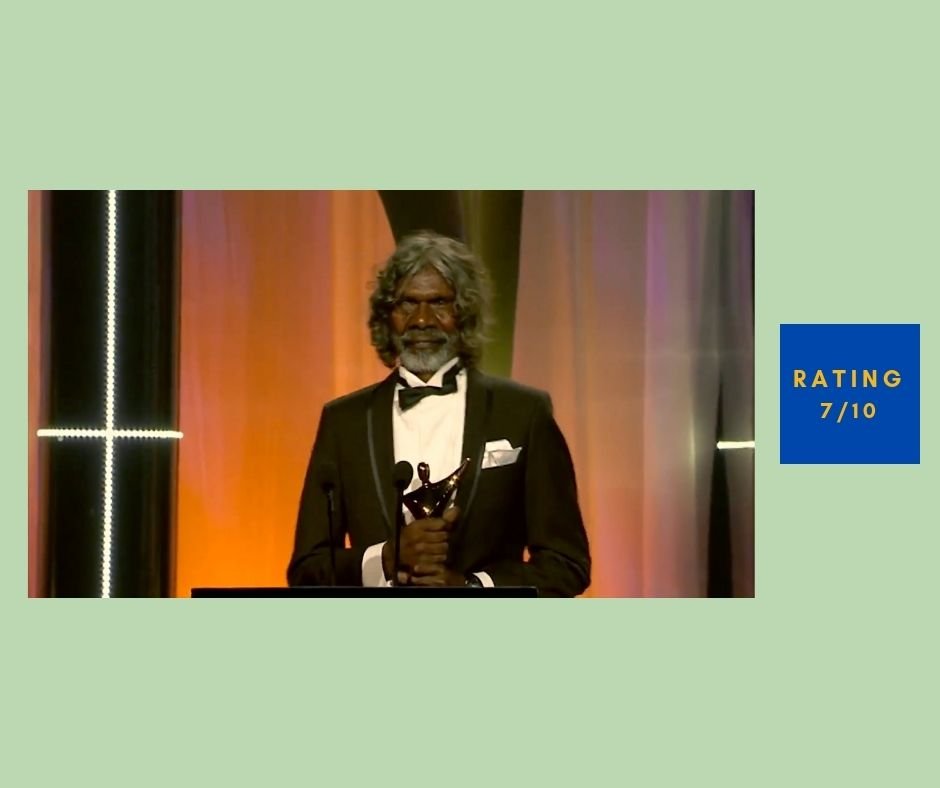
My Name Is Gulpilil by Molly Reynolds [7/10]
“My Name Is Gulpilil,” a slow-moving, occasionally ponderous documentary training a camera on the epochal indigeneous movie star, David Gulpilil, may well bewilder many viewers. Gulpilil, who has towered over Australian cinema for half a century, is now dying of lung cancer in a small South Australian town, and the film does not care to pass judgment or to tell a story in traditional terms. Instead, director Molly Reynolds lingers on his frame shuffling to and from the letterbox, luxuriates in his craggy face with its unforgettable eyes, and gently casts a backwards eye on past fame and controversy. Reynolds, it seems to me, concerns herself less with matters of mortality than with trying to capture the hypnotic yet unknowable (at least to a white viewer) essence of a man who seemed to conquer the modern world while yearning to remain in his ancient culture. A sad but somehow transfiguring movie, My Name Is Gulpilil is one feature every Australian should watch.
Think Like a Vegan by Emilia A. Leese & Eva A. Charalambides [6/10]
A stylish and personable discussion of all matters ethical from the point of view of a committed vegan, “Think Like a Vegan: What Everyone Can Learn from Vegan Ethics” would be ideal reading for those recently come to veganism or intrigued by the concept. The two authors share individual views and experiences as they roam over an expansive terrain of issues, from animal adoption to fake meat to justice. As a vegetarian, not a vegan, and one who came to my dietary regime from carbon footprint perspectives, rather animal ethics, much was interesting without challenging my own framework. But I used to read Peter Singer and it was interesting to see moral points of view expressed from a dietary viewpoint. Think Like a Vegan reads compellingly and smoothly, and might be just what you need.