Death to 2021 [6/10]

Death to 2021 review

Death to 2020, a rollicking satirical retrospective of a year that could scarcely be believed, was a modest success according to me, and “Death to 2021” is much the same: replete with chuckle-worthy sketches, blessed with wonderful acting, and driven by a sharp screenplay, but somehow, at the end, hollow enough to leave behind a sense of disappointment. Core characters from 2020 triumphantly return: the racist Brexiter hammed up delightfully by Hugh Grant; Cristin Millioti as a MAGA troll; the oh-so-ordinary English wallflower played pitch-perfect by Diane Morgan. Once more Lawrence Fishburne provides mock serioso voiceover commentary. For an hour of slightly savage fun that does manage to encompass the year just gone, don’t hesitate to latch onto Death to 2021.

Fool Me Twice by J M Dalgliesh [8/10]

J M Dalgliesh Fool Me Twice review

In just a little over two years, British crime fiction author J M Dalgliesh has pumped out ten police procedurals featuring DI Tom Janssen and his eclectic team of detectives in picturesque Norfolk. Belying that rapidity of publication, the recent Janssen outings have been his best yet, and “Fool Me Twice” is a meaty, twisty investigative treat for the reader hungry for a diet of crime and justice. This time a top lawyer is discovered savagely murdered in his home and the trail through old clients and current family turns out to be as baffling as any Janssen has encountered. The author is a sophisticated, slick stylist, and the supporting cast of characters swirling around dependable, whip-smart Tom makes for a captivating read. I had been hoping that at some point the abiding cast of players would be tested, instead of coasting along like a old-style fictional tableau, but this vague notion was swept aside as soon as I began reading Fool Me Twice. A cracker of a plot, an ace read, Mr. Dalgliesh!

The Lost Daughter by Maggie Gyllenhaal [7/10]

The Lost Daughter review

The Lost Daughter” is a searingly honest examination of the inner life of a mother, an ordinary mother, and Olivia Coleman in the central role is brilliant. Holidaying on a Greek island, 48-year-old Leda butts up against an extended American family, steeped in menace, and when the daughter of one of the men goes missing, the subsequent events build up in shock and fear. Leda, beset with memories of a fraught time when she was a young mother of two, wresting with career aspirations, takes steps that seem destined, in this moody film, to brook disaster. The fact that Maggie Gyllenhaal based her screenplay on an Elana Ferrante novel, just the kind of roiling internal examination that movies seldom attempt, and then directed the film, offered a great chance to make an arthouse classic. But a looseness of narrative control and the arbitrary use of symbolism undercut the power of The Lost Daughter. Nonetheless, it does grip and comes recommended.

Survivor’s Guilt by Robyn Gigl [6/10]

Robyn Gigl Survivor's Guilt review

A cross between a high-octane thriller and a courtroom drama, “Survivor’s Guilt” sees transgender attorney Erin McCabe struggling to solve, without ending up as a victim, the murder of a millionaire. When the millionaire’s daughter pleads guilty, McCabe smells the proverbial rat, and with the aid of her practice partner, dives into a horrific world of trafficking and exploitation and evil. The author is a straightforward stylist and the thriller plot itself proceeds a little clumsily, but the underlying storyline and the interaction of Gigl with the victim, herself transgender, keeps the reader interested. The action scenes are gripping. Survivor’s Guilt offers an engrossing, slightly-off-the-beaten-track read.

Long Half-Life by Ian Lowe [7/10]

Ian Lowe Long Half-Life review

Veteran environmentalist and antinuclear campaigner, Ian Lowe has written about the nuclear power industry and the nuclear arms race a number of times. Why now again? “Long Half-life: The Nuclear Industry in Australia” is Lowe’s riposte to a recent surge of pro-nuclear rhetoric and sentiment in Australia, a blip on the attention span of Australians that, he believes, might not allow for the history and the facts. Lowe is a cogent stylist with an easy manner, and this book is indeed a useful introduction to the history of nuclear power in Australia, from the days of nuclear testing in remote places, with unrealistic aspirations for nuclear energy, through the peak in interest in the late 1960s and early 1970s, through the two decades of political mayhem around uranium mining towards the end of last century. Lowe is a reasonably fair interlocutor, quite happy to give nuclear technology its due when it deserves it, but it is very hard to argue with his overall conclusion for the nation in 2021. As the only continent without a single power reactor, Australia is too far behind in terms of capability and infrastructure, and in any case, the nature of the nation’s dispersed, privatized utility system means that no firm could ever finance the huge upfront cost of a modern reactor. Long Half-Life is recommended as a skating introduction to its chosen topic.

Off Country by John Harvey & Rhian Skirving [6/10]

Off Country review

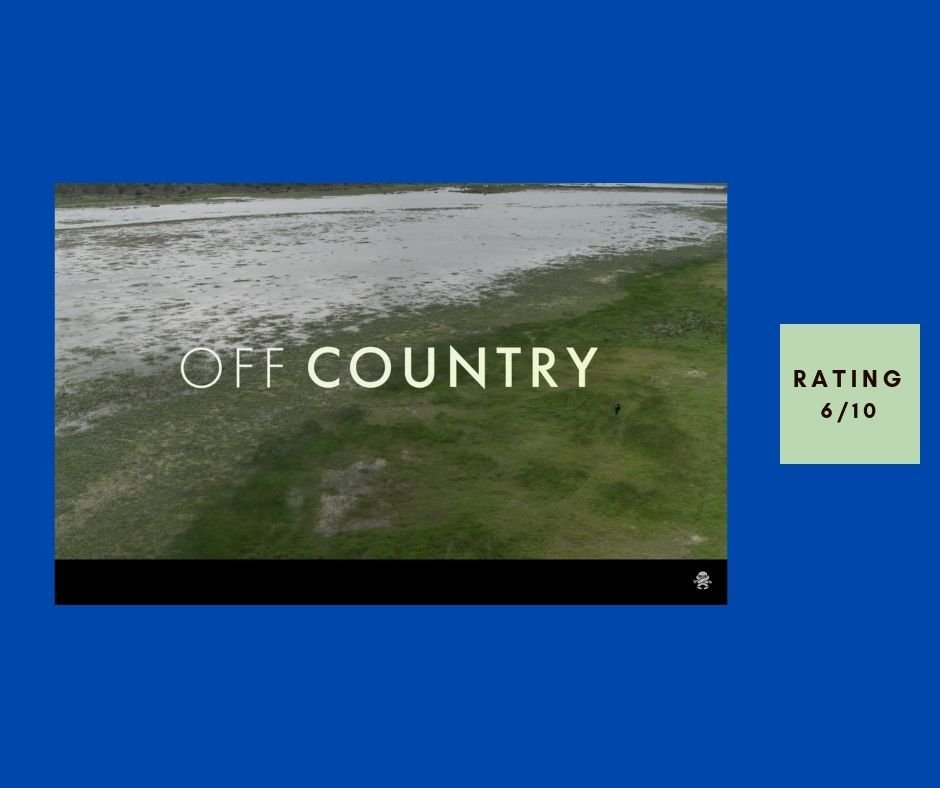
Off Country” is a beguiling, low-key documentary following seven indigenous students with scholarships to Geelong Grammar (and Timbertop, the school’s rugged camp famous for hosting Prince Charles many years ago). Beautifully shot west of Melbourne and in locations around Australia, the film, by definition, subscribes to no overarching storyline, and in its middle can feel slow. But skillful direction by Rhian Skirving and John Harvey carves out a powerful narrative by film’s end, exploring the nation’s fraught history; the lack of moral resolution even in 2021; belonging to two different worlds; and hopes and aspirations. The seven students are natural, intelligent, appealing subjects, and key Geelong Grammar teacher/activists are superb talking heads. Off Country is a rewarding film for both inquisitive Australians and non-Australians keen for insight.

Books that Made Us by Claudia Karvan [7/10]

Books That Made Us review

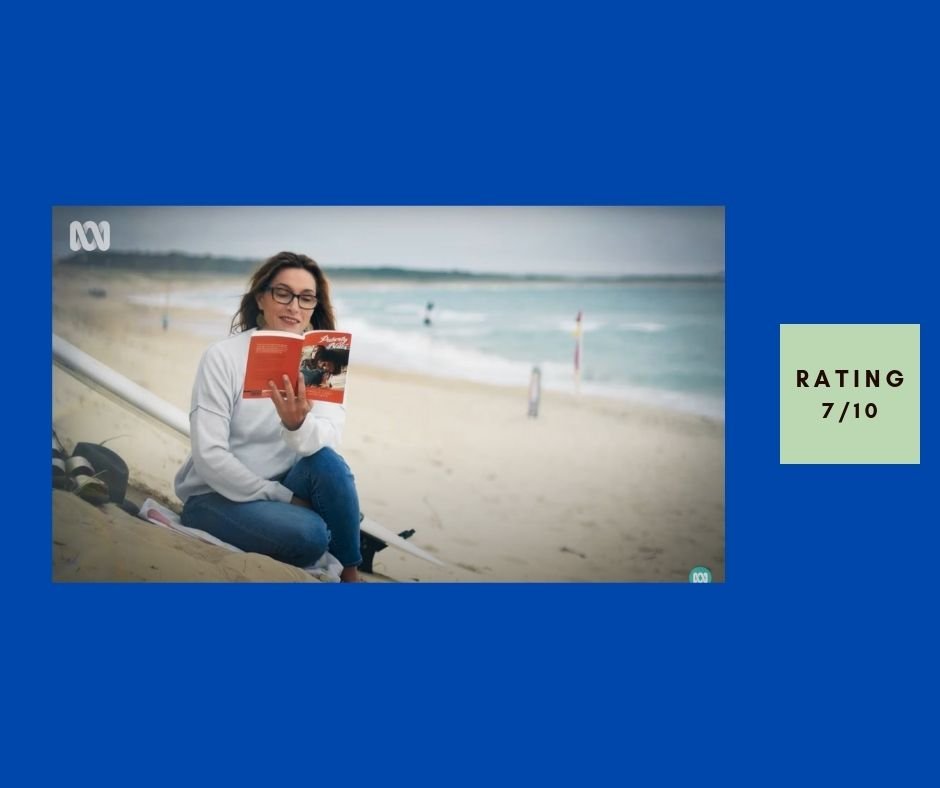
Over three beguiling episodes, Claudia Karvan, a wonderful Australian actor, explores new and old Australian novels in “Books that Made Us.” These kind of shows can quickly bore, but Karvan clearly loves reading and her affection infuses every moment with readerly joy. Of course I enjoyed explorations of core books written by heroes of mine, such as Chris Tsiolkas, Tim Winton, Helen Garner, and Tara June Winch, but just as fascinating are her forays into novels I read as a young teen, including The Timeless Land by Eleanor Dark. The entire season of Books That Made Us is heartily recommended, not so much as for its menu of “books I should read” (although it certainly does supply this) but for an invigorating shot of readerly purposefulness.

The Echo Man by Sam Holland [6/10]

Sam Holland The Echo Man review

Taking the serial killer sub-genre as far as possible, “The Echo Man” plunges detectives Cara Elliott and Noah Deakin into a series of horrifying murders, soon revealed to be copycat killings mimicking the darkest of the dark, Kemper, Dahmer, Manson, on and on. At the same time, Jessica Ambrose is accused of murdering her husband but rescued by disgraced detective Nate Griffin, and both find themselves eerily linked to the baffling Echo Man spree. Debut author Sam Holland is a solid writer with a firm grip on a rollicking plot. The murders themselves are described with chilling realism, almost, it seemed to me, to the point of becoming serial-killer-porn. The Echo Man is a read best undertaken with a slight suspension of disbelief and a vacant evening, ending up as a horrific, hypnotic rush.

Shetland Season 6 [9/10]

Shetland Season 6 review

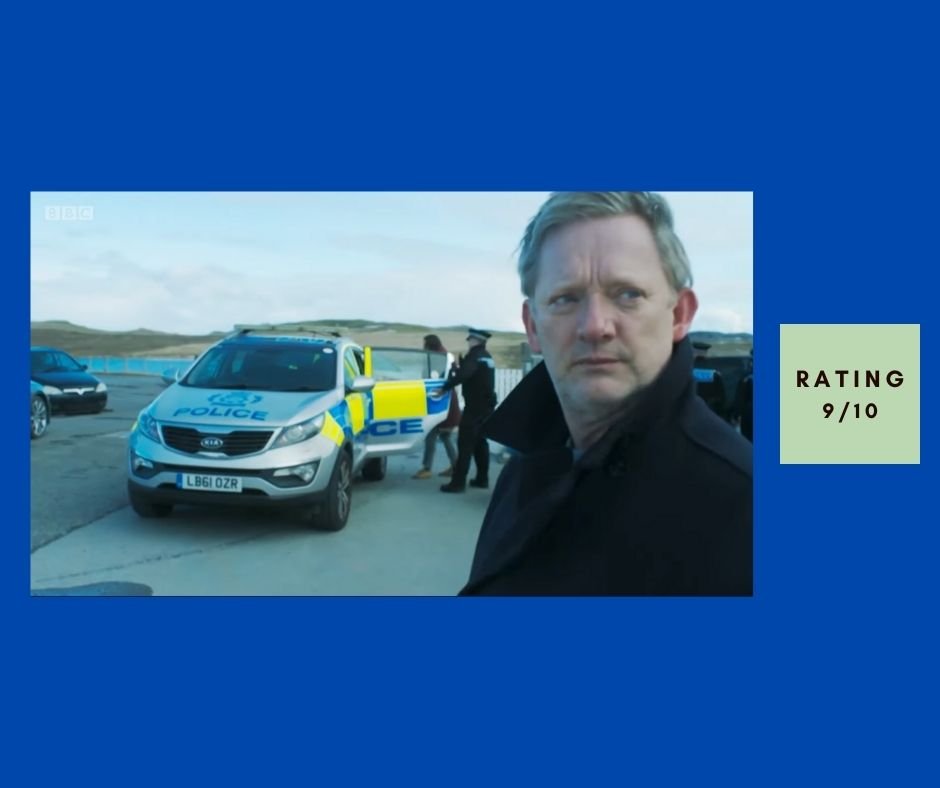
By the time you front up to the sixth season of a police procedural like Shetland, you have to ask yourself: has this run its course? I found the fifth season of Shetland to be brilliant, centered on the galvanic intensity of Douglas Henshall as DI Jimmy Perez, and I’m pleased to report that, all expectations to the contrary, Season 6 is another dose of the same but even more powerful. In this season, a popular lawyer is gunned down on his doorstep, a huge roster of suspects includes his wife, a rich businessman, and an ex-soldier with PTSD. Throw in Perez’s mother’s death and the dementia of his father, and the return of a previous season’s murderer with terminal cancer, and the plot is wonderfully baffling. The supporting cast of Alison O’Donnell and Steven Robertson as sidekicks Tosh and Sandy, plus Mark Bonnar as friend Duncan, is as strong as ever, but it’s Henshall as Perez who draws the viewer in. Once upon a time he looked like a hunk, now he has fleshed out and has the visage of a haunted obsessive. Breathe in the first five episodes of Season 6, crime fiction lovers, then gird yourselves for a transcendent final episode in which Henshall gives you a Jimmy Perez triumphant but at the end of his tether. Me, I was left breathless.

The Power of the Dog by Jane Campion [7/10]

The Power of the Dog review

Celebrated filmmaker Jane Campion tackles the sunset days of the American cowboy era in “The Power of the Dog,” her screenplay based on a 1967 novel by Thomas Savage. Set in Montana in 1925, with the motor car just arriving on the scene, the movie centers on two brothers running a cattle farm. Benedict Cumberbatch is a mesmerizing, fearsome ball of fury as the macho one of the pair, while Jesse Plemons is also perfectly cast as the besuited gentler brother. When the quiet one falls for a widow (played pitch perfectly by Kirsten Dunst) running a restaurant, the furious one begins a war of intimidation, one rendered even more suspenseful and unpredictable by the entry of the widow’s gangly, effete son (Kodi Smit-McPhee almost steals Cumberbatch’s thunder in this role). The four of them swirl around each other with a growing sense of approaching calamity, underscored by unsettling music from Jonny Greenwood. As always with Campion’s films, the cinematography is exquisite, with metaphor and meaning in every frame. Campion is an “arty” filmmaker in the best and worst sense of the word: while the tension builds almost unbearably, the spare, unsentimental direction makes identification with the characters hard to attain. Nonetheless, The Power of the Dog is a powerful, intriguing movie, a must-see.