Peter Attia, a Canadian-American doctor, is fascinated, in a very geeky but also practical way, in longevity, and has created a kind-of medical practice around the concept. But as “Outlive: The Science and Art of Longevity” confidently avers, Attia is just as concerned about how physically and mentally viable and fruitful the final decades of life—what he calls “healthfulness”—can be, as about how long we live. In general we humans are living longer but as mere shadows of functioning people from as early as our 60s. This is familiar terrain for me, obsessed as I am about existential issues, and a recent health scare has seen me radically transform my diet and sharpen my focus on other aspects of health. Outlive surveys the latest science (and the art, as Attia puts it) of extending and improving longevity. The author is a captivating stylist, freshly honest, with just the right mix of geekiness, advice, and credibility (he acknowledges kudos to almost-coauthor Bill Gifford). Commencing with the most potent weapon in our armory, exercise—not just aerobic, but also strength and stability)—he covers nutrition, sleep, and emotional health, all cogently, steadily, and with a practical bent tailored to individuals. Having read many such books, I can say that Outlive is one of the best (even though I disagree with his nutritional advice) and can be recommended to anyone exploring how to live a better life.
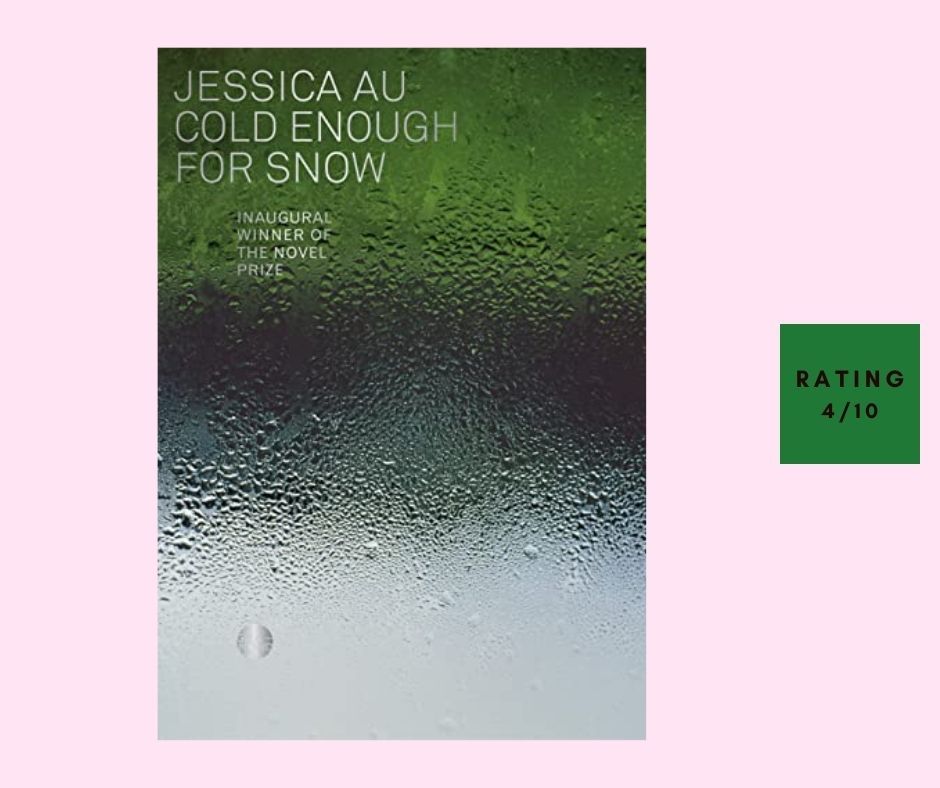
Cold Enough for Snow by Jessica Au [4/10]
I came to “Cold Enough for Snow” with high expectations: a much lauded novel with story thrusts close to my heart, parent-child closeness/distance, and art versus real life. And set in Japan, which I have loved traveling in! Alas, it fell flat from the outset. I could divine what the author was trying to get to with the way she portrayed the estranged daughter-mother pair’s touristing in Japan, the daughter’s sophistication yet separation from reality, etc., but the form of her narrative was very limp. Even the most “nothing much happens” novel can build up tension and mystery but this slim volume did none of that. It reminded me of those foreign films that don’t seem to have learnt Storytelling 101. The mother is portrayed subtly and effectively but the daughter felt wooden and unrealistic throughout. Setting is the novel’s strength, delivering wonderful scenes in places I think I’ve been but even here, something fell awry. The author’s style is my biggest beef, a toneless, unrhythmic style that sometimes even felt amateurish (e.g. she uses the phrase “such that,” which I normally only see in corporate comms, a few times). Overall, despite yearning for Cold Enough for Snow to take off, it settles as a mild-mannered, disappointing read.
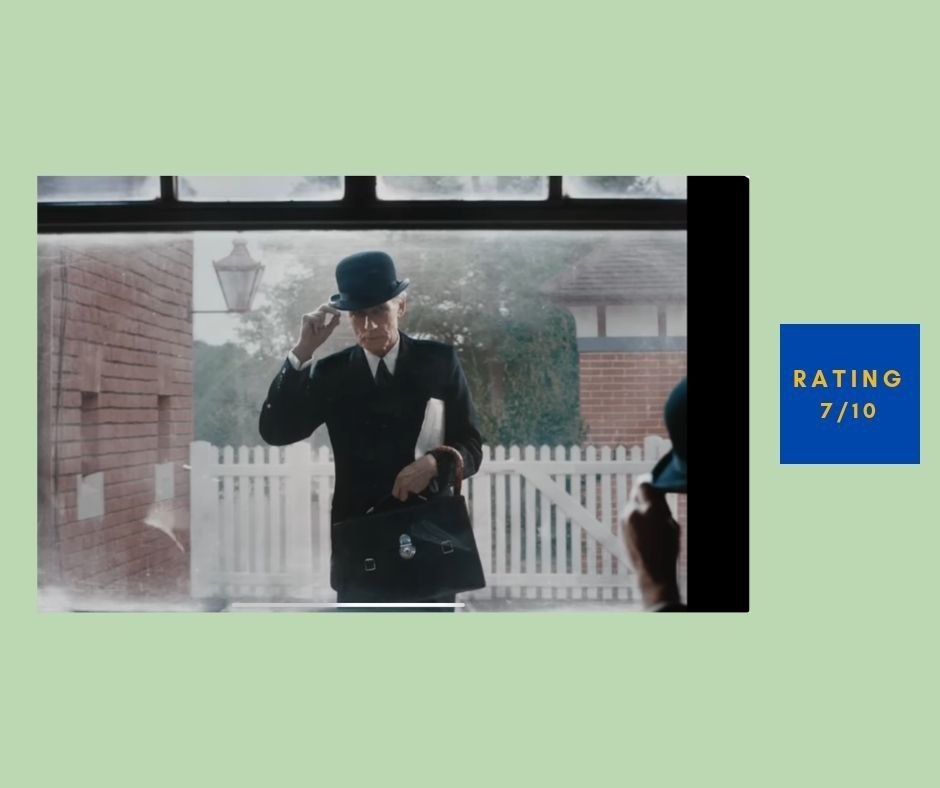
Living [7/10]
Everyone I know who has seen “Living” mentions that “Bill Nighy plays Bill Nighy really well,”but that throwaway comment downplays his superb performance as a characterless civil servant in 1950s London who receives a terminal cancer assessment and proceeds on a journey of rediscovery of life’s meanings. Nighy graces us with his usual effete, over-mannered depiction but also soars in naked, emotional scenes. Ably supported by a fine cast, notable for stellar performances from, among others, Aimee Lou Wood and Tom Burke, Nighy turns what is an over-soppy story into a graceful meditation on final days. Also notable is Kazuo Ishiguro’s agile, understated screenplay. Living reaches for no heady heights and carries its sentimentality a little too visibly, but provides oddly welcome viewing in this age of froth and fury.
Outlander Season 6 [8/10]
I came to the “Outlander” series circuitously. In the subgenre of historical time travel, the book series always struck me as too “historical,” whatever that means, and so when my wife became captivated by both the written and cinematic versions, I shied away, until, after two seasons, she persuaded grumpy me to commence with Season 1. I would say this: the TV series veers between jolting historical realism, powerfully portrayed, and soft-porn romanticism, so it took me two seasons to appreciate Diana Gabaldon’s authorial narrative skills while putting up with the fluff. Now, sinking into Season 6, I’m a veteran and a convert. The time-travel aspect is barely present in Season 6, which deals with the looming American Revolutionary War and its impacts on Fraser’s Ridge in North Carolina, the fiefdom of Scottish hero Jamie Fraser and his time-traveling wife, Claire. After a fraught Season 5, this season relaxes somewhat until a harrowing climax, but there is plenty of narrative tinder to explode, from the arrival of a band of religious zealots, to the escalating conflicts with a local indigenous population, to the need to balance a desire to join the historically inevitable rebel movement against the pressures of British rule. Some extraneous sex aside, the characters proceed with dignity and fervour, and the acting is sterling throughout, anchored by the superb leads, Sam Heughan and Caitriona Balfe. Roll on, Season 7, I say through gritted teeth, knowing that we Australians will see it a year later than the rest of the world.
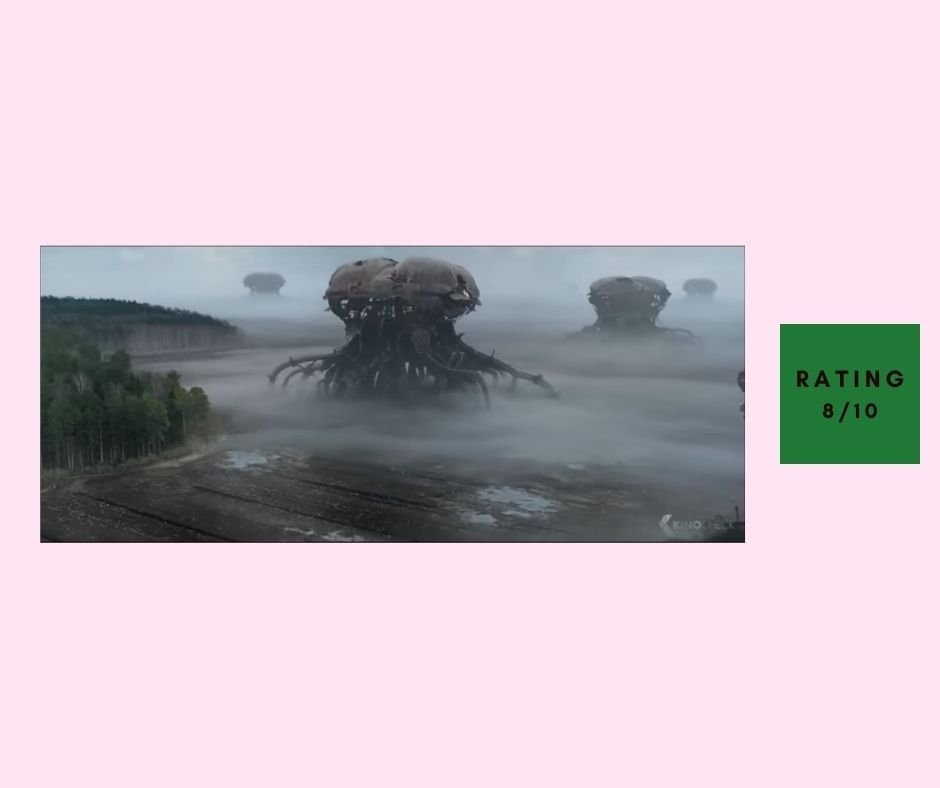
Vesper by Kristina Buožytė & Bruno Samper [8/10]
“Vesper,” a French-Lithuanian-Belgian hybrid, is a post-apocalyptic science fiction extravaganza dripping with murky atmospherics. In a world of mud and muck, shattered by genetic disasters, a young woman, Vesper, played with restrained, believable brilliance by Raffiella Chapman, spends her days eking out an existence trawling horrid swamps for food for herself and her comatose father. Nearby, a monstrous overlord (played with chilling force by Eddie Marsan) makes Vesper’s life difficult. Vesper’s stasis ends when a wan woman stumbles out of a wrecked flying craft, and she is forced to make huge decisions and to unfurl her homegrown biohacking skills. Dark in color, dark in mood, dark in music, Vesper offers bleakness and courage and a beautifully rendered ugly future. Very much arthouse but with a backbone of narrative spark, Vesper stands out from the current overloaded dystopian sub-genre.
Written by Bec Evans & Chris Smith [6/10]
Writers thirst for advice on how to write, and this writer/reader is no exception. I am a strong fan of artistic creative coach Eric Maisel, whose books have saved me many a time. But I’m always up for more, and “Written: How to Keep Writing and Build a Habit That Lasts,” written by writer Bec Evans and journalist/researcher Chris Smith, is a welcome addition to this sub-genre. They run Prolifiko, a writers’ coaching business that would, on the basis of Written, be a great aid to many writers. Essentially their underlying principle is one of individuality: standard writing advice might suit one person but not another, and over the ten chapters (plus a terrific concluding section), they provide tons and tons of tips around a careful framework based on research (into writers) and psychology/neuroscience. Much of the stylishly presented theory and advice was at least vaguely familiar to this grizzled writer but I extracted a number of new or forgotten gems about how to write in our distracted, fraught modern world. Whether you are a writer launching yourself or a jaded hack, Written is recommended as highly readable and most useful.
Upright Season 2 by Tim Minchin [6/10]
The first season of “Upright” was Tim Minchin at his best (my review): funny, wild, a script that worked as both propulsive and emotionally deep. Season 2, then, is a bit of letdown, although it is perfectly watchable. Minchin again plays Lucky, now a successful rock performer wasting his life, until young Meg from Season 1 lobs on his doorstep and takes him on an odyssey into the jungles of northern Queensland. The acting remains sold throughout and some of the snappy dialogue works, but the plot is naff and the overall story arc is shoddy. The action scenes lack flair and the Lucky-Meg dialogue retains little of the initial humor. Minchin himself remains highly engaging and the short episodes charge along, but overall, Upright Season 2 feels hurried.
Colin From Accounts by Patrick Brammall & Harriet Dyer [7/10]
Patrick Brammall and Harriet Dyer bring wonderfully timed comedic dialogue expertise to “Colin From Accounts,” a cutesy rom-com series that mixes subtlety and in-your-face oddness. Brammall plays Gordon, owner of an inner-city Sydney brewery, Dyer is Ashley, a younger medical student, and the pair meet and bond over an accident with a dog. Both are awkward misfits and quirky characters at the same time, and around them swirls an ensemble cast of similarly distinctive people bringing modern city life into colorful repose. Each of the short episodes reminded me of a seventies sit-com dabbling with modern themes and ideas: always amusing, sometimes touching, never dull but also skating across any deeper themes. A pleasure to indulge in over a week but never aspiring to more, Colin from Accounts felt to me, in the watching, like a few ideas short of brilliant.
Witch King by Martha Wells [7/10]
A masterful fantasy and science fiction author, equally adept in either genre, Martha Wells kicks off “Witch King” in the middle of the kind of confused action fantasy readers love. Kai—Kaisteron actually, a demon unusually living above the underworld, and mysteriously called the Witch King—wakes in a befuddled underwater prison and emerges to explore why he was there and to exact revenge. Kai is very much a Martha Wells creation, just slightly human-off-kilter and amoral, yet deeply feeling and quickly embraced by the reader as he tracks down trapped and hidden friends and enlists allies, while setting off on a journey through an astonishingly built fantasy world of technology and magic. Overlay a dazzlingly complex tapestry of peoples and alliances and enmities, throw in the genocidal Hierarchs, and the result is a swirling, fascinating, entertaining first entry in a must-read new fantasy series. Welcome, Witch King.
The Conspirators by G. W. Shaw [8/10]
Young Jacob Meaney, the reluctant hero of “The Conspirators,” is a quiet, smart multilingual translator, keen for a dollar because his girlfriend has issued an ultimatum, so when a mysterious rich person offers him a huge amount to interpret between Russian and Hindi over a few days in a remote Slovenian villa, he jumps at the chance. Quickly it becomes clear that he is in the murkiest of waters, and his situation plunges into fraught mayhem with no way out. A well-traveled ex-journalist, turned mystery and thriller writer, George Shaw is blessed with a cunning grasp of plot, lightness of touch in style, and, especially, it seems, an affinity toward throwing ordinary people into impossible situations that bring out the best in them. The action rips along, with the reader forever guessing the next twist in the plot’s skein, and the climax clocks in perfectly. A bonus is a fascinating peek into the world of book translation. Seeking a one-sitting entertainment spasm? Look no further, The Conspirators will satisfy.