Naomi Klein writes like an avenging angel, with incandescent courage yet in clear prose, so her “On Fire: The Burning Case for a Green New Deal” is a welcome combo polemic and analysis on that most important topic, how the United States should (no, must) brings its emission fast towards zero. A collection of essays and talks and think pieces from as long ago as 2010, with the Green New Deal material expanded, the book could have been a disjointed mess. Instead, it’s a revisited refrain of her core ideas about the need for radical change. As with most fiery outpourings, there’s quite some stuff for me to disagree with (I’m a believer in capitalism with a human face, for example), but Klein’s excoriation of the evildoers of the world (yes, you fossil fuel apparatchiks, I’m looking at you) was a balm to this troubled soul. With this year’s American election looming, “On Fire” is recommended as briefing and call to action both.
Abstract Season 2 [8/10]
The first season of “Abstract: The Art of Design” reinvented the “here’s how a creative person creates” doco, with nifty visuals, rapid cuts, the interposing of technical and personal, and a sophisticated viewpoint. Not all the eight episodes engaged me but that was simply because I found a few of the domains of the particular artists/designers/creators to hold less interest. Season 2 ups the ante and is a mind-engaging delight from start to end. If anything, the high-end quality and dramatization, by a consistent, intelligent team of directors, excels beyond Season 1’s on-screen impact. We pursue the output and inner creative processes of eight fascinating creators: an architect, a bio-architect (yes, there is something called that), a costume designer (how did they manage to intrigue me with that?), a toy designer, a Web interface designer, and a typeface designer (could there be anything more nerdy?). If you have a creative bone in your body, “Abstract” is essential, thoroughly modern viewing.
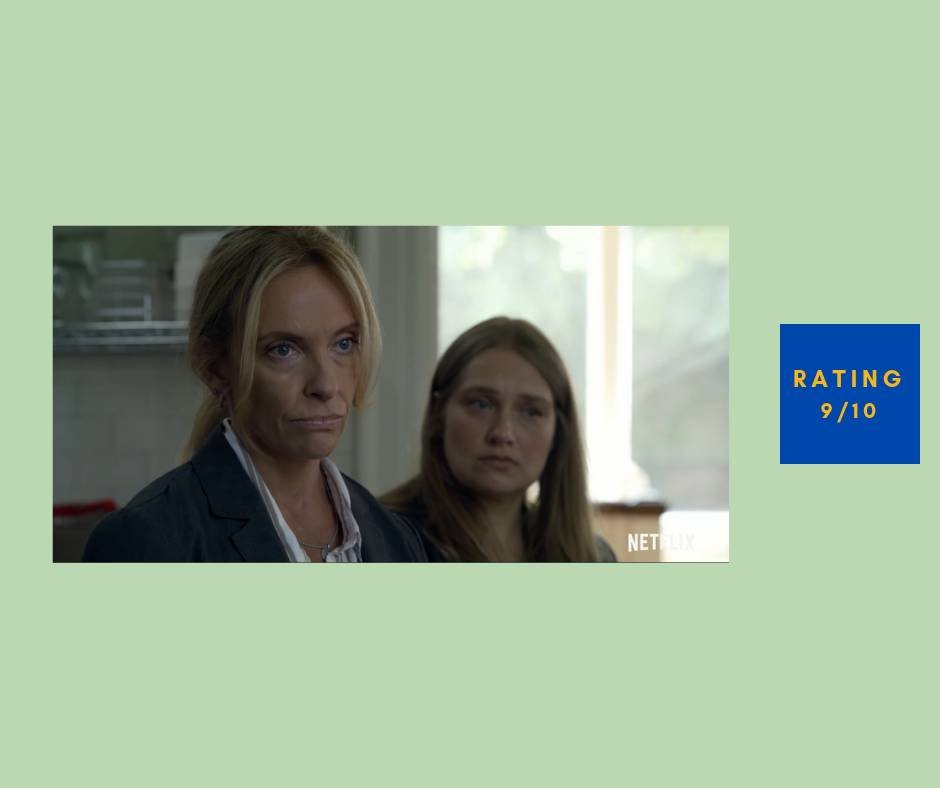
Unbelievable [9/10]
The plot basics of the eight-part “Unbelievable” series are routine: young woman is raped in Washington state and police dismiss the event, then three years later in Colorado, two determined female detectives set after the rapist following a similar rape. This could have ended up heavy-handed, with wincing scenes, or it could have been plodding police procedural fodder, but with a fine team of writers, excellent direction, and stellar acting, “Unbelievable” was one of last year’s best screen outings. Kaitlyn Dever is stunningly vulnerable yet inwardly sturdy as the first rape victim, Merritt Wever is so, so authentic as the relentless, humane younger detective, and Toni Collette inhabits the older, swaggering, crusader of a detective. Of particular note is that two of the three central characters, the avengers for goodness sakes, don’t even hit the stage until Episode 2. Such is the confidence of this series! “Unbelievable” surefootedly, with a growing sense of menace and desperation, seesaws between the nitty-gritty, two-steps-forward-one-step-back police work and the victim’s travails. The climax resists sensationalism and offers hope. Do yourself a favor and take your time (no binging) with this important series.
What Color Is Night? by Grant Snider [8/10]
Who doesn’t adore reading aloud to children or (in my case at this time of my life) grandchildren? But I don’t usually consider them “worthy” of a formal review. “What Color Is Night?” is a sparkling exception. I was drawn to purchasing this slim paean to the intricacies of night-time scenes by Grant Snider’s exemplary cartoons, and I bought it as an ebook designed to be read as an ebook to one of my grandsons. Each page is a rich, clear evocation of our world beyond the day, and the book’s title is indeed the topic of every such scene. Something deep imbues the unexpected colors of night time, something that has compelled me to read aloud “What Color Is Night?” again and again, and to bring it to mind every time the sun does down on my adult world. This is a child’s book but oh no, it is not. Wonderful.
The Second Sleep by Robert Harris [6/10]
Robert Harris is a remarkable novelistic traveller through time and space, setting his extensive roster of dramas/thrillers anywhere his curiosity takes him. Who else could render Pompeii’s plot-whumping reality as a breathless story? One of Harris’s strengths is the opening scene, always unraveled with economy, always unmistakably settling the place and milieu, and “The Second Sleep” is no exception. We ride beside a callow priest, in the year of 1468, on his journey to put to rest a deceased clergyman, arriving at a gloomy, downtrodden village in grungy Exmoor. No plot spoilers but from there on, Harris’s unwinding of a wonderful plot runs at a breakneck pace, and the book unfurls as a terrific armchair read. I can recommend “The Second Sleep,” but for myself, consider the climax a step down from what Harris usually conceives.
Jojo Rabbit by Taika Waititi [5/10]
Taika Waititi is a creative whirlwind, bringing his own artistic obsessions to an eclectic portfolio of mainstream and indie films. “Jojo Rabbit” is his transgressive outsider film, flaunting as it does with making fun of and fun with Nazism. Ten-year-old JoJo strives to be inducted into the Hitler Youth right at the end of war, and a series of grotesque, hammed-up incidents results in him discovering that his beautiful, distant mother (Scarlett Johansson miscast) harbours a Jewish girl. All and good, you might say upon hearing this basic plot, but Waititi sketches a hellish world in which an imaginary Adolf Hitler accompanies JoJo, Adolf being played with Monty Python excess by Waititi himself, and in which the Nazis are grotesque buffoons. From the start, I was reminded of the similarly transgressive “Death of Stalin,” but whereas that quickly established its madcap tone, the first half of “JoJo Rabbit” is so haphazard, twitching between absurdity and shock and nonsense, that I almost walked out. I’m glad I stayed for the second half settled into a bittersweet, overwhelmingly tragic “end of war” workout that even manages a final flicker of hope, and I enjoyed that half. And thank goodness for Sam Rockwell, whose portrayal of a drunken, disgraced Nazi officer is off the wall and a triumph. All in all, “JoJo Rabbit” miscued badly for me but I urge you to see it for yourself.
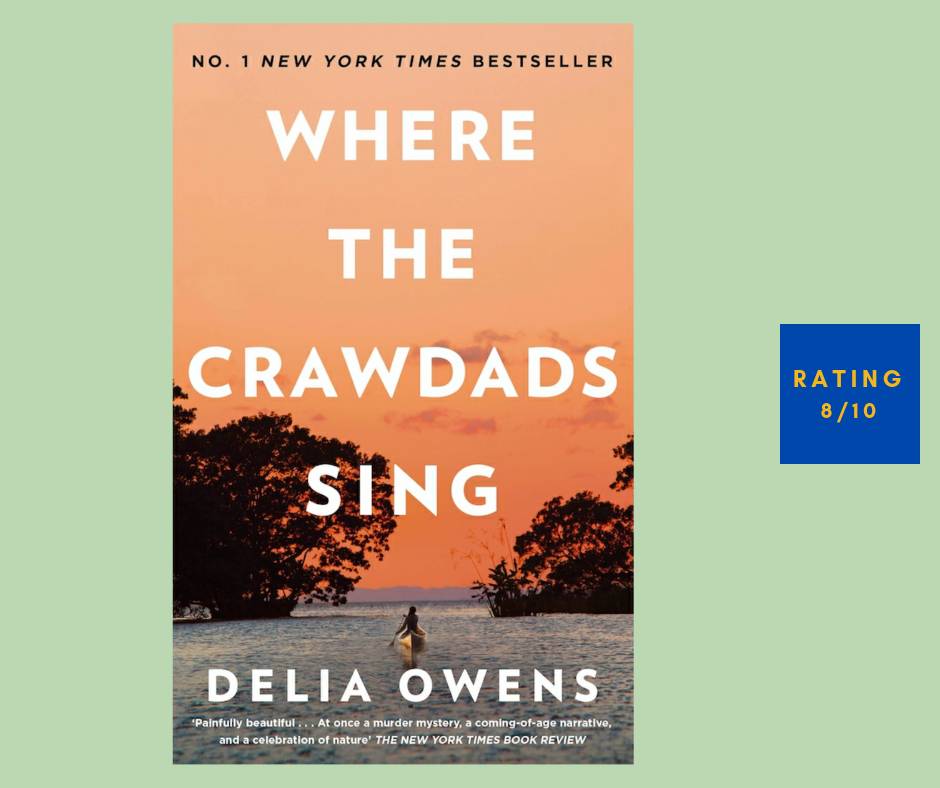
Where the Crawdads Sing by Delia Owens [8/10]
A killer opening scene on a white trash stretch of the North Carolina coast sets “Where the Crawdads Sing” on a chugging, rewarding trajectory through the life of Kya Clark, the local “Marsh Girl.” Delia Owens, a wildlife scientist with well-regarded nonfiction books to her credit, lifts this book up from the scrum of coming-of-age tales through her descriptions of the wild coastline and its birds and wildlife. Her descriptive prose sings in a decidedly traditional way. The story itself often creaks on the edge of predictability – think “Marsh Girl falls for two boys, one good, one bad” – but is always wonderfully rescued by the lush details of isolated Kya’s life and her network of occasional friends. And I was most delighted that the backbone plot of murder (maybe), investigation, and court room scene, works like a treat. Three quarters of the way through “Where the Crawdads Sing,” an echo of a much-loved book surfaced. Yes, I whispered, this is the new “To Kill a Mockingbird“! That realization helped me fall into easy sentimentality over the final, satisfying quarter of the book. Transcending itself, Delia Owens’ novel deserves a huge readership.
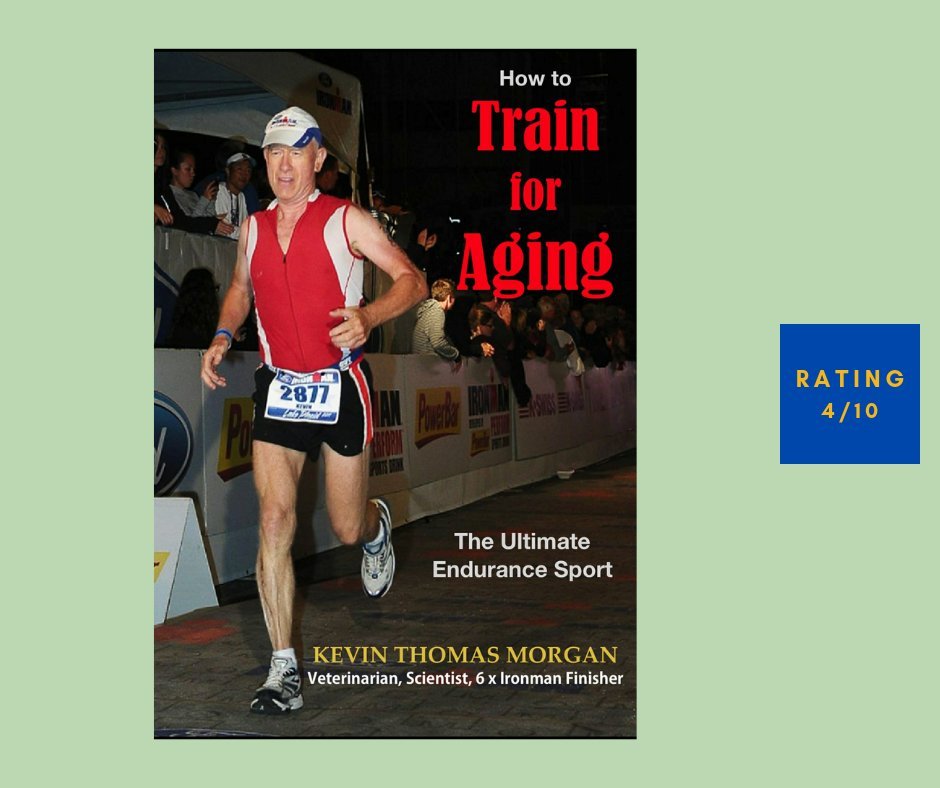
How to Train for Aging by Kevin Thomas Morgan [4/10]
I was drawn to “How to Train for Aging: The Ultimate Endurance Sport” by its relevance at my time of life, but in spite of good intentions, Kevin Thomas Morgan flails at his topic without persuading. A veterinarian (that is, with some rationality) who has had heart problems, he exhorts, preaches the concept of entropy, and in general encourages systematic physical activity (he does Ironman competitions) as the antidote to aging’s retrogressions. That much I knew from the book’s title, and the concept appeals to me, but I expected sagacity and rewarding tales from the front line. Instead the book offers a few relevant insights but exaggeratedly limps from cover to cover.
Ghosteen by Nick Cave & the Bad Seeds [9/10]
A lush, almost transcendental masterpiece from a genius, “Ghosteen” stood out from my 2019 year of half-hearted, wrong-track listening. At age 64, I hate reprising favorite artists or bands from my 30s (for that’s a feature of today’s music scene, all the oldies keep on giving) but for the life of me, cannot find highly affective, inspiring music from the younger generations. Nick Cave and his longstanding, morphing band, here lightly but potently employed, have crafted eleven keening, yearning songs about loss and seeking and reality and questing and raging (softly) and love … well, you get the picture that for me, each of these synth-and-chorus-soaked songs, some long, some shorter, builds inside me with great force. Every word carries portent and mystery. I can barely present highlights, so strong is each song, but listen to the soaring wordless chorus behind “Bright Horses,” or Cave’s lament or triumph on “Waiting for You,” or the whispering softness of the title track. Oh, why can’t more music move me like this?
Between Two Ferns: The Movie by Scott Aukerman [4/10]
A mockumentary extending a series about a hapless interviewer roasting celebrities, “Between Two Ferns: The Movie” doesn’t need to rope in a decent plot (it doesn’t) nor to exhibit any acting ability from star/creator Zach Galifianakis (it doesn’t), but it does need to generate regular belly laughs, and in this regard, the film almost works but fails. The film intelligently varies the settings by sending our dumb griller on a dumb road show, and the “star’s” back-up crew is solid (especially the gormless assistant portrayed well by Lauren Lapkus), but Scott Aukerman’s script and direction drift. Will Ferrell, as the manic producer, hams things up for no laughs at all. As for the star turns, scenes with Bruce Willis and Keanu Reeve are plain dull, and only deadpan, hilarious segments featuring Benedict Cumberbatch and Matthew McConaughey save “Between Two Ferns” from major torpor.