One of the recurring morsels of advice artfully provided by Sallie Tisdale, author and palliative nurse and Zen Buddhist, in her remarkable “Advice for Future Corpses (and Those Who Love Them): A Practical Perspective on Death and Dying,” is that when it comes to your death, “all the planning and support and advance directives in the world won’t give you control.” Time and time again she stresses that in this final journey, every individual makes herself anew. And yet, paradoxically, in this book she guides us through falling ill, falling mortally ill, dying, and, for survivors, grieving. Sometimes advice to a carer, sometimes wisdom for those about to die, a mix of tales and instructions and analyses, “Advice for Future Corpses” manages (at least for me it did) pierce the veil of blindness and disregard around death. She writes: “At the moment of death, a thousand tiny things happen. A fading, a flattening out.” And then, tenderly, she describes the body after death. Wonderful writing throughout. I appreciate this isn’t for anyone, but if being honest and being prepared are something you ascribe to, Sallie Tisdale is your beacon.
On Hope by Daisy Jeffrey [5/10]
Part of the On XXX series, “On Hope” is a pamphlet-length blast of vigor from Daisy Jeffrey, a core leader of the huge 2019 Australia Climate Strike rally (and its strikes). Unlike many of the On series, Jeffrey offers little stylistic complexity, instead we get an “in the moment” picture of a couple of years of feverish organizing amidst school work, culminating in a huge success. The very fact of this book, based on that event, gladdens the heart in these days of existential climate doom, but I also enjoyed her “fly on the wall” account of the hope-ridden but disappointing COP25 in Madrid. A useful and engaging chronicle.
The Mandelorian [7/10]
Set in the boondocks of the Star Wars universe, at a time that becomes established over the course of its eight episodes, “The Mandelorian” is a flagship Disney+ project that is immensely entertaining. The hero is The Mandelorian (actually one of a clan of such), a bounty hunter clad in dark shiny armour and bedecked with weapons. This is Shane meets Star Wars, and the early episodes, mostly standalone stories involving specific bounty targets, are the most satisfying. Pedro Pascal plays the lead role with a satisfying deep metallic voice. Only gradually does the overall arc of the plot, involving a baby creature, reveal itself, and how “The Mandelorian” meshes into the Star Wars story then emerges. The action scenes and the gritty flight scenes on varied planets are beautifully orchestrated. I savored the “slow plot” development of the Mandelorian’s character. All is not perfect. The old-style orchestral soundtrack, while consistent with the Star Wars music I recall (I’m a much lapsed ex-fan) is irritatingly shallow. And the more complicated plot over the second half of the series loses some momentum. But if you love the Western cowboy ethos on screen, “The Mandelorian” will delight.
Mixing Colours by Brian Eno / Roger Eno [7/10]
“Mixing Colours” is an additional chapter to the occasional joint works of Brian Eno, the more famous musician/producer, and ambient pianist Roger Eno. Comprising a double album of eighteen gentle medium-length tracks, it immediately strikes one as perfect for lockdown. Roger’s slow, melodic-but-ambient-and-almost-forgettable piano figures are mixed and treated by Brian to produce a sonically spaced-out feel that floats in the background. Played as background, tracks blend into one another with pleasing cohesiveness, the pallid tone offset by occasional striking almost-choruses. Played in the living room with a glass of wine, the album stimulates meditation. Not a single tune seems surplus. How does this add to Brian Eno’s foundational work on ambient music? I have to say I’m unsure, because by definition very little sticks in memory, but right now, in April 2020, “Mixing Colours” is, despite its glacial speed and sombre tone, just the uplifting mind music we need.
Undone by Raphael Bob-Waksberg & Kate Purdy [8/10]
The first noticeable aspect of the eight-part animated series “Undone” is its animation technique, somehow slightly “off” but capable of more emotion than Pixar’s perfection. It turns out this is “rotoscoping,” in which the actors perform their scenes and animators draw over them. All I can say is that it is stunning and grips ones attention. “Undone” is a science fiction tale of a disillusioned, possibly schizophrenic young woman who survives a terrible car crash and subsequently embarks on a quest to solve the mystery of her father’s death many years ago. And get this: her father now visits her in visions. The plot involves drama but also many small-scale subplots that combine into a most intriguing tale. Each short episode, around twenty minutes, works well, and the overall arc is gripping. Rosa Salazar stuns in the lead role and Bob Odenkirk does a star turn as the father. Who would have thought an animated sci-fi head trip movie would be one of 2019’s stronger offerings?
Have We Met by Destroyer [6/10]
Dan Bejar of Destroyer is one of the quirkiest, most intriguing indie rock artists making music. His thirteenth album in a quarter century, “Have We Met” is a kaleidoscope of electronic and guitars, smoothed out by strong bass beats, constructed around free-form abstract poetry. One of the last “I enunciate like Bowie” vocalists around, here Bejar’s lovely voice is often hushed, close to talking. The lyrics are impressionistic oddments that compel attention. The songs brood or swoop or fester, forming a whole that is equally at home on the car radio and in a candlelit living room. Occasional frittery is easily forgiven. Best tracks include the unusually dirty, funky, slow “Cue synthesiser”; the altogether different, ambient “The television music supervisor,” with its hushed voicing and wacko lyrics; and the moody, drifting, winding-up melodies in “The Raven,” which kicks off with lovely lyrics: “Just look at the world around, actually, don’t look.” If you’re not familiar with Destroyer, exercise some caution, but “Have We Met” is a fine, idiosyncratic introduction.
Our Final Warning by Mark Lynas [8/10]
When I read “Six Degrees,” Mark Lynas’s blistering warning, way back in the good old days of 2007, the experience scared the shit out of me. I needed that fright and since then I’ve strived to keep on top of our future in a globally warmed world by reading as much as I can in the popular, and sometimes scientific, press. Some brilliant works have ensued over the thirteen years since “Six Degrees,” but none of them had quite the same sensible framing. So Lynas’s complete remake of that classic, just released, “Our Final Warning: Six Degrees of Climate Emergency,” had to jump to the top of my reading pile. We are now in a one degree world, as Lynas opens the book with, and over the course of this sober, stunning book, he takes us through what the latest science says two degrees, three degrees, four degrees. five degrees, or even six degrees would look like, plus how soon or likely each of these outcomes looms. Lynas is a robustly fair analyst: in a couple of cases, the prognosis is slightly improved from 2007 but mostly matters are worse. “Our Final Warning” is brilliantly organized and the writing is clear and elegant. If you read one global warming book in 2020, this should be it. As for me, I’m more than shit scared now, I’m bereft. Unless we act, I’ll see in two degrees in a decade-plus and maybe three degrees before I die; my grandchildren face four degrees and human civilization under threat.
Planet of the Humans by Jeff Gibbs [1/10]
The Michael Moore documentaries were always as disheveled as he is but at least in the early days they aimed at targets easy to hit, requiring little work. Over time they’ve grown even more cheap and nasty. This one isn’t even narrated by Moore but by director/writer Jeff Gibbs, and he is a surly non-raconteur. “Planet of the Humans” shows no coherent plotline but flails at modern environmentalism, which Gibbs believes has been corrupted. The movie concludes portentously at nihilism backed by population control. The renewable energy sector can roll with the punches here, chiefly because Gibbs offers up tawdry images and false facts seemingly taken from the playbook of the fossil fuel industry (although biomass may well be a legitimate target, from my state of knowledge). But the chief problem with “Planet of the Humans” is not the content, risible though much of it may be, the chief problem is an unintelligent lack of narrative coherence or drive. Most scenes are trivially boring and the constant lurches between “on the spot subversive reporting” and lurid, pointless imagery is exhausting. If this isn’t the worst movie I watch in 2020, I don’t know what will be.
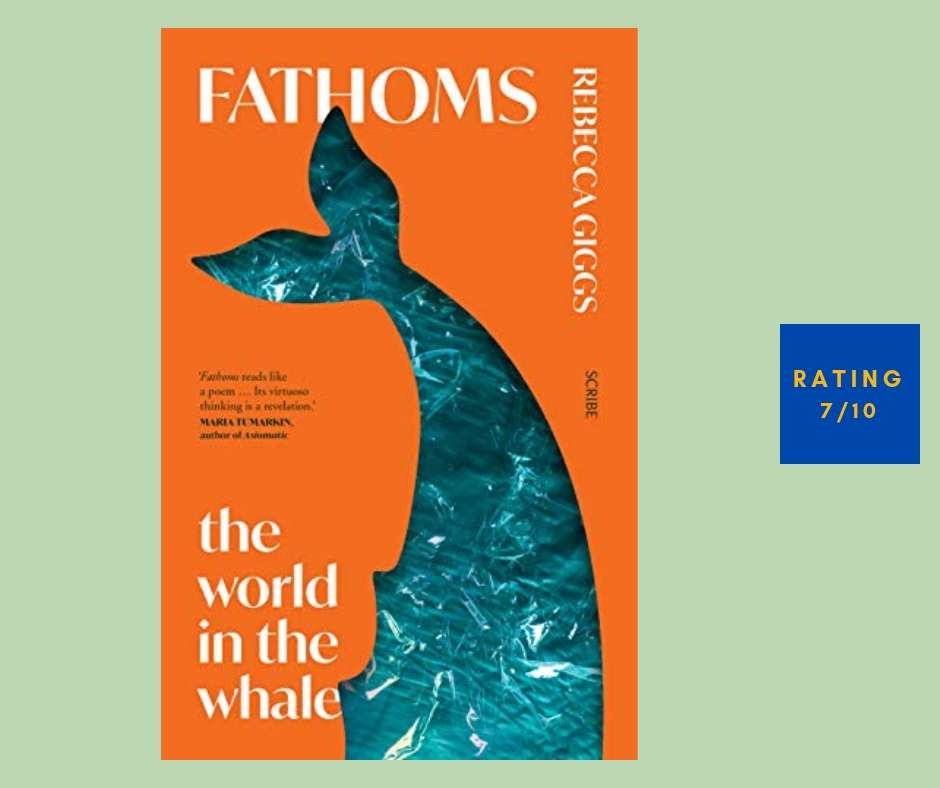
Fathoms by Rebecca Giggs [7/10]
At once an encyclopedic tour de force about all things to do with whales and whaling, and a lyrical exploration of humans and other species on the brink of the next great extinction, “Fathoms: The World in the Whale” is a blessing. An immersive, beautifully written mix of academic exploration, philosophical musings, and research memoir, it is a right book for a right time. Australian author Rebecca Giggs covers every aspect of whales fully (sometimes, it must be said, too exhaustively for this simple soul). A number of times, I gasped at unexpected knowledge revealed or fresh insights gained. “Fathoms” is recommended for anyone with the slightest fascination with nature and our environment.
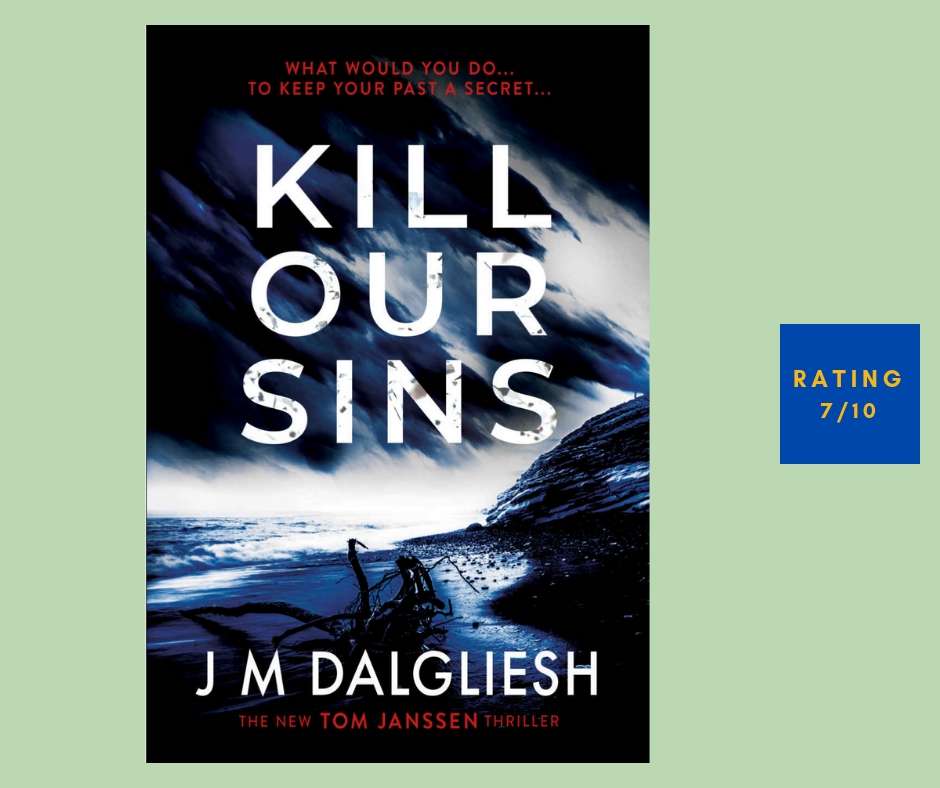
Kill Our Sins by J M Dalgliesh [7/10]
The third DI Tom Janssen mystery to be released in just over half a year, “Kill Our Sins” is another solid slab of entertainment perfect for lockdown times. When fisherman retrieve a badly mutilated female body off the Norfolk Coast, Jannsen, the stolid, relentlessly analytical homicide detective, aided by his offsider and by his boss Tamara, sets out to plumb the past and put justice to rights. All clues point to long-ago school friends but the plot is murky enough to almost derail Janssen. As ever, Dalgliesh keeps up a steady clip and the plot bucks and twists. Norfolk is a wonderful backdrop. A fine, complex read.