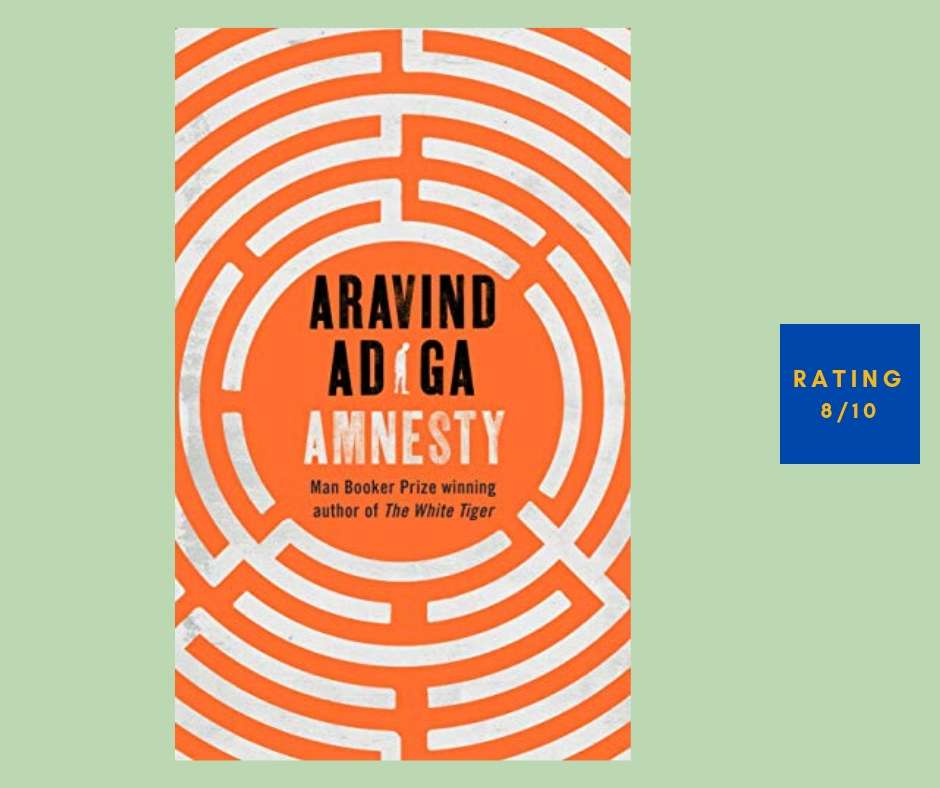
Amnesty by Avarind Adiga [8/10]

Avarind Adiga Amnesty review

Avarind Adiga, 2008 Booker Prize winner (for “The Tiger“) is, in my considered opinion, one of the most immersive, brilliant stylists alive. “Amnesty,” his fifth novel, mashes us, within the opening page, into the mind of an illegal Sri Lankan immigrant working as a cleaner in Sydney, a young, earnest man on the cusp of a solid existence after three years of anxiety. When a cleaning client is murdered, Danny realizes who the killer is and must choose between justice for the dead and his own deportation. Told over one breathless day, a plotting triumph that weaves Danny’s past into a thriller ripped from the headlines, the novel broadcasts the fraught, ridiculous sub-world of the illegal, a person without status, almost without existence. Not many novels can entertain superbly (a one-sitting reading this is, I guarantee) while speaking to our modern world, while bringing us into the mind and heart of a person irretrievably split between duty and self-fear. “Amnesty” is one of the finest novels of 2020 so far.

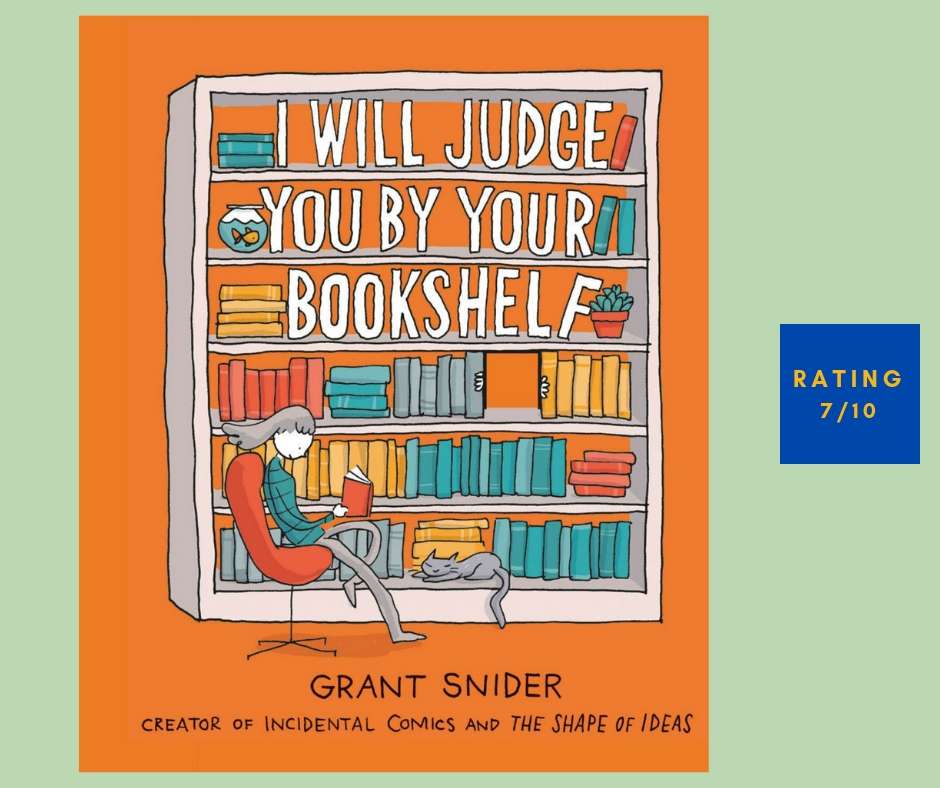
I Will Judge You By Your Bookshelf by Grant Snider [7/10]

Grant Snider I Will Judge You by Your Bookshelf review

Grant Snider stands apart, an illustrator with a distinctive, flowing eclectic style that ranges across colors and moods, an inventive mind, and wisdom crossed with laugh-out-loud humor. “I Will Judge You By Your Bookshelf” covers books and writing and everything in between, in a series of one-page and two-page comic strips that captivated and entertained me. His work invokes the senses and engages the mind. In lockdown, those of us who love books and/or write should be in our natural habitat, but a pandemic preys on the sensibilities of creatives, and they suffer. I can think of no better antidote to lockdown blues than a steady sampling of the wondrous comics in this Grant Snider collection. A must for all the geeks of humanity.

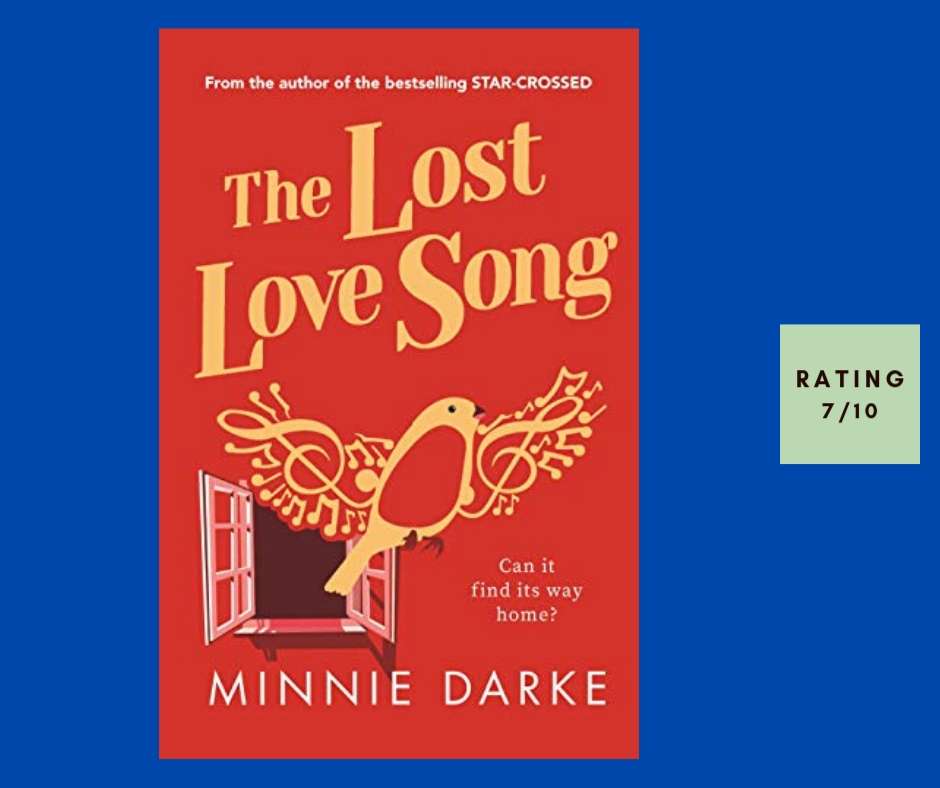
The Lost Love Song by Minnie Darke [7/10]

Minnie Drake The Lost Love Song review

In lockdown, I sought elegant romantic fluff and in “The Lost Love Song,” by Tasmanian author Minnie Darke, I stumbled on just what I needed. The novel’s plot conceit is revealed in its title: a famous pianist composes a love song that then begins a life independent of her, across oceans and cultures and times. If that sounds twee, the author transcends the genre through strong writing with a robust authorial voice, through a revolving set of vibrant characters, and through a plot that might seem destined for a romantic climax but twists and turns. This is delectable writing to be devoured in one lockdown-conquering sitting.

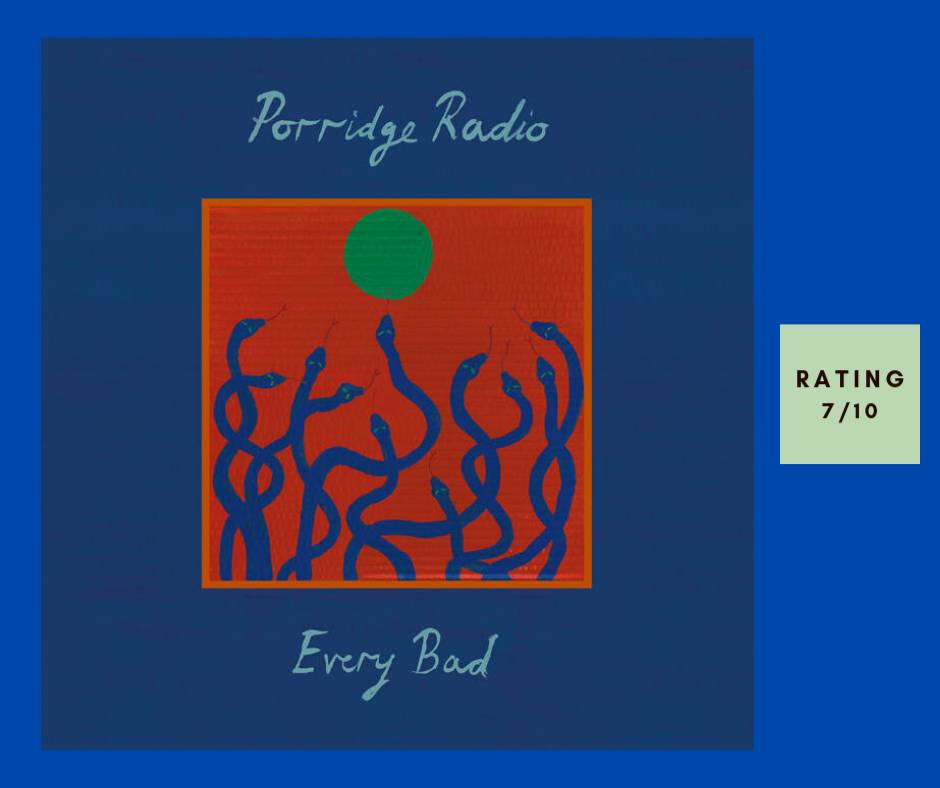
Every Bad by Porridge Radio [7/10]

Porridge Every Bad review

The superb, emotion-ridden, classic rock voice of Dana Margolin, the singer of Brighton quartet Porridge Radio, underpins the ragged, intelligent beauty of their second release, “Every Bad.” Whether crooning raggedly or revving up to a scream, her performance is a tour de force, but there is more to the band than her. All eleven songs marry tumbled personal lyrics, often repeated as melodic incantations, with savvy arrangements built around crunchy riffs and buttressed with keys. “Every Bad” sounds at once typically British and fresh as revolution. Call it indie, call it semi-punk, call it Costello-like pop, call it what you will, this is a gorgeous romp that enlivened Coronavirus lockdown, and I heartily recommend it. If you need tracks to check out, go for Margolin shrieking “you’re wasting my time” on “Long,” a song that builds and then cools; the thumping aching pop of “Give/Take”; and “Lilac,” a lovely scuzzy torch song.

The Capture by Ben Chanan [7/10]

The Capture review

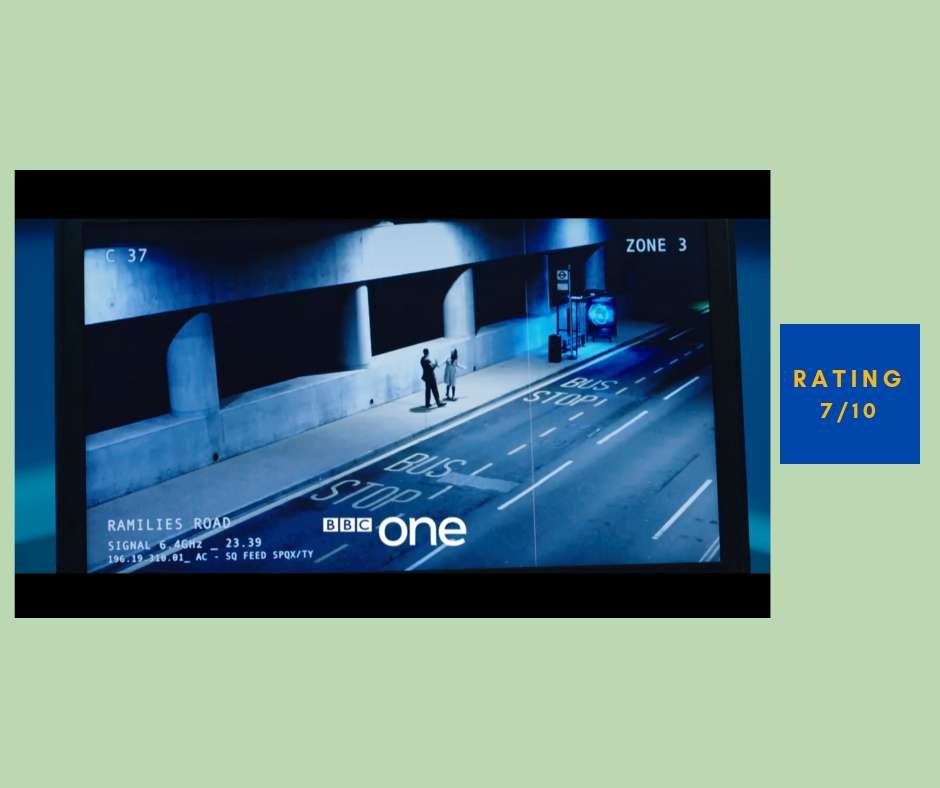
For some reason the British excel at conspiracy thrillers and “The Capture,” a six-part series written and directed by Ben Chasan, is as devious and troubling as any. When a British soldier (played convincingly by Callum Turner), recently released from prison after a sensational trial, finds himself framed for a kidnapping that plays out on CCTV footage, an ambitious, smart policewoman (a terrific performance from Holliday Grainger) sets out to track him down, only to discover all is not as it seems. I found the second episode flat but from then on, the plot roars with twists of flamboyant outrageousness. Like the darkest thrillers of the 1970s and 1980s, the murky reality is revealed, time and time again, to mask further complexity and horror. For a plot-driven movie, the directing and cinematography are razor sharp, and all the supporting actors never put a foot wrong. “The Capture” might not, in the end, have you worried about the world (the plot is way over the top) but it captures a paranoid mood we all sense today. You will definitely ache to binge this one.

Unleashing the Artist Within by Eric Maisel [8/10]

Eric Maisel Unleashing the Artist Within review

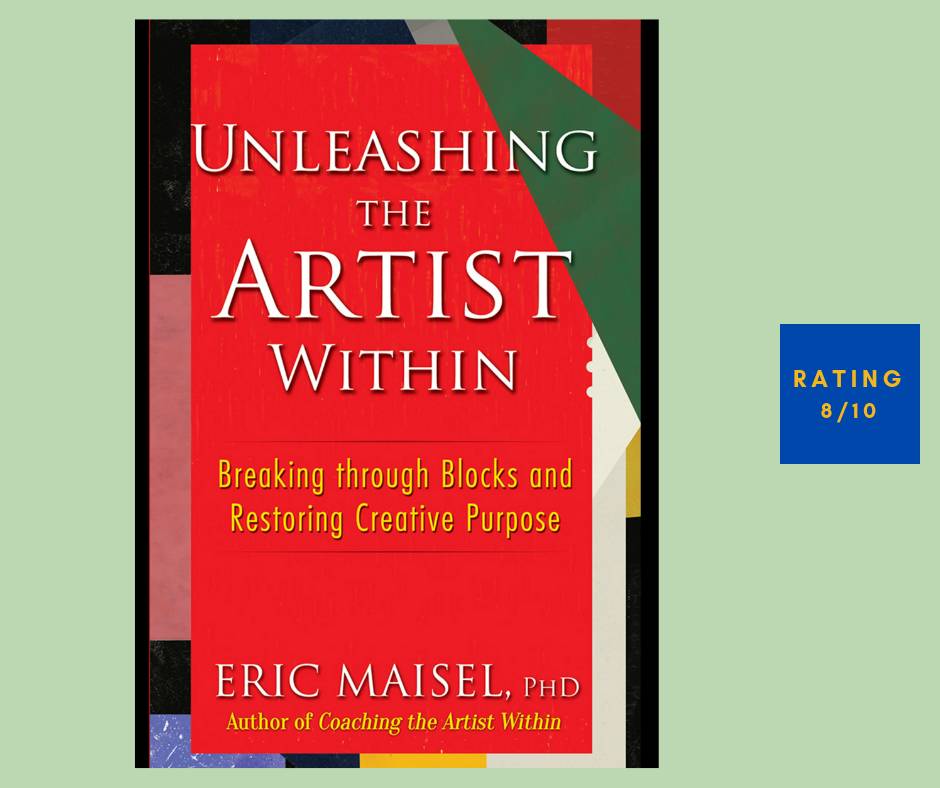
Eric Maisel has saved my life many times over. His stunning portfolio of philosophical and creativity references and how-to books has not only kept me writing against any sensible odds but has ended up underpinning my very life system. I know there is a river of creativity self-help books out there, and can tell you from bitter experience that most add little, but “Unleashing the Artist Within: Breaking through Blocks and Restoring Creative Purpose” is the real deal. A sequel to 2005’s brilliant “Coaching the Artist Within,” Maisel’s best book in years addresses a dozen key challenges faced by working artists, writers, and musicians (indeed any creative types including businesspeople, etc.). Most chapters are informed by telling vignettes from Maisel’s creativity coaching clients. The opening “lesson” addresses the heartland topic of how to sink into the reality of the daunting nature of creativity, the second lesson tackles the daily grind issue, the third exhorts passion (he calls it hunger) and offers ways to inculcate it, and so on. I found “Recovering from dashed hopes” to be most potent. A chapter on honoring and guarding one’s creative workspace is a gem. Essential, that’s what “Unleashing the Artist Within” is.

Agency by William Gibson [8/10]

William Gibson Agency review

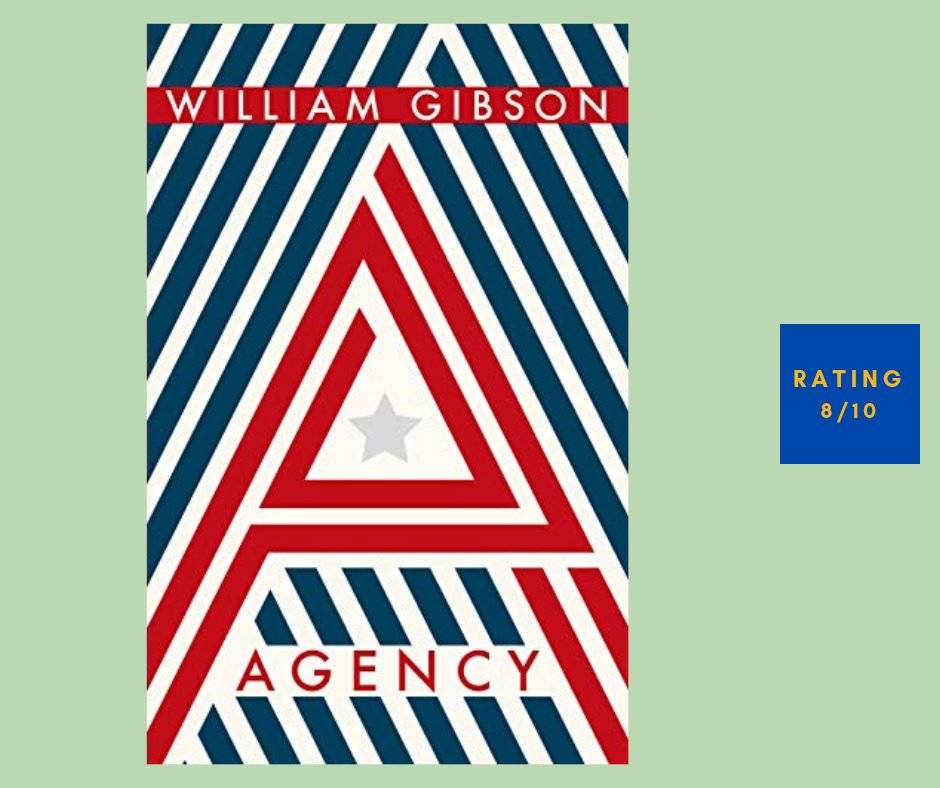
No one but no one writes what William Gibson writes, nor writes how he writes. From the “Neuromancer” days, three and a half decades ago, we’ve been blessed with enigmatic, fast-paced science fiction (and sometimes almost not sci-fi) that vibrates with post-ironic intelligence. “Agency” follows 2014’s “Peripheral” in a universe where remnant oligarchs fiddle around divergent time-travel strands in the past, like Zeus’s menagerie of Gods. In the roaring opening pages of “Agency,” in a present-day America in which Trump didn’t win, our hero Verity, an app tester (of course) takes on a spunky new AI, Eunice by name, who struggles to understand herself even as the machinations of present and future battle over her. Gibson is a punctilious stylist who peppers his worlds with objects and settings almost, but not quite, normal, and he’s a super choreographer of his careening plots. Dialogue dominates even the most James-Bond-like scene, and the dialogue is waspish and beautiful to read. “Agency” is a monster of a read that may well be heralded as one of Gibson’s classics.

Right After the Weather by Carol Anshaw [6/10]

Carol Anshaw Right After the Weather review

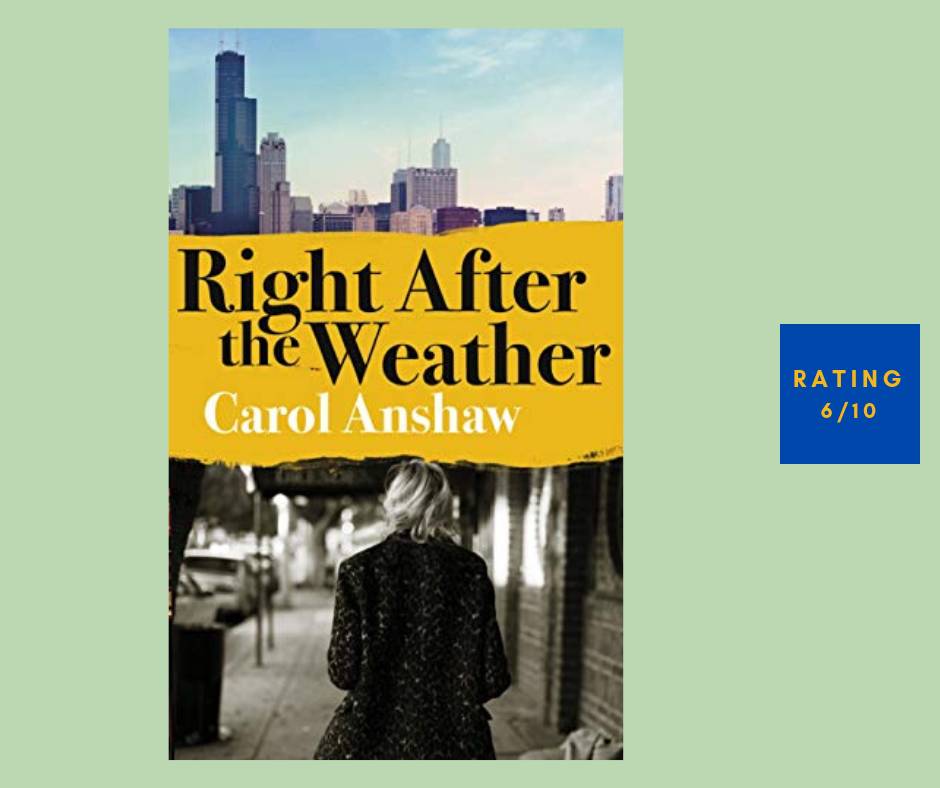
A swirling novel about a Chicago stage designer thrust into violence, “Right After the Weather” is literary fiction at its densest. Around Cate revolves a kaleidoscopic cast of dramatic characters who bounce off each other like billiard balls. Inner Chicago, in all its messy beauty, is brought gloriously to life. And in the background lurks seedy, capricious evil. Carol Anshaw’s pen is wonderfully streaming and a coruscating sense of humor pervades. I enjoyed “Right After the Weather” immensely, even when the plot lost traction as the novel inched towards an ambiguous climax. An author to watch.

The Story of More by Hope Jahren [7/10]

Hope Jahren The Story of More review

With her debut “Lab Girl,” Hope Jahren signalled the entry of a new master of science writing, someone able to distil complexity into eloquent, comprehensible story. In “The Story of More: How We Got to Climate Change and Where to Go from Here,” Jahren, a geobiologist by trade, narrates a class she regularly gives on climate change. As a primer, and indeed even for those well read on the subject, the book is superb, nineteen short chapters bundling up a vast amount of data into coherent morsels. Jahren has the scientist’s (indeed, dare I say it, the mathematician’s) gift of isolating what to sum up. Mostly here, her emphasis is on the “more” of the title, humanity’s vastly expanded earthly footprint over the past half century or so. After tackling where we are, she covers food and wastage, and then energy, and then the core of global warming, including brilliant chapters on rising sea levels and species’ extinctions. Unsurprisingly perhaps, the only area I found myself disagreeing with was how to reduce emissions from energy production, which is political as much as scientific. And a concluding appendix, “The Story of Less,” includes a section on personally reducing emissions that is at once necessary and heartfelt, but also naïve (a familiar distraction from political action on climate change is to assert the individual’s role). “The Story of More” concludes with an invigorating section on data sources for all the issues covered. Jahren is a beguiling stylist and a terrific organizer of ideas. All up, this is a vital book for our times.

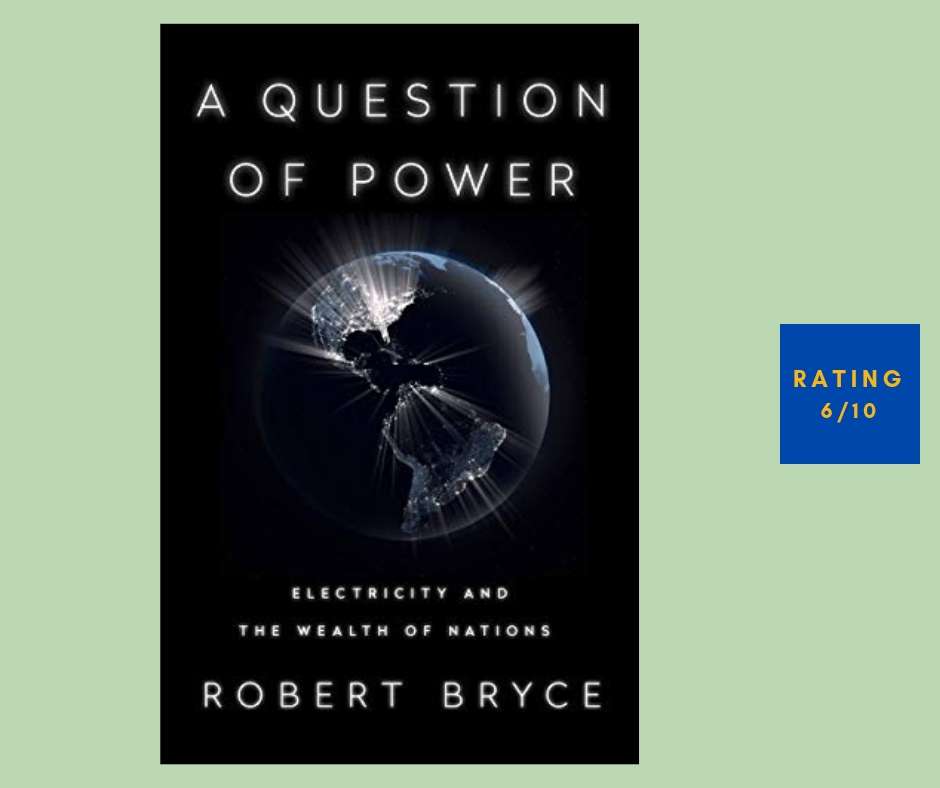
A Question of Power by Robert Bryce [6/10]

Robert Bryce A Question of Power review

We all sense the importance of electricity in our lives and in humanity’s future, and “A Question of Power: Electricity and the Wealth of Nations,” by journalist Robert Bryce, is an exuberant, stylish paean to what he labels “the juice.” The best of this readable polemic is several first-hand accounts of electricity’s vital importance and the problems of electricity failure. A particularly enjoyable chapter digs into the incredible electricity needs of the new tech giants such as Google and Facebook. Bryce is an unashamed champion of the doubling of global electricity over the next two decades, not just for us developed nations but for the sake of the poor of the world, and it’s easy to get swept up in his polished prose. “A Question of Power” is a virile expression of a point of view that seems oddly old-fashioned in the new era of global warming urgency, and Bryce’s “N2N” philosophy – of moving to natural gas then nuclear – is a well-trodden playbook that is rehashed without much life. But even if you feel his unalarmed policy prescriptions miss the point – as I do – there is much to relish in this romp through the Juice.