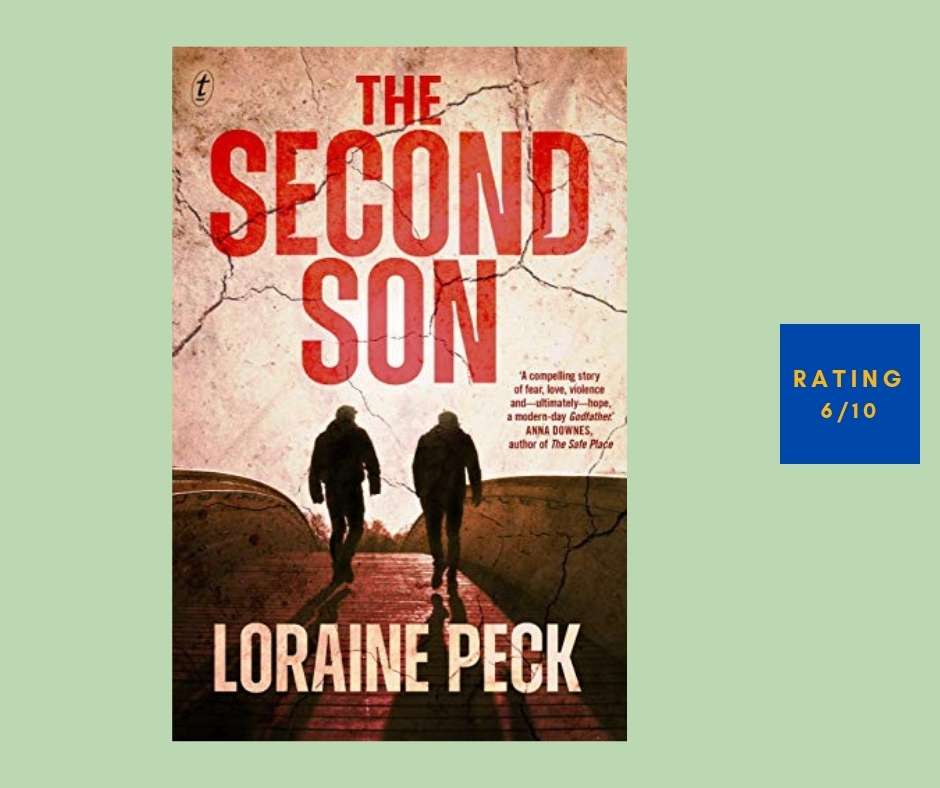
The Second Son by Loraine Peck [6/10]
Loraine Peck The Second Son review

A debut by Sydney novelist Loraine Peck, “The Second Son” is a thriller set in a gangster world, in this case the turf of a Croat gang in the Sydney suburb of Liverpool. Headed by brutal Ivan Novak, the gang is rocked by the gunning down of number one son, Ivan. The Second Son is the fraught story of Johnny, Ivan’s younger brother, always in the shadow of Ivan, and Johnny’s wife Amy, desperate to get the two of them and their child away from the violence. When Johnny is tasked with extracting revenge, a twisty, violent gang narrative unfolds. The author controls the pacing of the plot well, although the 400-plus pages, breathlessly told through present tense dialogue and inner thoughts, dissipate any strong sense of noir dread. Written in a straightforward storytelling mode, with little room for flourishes, I found myself absorbed and entertained without being riveted or, strangely enough, shocked by the capricious violence.

Whole New Mess by Angel Olsen [9/10]

Angel Olsen Whole New Mess review

Whole New Mess” is essentially the set of demos underlying All Mirrors, that revved-up, souped-up tilt at grandiosity that succeeded splendidly. All Mirrors was a triumphant song-cycle, I thought at the time, so would Whole New Mess, released less than a year later, pale by contrast? Not at all, it turns out. The nine progenitor songs, featuring her swoon-worthy, soaring voice (the voice I first fell in love with) and accompanied by scratchy or reverb guitar with occasional organ thrown in, almost feel like different compositions. The rawness elicits the underlying harshness of her lyrics, while her voice beckons rather than rouses. “What It Is (What It Is)” feels doubly powerful compared with the band-backed storm version. The woozy, guitar-up-at-mike version of “(New Love) Cassette” is a stunner, while “(We Are All Mirrors)”, which became the torchy title track of last year’s release, conjures up images of Olsen enfolding the world with her voice-and-guitar genius. There are two tracks new to us, and the title track, “Whole New Mess,” is a career highlight, a broken, emotive plea. Overall, I rate Whole New Mess even more a wonderment than its cultured spawn. Brilliant and beautiful.

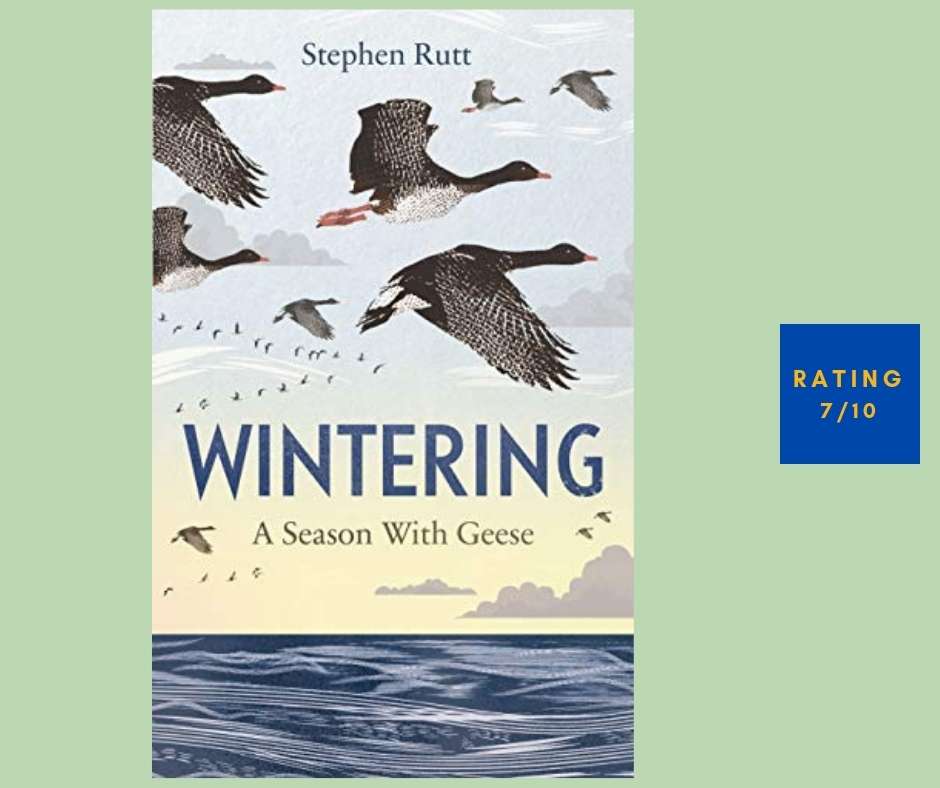
Wintering by Stephen Rutt [7/10]

Stephen Rutt Wintering review

Among birders, I’m surely not alone in barely noticing geese. I sound them out—”honk honk”—to my grandchildren but in parks all I do is register their existence as a tick on the day’s bird count. Stephen Rutt began observing Pink-footed Geese as migratory arrivals in Dumfries, Scotland, when he moved there, and that sparked a winter season of paying close attention to that species and five others. “Wintering: A Season with Geese,” a slim volume, is the result and it’s a lyrical pleasure in a minor key. Rutt is a melancholy, interested observer and his prose celebrates the existence of geese in British skies and bird reserves, at the same time delving into their characteristics and Anthropocene era prospects. From Scotland he ventures back south to conscript his father into goose searches; I enjoyed their relaxed camaraderie. A palette of greys and murk, days of rain and mist, interesting histories and facts … he brings all six species to life. All in all, Wintering is a dose of mentorship in close observance of birding nature, and a welcome dose at that.

Before I Saw You by Emily Houghton [6/10]

Emily Houghton Before I Saw You review

Before I Saw You,” in the YA genre, offers a softly glowing, quite predictable, but tender tale of hardship and love. Alfie, who lost a leg in a car accident, finds himself engrossed with traumatized Alice, a burn victim who is horribly disfigured. Of the two central characters, yakking, action-oriented Alfie rings truer, while shrinking Alice could have been gingered up more. The hospital setting, our main locale for most of the book, is well portrayed insofar as the patients and doctors and nurses are concerned, but again, I found myself wishing for a bit more truthfulness about the bludgeoning depressiveness of modern medicine. The author unwinds the narrative with a sure hand, dialogue (especially Alfie’s) adds flavor, and the ending, if soppy-inevitable, crashes through with a bang. Overall, a diverting read.

Mirrored Aztec by Guided By Voices [6/10]

Guided By Voices Mirrored Aztec review

I sigh whenever I spot another album from Robert Pollard, solo or from his multitudinous bands. Should I listen or should I shrug? It’s impossible to keep up and in any case, listening to them all debases the better ones. A new release from the classic GBV, though, that has to be grabbed and savored. What then of “Mirrored Aztec“? Eighteen of-the-moment, lasting-only-a-moment riffy delights, amazingly upbeat for a band so prolific (this is Number 31!). My feet tapped and on the second track, all of two minutes, “Bunco Man,” I punched an arm in the air, just as I did all those years ago when Guided By Voices made a rare excursion to Australia. “To Keep An Area” is a plodding, strummed song that only Pollard could write and sing. An oddly tuned guitar signature launches “Thank You Jane,” a glorious confection (three minutes long, a rarity). “Haircut Sphinx” lurches and groans as if 1969 were next year. You get the picture … Mirrored Aztec is a gorgeous splurge of music love. And did I mention the fabulous psychedelic album cover? Recommended.

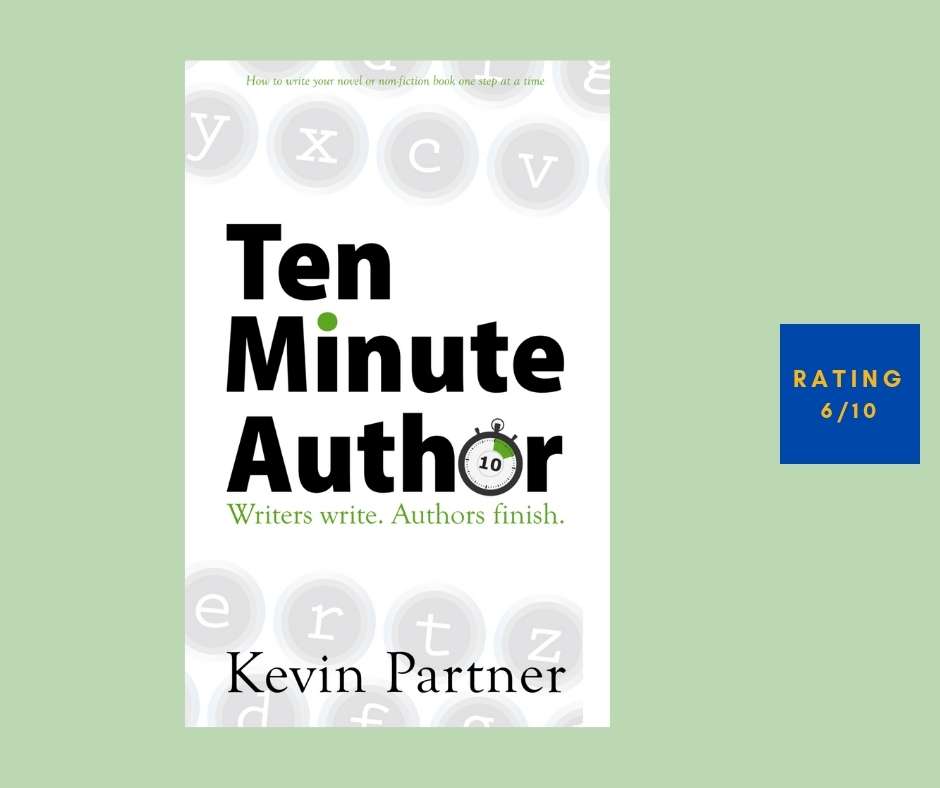
Ten Minute Author by Kevin Partner [6/10]

Kevin Partner Ten Minute Author review

For authors only, but any author, newbie or tyro, should zip through Kevin Partner’s “Ten Minute Author: Writers write. Authors Finish. How to Write Your Novel or Non-fiction Book One Step at a Time” for a shot of motivational education. The book presents a simple, almost ridiculously simple, precept that can fire up a regular writing habit, which, as Partner rightfully proposes, is the key to writing improvement and writing success. But it’s not the idea itself that powers this book, for successful authors have been trumpeting “bum glue” for years. The book’s strength is its author’s robust, engaging, cozy style. Even the most skeptical curmudgeon would find Partner persuasive, at least to the point of giving the notion twenty-eight days’ trial as recommended. Kevin Partner has the runs on the board, he’s like your best friend giving you the writing skinny in a pub, and you, yes you, should listen to him! Ten Minute Author indeed.

The Last Berliner by Gregor Erier [8/10]

The Last Berliner review

The Last Berliner” is such a brilliant breath of air, a seemingly uncomplicated siege thriller that offers layers of plot and characterization, a dazzling display. Sebastian Achilles is brilliant as Tobias, an electrician coping with his father, about to be evicted because of slumlord reclamation and redevelopment. What begins as a classic thriller buildup deepens immeasurably with the injection into the siege scene of a policewoman and a sleazy developer (great acting performances here), and the buildup of negotiations is wonderfully conveyed. And then a bravura climactic scene blows the viewer away! Unpretentious, but very intelligent, The Last Berliner is a minor triumph that deserves wider recognition.

Down in the Weeds, Where the World Once Was by Bright Eyes [9/10]

Bright Eyes Down in the Weeds Where the World Once Was review

Down in the Weeds, Where the World Once Was” is the tenth album, and the first in nine years, of Bright Eyes, the flagship band of genius songwriter Conor Oberst. Anything Oberst puts out is wondrous but Bright Eyes teams him up with a solid group of musicians and songwriters, and Oberst’s Bright Eyes presents him at his most expansive and ornate. Take the stripped-down tremulous outpourings of a bard and add Queen-spirit adventurousness of arrangements and weirdness … well, it’s a triumph. Oberst’s vision and yearnings have not abated a whit, and every one of this capacious album’s fourteen tracks sparkles with inventiveness, talent, and invention. Lyrically, as ever, Oberst marries personal concerns, in this case a break-up and a family death, to the vast and apocalyptical. Every song, even those that flirt with harshness or weirdness, contains a kernel of indie melody. I find it hard to pluck out highlights from this cohesive album, in the old vernacular, but the hairs stood up on the back of my neck when, during the swoony “One and Done,” which seems to be about wedding memories, Oberst keens: “Around here we’ve been wondering what tomorrow’s going to sing / On the final field recording from the loud Anthropocene.” Folks, if you wish to see non-mainstream music, sadly still much overlooked, at its most profound, snap up Down in the Weeds, Where the World Once Was.

Our Two Skins by Gordi [6/10]

Gordi Our Two Skins review

Australian folk/pop/rock/whatever artist, Sophie Payten, AKA Gordi, unleashes emotionally on “Our Two Skins,” her second. Standout track “Aeroplane bathroom” is as spare and airy as can be, while “Unready” and “Sandwiches” rattle with pop-rock rhythms out of Sinead O’Connor’s playbook, but those three tracks and the other eight sink deep inside the listener with emotional heft. Beautifully produced by Zach Hanson and Chris Messina, using space and echoes that feature Payten’s swaying ethereal voice, the album roams over joy and anxiety and meaning. The closing minute of “Volcanic,” a tinkling, accelerating piano figure overlain by an urgent chorus, is another highlight. Lovely music, real lyrics, what more could one yearn for?

The Apocalypse Factory by Steve Olson [8/10]

Steve Olson The Apocalypse Factory review

The tale of Hanford’s success with plutonium manufacture over the decades for the Nagasaki nuke and then onwards for a generation of atomic and hydrogen bombs, “The Apocalypse Factory: Plutonium and the Making of the Atomic Age” is a retelling, but a fresh and vital one. So many of the Manhattan Project and Cold War accounts are too complex, too technical, or too biased. Steve Olson, who hails from the east of Washington State, where the vast plutonium factory sprang up, offers an everyperson account that manages to be both accurate and accessible, both sympathetic (often awestruck) and sad. His unique, and most apt, take on the nuclear weapons enterprise is through the chemistry of plutonium: its discovery, mastery, and production. Olson is a cogent, entertaining writer, and he maintains a steady narrative pace. The Apocalypse Factory celebrates and bemoans a chapter of human achievement, and it comes highly recommended.