Swallowing the Sun by Steve Robinson [8/10]

Steve Robinson Swallowing the Sun review

The homespun 60s-ish cover of “Swallowing the Sun” promises folk-rock and gentle melodies, and Steve Robinson, an English folkie who has spent two decades in a US band (The Headlights) and touring with Roger McGuinn, delivers on those promises. On his aptly named Sunshine Drenchy Records, he delivers eleven ear worms of folk-rock or folk-pop , all of them instant lockdown companions. Dave Gregory, one of my heroes from XTC, adds stunning guitar on two songs, especially impressive on “Needle in the Red,” a lustrous song of despair. So many blessed associations whizzed around my sonic mind as I basked in this stellar album—Wesley Stace, late-season Jayhawks, Elliott Smith, even the Microphones—all of them smart yet eschewing fat production. Highlights include the deliriously joyful “Dizzy Love Song,” sun drenched indeed; the Beatleesque “Mr Empty Head”; and “Milk and a Dash,” straight out of my 1960s and with a memorable chorus of “memories make us, then they take us down.” Swallowing the Sun seems certain to register in my top albums of 2021.

Outside the Wire [6/10]

Outside the Wire review

Another week, another robot soldier military sci-fi thriller. Set in a near-future somewhere in Ukraine, “Outside the Wire” posits a disgraced drone pilot being mysteriously teamed up with an android officer on a quest to quash nuclear Armageddon. The two leads are handsomely and authoritatively played by Damson Idris and Anthony Mackie respectively, with most of the bit players just plot fodder. Cracking action scenes are a strong feature of the film and the brooding wasteland ambience is well captured. Individual scenes, especially the tense interplay between the two heroes, are well written and directed. At one level, one can surrender to a ho-hum action movie, but the intriguing storyline begs for more skill. Unfortunately, not only is the setup of Outside the Wire cursed by silliness, a sequence of plot twists, clearly intended to be dramatic and unexpected, leaves one shaking one’s head with incredulity. Overall, acceptable entertainment that might have shone.

Whoosh! by Deep Purple [6/10]

Deep Purple Whoosh review

Whoosh!” is a whoosh indeed, a synthesis by a revered band in their 70s of a musical genre they helped invent. It’s always been tempting to equate Deep Purple with Ian Gillan, the Purple vocalist with the screamingest, purest, most expressive voice of them all, and on this, their 21st album, he is in classic (if no longer screamy) form. But really, the heart of the band is the drum/bass combo of Ian Paice and Roger Glover, and they pound out thirteen varied yet unmistakable heavy metal/psych/boogie songs. Throw in eclectic keyboardist Don Airey and super guitar noodler Steve Morse, and you find that every track, even the more stock standard tunes, jumps out of the gate and delivers. They sound just like the show I went to in Festival Hall in Melbourne in the early 70s and while that seems ossified, it is also a source of comfort. Standout tracks are the chugging, raging “The Long Way Round”; the band interplay, straight out of the 1960s, and the easy majesty of Gillan’s vocals on “Nothing at All”; and the echoes of Gillan’s vocal harshness on his attack on politicians, “No Need to Shout.” Whoosh! is not for you, young music fan, but it’s plenty solid and fine.

How to Blow Up a Pipeline by Andreas Malm [7/10]

Andreas Malm How to Blow up a Pipeline review

Andreas Malm lectures in human ecology and is a climate activist, with a few books under his belt. “How to Blow Up a Pipeline: Learning to Fight in a World on Fire” is his eloquent polemic in favor of taking the step from nonviolent direct action, as practised by me and other Extinction Rebellion members, to some forms of violence. This is a hugely important topic, or at least it is for those keening to bring humanity into line with emissions halts. Malm’s carefully unfurled argument points out that NVDA, and all the other forms of peaceful protest, have barely shifted human behavior. His argument is that the arguments in favor of nonviolence are not only unsupported by history but are inadequate in the face of the damage being done to the world and our future generations. He is occasionally savage about XR, though, to be fair, he also extols some of its activities. He shies away from violence to other people but argues for a “radical flank” alongside the mass nonviolent movement, a flank that, for example, blows up the pipelines of the book’s title. Malm writes well and How to Blow Up a Pipeline makes for sobering reading. If you’re wondering what on earth to do about global warming, this book might provide fodder for thinking, regardless of which way your mind and heart go. As a lifelong pacifist, nonviolence sits comfortably on my shoulders, but I’m pleased to have read a bracing, up-to-the-minute critique.

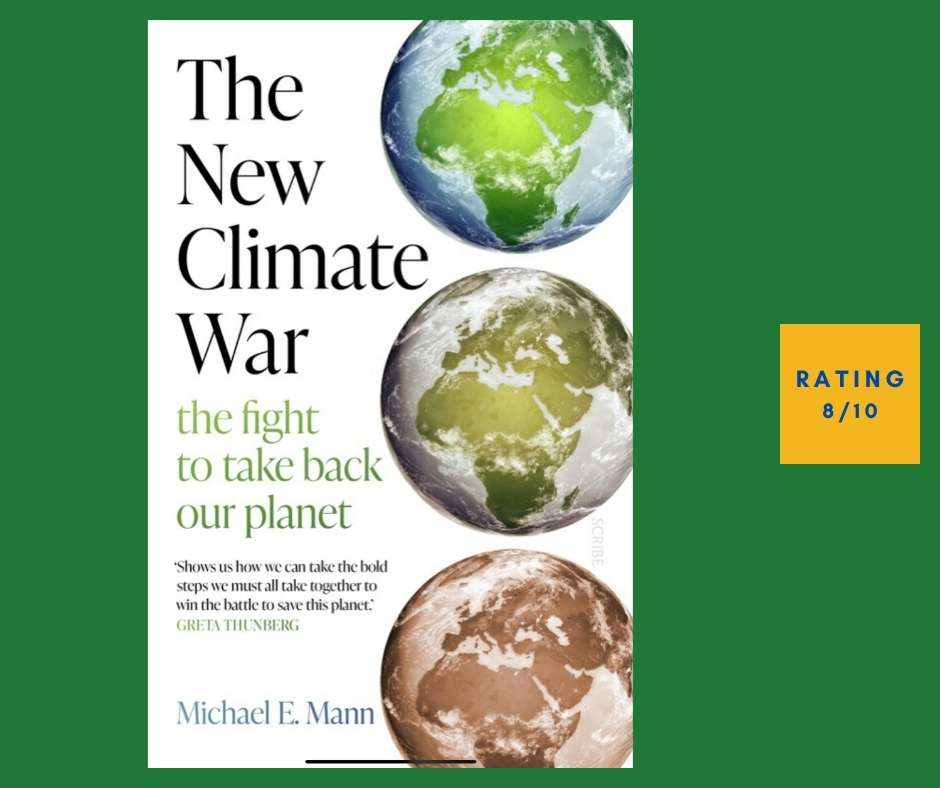
The New Climate War by Michael E. Mann [8/10]

Michael E Mann The New Climate War review

Michael Mann is a role model for top-flight scientists who also engage with policies and politics. Co-inventor of the vivid “hockey stick” demonstrating, years ago, the climate crisis’s signature on our planet, he went through a trial by fire when fossil-fuel-funded outlaws drummed up fake allegations against him, leading to years of battles. He has written a few expository books on climate change, now with “The New Climate War: The Fight to Take Back Our Planet,” he addresses our primary initial challenge on the mitigation front: how to force a hundred-plus huge companies to leave coal, gas, and oil in the ground, in a genuine war against propaganda that has, he claims, grown more sophisticated since the straight-out denial days. Writing with his usual clarity, zest, and bursts of humor, Mann clearly lays out the newer inactivist strategies of downplaying, deflecting, delaying and doom-declaring, all designed to minimize the actual global changes required. I’ve noticed all these strategies in deployment, and can also see clearly a foul strategy Mann enunciates, namely to shift responsibility for action away from companies and countries onto individuals. Both individual and systemic efforts are essential, he reminds us. The New Climate War is cogently laid out and essential reading for those desperate to preserve what we can for our grandchildren. I feel his attack on doomerism is both relevant and a tad too divisive, for all of us will inevitably oscillate between energetic action and necessary pessimism, but this is a minor point. Overall, The New Climate War is likely to be 2021’s most influential book about our climate emergency.

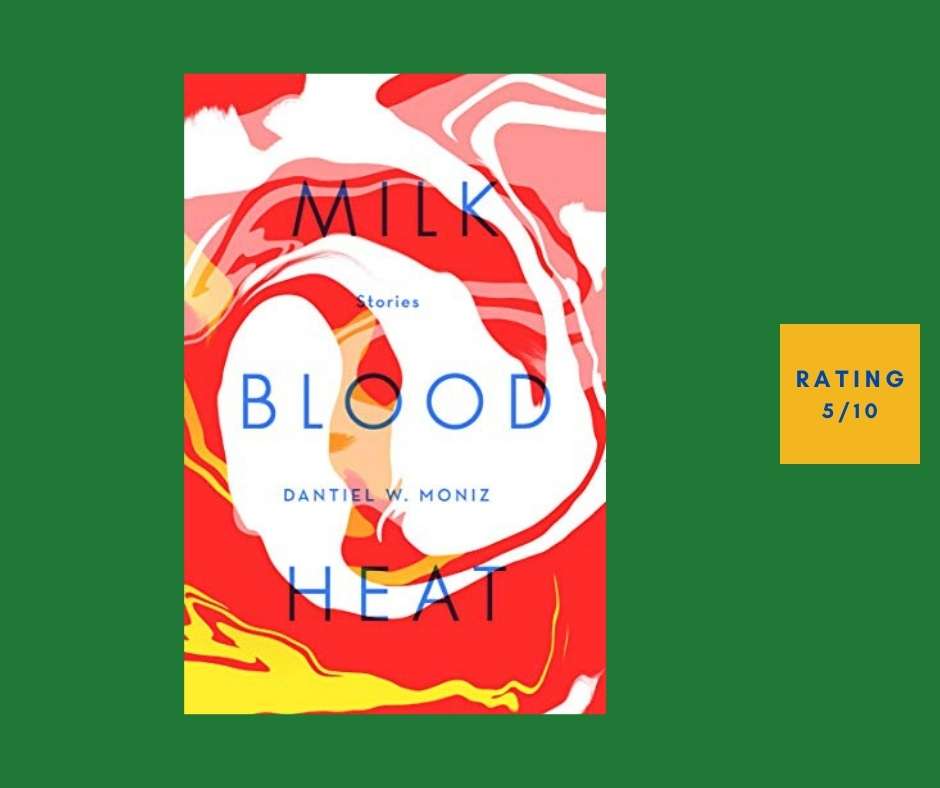
Milk Blood Heat by Dantiel W. Moniz [5/10]

Daniel W. Moniz Milk Blood Heat review

In “Milk Blood Heat: Stories,” Dantiel Moniz offers eleven fervid, acutely observed tales set in the hot, strange world of Florida. Quotidian and shocking events share the platform, relationships morph and fester, hearts explore and break. In the title story, two teenage girls mess with notions of death until tragedy strikes. “Feast” puts us in the mind of a woman recently miscarried, unable to let go, at odds with her husband, a strongly imagined situation that brings back decades-old memories to me. The man at the heart of “The Loss of Heaven” heaves with conflicting emotions at the dying of his wife, until his world shifts. The grotesque “Exotics” short-short is predictable but sweetly penned. I doubt I can ever appreciate short stories as much as novels, but reading cohesive, evocative tales such as in Milk Blood Heat is surely beneficial.

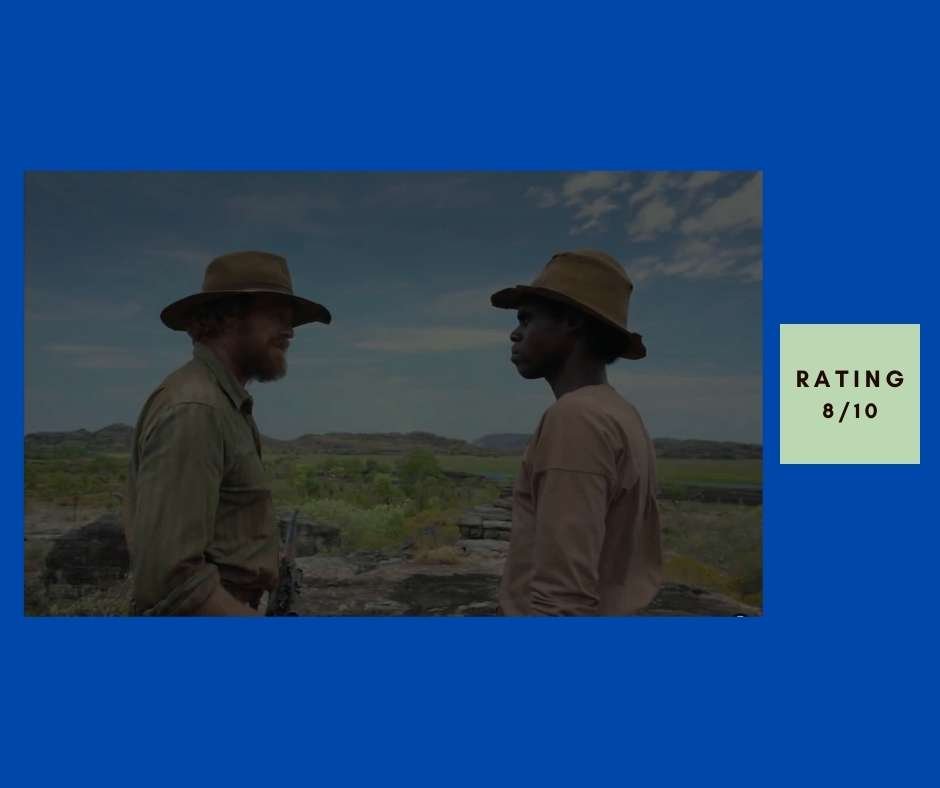
High Ground [8/10]

High Ground review

In the tradition of blood-soaked westerns offering no succor, “High Ground,”penned by Chris Anastassiades and directed by the brilliant Stephen Johnson, begins and ends with death. A WWI sniper rescues a boy from a senseless white massacre of a tribe, and then years later enlists the indigenous young man to help track a renegade warrior. The plot never wastes a moment, the Arnhem land scenery is voluptuous, the atmosphere lost and brooding, the sense of wastage and treachery is almost overwhelming. As a birdwatcher, I was overcome by the persistent soundtrack of Whistling Kites and Ravens. Simon Baker perfectly suits the deadly yet kindly sniper, Jacob Junior Nayinggul does a great job as the vengeance-seeking Aborigine, and there are seriously fine acting performance by many white and indigenous actors. I kept longing for a redemptive climax, even as I knew there would be none, but the conclusion, fading out as a bird climbs into the sky, was perfect. High Ground will surely emerge as 2021’s best Australian movie.

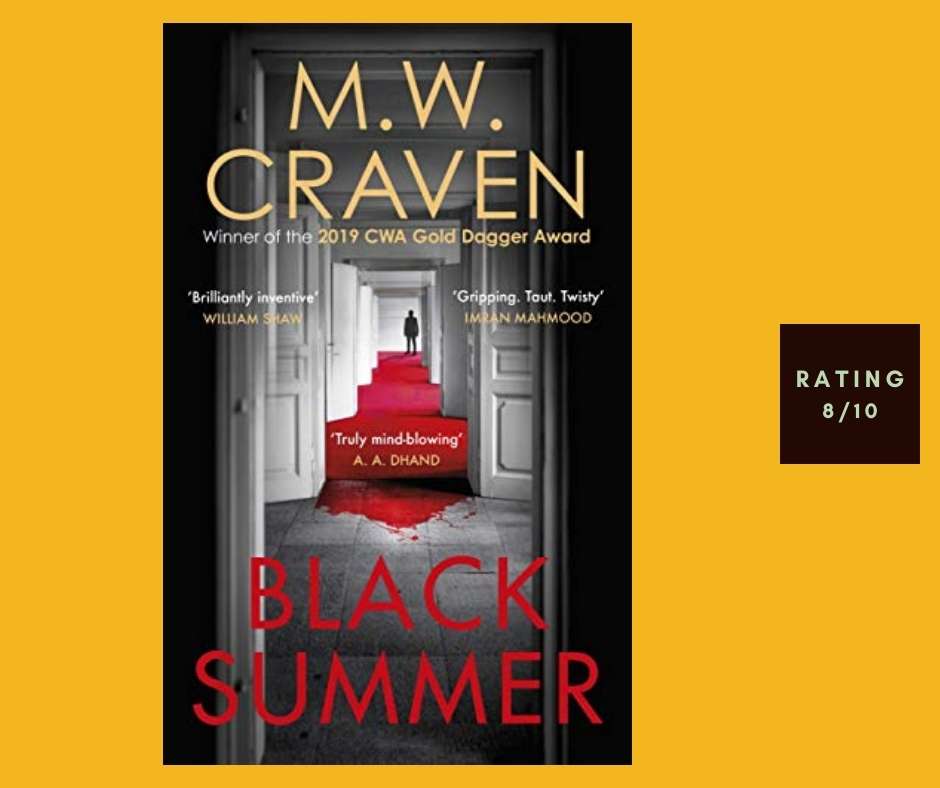
Black Summer by M. W. Craven [8/10]

M. W. Craven Black Summer review

After thoroughly enjoying the intricate plotting and atmospheric characterization of The Puppet Show, the award-winning first outing of brilliant, bull-in-a-china-shop detective Washington Poe, I rushed to read “Black Summer.” If anything, Black Summer is even more devilish than the debut, in the sense that crime fiction fans find delicious. And delicious is the correct adjective to use, for the book is set around the world of Michelin star restaurants. Poe caught and jailed a charismatic. psychopathic chef for the murder of the man’s daughter, but now a dazed young woman lurches into a police station and DNA proves she is the daughter. Brimming with shades of Hannibal Lecter’s brilliance, the novel kicks off swiftly and never slows down. Aided by Tilly Bradshaw, the ultimate awkward nerd introduced in The Puppet Show, Poe needs to unravel the chef’s plan even as he himself becomes a suspect. The author’s characters come wonderfully alive, especially in the dialogue, and the Cumbrian setting is vivid. Another superbly plotted one-nighter.

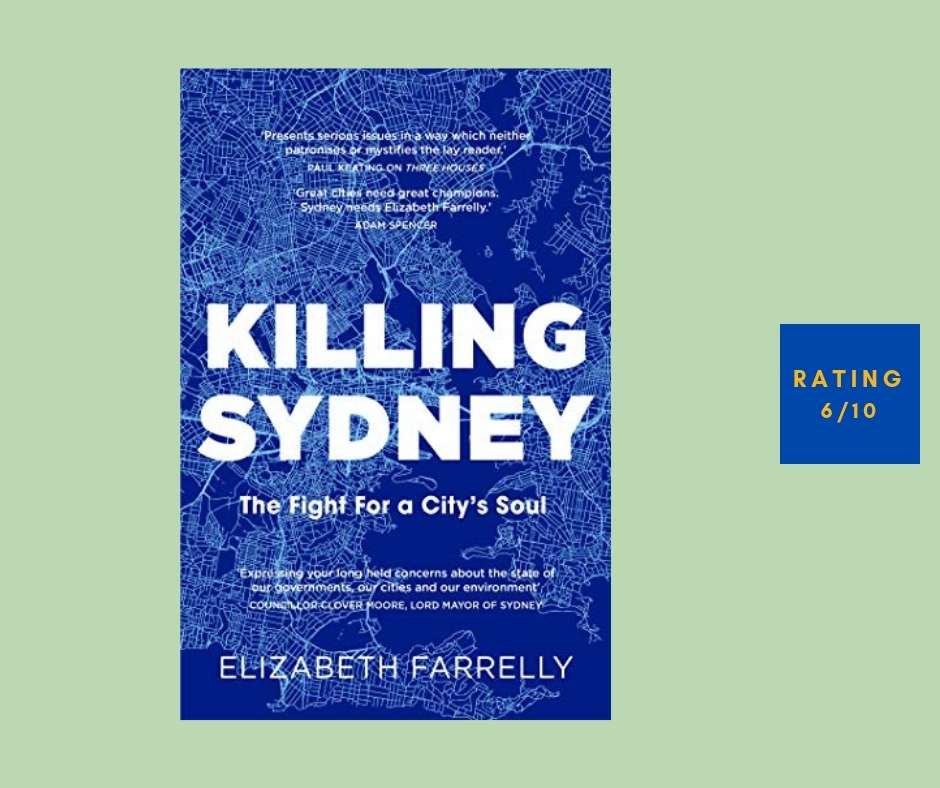
Killing Sydney by Elizabeth Farrelly [6/10]

Elizabeth Farrelly Killing Sydney review

Architecture is one of those professions that fascinate but confuse me. I love cities and can haltingly express what I enjoy about this or that aspect of this or that city, but constructing a coherent vision of what might be “good” or “bad” architecture escapes me. Reading architects talking about their purviews mostly bewilders me. Not so Elizabeth Farrelly, Sydney columnist, architecture critic, and activist. Her “Killing Sydney: The Fight for a City’s Soul” is a refreshing, boisterous survey of the city she loves through the eyes of an architect, employing in different chapters varying lenses with which to examine older history but in particular what she considers (and I have to agree) a recent history of despoilment, greed, corruption, and mendacity. Farrelly writes exhilarating prose and her knowledge of the magic of Sydney’s location and varied suburbs and buildings is staggering. Her takedown of the recent massive developments that I’ve observed when travelling to my son’s house in Marrickville is eye-opening. If I am barely wiser in my own architectural acuity after finishing Killing Sydney, I am much richer for the read. Recommended for any Sydneysider, Australian (other Australian cities, I’m sure, face the same vicious environment), or fan of beautiful architecture.

Animal, Vegetable, Junk by Mark Bittman [8/10]

Mark Bittman Animal Vegetable Junk review

On my bookshelf squats Mark Bittman’s massive How to Cook Everything Vegetarian, a companion to my life, and the prodigious Bittman has written six related cookbooks. Now, with “Animal, Vegetable, Junk: A History of Food, from Sustainable to Suicidal,” Bittman turns serious, and boy, how dark his intent is. This book is nothing less than an indictment of the entire thrust of humankind’s journey through the world of food and diet. Particularly savage is the tale of modern (read: American) industrial agriculture, which, following in the footsteps of British and other colonial powers, has scrunched the small, traditional farmer, starved and abused farm workers, embraced monoculture, and ended up at our current point of history, in which much of what is eaten is now formally “junk” that makes us sick and kills us. I had read parts of this history and naturally, having turned vegetarian solely to cut carbon emissions, am well aware of the blight of our modern food practices on Earth’s climate, but I had never seen the whole trajectory laid out before. The author is a smooth, engaging stylist and his carefully researched facts are expounded with fairness. His penultimate chapter, “The Way Forward,” begins thus: “I realize that much of this book has been, let’s say, not exactly uplifting,” which describes the impact accurately. His descriptions of what he describes as minor corrective revolutions offered me some cheer but not much. What will be needed, he says, is massive systemic change: “Innovation from industry is not going to fix food and diet, and neither is ‘buying right.'” Compendious and sweeping, Animal, Vegetable, Junk is a must-read for those of us who despair at the food terrain we gaze at.