Box 88 by Charles Cumming [5/10]

Charles Cumming Box 88 review

Charles Cumming always writes enjoyable spy thrillers that reek of sophistication and rattle along. “Box 88” is no exception. We have grown accustomed to shadowy, super-secret espionage organizations, and BOX 88 is exactly that, so shadowy that Britain’s MI5 begins stalking one of its most capable operatives, Lachlan Kite. Kite is portrayed as a human but perfect spy, and soon after the novel kicks off, he finds himself captured and under torture. His history from recruitment days three decades earlier seems to be the pivot point. Cumming’s forte is plot control and Box 88 grips attention, a well realized tale of capture and escape. Yet my one-sitting enjoyment grew frayed. As an entity, BOX 88 is sprung onto the reader, with plenty of explanatory material, but it never establishes a mood or character. Kite himself is resourceful and likeable enough, but again, his inner life never grew upon this reader amidst the frenetic plot. And the overall story bursts at the seams, always holding together but never generating enough tension beyond the “torture room” ambience (which is done well). Box 88 ends up a fluid read but with little heft beyond the final pages.

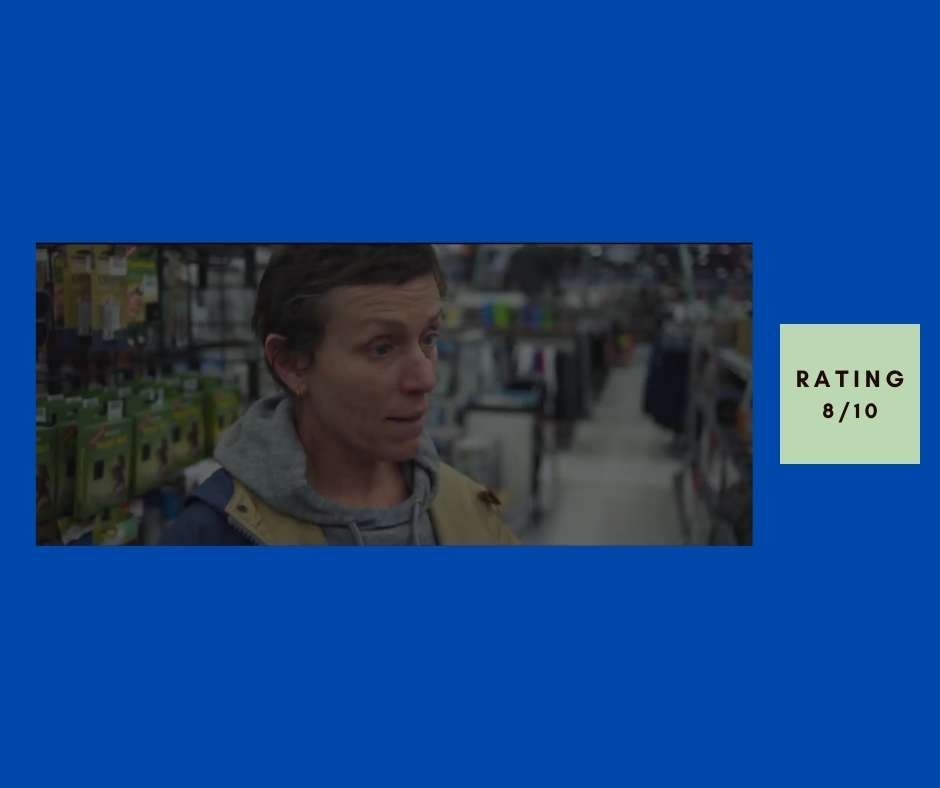
Nomadland by Chloé Zhao [8/10]

Nomadland review

Inheritors of the American hobo tradition, countless casualties of the gaping inequalities in the United States now apparently roam the country’s desolated areas, living out of caravans, vans, and tents. Nomads, they’re called, and “Nomadland” is writer/director Chloé Zhao’s immersive, almost dystopian depiction of their weird worlds. Discarded by capitalism, the movie’s centerpiece, middle-aged, working-class Fern, jury rigs a van to her idiosyncratic liking, leaves her now-junked mining town, and ventures into snow, desert, and mountainscapes. The fieldwork of The Grapes of Wrath is now, in Fern’s case, our era’s subsistence piecework: packing goods in one of Amazon’s supersized warehouses; cleaning shitty toilets in an RV park; slaving away in roadside cafes; hefting sacks of beets. Forensic rather than polemic, gentle not abrasive, brutally stark without sentimentality, Nomadland could well have drifted into travelogue territory, and the sweeping beauty of Joshua James Richards’s cinematography centers the movie on vast badland scenes. And Fern’s narrative journey is hardly substantive. What elevates Nomadland into art are Zhao’s discerning vision, the elegiac piano soundtrack of Ludovico Einaudi, and, above all, Frances McDormand’s utterly natural, unforgettable, star turn as Fern. Other actors shine as well ( I always enjoy David Strathairn, here playing an awkward middle-aged man in love with Fern) and the inclusion of non-actors from the nomad community is notable, but McDormand turns what might have been a semi-documentary into a reflection on home and community and modern life. A wondrous movie.

100 Not Out by John Naughton [8/10]

John Naughton 100 Not Out review

John Naughton, a British academic/columnist, expanded his twenty-year blog into daily audio posts during three-plus months of 2020 lockdown. “100 Not Out: A Lockdown Diary” is the result, and it is a succinct blast of curiosity and reflection that chimed with my lockdown memories. Naughton researches and writes about technology in society, and the daily pandemic blogs often tackle Coronavirus-technology issues, as well as more general philosophical musings. Scathing dissections of the Johnson government’s public health debacle over 2020 are a highlight. Written in a clear, refreshing, lively style, I felt during my reading that I was in the company of a gentle polymath, to my continual joy and benefit. Highly recommended.

The Queen’s Gambit [9/10]

The Queen's Gambit review

The Queen’s Gambit” is a chess drama, and if you are anxious about boredom, rest assured. Gladiatorial grandmaster chess is a tense, vicious sport, and this dramatisation of Walter Tevis’s 1983 novel is a tour de force. Over seven episodes, it explores the life of prodigy Beth, from her orphanage beginnings, through her troubled teens, and up into the stratospheric grandmaster world in her early adulthood. Exploring seamlessly issues of love and identity and addiction and ambition, the script flows like a river. Anya Taylor-Joy mesmerizes as famous Beth, and Isia Johnston is only slightly less impressive as child Beth, while memorable performances by Bill Camp (a chess-playing janitor), Harry Melling (a fine male player), Marielle Heller (stepmother), and Thomas Brodie-Sangster (a grandmaster) flesh out a pitch-perfect cast. Beth’s dialogue, always sharp and unexpected, could be a scripting masterclass. Steven Meizier’s cinematography, allied to the vibrant 60s costumery, ensure a constant visual feast. And the chess scenes crackle with tension and nuance. All in all, The Queen’s Gambit is a must-see.

The Diplomat’s Wife by Michael Ridpath [8/10]

Michael Ridpath The Diplomat's Wife review

Thriller/crime fiction/spy novel author Michael Ridpath has concocted a minor gem with “The Diplomat’s Wife.” In 1979, Phil, an earnest, impressionable, smart eighteen-year-old Englishman sets out on a Cold War European voyage of discovery with his “Grams” (grandmother), driving and assisting her as she retraces the touchstone places of her early days as a diplomat’s wife. The author is a beguiling writer who brings the travels to and atmospheres of England, Paris, Berlin, and other notable places to vibrant life. And the easygoing but immersive tone of Phil’s world is so, so seductive. Once the journey begins, Phil’s grandmother unleashes her unexpurgated personal history from 1936, the present intrudes dramatically on the past, and Phil is forced to grapple with all his emerging loyalties and senses of family. Meticulously plotted with an amazing sense of flow, The Diplomat’s Wife is a glorious one-evening repast that somehow reminded me of the spy thrillers I read in the 60s, 70s, and 80s: fiercely serious yet not bloodthirsty; endlessly intricate in a Casablanca way; and rich with Cold War lore. One of 2021’s must-reads.

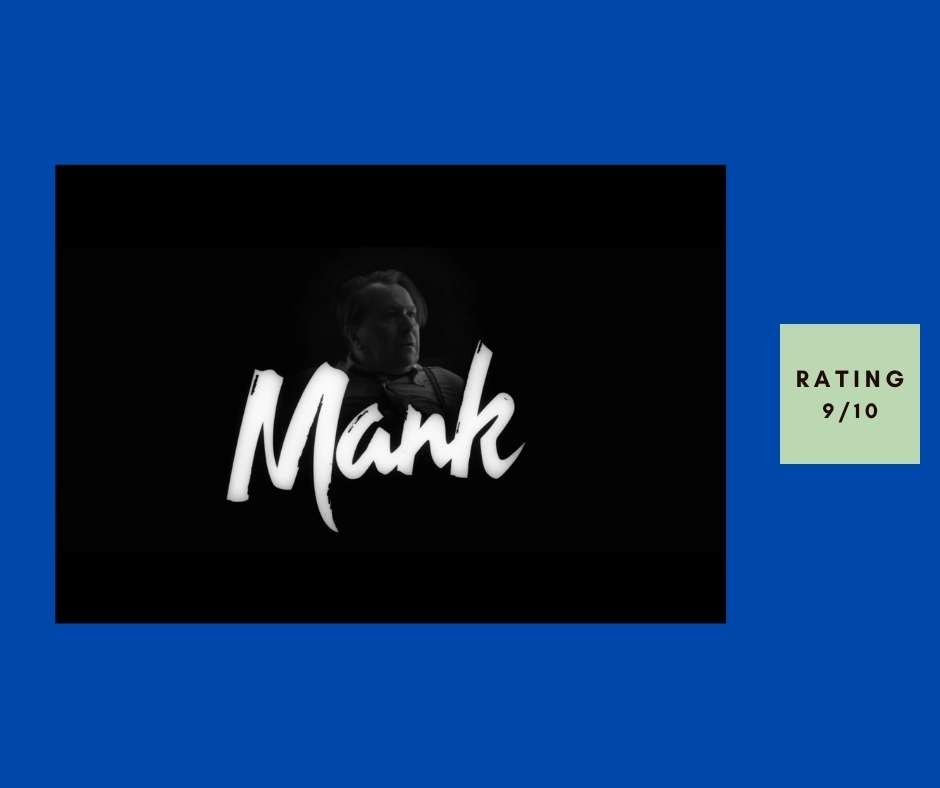
Mank by David Fincher [9/10]

Mank review

Don’t you swoon at the opening scene of “Mank,” in which Gary Oldman, playing kinda-legendary screenwriter Herman J. Mankiewicz, is deposited in a desert hideaway with a nurse and typist, in order to deliver post-haste the screenplay of Citizen Kane to outcast director/actor Orson Welles? Well, if you don’t swoon, Mank is not for you. But for the rest of us, this is an ancient-but-topical tale that David Fincher unwinds with unerring discipline. Oldman is outstanding as the unkempt, alcoholic, B-grade writer on the outer, spewing out from his bed the Welles’ classic, but all the actors fit in perfectly, with special credit due to Charles Dance (a malevolent, amused William Hearst) and Amanda Sayfried as his trophy bimbo actress. Cinematographer Erik Messerschmidt creates a sumptuous black-and-white, sharp-but-smoky visual feast, and everything about the movie achieves the aim of making a movie about the making of a movie in the very style of that movie. I gather the narrative messes slightly with the history, but who cares? The way that Fincher embeds the plot in an arc of tilting against the evil media magnate and his Republican vipers is breathtaking. If anyone asks me to accompany them on a second viewing, I shall jump at the chance, and I commend Mank to you.

Death to 2020 [6/10]

Death to 2020 review

What better way to farewell 2020 than a spoofy news recap? “Death to 2020” is a seventy-minute, month-by-month recap of actual footage, including talking-heads commentary from experts … except that the voice-overs and interview snippets are played by actors, hamming up like crazy. The star turn is from Hugh Grant, playing a crusty British historian who gets reality confused with Game of Thrones; every one of his appearances raises a chuckle. Samuel L. Jackson also commands attention as an aggressive newsman. Samson Kayo works well as a virus expert. Other mock contributors, even when acted well, are less successful, either unfunny or too relentless or plain silly, but all of them rustle up at least one or two amusing segments. The pace is relentless, and a recap of the year can remind us of forgotten events, but overall, Death to 2020 is an hour of entertainment that winds up as an opportunity missed.

The Trials of Koli by M. R. Carey [9/10]

M. R. Carey The Trials of Koi revew

Picture a future Earth in which technology has nearly disappeared, on which plants and animals have mutated into terrifying forms, and upon which human tribes struggle in fraught adversarial pockets. M. R. Carey’s brilliantly conceived world unfolds in the trials of young Koli, an untutored but smart and resourceful young man with unquenchable spirit. The second book of the Rampart trilogy, “The Trials of Koli“,” is as spellbinding and emotionally rich as the first book (review), and is thoroughly recommended. Heading towards a mythical London with two very different humans and a mutating artificial intelligence, Koli battles humans and animals and, eventually, horrific plants. Carey artfully employs a slightly illiterate voice to capture the unforgettable voice of Koli. Unfolding as both an epic and a technical riddle, this trilogy is destined to be a classic sci-fi series, and The Trials of Koli is a surefire resident of my “best of 2021” list.

Birds of Prey [7/10]

Birds of Prey review

My love-hate relationship with superhero movies, as unfurled in the third decade of the 21st Century, continues. “Birds of Prey (and the Fantabulous Emancipation of One Harley Quinn)” is apparently the second offering of a specific spin-off from Batman/Joker, the conceit being that Joker’s girlfriend, the sassy, garish, “with attitude” Harley Quinn parts from the villain and finds her way in the world, be it as goodie or baddie. In this movie, Harley finds herself arrayed with (and often against) three other amped-up female protagonists, one a cop, the others ultra-athlete goodie/baddies, in a race to save a feisty teenager (played with amazing panache and irony by Ella Jay Basco) being pursued by the film’s arch-villain, hammed up by Ewan McGregor. The storyline isn’t bad for a superhero movie but the film’s two key hooks are gorgeously choreographed action scenes and the take-no-prisoners, expletive-mouthed performance of brilliant Margot Robbie in the title role. Much of the movie sings a fevered song that is just how a superhero movie should unfold. But is it just me to tire so quickly of biffy, smashing fight scenes that, in spite of the balletic precision, quickly descend into tedium? Am I overstating my persistent flashes of impatience that bordered on tedium? Luckily, Harley Quinn’s exuberant set pieces cured most ills as the film plummeted towards a reasonably plotted ending. Overall, Birds of Prey is an odd mix of filmic brilliance and superhero blandishments, and is a fine entertainment that fails to move beyond entertainment.

House of Correction by Nicci French [8/10]

Nicci French House of Correction review

House of Correction” is my first Nicci French psychological thriller and after I’d gobbled it down, my first thought was, why had I foregone the previous 23? The husband-and-wife team write smooth, dialogue-rich, never-waste-a-word prose that is like melted butter to an avid reader, and House of Correction is wonderfully conceived and plotted. Tabitha, a semi-depressed misfit with oodles of vim, finds herself in prison, accused of murdering a man in her house, in what looks like an open-and-shut case. Tabitha can barely recall the day in question, possesses no niceties, and has few obvious endearments other than what emerges as an obsessive mind and great determination. The authors have gleefully set up the book as a combination of a locked-room mystery (my favorite sub-genre of crime fiction) and a courtroom drama, the latter enlivened by Tabitha’s conducting her own borderline inept defense. It’s all a swirling, complex plot, the type that’s a treat for a crime fan, and I was captivated. Strongly recommended for anyone who recalls classic mysteries but likes them plonked into a modern setting.