Brilliant Irish novelist John Boyne has now tilted towards satire, with “The Echo Chamber” chronicling tumultuous days in the lives of a silver-spooned British family, the Cleverleys: broadcasting icon George; bestselling novelist Beverley; and their three messed-up children. All five are thriving, according to their individual desires, in the social media world. As the novel’s title makes clear, Boyne’s target is the capricious, savage world of Twitter and Facebook. When George haphazardly tweets about a transitioning secretary, the worlds of all the five Cleverleys tumble willy-nilly into the darkest crevasses of online justice and injustice. Boyne is supreme at dialogue and the entire book glitters with clever conversation upon witty exchange, and his plotting of the absurd trajectory of his subjects is masterful. Most importantly, from my point of view, the author feels for his characters even as he skewers them, and his calibrated tone of realism merged with outrage is wonderful to read. The Echo Chamber is neither high tragedy nor visceral commentary, but is all the more sparkling for being a humane, funny, intelligent window onto our connected world. All of John Boyne’s novels come highly recommended and this is a fine example.
David Byrne’s American Utopia by Spike Lee [8/10]
I first saw Talking Heads live soon after they had released their debut Talking Heads: 77, maybe in 1978. After the band, I failed to follow David Byrne’s solo forays into all manner of music but I admired his ironic, askew thinking, and kept touch with his writings. I guess I was skeptical when Spike Lee’s “David Byrne’s American Utopia” hit the cinemas, for it would be a live concert rendered flat in the filming, surely? Not so at all. This movie is a triumph. Since the 1980s, Byrne has been an imaginative choreographer of his concerts and here he assembles an astonishingly diverse and talented group of musicians and singers, maxing out in particular on drums and percussion. On a simple stage set, the dozen performers (including Byrne in resplendent, apt voice) play out elaborate dance scripts as they showcase a wonderful range of Byrne’s simple-yet-intricate tales of modern life. Most rock film directors add little, but Lee employs a rich array of cameras that constantly shift in attention, from birds-eye panoramas to bustling barefoot dance scenes to performer close-ups. He manages to keep Byrne always at the center of his narratives whilst fitting in the panoply of the others in full flight. The overall arc of Byrne’s songs, interspersed with intelligent patter, is that of alienation and coming together. Some rousing political songs stirred my heart. Post-concert footage rounds out the experience beautifully. If you hanker to see a stellar concert, wonderfully rendered, without stepping into a concert hall, David Byrne’s American Utopia is the movie for you.
Ammonite by Francis Lee [4/10]
What renders a book or film compelling depends, obviously, on the reader or viewer. Far more than with the written word, for me a movie, even it is avant garde or speculative, needs to come with a strong narrative backbone. Bear that in mind as I describe “Ammonite,” the new outing for well-regarded filmmaker Francis Lee, as compelling enough scene by scene, but ultimately dreary. Based on the life of Mary Anning, a brilliant but downtrodden fossil hunter in Lyme Regis in the 1840s, Ammonite explores the impact of the arrival of a male fossil expert’s wife to undergo emotional convalescence with Anning, a stay that escalates into lust and love. Kate Winslet and Saoirse Ronan turn in fine performances in the two leading roles, but there are only so many smoldering exchanges and looks one can take while longing for something to happen beyond what is obvious will happen. The bleak, beautiful shoreline is evocatively filmed, the period costumery meticulous, the supporting actors excellent. The trouble is, in my opinion, the script. Given that the core relationship is an act of imagination, one could imagine many ways the plotline could develop, but very little is pursued in Ammonite. My attention was snared throughout, simply because of the sumptuous scenes, but neither character develops much and little drama is evinced. All up, an opportunity missed.
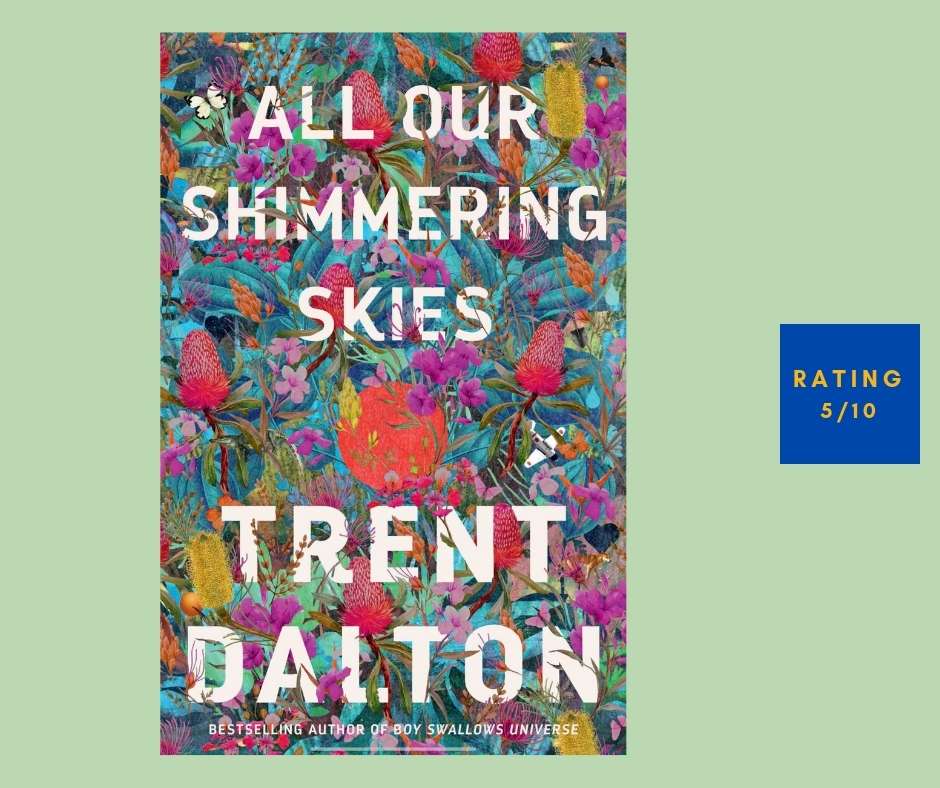
All Our Shimmering Skies by Trent Dalton [5/10]
Trent Dalton’s debut, Boy Swallows Universe, was a bravura coming-of-age delight. “All Our Shimmering Skies” arcs up the core features of the debut – the focus on a troubled youth, the elements of magical realism, the fizzing style – but overreaches. The story of Molly, graveyard orphan girl, and her quest across the fantastical terrain of the Northern Territory at the time of the WWII Darwin bombings, is impressive at the page level, but I found its unrelenting appeal to talking skies, talking spirits, and Grand Guignol plot escalations leached away any character identification. Whereas in Boy Swallows Universe, Eli, the starring boy, seemed heroic, this time Molly is rendered as a declaiming cardboard heroine. The core villain is straight out of gothic Victorian novels. Only one character retains any life beyond the page: Japanese kamikaze pilot Yukio. Dalton conveys Darwin with great gusto, yet the drama-imbued Australian bush somehow comes across as a movie set. All in all, there is much to admire in the literary gymnastics in All Our Shimmering Skies, and it delivers a quick read in spite of its length, but we will need to await Trent Dalton’s third novel to see him at his most potent.
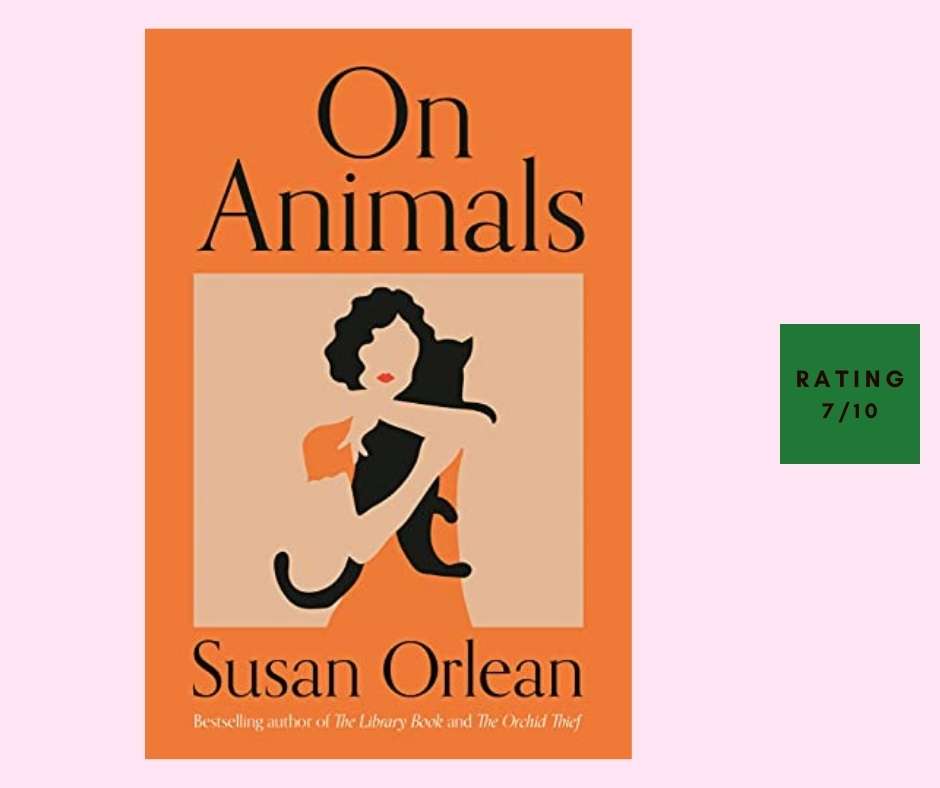
On Animals by Susan Orlean [7/10]
Susan Orlean is a brilliant writer and indefatigable researcher driven by her startlingly varied fancies. “On Animals” gathers up sixteen essay articles from the last quarter century, mostly from The New Yorker. A self-confessed animal lover, albeit one more typically at home in an American city, Orlean writes about laboring donkeys in Morocco, her own chicken-owning experiences, the strangeness and popularity of pandas, a “lion whisperer,” the world of taxidermy, and pigeon racing in Boston. She is a smooth, individualistic stylist, able to throw in barbed humor whilst expounding history and technicalities in a readable yet intelligent manner. I was most swept up by the author’s wry but heartfelt narrative of the life of Keiko, an Orca whale who achieves stardom, and a spotlight essay on Biff, a prizewinning show dog. Entertaining and educational (in the best way), On Animals is sure to delight anyone curious about our non-human earthly neighbors.
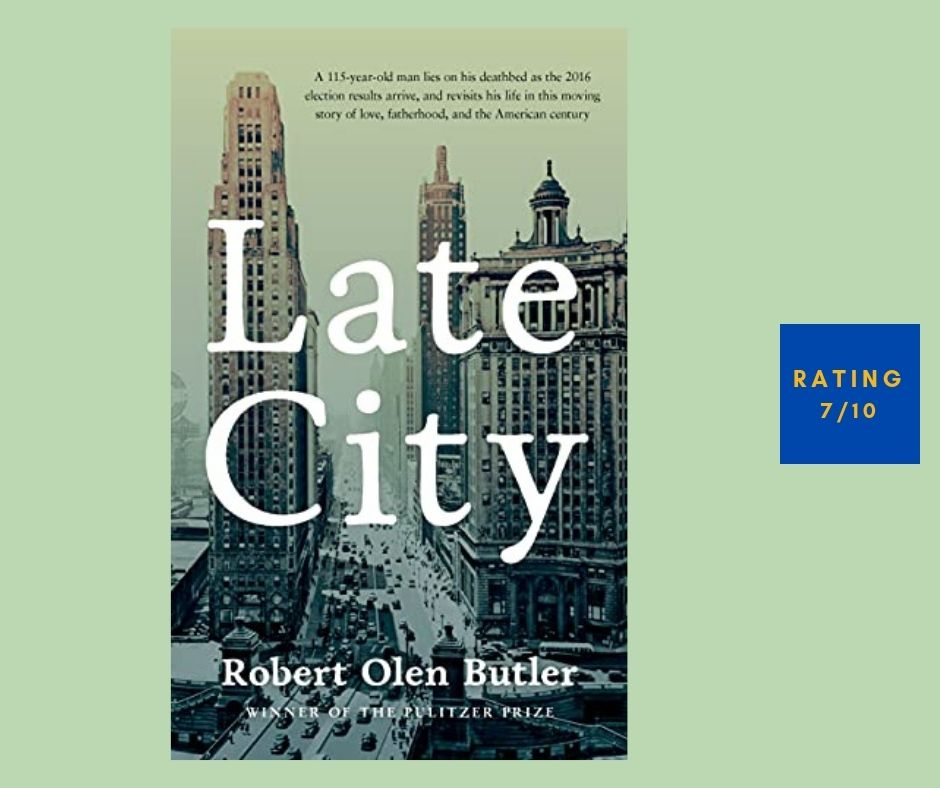
Late City by Robert Olen Butler [7/10]
I thought I had read some Robert Olen Butler back in the eighties but none of his huge list of works chimes with me, so “Late City,” written at age 70, could be a first for me. And I’m delighted. A decidedly literary novel, written from a hazy but erudite viewpoint of a dying 115-year-old man on the eve of Trump, it posits a final earthly dialogue with God (a decidedly jaded deity), which then sashays through our hero’s life. A country boy, a soldier, a newsman, a husband, an old person’s home resident … all these phases of his life are recalled, reflected upon, and synthesized. Butler is a poetic stylist and his dreamlike scenes are a pleasure to read. A final mild plot twist failed to excite me, and somehow a century of recollections about America did not amount to much more than broad opinions on war and race, but overall, Late City is a minor readerly pleasure.
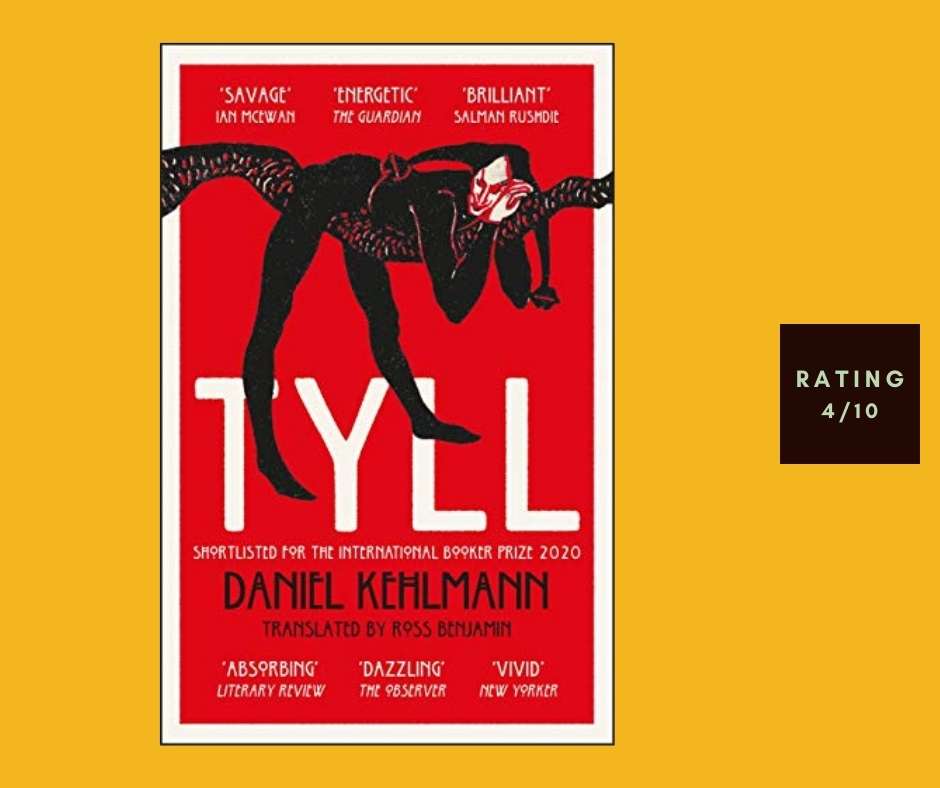
Tyll by Daniel Kehlmann [4/10]
Daniel Kehlmann is a top German author and in “Tyll,” he employs the trope of the eternal trickster, in this case the legendary Tyll Ulenspiegel, to span the tumultuous Thirty Years’ War that wracked central Europe in the early sixteenth century. Charismatic Tyll connects a range of participants, lowly and kingly, as he strives with wit and grace and almost supernatural sleight of hand to survive when most don’t. Kehlmann is a consummate stylist and his eclectic scenes are convincing, but from the outset, I felt Tyll mainly suits those intrigued by the times, for the plot bogs down into treacle again and again. The bit-player characters are evocative but I found our juggling and tightrope-walking hero unfathomable and often uninteresting. Reader, check this out if the cover blurb intrigues you; Tyll was not for me.
The Stranger by Simon Conway [6/10]
Deeply imbued with military knowledge and spycraft, “The Stranger” is a tumultuous entry into the modern post-Le-Carre spy thriller field. Starring a stubborn, wayward British operative thrust into blowback from a long-ago rendition, with a huge cast of complex characters from different nations, the first third skirts with plot overkill, but thereafter the storyline settles into a globe-trotting race that culminates gracefully (if in bloodthirsty fashion). Action scenes pulse with tension and threat. The author is an assured stylist, the dialogue is sharp, the double-crossing ambience is well portrayed. The Stranger makes for a one-night read that promises a welcome sequel.
Interior Chinatown by Charles Yu [7/10]
Having tagged Charles Yu as a science fiction author (his wonderful How to Live Safely in a Science Fictional Universe cluing me in), it took me a couple of pages to realize that “Interior Chinatown” is a quirky and quirkily told literary novel tackling stereotypes (Asian, Hollywood) and roleplaying in life. Daringly told in the second person, it walks in the shoes of Willie Wu, a downtrodden Chinese American stuck playing the part of Generic Asian Man Number Three/Delivery Guy but dreaming of attaining Kung Fu Guy. His life swirls among his family’s in a blur of performance and longing, until love arrives and he must choose between ambition and happiness. Super playful, forever inventive, often chuckle-aloud amusing, Interior Chinatown is a bracing corrective to my 2020 diet of seriousness, at the same time thrusting a sharp epee at my preconceptions. And Yu’s style is so nimble that the novel races along. A wonderful novel.
When We Cease to Understand the World by Benjamin Labatut [7/10]
Chilean author Benjamin Labatut has created a tour de force fiction-nonfiction hybrid, “When We Cease to Understand the World,” that in a slim volume barely longer than a novella pulses through key early 20th Century physics, mathematics, and mass evil, focusing on key luminaries. Fritz Haber invents poison gas, Schrodinger and Heisenberg engage in a titanic battle over the invention of quantum physics, Karl Schwarzschild invents the black hole … all these tales told as pithy education but also imagining personal battles commensurate with the scientific ones. A final chapter sees the narrator engage with a “night gardener” about the merits of all this thinking. To an ex-mathematician like me, the most spellbinding chapter concerns Alexander Grothendieck, a mathematical prodigy of such obsession that he mesmerized a generation, and his baffling disciple Shinichi Mochizuki who in 2012 published six hundred pages of proof of a key conjecture, but published it on his own blog, and no one, but no one, could understand it! Labatut writes with a lyrical fervor that hypnotizes, even if sometimes you wonder where he is going. “The quantity of fiction grows throughout the book,” confides the author, and the mixing of “real” and “imagined” could irk some readers. I rode with the flow and experienced a sustained rush of intellectual and emotional pleasure. When We Cease to Understand the World is a maverick, kinetic boon.