Your Honor [9/10]

Your Honor review

Am I the only soul who hasn’t seen Bryan Cranston blitz the world in Breaking Bad? I came to “Your Honor” hesitatingly: what if he isn’t the compelling actor everyone claims he is? I need not have fussed. Peter Moffat’s storyline, about a New Orleans judge facing impossible choices when his son is involved in the hit-and-run of a mob boss’s child, is riveting, a vehicle tailor made for an intense character actor, and Cranston nails each and every scene. Over ten leisurely episodes, the sinuous tale twists in a manner almost always unpredictable but just so right. The cinematography is atmospheric, the music thrums with portent, and New Orleans figures as a character in its own right. Amazingly for such a lead-actor-centered drama, the large supporting cast is uniformly excellent, with special mention due to Hunter Doohan’s sensitive-waif portrayal of the judge’s son and Michael Stuhleberg malevolence as the crime lord. In Australia, at least, the streamed version of Your Honor was drip fed week by week. I watched each episode the hour it hit my iPad, so thrilling was the experience.

It’s a Sin [8/10]

It's a Sin review

A superb five-part Russell T. Davies creation, “It’s a Sin” unfolds the lives of three young gay men who hit London at the start of the 1980s, just before the Aids epidemic laid waste to that entire community. Colin is the quiet Welsh boy, played with devastating subtlety by Callum Scott Howells. Roscoe flees his Nigerian religious father; Omari Douglas nails his exuberant defiance. And the heart of the series is Olly Alexander playing the supremely hedonistic Ritchie from the Isle of Wight. Oh, and I must not forget Ritchie’s university friend Jill, played with heart-catching earnestness by Lydia West, who glues together the entire narrative. Not a moment is wasted as the three friends, living in the same house, careen through the eighties in a vivid blur of wild, funny, real events and scenes. It’s a Sin illumes both the era’s homophobia and Britain’s willfully neglectful Aids response, and heartbreak looms large, but mostly it is a celebration of life and love and belonging. Destined to remain a classic.

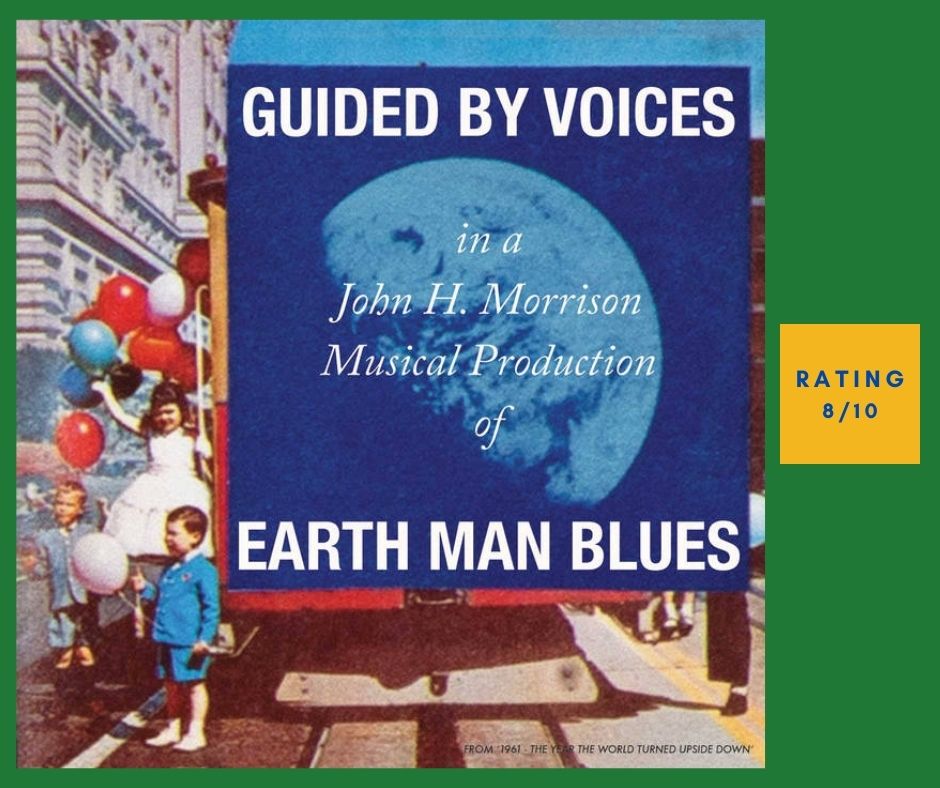
Earth Man Blues by Guided By Voices [8/10]

Guided By Voices Earth Man Blues review

No one can keep up with Robert Pollard’s unique outflow of unique garage-rock-style music, in a bewildering array of identities, and in practice, I suspect, few do. It’s not that his profligacy is full of filler—his amalgam of singalong melodies, rough prog-infused guitar music, and freeform lyrics never bores—but true brilliance is steady yet only partial. I seem to listen to only a tenth of the blur of releases. Luckily, he always comes back to his first group, Guided By Voices, and often those releases return to the mother lode. His 33rd GBV album, “Earth Man Blues,” seems to have found lockdown life. Nominally mostly rejects from previous GBV releases, they cohere wonderfully into something that resembles a harsher concept album from the early Genesis days, the fifteen inventive tracks often buttressed with woozy synths. Intoxicating stuff, Earth Man Blues is Guided By Voices at its magical best. Highlights include the two minutes of raging, melodic garage pop of “Trust Them Now”; “Lights Out in Memphis (Egypt),” a five-minute wig-out flitting between ponderous guitar riffs and 60s-style voiceovers; and the short, off-kilter swooning pop of “Sunshine Girl Hello.”

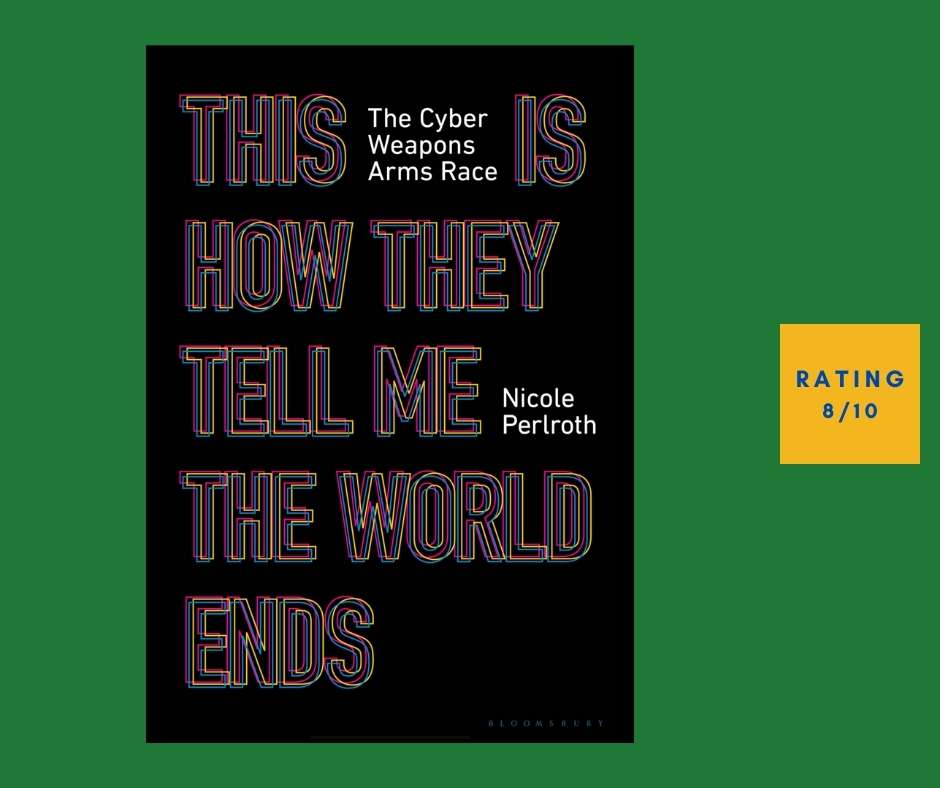
This Is How They Tell Me the World Ends by Nicole Perlroth [8/10]

Nicole Perlroth This Is How They Tell Me the World Ends review

Two decades ago, I did enough research into the world of hackers and cybersecurity to know about black hats and white hats and the dark, sometimes romantic world they inhabit. I even worked for a cyber protection company for a few months. Well, reading “This Is How They Tell Me the World Ends: The Cyberweapons Arms Race” is an eye opener. How the software/online world has transformed! That old slapdash, cowboy world changed when so many software holes became apparent that some of them, “day zeros,” became tagged as special; money lurched after them; governments joined the gold rush; America rampaged all over the world but then its enemies stole or reverse engineered its goodies; and suddenly here we are, in Nicole Perlroth’s world. Seven years of dogged, brilliant journalistic investigation into the murkiest depths have yielded a mind-blowing book of coverage and revelation. Essentially, Perlroth tells us, we are fucked, although, of course, she tells the tale far more elegantly, for she’s a superb, sprightly stylist. Backed by hundreds of interviews, peopled by emblematic hackers and mercenaries and spooks, Perlroth’s jaw-dropping narrative begs the question: why hasn’t much worse befallen the world’s online/software-driven infrastructure? Reading her recommendations for ameliorative action at the end suggests, to me at least, that the answer is: good fortune. This Is How They Tell Me the World Ends is one of 2021’s essential reads and a pleasure to consume at that.

Smoke by Joe Ide [7/10]

Joe Ide Smoke review

The fifth instalment in the ongoing adventures of Isaiah Quintabe, geeky private detective extraordinaire in the hells of Los Angeles, “Smoke” no longer follows the standard format of “client presents case, IQ solves it.” At the end of the explosive fourth book, IQ fled LA and Grace, the love of his life, shattered by violence. Smoke chronicles his recovery steps, hidden a long way away, while back in his home town, we follow the adventures of Grace, sometime friend Deronda, and his on-again-off-again hipster partner Dodson, while the author introduces three disparate villains of varying levels of depravity. Like James Lee Burke, Joe Ide seems to specialise in picaresque, nigh emblematic bad guys, and Smoke sizzles with their horrors and plans. The plot rockets along, and the characters are, as always, alive with zest and ripe dialogue and thoughts. I missed the old IQ, solver of puzzles, until some of the subplots meshed together and he is forced to use all his skills. A white-knuckle ride, that’s what Smoke is, and wonderfully written. I would recommend beginning at the first book, though.

As the Love Continues by Mogwai [7/10]

Mogwai As the Love Continues review

Mogwai’s tenth album in nearly a quarter of a century, “As the Love Continues,” encapsulates all the elements of their unfolding brand of music, from post-rock, bass-heavy walls of sound, through tinkly keyboard contrasts, to melodic instrumental wig-outs. If it doesn’t contain the grandeur of a couple of the band’s earliest classics, there is a pleasing sense of variety and craftsmanship that pervades As the Love Continues, and the album’s overall impact is one of a satisfying journey. Moods of grace and grandeur and sadness seem especially fitting in a world still stifled by lockdowns. Highlights include the panoramic, six-minute “Midnight Fit,” with its bursting strings; the opening “To the Bin My Friend, We Vacate the Earth,” unfurling into booming majesty; the surprisingly cheesy but brilliantly choreographed “Supposedly, We Were Nightmares”; and “Dry Fantasy” which somehow grafts that bass-loaded Mogwai grandeur onto a Tangerine Dream melody. As the Love Continues is, perhaps unexpectedly, perhaps foretold, a career highlight.

The Bomber Mafia by Malcolm Gladwell [6/10]

Malcolm Gladwell The Bomber Mafia review

A Malcolm Gladwell book or podcast (and they are similar) is a breath of fresh intellectual air. Even if you disagree with his latest thinking, his argument always chimes sweetly and the telling is sure-footed. “The Bomber Mafia: A Story Set in War” is another readily readable slice of history, this time the quest of a ragtag group of American air force officers, from just before WWII, to invent pinpoint bombing and, potentially, to make ground and sea warfare moot. Gladwell tackles this idea slowly and thoughtfully, telling the tale of a reclusive, crusty Dutch inventor who invents the bomb sight, then traversing the war until the post-war lunacies of Curtis LeMay. Carry The Bomber Mafia to a park in springtime, read it in one sitting, and momentarily consider Gladwell’s intriguing musings soon forgotten.

On Time and Water by Andri Snær Magnason [8/10]

Andri Snaer Magnason On Time and Water review

Missing out on Icelandic author Andri Snær Magnason’s varied works to date is regrettable, for on the evidence of “On Time and Water,” he is a sumptuous, precise stylist. Part memoir, part historical exploration, part climate emergency plea, part climate science exposition, On Time and Water ranges effortlessly over Magnason’s investigations into Finland’s ancient glaciers, indeed the world’s glaciers, as they begin to melt at an accelerating rate; over the notion of past time as experienced by his grandparents; over mythologies, generating his conceit that a holy cow has reached out to him to write the book; and over the notion of future time in the Anthropocene Age. Two interviews with the Dalai Lama offers reflections on mortality and the glacial melting in the Himalayas. Switching effortlessly between journalese and poetic prose, Magnason champions a far richer relationship with the future, out to his great-great-grandchildren, in place of the prevalent short-termism that threatens us all. A most rousing read, On Time and Water should be required reading for young people (we in the older generation seem to be a lost cause).

Fire, Storm and Flood by James Dyke [5/10]

James Dyke Fire Storm and Flood review

Fire, Storm and Flood: The Violence of Climate Change” is labelled “a photographic record” of the climate emergency, and is structured as stunning stock photos, each accompanied by a couple of pages of fluent narrative prose. The author, a British Earth systems scientist, has artfully selected vignettes and climate tales from around the world and through time. As a collection of short essays on aspects of climate change occurring now or forecast to occur with certainty, it is timely. Essays that impacted me included the one of back to back photos of a glacier now and decades ago; the heavily populated Thar Desert across Pakistan and India; the ignominy of the Athabasca Oil Sands; the 2018 China heatwave; and Death Valley temperatures approaching wet bulb death levels. Although useful and often compelling, I pined for a cogent narrative through-line to shape for my reading, and I was irritated by the book’s progressive timeline which is small and unreadable on a tablet. Fire, Storm and Flood is worth considering if you are hungry for global warming stories.

News of the World [8/10]

News of the World review

Tom Hanks’s movies by now loom larger than the actual storyline or script, his trademark reserved seriousness casting a shadow over each one. Some of them half work, others triumph. “News of the World” is in the latter category despite a plot that screams feelgood from the start. A blighted Civil War veteran, who has restored some self pride by becoming a news reader, toting rolled-up broadsheets across the scarred, postwar south and reading them, for coins, to the assembled citizenry. This central plot device in itself inject heft into the film for this viewer, for I love reading to others. The news reader stumbles upon a young girl who was ripped from her family by the Kiowas and can no longer speaks English. Abandoned by terrible fate, she is taken under the wing of our hero, who undertakes a perilous journey, through hideous wayfarers and corrupt communities, to her former German relatives. One realizes early that the ending will be sweet enough, but strangely enough, the filmmaking skill in evidence here washes away the cliches. The wild West is grittily portrayed in subdued colors, Hanks’s young co-star Helena Zengel puts in a riveting performance, and the violent set pieces are brilliantly staged. The ending delighted me. News of the World is an unexpected triumph.