The Spiral by Iain Ryan [7/10]
Iain Ryan The Spiral review

Iain Ryan’s previous noir outing, The Student, featured a gormless, unlikeable character in an academic setting, thrust down a violent rabbit hole “The Spiral” has that much in common with its predecessor, only this time our protagonist Erma is a lecturer adept at martial arts and researching choose-your-own-adventure novels. After a colleague shoots her twice, nearly killing her, and then dies, Erma is left with unanswered questions that spur a twisting, semi-surreal plot that unfolds, slowly at first, before plunging into a classic noir hellishness. Erma is viscerally rendered; I disliked her from the get-go but was gripped by a desire to see her triumph against terrible odds. The author is a savagely realistic stylist, notable for pungent dialogue. The book’s blurb mentions Mullholland Drive; a seemingly bizarre feature is a parallel narrative inside a computer game, but even this feature resolves itself intelligently. Overall, The Spiral is a coruscating, white-knuckle adventure in adept hands, like a plunge into an Arctic ice hole.

The Dictionary of Lost Words by Pip Williams [8/10]

Pip Williams The Dictionary of Lost Words review

The tone of “The Dictionary of Lost Words,” an ode to words and dictionaries and the impact of both on our inner and outer lives, is earnest, sweet, and surprisingly unadorned. In short, this debut novel by Australian Pip Williams should have set my teeth grinding. Indeed it took a third of the book for the underlying intelligence and subtlety of the unfolding yarn to grip me in its maw. The story of Esme, daughter of one of the lexicographers assembling and adjudicating the first Oxford English Dictionary at the turn of the Twentieth Century, amasses gravity as she grows from childhood into marriage, amidst World War I and, crucially, the suffragette movement. At a young age, she begins to collect unwanted words, which so often arose from women’s language and experiences, and eventually she moves to collect women’s word herself. Thus the closing half of The Dictionary of Lost Words escalates into an absorbing, affecting morality tale that resonates in our current times. Plus, of course, any book that celebrates words and their subtleties should be celebrated. Gentle and deep.

The Painter and the Thief by Benjamin Ree [9/10]

The Painter and the Thief review

Filmed over four years and perfectly constructed by hitherto unknown documentary filmmaker Benjamin Rees, “The Painter and the Thief” is concurrently a fascinating relationship drama, a deep reflection on art, and an exploration of humanity. When painter Barbara Kysilkova’s two standout paintings are robbed from an Oslo gallery, the main thief, drug addict Karl Bertil-Nordland is soon caught. The paintings remain missing. On an impulse, the painter asks the thief if she can paint him; on an impulse, he agrees. I won’t spoil the riveting plot but suffice to say the two begin a fraught journey together, the thief spiraling back towards prison but yearning for the light, the painter struggling with inner darkness and artistic poverty. The discreet capture of scenes, often months apart, casts each event as private and intense. Barbara and Karl are charismatic in their own ways, both questing. The entire arc of the story is unexpected and moments of beauty abound. Not a moment is wasted, and The Painter and the Thief deserves to be anointed in this year’s awards.

Stowaway by Joe Penna [4/10]

Stowaway review

Science fiction is a film genre blessed by our streaming “golden age,” with bold concepts and adventurous futuristic evocations readily gambled upon by Netflix and others, and, from my point of view, that is entirely welcome. I came to “Stowaway,” with its premise of a three-astronaut flight to Mars jeopardized by an unwitting extra passenger, open to the splendiferous recent pleasure of wonderment and excitement that, for example, Proxima delivered. Alas, Stowaway is a pleasant, astronaut-centered spectacle but its early narrative promise soon fizzles out. The central plot conceit fails to generate tension beyond a wonderfully choreographed spacesuit scene and none of the four key characters feels at all carefully cast (although Daniel Dae Kim trumps his better known stars with seriousness and grace). Overall, there is nothing lamentable about Stowaway but it falls well short of its spectacular setting.

Metabolical by Robert Lustig [7/10]

Robert Lustig Metabolical review

A sad reflection on the global food sector and the science (for what it is worth) of diet is the number of books pumped out claiming to “reveal the truth.” The truth is that nothing about food is incontrovertibly proven and all is distorted by governments, corporations, and individuals acting on self interest. My rant arises from the fact that I read way too many books offering solutions and advice; most of them, these days, get short thrift from me. But “Metabolical: The Truth About Processed Food and How It Poisons People and the Planet“,” by American doctor and activist and prolific writer Robert Lustig, strikes me as scientific as can be. Essentially, Lustig’s thesis (one echoed by many these days) is that the ultra-processed carbohydrates fed to us by the modern food system mess with our evolutionary bodies to our peril. Processed foods lead to all the modern health epidemics. Lustig takes care to not point the finger at obesity (according to him, some technically obese people do not need to lose weight, while some technically thin people dice with dietary death). He slams governments, the health profession, medicine, pharma, agriculture, and, of course, the food “manufacturers.” His answer is twofold: “protect the liver” and “feed the gut,” which he explains well but perhaps too briefly for the average reader (I am not sure I came away with clear notions on how to follow his rules). Overall, Metabolical is timely, well written, and an up-to-the-minute mix of science and polemic.

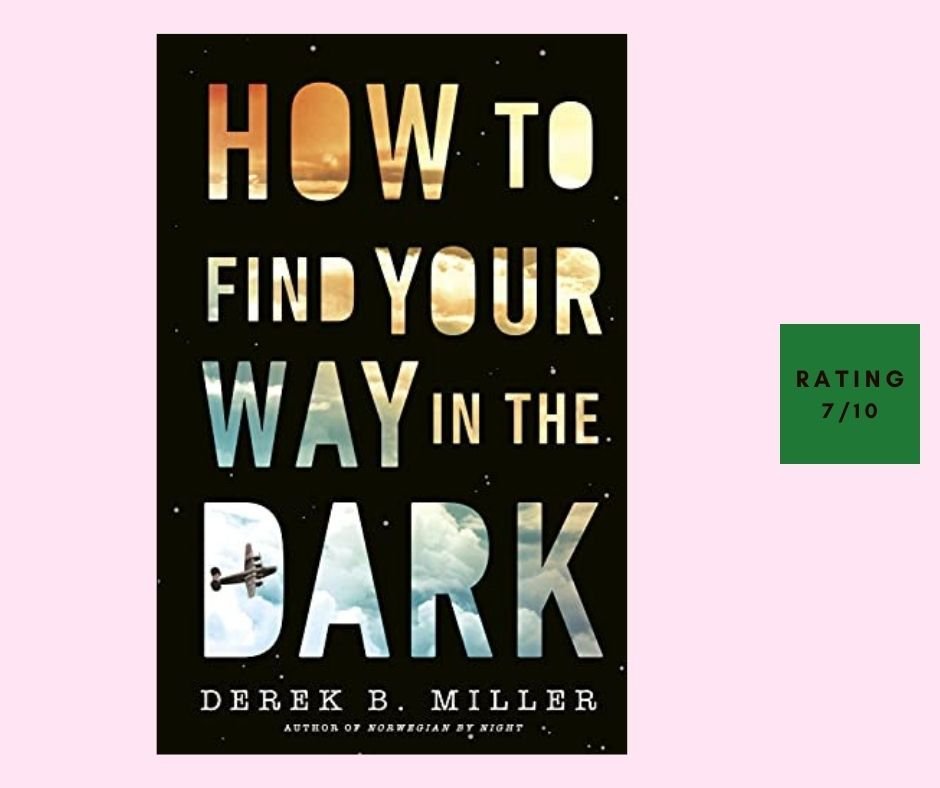
How to Find Your Way in the Dark by Derek B. Miller [7/10]

Derek B Miller How to Find Your Way in the Dark

How to Find Your Way in the Dark” is a coming-of-age tale with a dark patina. A year after the tragic death of his mother, thirteen-year-old Sheldon sees his father killed beside him after being run off the road by a malevolent thug, and the resourceful teenager embarks on a journey of revenge and growth. Set in the northeast states of America in the lead-up and start of World War II, author Derek B. Miller brilliantly evokes a fraught, gaudy time. Miller is an exuberant stylist with a knack for bantering dialogue, and most scenes, even the violent ones, are laced with comedic touches. I was reminded of the expansive sagas of E.L. Doctorow, embedding complex lives in rich historical settings, only more gung ho. Overall, this is a fast-paced, immersive read diminished only slightly by the author’s love of all his characters and settings, sometimes at the expense of tautness. If you enjoy memorable, resourceful heroes, embrace How to Find Your Way in the Dark.

Promising Young Woman by Emerald Fennell [7/10]

Promising Young Woman review

Vigilante movies rarely work but when they do, they can be memorable. “Promising Young Woman,” a revenge story for the #MeToo era, follows a young woman turning the tables on misogynistic males, at first in random bars but then increasingly in a targeted fashion relating to an event in our hero’s life. Carey Mulligan is extraordinary as the scheming, candy-sweet-looking avenger, channeling deception, rage, ennui, and regret. Writer-director Emerald Fennell’s script charges ahead from one brilliant scene to another. The cinematography and the music fit perfectly. Promising Young Woman makes for edgy viewing, skirting satire and horror, and the closing bravura scenes seem both inevitable and regrettable from a story point of view. Recommended.

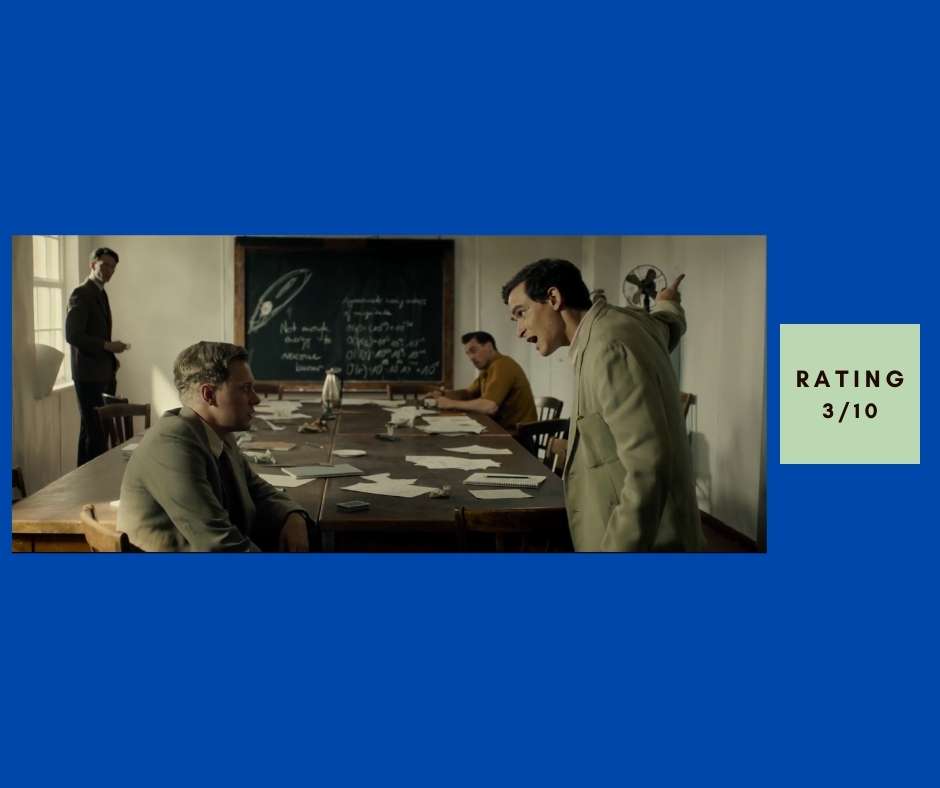
Adventures of a Mathematician by Thor Klein [3/10]

Adventures of a Mathematician review

Richard Rhodes, in Dark Sun: The Making of the Hydrogen Bomb, one of his rich histories of the atom, recounts at length the battle between Stanislaw Ulam, the Polish mathematical prodigy, and Edward Teller, our dark Cold War “Strangelove,” for supremacy and ownership of the Father of the Hydrogen Bomb title. He comes down, if I recall rightly, on Ulam’s side. It is an emblematic story, and, armed with Ulam’s memoir of the same name, should have led to “Adventures of a Mathematician” being a fascinating film for German writer/director Thor Klein. Unfortunately, constrained by being “based on a true story,” this movie seems to ride along with scene after scene sapped of dramatic tension. Phillipe Tiokinski seems well cast for the role (at least based on my limited historical impression of Ulam) but flubs the role. Even the sound seems at fault, with diction difficult to follow. A resounding lode of modern history, Adventures of a Mathematician disappoints.

Carnage by Nick Cave & Warren Ellis [7/10]

Nick Cave Carnage review

Scant months after Nick Cave’s lockdown solo album Ghosteen, a masterpiece of emotive melancholy, he is back, this time accompanied only by inexhaustible Warren Ellis. “Carnage” is a jostling volume of eight grandiose poetic soundscapes that seems to channel everything from The Boys Next Door to piano soliloquy. Cave’s voice growls and keens, crackles and pleads. Ellis lays down tracks of resonant surety. “Hand of God” is a triumph, biblical Cave crooning and crying over a chant and Ellis’s insistent pulse and swelling electronic strings. “The trees are black and history / Has dragged us down to our knees / In a cold time” sends shivers down one’s back on the dark “Old Time.” The elegiac title track throbs to Cave’s voice caressing a chorus that is as emotionally affecting as any he has sung: “It’s only love / With a little bit of rain / And I hope to see you / Again.” Carnage is intelligent, beautiful music for this age of ours.

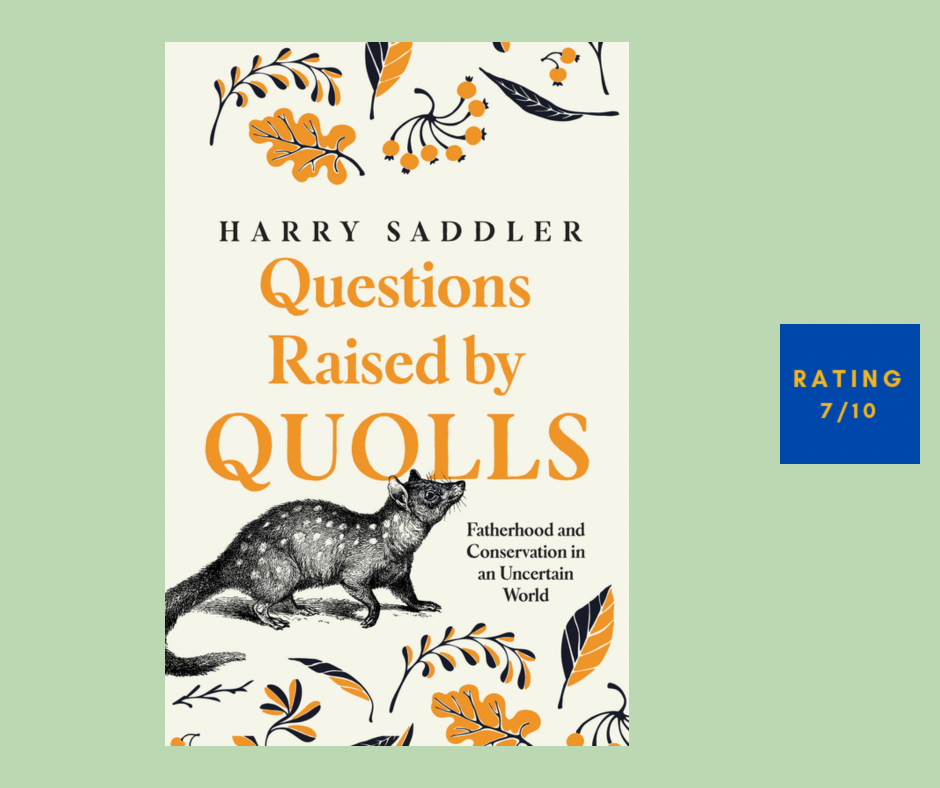
Questions Raised by Quolls by Harry Saddler [7/10]

Harry Saddler Questions Raised by Quolls review

Harry Saddler is one of those pure-hearted autodidacts you would love to know and chat with, but never can find. Reading his books, indeed plugging into his Twitter feed, is an undiluted pleasure. ”Questions Raised by Quolls: Fatherhood and Conservation in an Uncertain World“ is a far-ranging digression on matters existential and conservation-related, anchored by his investigations into Australia’s quolls. Quolls, short-lived, carnivorous mammals now close to extinction, sound fascinating (I’ve never seen one) and the author traces their near-extirpation through chronicling his family’s history and investigating conservation efforts. Another persistent thread is his earnest, almost plaintive pondering on whether to pursue fatherhood in the fraught Anthropocene era. Saddler is a natural, easy stylist, and his control of the narrative is sweet to experience. The natural world comes to life on the pages of Questions Raised by Quolls, a beguiling book I heartily recommend.