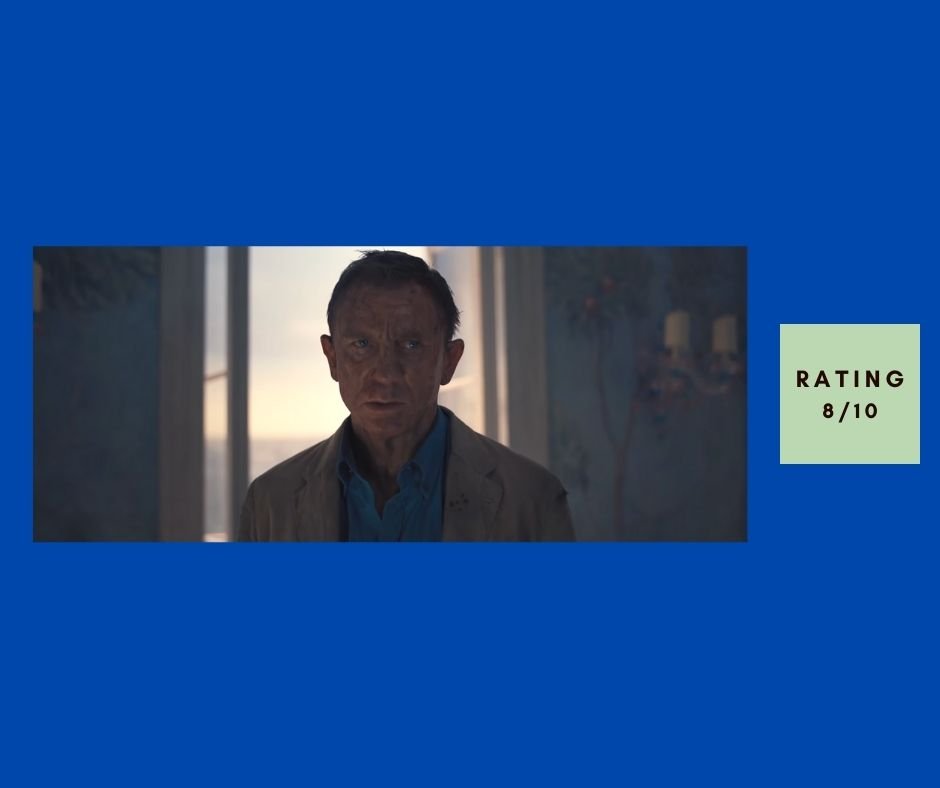
No Time to Die [8/10]

No Time to Die review

Seeing the latest James Bond movie is a ritual, but not always a huge pleasure. Daniel Craig has added gravitas to the Bond legend but the last two Bond outings provoked an identical reaction in me: I rocked up to the cinema with anticipation but walked out shaking my head at plot inanities. Thankfully, Craig’s final Bond appearance in “No Time to Die” has cemented his reputation, for this instalment in the Bond series is a hoot of a fine thriller. Amazing set-piece scenery wonderfully shot, coupled with suitably ludicrous but gasp-worthy violence, are a given in Bond films, and No Time to Die never disappoints. Craig emotes far more than usual, adding depth to the movie’s otherwise cartoonish flavor; in particular, Rami Malek’s portrayal as the obligatory arch-villain is solid but campy. The other key actors are well cast and capable; kudos to Ralph Fiennes as M and Ben Whishaw as Q. The plot is the customary throwaway nonsense but who cares? Cary Joji Fukunaga’s direction is flawless and the action rockets along with few pauses and no clunkers. Loud, fast, thrilling, No Time to Die left me glad for the end of lockdown.

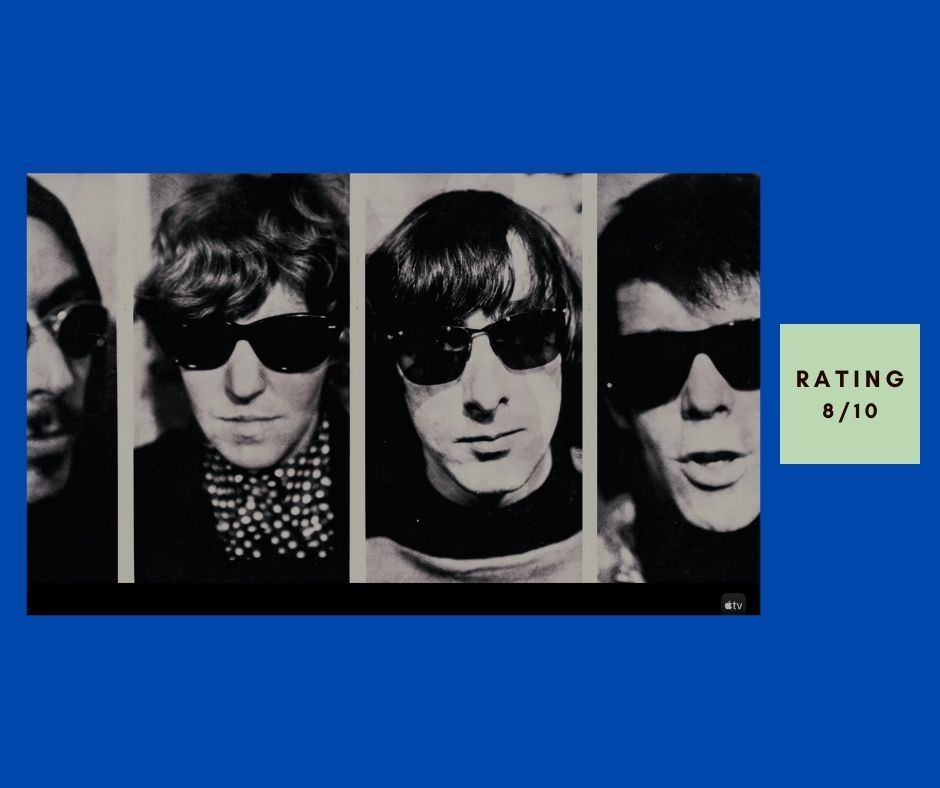
The Velvet Underground by Todd Haynes [8/10]

The Velvet Underground review

In theory, I’m the right age to have been influenced, as have so many, by the Velvet Underground, but my rebelliousness stopped shy of this iconic band. The Velvet Underground were very much Lou Reed’s vehicle of expression, but he was balanced, in the first incarnation of the band, by the inimitable John Cale, and by Sterling Morrison and Moe Tucker. I spent half a decade reading of the influence of the band upon artists and groups I adored. Now Todd Haynes, uncompromising filmmaker extraordinaire, has put together a biopic documentary of sorts: “The Velvet Underground.” Haynes has chosen to let the band and contemporary talking heads speak for themselves, via interviews and wonderfully evocative concert clips. Visually, he creates arresting montages and segues, and the end result is a propulsive narrative that forces the viewer to interpret on the go. The Andy Warhol era (he sponsored them for a while) is especially fascinating. Rock and roll, at least in my day, was meant to be revolutionary, dismissive of the old and established, and The Velvet Underground, as a film, certainly lives up that ambit claim.

The Labyrinth by Amanda Lohrey [7/10]

Amanda Lohrey The Labyrinth review

A gentle forensic novel centering on grief and restoration, “The Labyrinth” is my first Amanda Lohrey and it will not be my last. When her artist son becomes incarcerated due to homicidal negligence, a woman abandons her normal life and buys a ramshackle hut on the southeast coast of Australia, close enough to her son’s prison. Reeling, she seizes upon the redemptive idea of building a labyrinth, one of those twisty physical structure we all remember from our childhoods. With no grand plan, she is forced to rely on others—locals and an illegal immigrant—and gradually, hope for the future offers itself as a possibility. Describing the plot above does not do justice to the hypnotic plot and prose, to the interplay of real humans, to the interplay of ideas. The Labyrinth is no thriller but it is a page turner, and a meditative one at that.

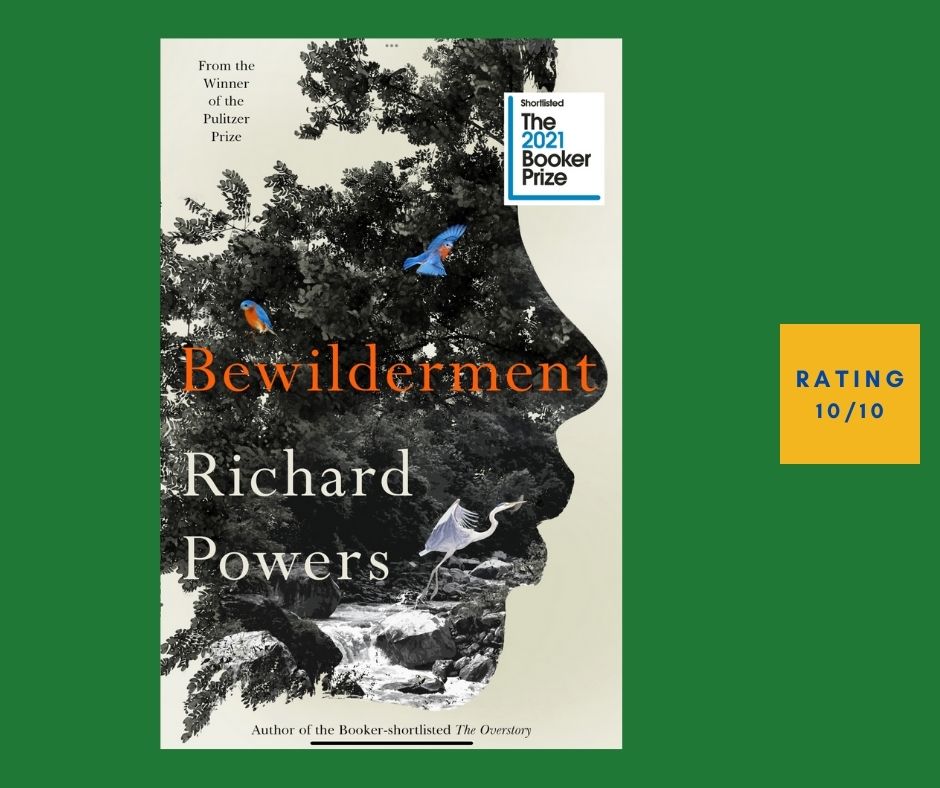
Bewilderment by Richard Powers [10/10]

Richard Powers Bewilderment review

A consummate stylist with cerebral depth, Richard Powers is without peer among contemporary novelists. Not all his works succeed fully (I lauded his previous book, The Overstory, but wished the story came with a bit less thematic baggage), but “Bewilderment” is his masterpiece. The two central characters are Theo, an astrophysicist still mourning the tragic death of his wife, and nine-year-old Robin, a precocious, troubled boy obsessed about the looming fate of Earth. Told close-up from Theo’s vantage point, the novel begins with a respite camping trip and then plunges into Robin’s participation in a leading edge experiment in which he is fed his dead mother’s emotional biofeedback. All this a few years into the future, with the planet under stress and America roiled by the return of never-named Trump. Thus with just this storytelling setup, the reader imbibes Powers’s insights into far outer space, into biofeedback, into the climate crisis (especially the slowly looming species’ extinctions), and into the role of science in our modern world. Yet none of this is heavy. Instead, Bewilderment is a beautiful tale of a father’s endless love for his son in terrible times. Sentence for sentence, Powers writes like no other; I was swept up by the precise beauty of every paragraph. The ending had me, and still has me, in tears. Do yourself a favor … more, do your friends a favor, and make sure you and all those you know receive the grace of this wondrous novel: Bewilderment.

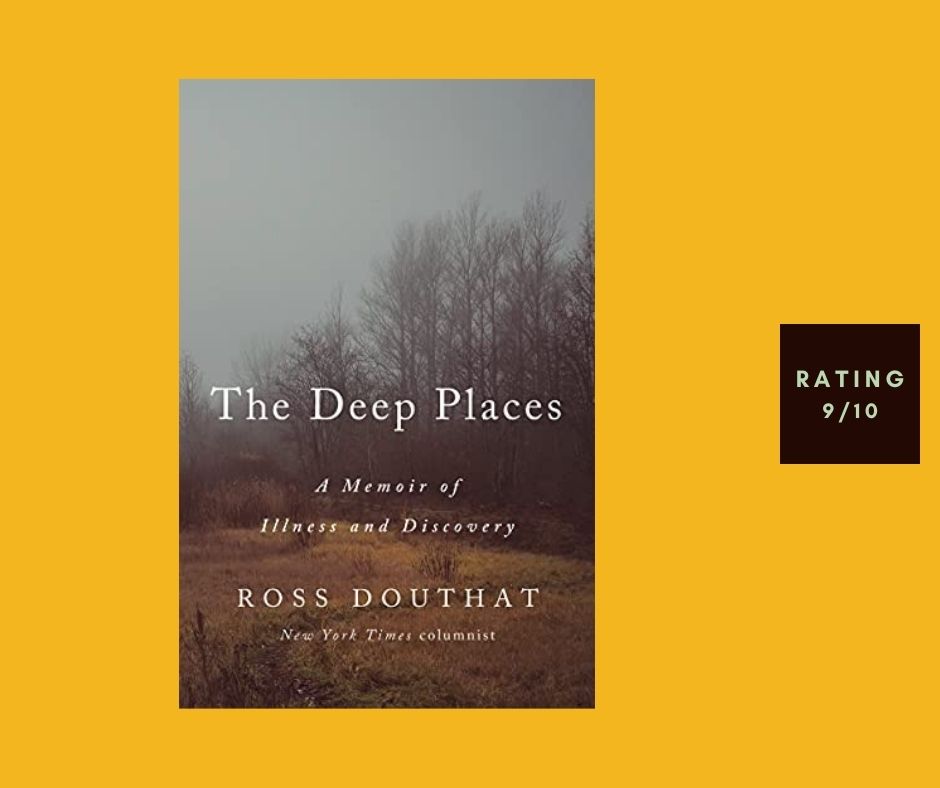
The Deep Places by Ross Douthat [9/10]

Ross Douthat The Deep Places review

In 2015 New York Times columnist Ross Douthat, settling into new rural bliss, was struck by terrifying pain all over his body, often in strange places, rendering him sleepless and barely functional. It took a while but he discovered he had tick-born chronic Lyme disease, a diagnosis that is not even an official diagnosis, because 21st Century medicine does not recognise it. Thousands, it turns out, have it, yet in many cases doctors end up urging patience and therapy. No formal cure exists. “The Deep Places” is Douthat’s chronicle of the next five years and I have to confess I came to the book not out of any interest in the subject, but because I’d been wowed by an edited extract. And the book bears out that instinct of mine: it is beautifully written, propulsive yet intellectually multifaceted, horrifying yet always imbued with hope. The author manages to evocatively convey his passage to the netherworld of non-official remedies, be they huge doses of antibiotics or quasi-quack offerings, and to simultaneously debate both sides of the official-versus-alternative debate. Throughout, a deep sense of appreciation for everyday quotidian life, something Douthat could rarely experience pain-free, shines through. Dear reader, read The Deep Places to see a master writer in action, and maybe to learn something new about the medical world.

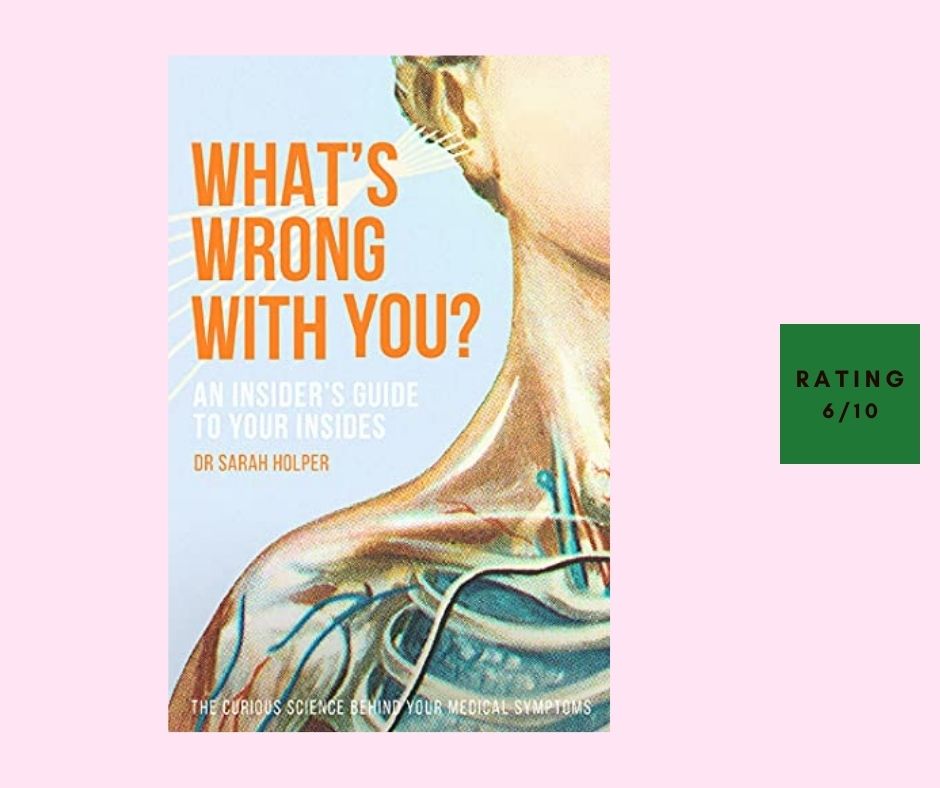
What’s Wrong with You? by Sarah Holper [6/10]

Sarah Holgate What's Wrong with You review

In “What’s Wrong With You?: An Insider’s Guide To Your Insides,” young medico Sarah Holper gives us a cook’s tour of the way our innards work in commonplace areas often queried by people. Why do we yawn? What’s burping all about? Why will I, an older man, go bald but not my wife? Why does diarrhoea arise in so many different scenarios? How come I get itches? And so on, each intriguing piece engagingly written and informative. The author adds historical background, plus oddities, both of which added little to my enjoyment (but might intrigue you). I did find it refreshing to read a “medical” book without being sold “health how-to” or a website of supplements. What’s Wrong with You? will tantalise many a reader.

Roadrunner by Morgan Neville [9/10]

Roadrunner review

If you were a Bourdain fan, “Roadrunner: A Film About Anthony Bourdain” is right up your alley, but what if you’re not? Me, I don’t read chef memoirs and watch few travel shows, so I was aware of him (who wasn’t?), but barely registered his presence and then absence, yet this surefooted, stately biography, crafted by stellar documentarian Morgan Neville, stirred me. Moving chronologically through Bourdain’s life until his sudden suicide, seemingly at the peak of his fame, the documentary inches toward the final, core question: why? Of course Neville was blessed with tons of on-screen hours to utilize, but he finds wonderful additional footage, plus a number of close friends and colleagues of Bourdain who were willing to be compelling talking heads (mostly seated at restaurant tables as if in homage). Neville shows a complete grasp of pacing, as the film flails at answering that big question, and although no final answer is given, the strong implication is that Bourdain’s obsessive personality, close to addictive, which hurled him at anything he was interested in or attracted to, plunged him too low after a final high. Watching the final credits, I felt a bond of connection to this talented, unknowable man. Roadrunner is surely one of the finest documentaries of 2021.

Great Circle by Maggie Shipstead [8/10]

Maggie Sipstead Great Circle review

A long, virtuoso literary saga that feels like something from the twentieth century, “Great Circle” interposes the life story of Marian Graves, a pilot who disappears in 1950 while attempting a two-Poles circumnavigation of the Earth, with a tale of a modern-day actress playing Marian in a film. Maggie Shipstead writes sumptuous descriptive prose, her evocations of everywhere from rural Montana to London a delight to read. But the most luminous writing is that about flight; by book’s end, I knew how to fly and what it is like. The novel is also about knowing your dream: Marian longs to fly from a young age, and clings to that vocation through personal trials and tribulations. The author’s systematic plotting of the two stories, with clever interconnections, is sure-footed, and the long read seems far shorter. An expansive book novel like this invites nitpicking, and I found a handful of aspects – the plot treatment of a key gangster, the modern-day story’s overshadowing by the historical one, and the unwinding of the climax – to be slight distractions. But overall, Great Circle is an absorbing, large-canvas read that exhilarates through its grand tale and its brilliant stylistics.

Beloved Beasts by Michelle Nijhuis [9/10]

Michelle Nijhuis Beloved Beasts review

Framed as a condensed narrative history of modern conservation, “Beloved Beasts: Fighting for Life in an Age of Extinction” is also a welcome survey of where we, the human race, are in relation to the non-human species on Earth. The author, an American science journalist, writes like a dream and her command of her vast material is exemplary. Tracing the conservation movement from Linnaeus who brought order to species’ taxonomy; through early species’ rescue attempts; through Aldo Leopold’s “land ethic”; through Rachel Carson’s beautiful writing bringing conservation into broader society; through the introduction of ecology into our vocabulary; through the invention of cross-disciplinary conservation biology; through the notion of integrating humans and threatened species; to our modern understanding of the looming (current?) age of mass extinctions and a final look at those desperate to avert disaster (forgive this summary’s lack of mastery of Beloved Beasts; it’s a complex narrative). Throughout, the author leavens the historical account with personal experiences in the wild and amongst conservationists. Being a lover of the species of Cranes, I especially enjoyed the tale of how Whooping Cranes were rescued from the brink. I urge you to buy this as a window onto one of our greatest challenges, protecting our planet’s biodiversity, and I predict that if you do make the purchase, upon completing the read, you will commence to reread, as I am right now.

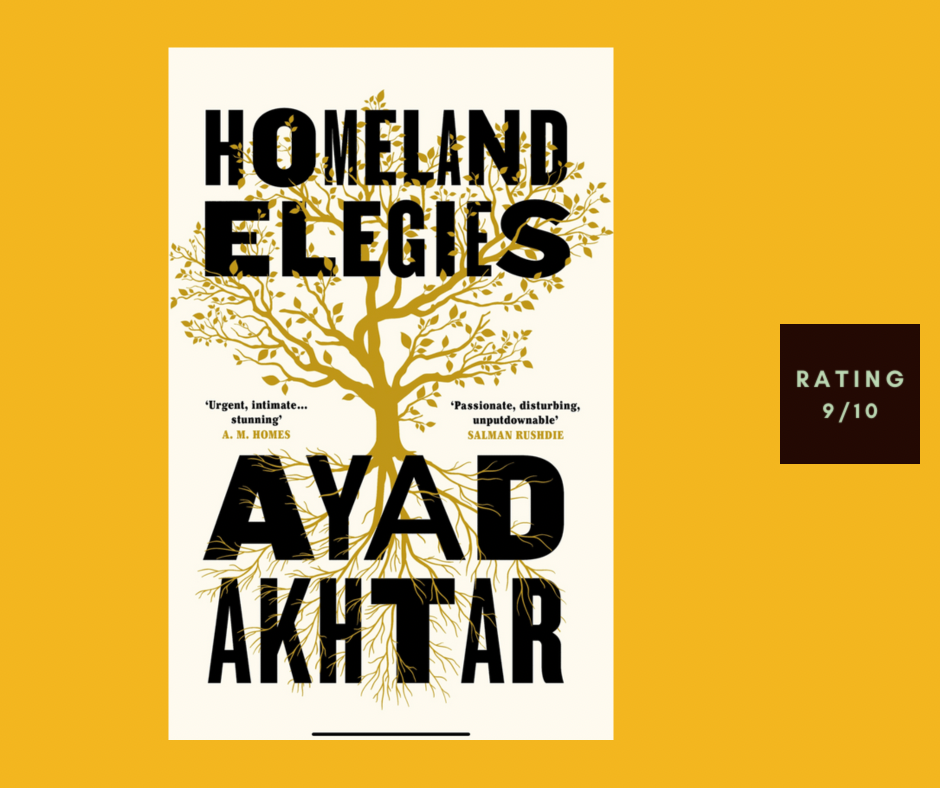
Homeland Elegies by Ayad Akhtar [9/10]

Ayad Akhtar Homeland Elegies review

Redolent of the autofiction of Karl Ove Knausgaard, ”Homeland Elegies” is a stunning work about the author’s experience of being a Muslim in the United States, including experiences as an author striving to find what to say. Akhtar is fully frank about his father’s fascinating life after emigrating from Pakistan, including a brief stint as Trump’s cardiologist, about his conflicted feelings about his m,other; about his riveting short-term patronage by a Muslim New York hedge fund operator; about his sexuality; about the seemingly never-ending tribulations of American Muslims after 9/11. But it’s not the frankness that rivets the reader, it’s the nimble, evocative writing style and the piercing evocation of amazing scenes. Homeland Elegies dissects the existential aspects of being a Pakistani, being a Muslim, but, especially, being an American. A tour de force that, somehow, reinvents the modern memoir.