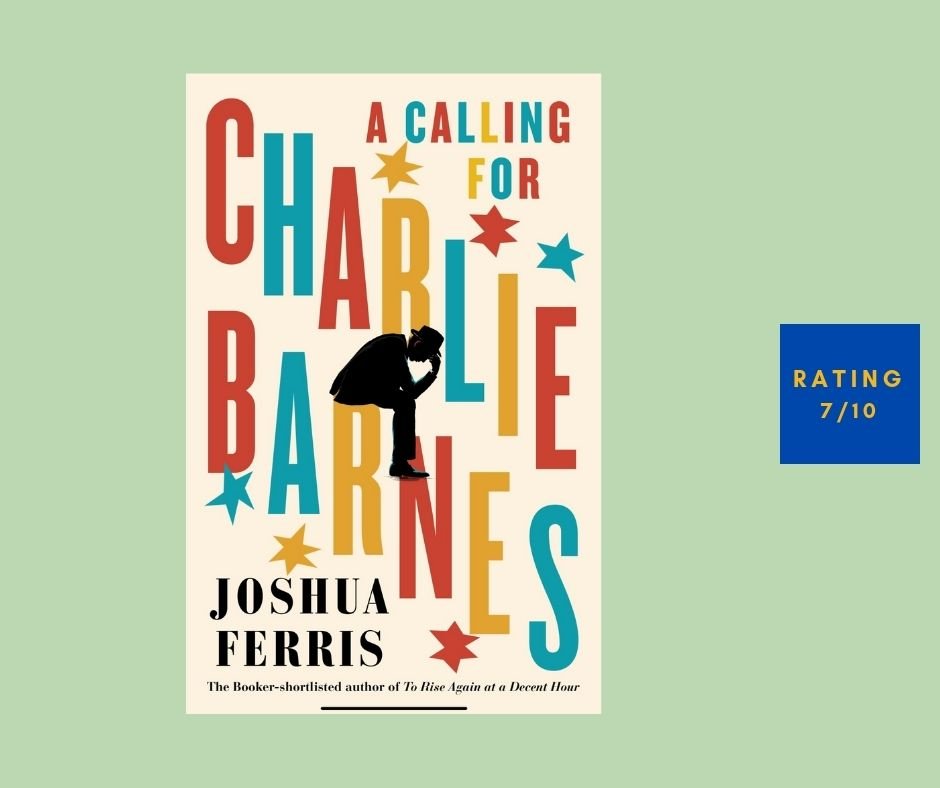
American author Joshua Ferris’s 2007 debut, Then We Came to the End, delighted me wth its brilliance, and I relished his subsequent two novels. ”A Calling for Joshua Barnes” meshes skewering satire with a meditation on life’s purposes, whilst playfully teasing the reader with metafictional twists. Charlie Barnes is a rapscallion, a man of ideas, a contradictory capitalist, as well as a prodigious ex-husband and the father, beloved or otherwise, of sons and daughters. In the wreckage of the GFC, suspecting a cancer, at the tail end of life, he flails at existential options and tilts at reconciliations and new starts. His storyteller son is there to help, but the story of Charlie is ambiguous. Ferris is an exuberant stylist and somehow manages to combine savaging Charlie and rendering him loveable. Dialogue zings, there are chuckles aplenty, and Charlie’s twilight world glows with realism. In the end, A Calling for Charlie Barnes offers myriad pictures of life’s meaning, the relationships between parents and children, and the baffling nature of story. Recommended.
The Heron’s Cry by Ann Cleeves [9/10]
Master of the mystery novel, of the marriage of sneaky plot and deep characterization and evocative locales, in 2019 Ann Cleeves departed from the Shetland Islands of her wonderful Shetland series (see my review of Season 5 of the associated streaming series), and the Northumbria of her much loved Vera series (see my review of the latest instalment), to launch a new series set in North Devon. Number 1, The Long Call, was a fine read. Now “The Heron’s Cry” brings us back into the world of DI Matthew Venn, a dedicated, systematic homicide detective; fiery Jen Rafferty; and bulldog Ross Pritchard. When a doctor is discovered murdered in a rural artists’ colony, a shard of his daughter’s glass creations the grisly weapon, Venn and crew embark on a baffling, increasingly frustrating (another body!) investigation swirling around the British mental health system. The Devon countryside and bleak coastline are wonderful brought to life, as are the many characters. The plot is a classic, twisting and unpredictable. Number 2 in the series eclipses Number 1 by a long way, and I commend The Heron’s Cry as a superlative, one-sitting crime fiction read.
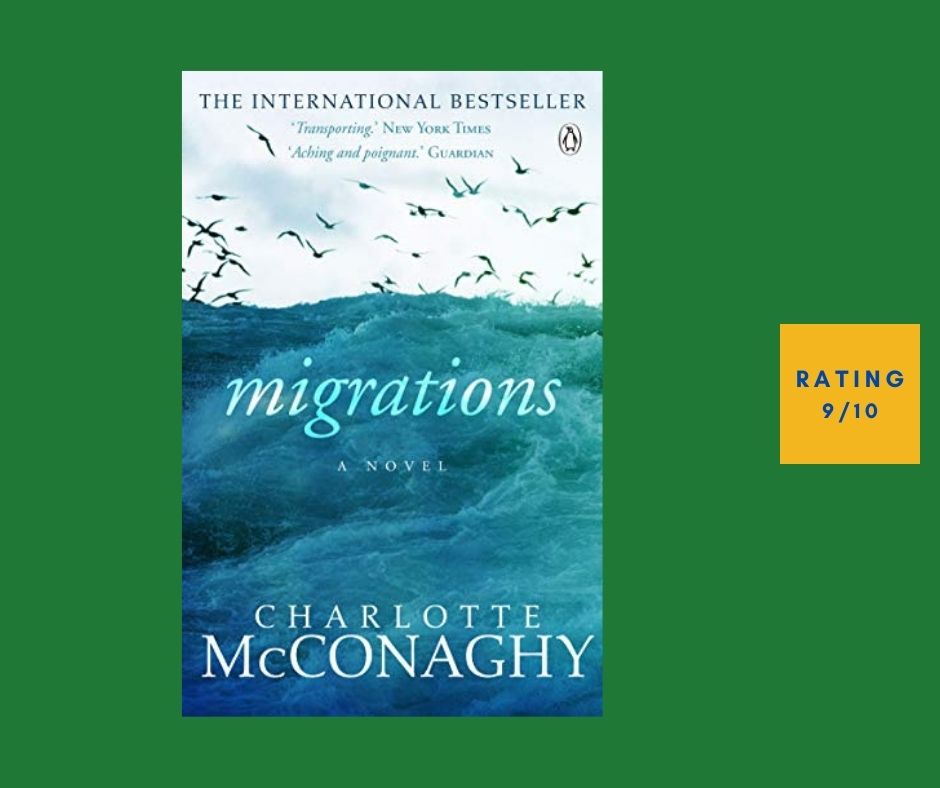
Migrations by Charlotte McConaghy [9/10]
From its opening pages, “Migrations” is a tour de force of lyrical, propulsive, emotionally rich writing. The story of Franny Stone, an amateur setting out from Greenland to track Arctic Terns on their impossibly long migrations to the Antarctic, is enriched by a dystopian setting of a soon-to-be world of species’ extinction and Franny’s dark back story. The scenes in the wild, be they on Greenland ice or on a fishing boat crewed by a spirited, motley crew, are extraordinarily vivid. Books of this ilk can quickly become mired in despondent themes and indulgent lyricism, but the author puts all her skills and messages in the employ of a steadily escalating plot. On the one hand, Migrations begs for a movie adaptation, on the other hand, it’s the inner life of Franny that gripped my heart as we approached the finale. Migrations must not be missed.
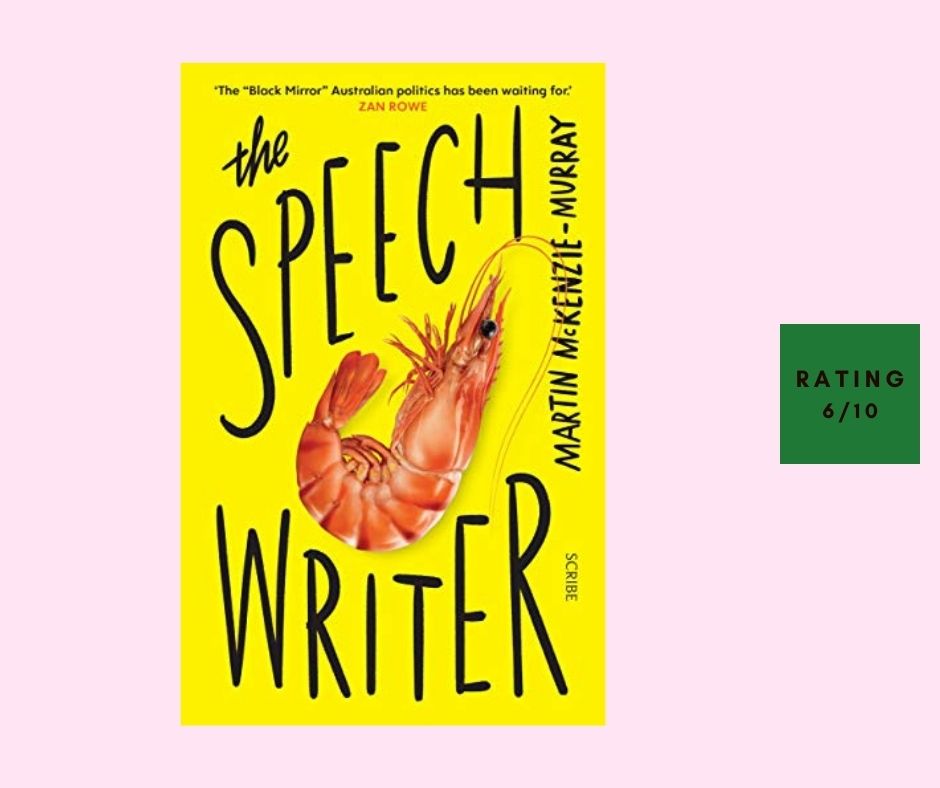
The Speechwriter by Martin McKenzie-Murray [6/10]
“The Speechwriter” is an exuberantly penned Australian satire, fun to read yet possessing little heat in the end. The speechwriter in question is Toby, a talented wordsmith obsessed with oratory, who is catapulted up the ranks of political speechifying despite obtuseness and a seeming desire to self-destruct. Eventually, his quixotic wordsmithing results in prison incarceration with a boofhead cellmate, who encourages him to write down his story. This is no-holds-barred, outrageous skewering of Australian politicos and makes for swift, chuckling reading. The author, a journo/speechwriter, loves words as much as Toby does, and the overall impact of The Speechwriter is like listening to a manic stand-up unfurling a shaggy dog story.
Passing by Rebecca Hall [5/10]
“Passing” is an ambitious arthouse story based on African Americans pretending to be white, a concept used with wonderful effect in Brit Bennett’s impressive novel The Vanishing Half. There is much to admire here: a clever setup with two light-skinned blacks in 1920s New York, one having pretended to be white before marrying an arrogant racist, the other a hardworking, cautious soul; the black-and-white cinematography, alternately fuzzy and sharp; a tinkling piano soundtrack; sparkling jazz club scenes; and an ambiguously unfolding plot that teases the viewer. All the issues of racism, including induced shame, stand out clearly, and Passing should have been a profound, stylish revelation. Instead, I found myself unattached to both the main characters, both of them, dare I say it, miscast and too studious in execution. Over the course of the viewing, I paid heed, I pondered, but I disassociated. Character identification can be like music appreciation, different from one listener to another, so feel free to ignore my impressions and partake of this intriguing film.
Hot Air by Peter Stott [9/10]
The heroes of today are not muscle-bound gladiators but the committed climate scientists wrestling with humanity’s greatest scientific problem: how fast is our planet warming and what will the consequences be? Regrettably, with some notable exceptions, scientists are self-effacing and reluctant to step into the limelight. Despite all the intellectual and political dramas swirling around climate change over the past decades, very few of our geeky exemplars have told their stories. Now, we have one rousing story, namely ”Hot Air: The Inside Story of the Battle Against Climate Change Denial,” penned by esteemed British climate scientist Peter Stott. Covering his personal journey from a first nervous international conference appearance in 1996; through vital roles at Kyoto (where he met his first pseudoscientific savager, the now-ignominious Fred Singer, “a squat man with twinkling eyes); Shanghai; Trieste; Paris; a London court case; Hobart; Stockholm; to the present day. My heart was in my mouth as I read about Stott’s horrific 2004 experience in Moscow at a fake scientific conference cooked up by Putin. His tale of the infamous stolen emails of 2009 is riveting and scarcely believable as to how vicious the nonsense claims were. I noted how often, despite Stott’s great scientific stature, he describes nerves before major talks or papers, a sign of humility. Only at the end, after a quarter of a century in the trenches, was Stott able to express some cautious optimism. Smoothly written in approachable, clear prose, plotted capably, and fervent throughout, Hot Air is a triumph of modern heroic storytelling. Buy and read, please.
Ted Lasso Season 1 [9/10]
Word of mouth for the first season of “Ted Lasso” was overwhelmingly positive, especially during dark lockdown days, but it took me over a year to get to it, mostly because the Apple+ streaming platform seemed too paltry back then. Now I can confirm the accepted wisdom: Ted Lasso is an unmitigated pleasure, an intelligent, vibrant, singular series. You probably know the premise: a middling American football coach—Mr. Ted Lasso himself, played superbly by Jason Sudeikis as the eternally optimistic, sweet-as-pie mensch (with occasional hidden flaws)—is hired to coach mediocre British soccer team AFC Richmond. From the start, the series features Yank-Brit cultural clashes, often involving jokes that should be lame but are rendered hilarious with wonderful comic timing. The series takes its time unveiling a panoply of contributing characters: Brendan Hunt is also flawless as the other hired “Coach”; Hannah Waddingham wonderfully hams up the club’s owner; Brett Goldstein does a great gruff pastiche as the foul-mouthed star, Roy Kent; and let me also mention with admiration other key roles played by Nick Mohammed, Jeremy Swift, Phil Dunster, and Juno Temple. The entire ensemble (and there are more) swirl around an unfolding plot of sweet twists and resolutions, following this ill-fated soccer team toward some kind of cohesion. The dialogue is swift and intelligent and funny, the plot is controlled well, the camerawork is all English eye candy, and the overall theme of hope resonated the heck with me. All in all, I see Season 1 of Ted Lasso as an unmitigated triumph.
Chernobyl 1986 [6/10]
“Chernobyl 1986” holds amazing promise: a highly atmospheric, right-there-at-the-scene depiction of the nuclear catastrophe from the point of view of Ukrainians. And there is much to admire in the fantastically realistic (and to my Western eyes, distinctly foreign) settings and down-to-earth citizens of Pripyat and nuclear “liquidators.” Danila Kozlovsky dominates the movie as both director and lead actor, and he ends up being both an asset and, I think, a liability. His portrayal of firefighter Alexey is understated and truthful but lacks drama in key scenes, and his direction, while fiery and tight in the action sections, feels slow and naive away from the reactor itself. The core scene of the nuclear explosion itself is magnificent; the underground repair scenes, despite their surreal nature, drag a bit. The overall narrative holds without gripping, and at the end of Chernobyl 1986, my overwhelming imprint was one of regret that the cinematic experience did not match the expectation. Nonetheless, I commend this as a fascinating perspective on a defining event in our recent history.
From Dreams to Dust by The Felice Brothers [9/10]
I always knew The Felice Brothers as a lurching country-rock band with anthemic choruses and chaotic music, brilliant but untutored. Well, more recently they have changed, maturing without losing their power. Their eighth album, “From Dreams to Dust” was recorded in a church and has an expansive sound and eclectic tunesmithing from the two brothers. Ian Felice’s lyrics are superb, sometimes spooling characters’ thoughts in a tale, sometimes rambling, clever poems. The band’s emphasis on ear-candy choruses remains unchanged and my recent days have involved singing nifty lines in the shower, on the street. My one Felice Brothers concert was memorable and the thought of seeing From Dreams to Dust writ large on a stage give me goosebumps. None of the dozen tracks is less than superb, so choosing highlights was tough, but check out “Jazz on the Autobahn,” a triumphant mix of rhythm, talking vocals backed by doo-wop, and rousing chorus; the transcendent, reflective “Be at Rest”; and the Dylanesque spoken-word masterpiece of “We Shall Live Again,” including some of the zingiest rhymes I’ve ever heard. In short, From Dreams to Dust is the band’s best yet and, in a perfect world, would rule the airwaves.
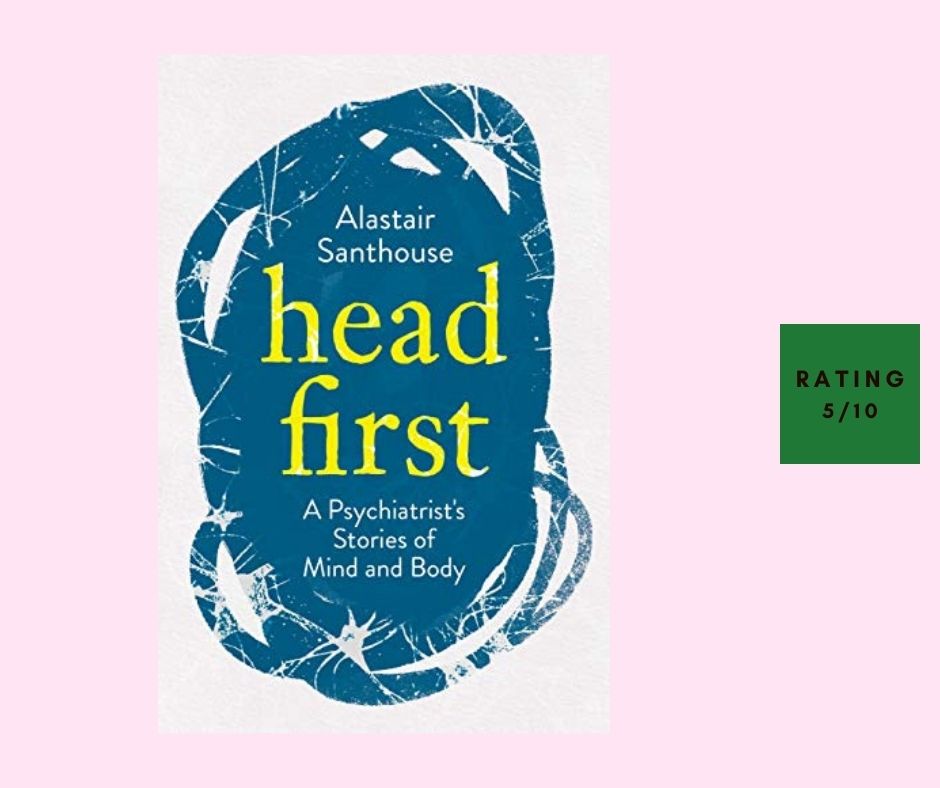
Head First by Alastair Santhouse [5/10]
A top psychiatrist reflects on a lifetime of treating patients in hospital … I expected such a book to fascinate and yes, “Head First: A Psychiatrist’s Stories of Mind and Body” does intrigue. The author darts backward and forward in time, recalling patients pained, miserable, suicidal, and everything in between. Seemingly a humble mind, he reflects on the ongoing mysteries of why minds become troubled, how treatments are accepted or subverted, how mental and emotional conditions interact with bodily symptoms. Because he has mostly worked in the hospital system, Head First is also a valuable insight into how psychiatry has gradually, but undoubtedly insufficiently, gained a foothold in overall treatment. Santhouse bewails the myopia of medical specialization and doctors’ incomprehension of the role of the mind in illness and pain. The author’s style is straightforward and direct, almost conversational, and I would have enjoyed a more compelling voice and a less amorphous overall shape, but there is value and insight in this read.