”Kleo” is one heck of a surprise, seemingly the child of the brilliantly plotted Patriot series and the stylish, gory mayhem of Killing Eve. Chock full of visual treats, imaginatively varying in pace, and plotted with verve over eight unpredictable episodes, it is never wholly original, yet always fresh. Jella Haase is perfect as East German assassin Kleo, wrongfully imprisoned and then released when the Berlin Wall comes down. Set on revenge, she eventually enlists unlikely companions such as druggy Thilo and hapless West German cop Sven. The scriptwriters and directors are not afraid to take chances, with the result that every episode is a hoot from start to end. No grand themes intrude but the post-Cold War German backdrop fascinates, and the music is an exuberant feast. Kleo is a 2022 standout.
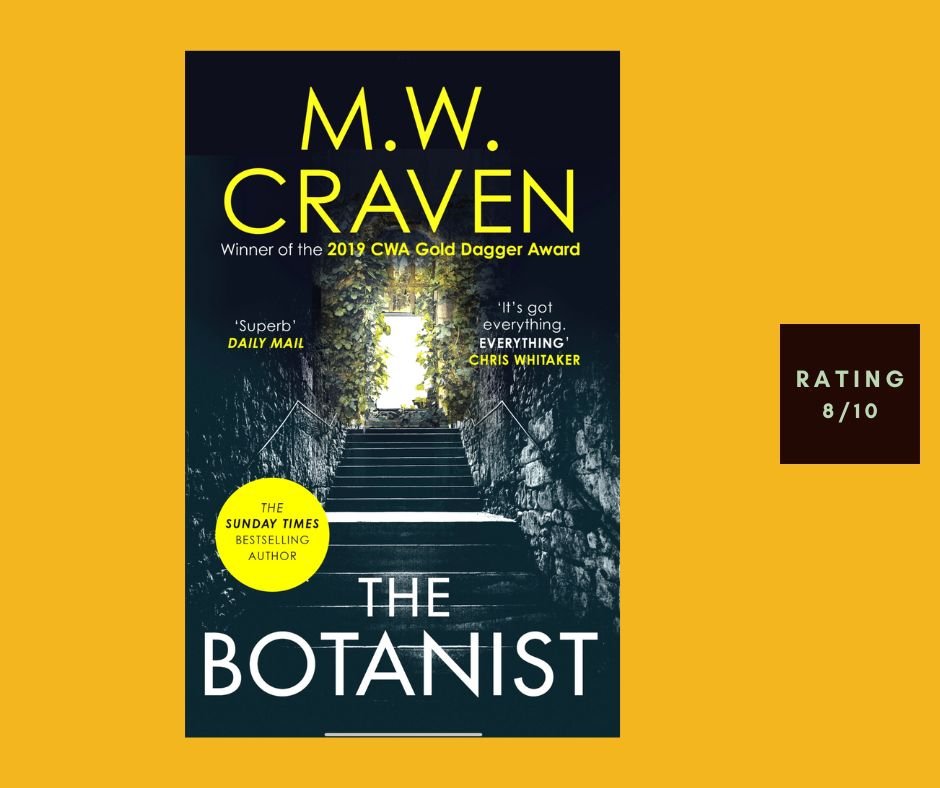
The Botanist by M.W. Craven [8/10]
The fifth in the crime fiction series featuring bulldozing DS Washington Poe of the National Crime Authority and his odd-couple partner, Tilly Bradshaw, a super-brilliant but innocent analyst, “The Botanist” is another beguiling M.W. Craven rocket ride. Pitted against the super-clever poisoner calling himself The Botanist, whose specialty is murdering bad folks in locked rooms, Poe also finds himself scrambling to save his forensic scientist pal Estelle, implicated in another no-escape locked-room mystery. If those descriptions signal complexity to you, let there be no mistake: this is classic, complex, clue-based genre fiction, but it comes laced with acerbic humor and dolloped out with clockwork pacing. The author flirts with plot obsession, which is what ended up turning Jeffrey Deaver’s initially pleasing thrillers into self-pastiches, but the jaunty style, the perky characters, and the controlled pacing keep the Craven engine on a steady footing. The Botanist can be read as a standalone, a most enjoyable one, but really, for a series this much fun, do yourself a favor and start back at #1, The Puppet Show.
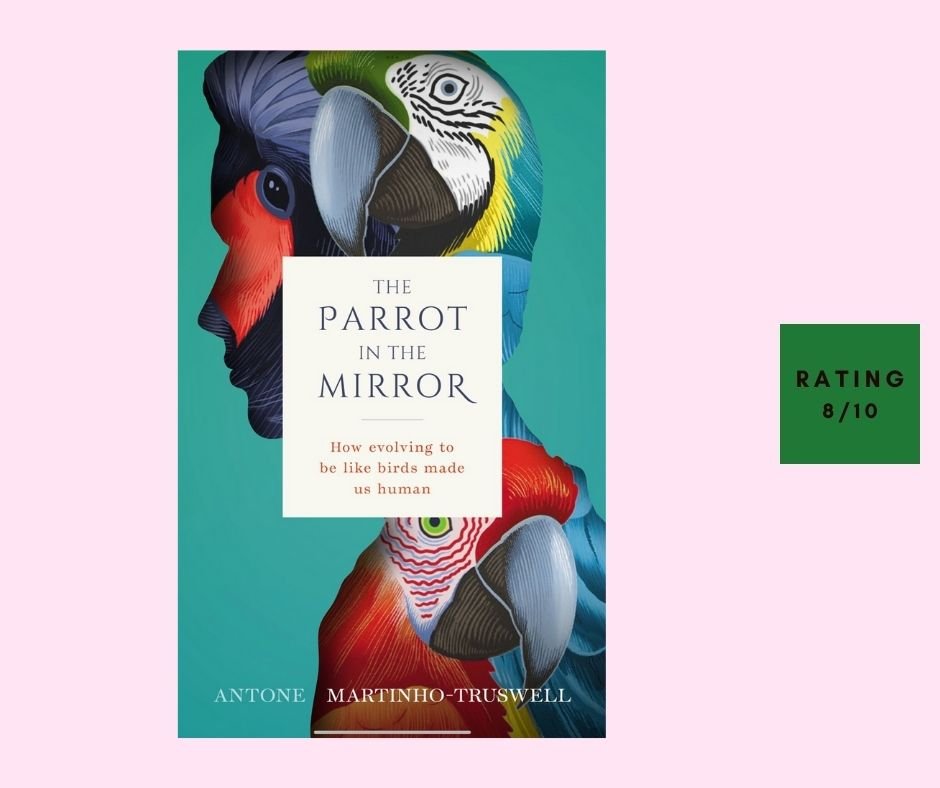
The Parrot in the Mirror by Antone Martinho-Truswell [8/10]
Australian-resident zoologist Antone Martinho-Truswell has a roving mind and spirited, engaging pen. “The Parrot in the Mirror: How Evolving to Be Like Birds Made Us Human” is his fascinating notion that some of what we are as humans is the result of convergent evolution matching how birds evolved far, far earlier. Birds broke off from the evolutionary tree of dinosaurs, then, much later, humans evolved on a completely different branch. Yet some of our traits, driven by the pressures of evolution, have ended up being closer to those of birds than to how other mammals behave. The author is a sparkling writer, able to draw the reader along challenging but fascinating routes, turning what could have been turgid academic theory into a marvelous tale. I was drawn to The Parrot in the Mirror by a fascination for the fifteen crane species of birds, one of the more ancient groups of birds, and I found the book to be a valuable read, but I feel certain that many general nonfiction readers would sink into the storytelling.
The Climate Book by Greta Thunberg [8/10]
A brilliantly edited and curated guide to the climate crisis, from the science to mitigation to adaptation to responses, “The Climate Book” is a surprisingly readable tome of impeccable timing. Greta Thunberg masterfully guides the narrative, using her amazing, laser-sharp perspective, by interspersing her own eighteen editor’s/activist’s essays. A spectacular roster of over eighty scientists, professionals, policymakers, and activists (I like the fact that their superb credentials are listed only in the table of contents, when we read them, we’re expected to know who they are) provide the encyclopedic coverage of all the data and issues.
Zeke Hausfather is as lucid as ever covering methane, Katharine Hayhoe sums up the growing frequency and dangerousness of heatwaves, Fredericke Otto tells us about climate change attribution, Peter Gleick shares his insights as the pre-eminent expert on water threats, and Tamsin Edwards sketches out the likely outcomes at 1.5º, 2º, and 4º. The most chilling “hot off the presses” (at least to me) news comes from one of the most passionate, eloquent, brilliant climate scientists, Johan Rokström, warning us that “we have reached an existential fork in the road.” The issue is tipping points. Two decades ago “we still thought that the risk of irreversible changes with large impacts was very low, and that there was only a serious risk at 5–6°C of warming. … Today, our best understanding is that even at 1.5°C, and certainly between 1.5 and 2°C, we are taking enormous risks.” Gulp!
Right here, right now, The Climate Book is an essential compendium and action manual regarding the climate crisis. Everyone is obliged to read it.
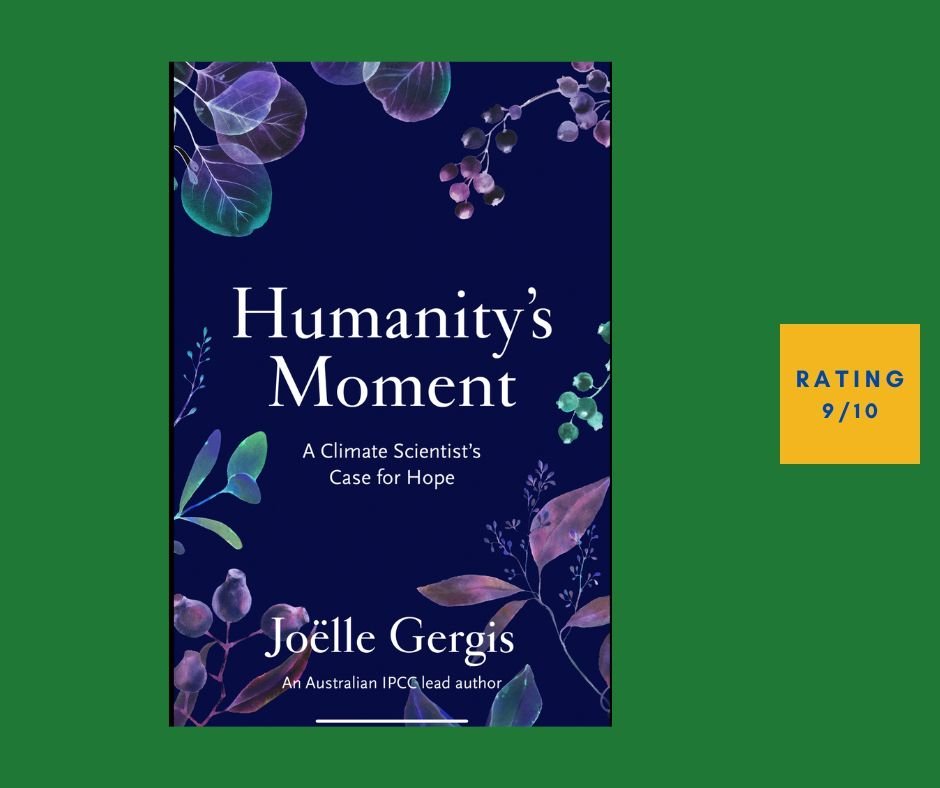
Humanity’s Moment by Joelle Gergis [9/10]
”Humanity’s Moment: A Climate Scientist’s Case for Hope” is a most welcome rarity, the recent journey of a dedicated climate scientist with an eloquent pen and a compassionate heart. This was not a physical trek but a grinding mental journey helping to assess scientific evidence and then assemble it into conclusions for the hot-off-the-press IPCC Sixth Assessment Report. Masterfully, she uses a step-by-step overview of that report, expressed in lucid prose, to provide a fully up-to-date Climate Science 101 course for the reader, while also recounting her own experiences, including journal entries. In effect, this book is a window into one climate scientist’s ”real” views on the climate crisis, over and above what the necessarily conservative and careful IPCC report states. As she works, she witnesses what the reader does, our Earth burning, melting, flooding and bending under winds, and it near breaks her heart. The final section of the book then becomes her reckoning with those heartrending experiences and here the author’s prose blooms. In the end, Humanity’s Moment morphs into a Silent-Spring-like ode to humanity’s quest for justice and hope. Of all the climate crisis books you notice this year, make this one your reading priority.
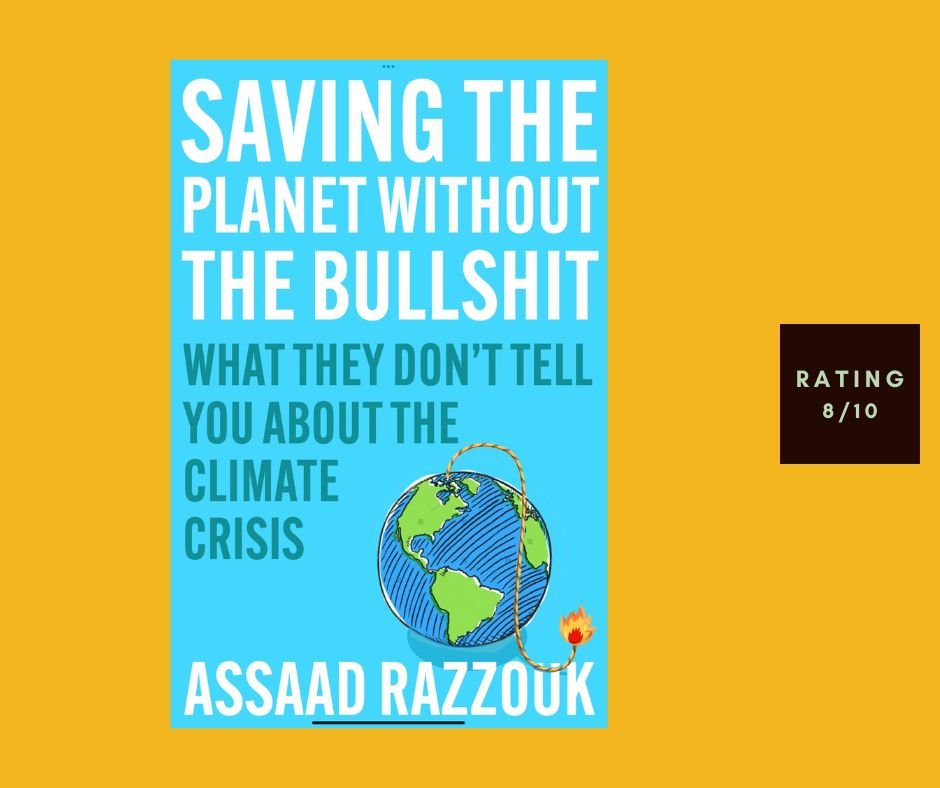
Saving the Planet Without the Bullshit by Assaad Razzouk [8/10]
Clean energy entrepreneur and ”thought leader” punches solidly with “Saving the Planet Without the Bullshit: What They Don’t Tell You About the Climate Crisis,” tackling in over two dozen info-packed, straight-talking chapters aspects of the climate crisis and its possible solutions. Mostly he confirmed a view I have held for five years, namely that ”it’s all about zeroing fossil fuels, forget everything else, period.” Individual actions and accountability are important, he preaches (in this case, to the converted), but often deliberately distracting, and under this rubric he includes plastics recycling, tree planting, offsets, veganism, flight shaming, corporate ESG, and so on. Pour opprobrium on cruise ships, fight for insects, ride a bike, hit the top ninety sinners, and so on. Employing a sizzling, fact-laden style, the author makes every chapter a revelation or helpful synthesis. Even if you think you know it all, Saving the Planet Without the Bullshit is a delightful ride and essential companion.
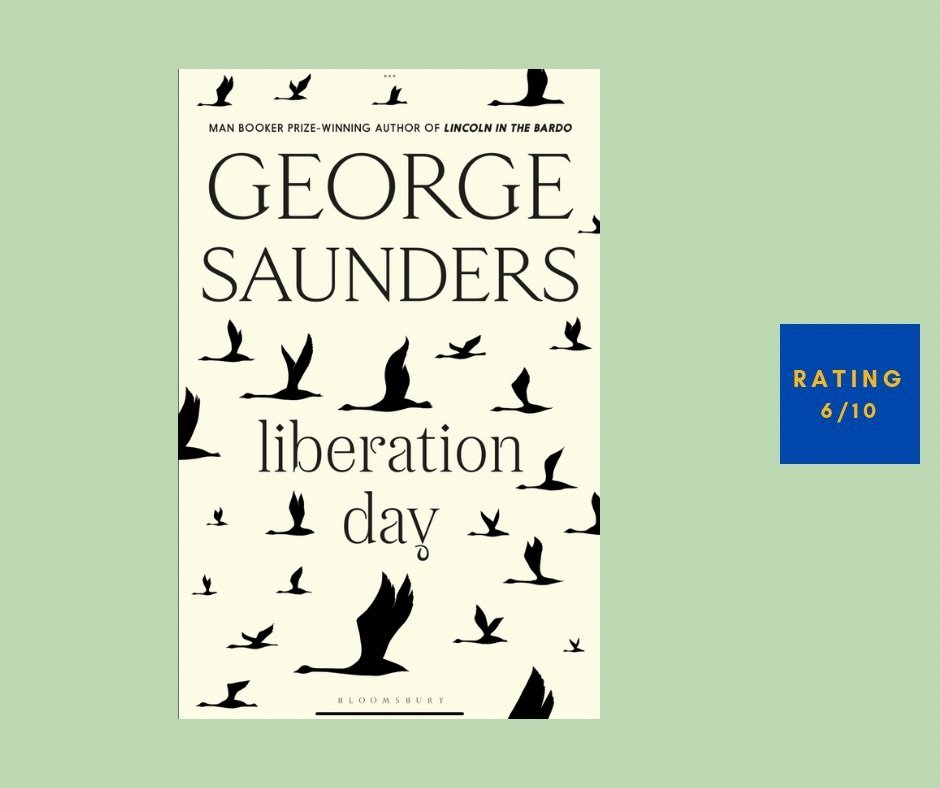
Liberation Day by George Saunders [6/10]
The nine short stories in “Liberation Day” are a mix of immersive character studies and boundary-stretching brutal sci-fi concepts unwound for the reader. The title story, for example, posits slaves shackled and semi-tortured to vocalise scripts for an ultra-rich family, while in “Ghoul,” a hellish amusement park is maintained by brainwashed slaves. The heroes in such stories grapple with survival and purpose, parodies of the real world. “The Mom of Bold Action” puts us in the head of a scatty mother trying to write mini fables, who swings into Trumpian action when her son is mildly assaulted and her husband retaliates. This story is a virtuoso turn, a frenetic unreliable-narrator rant that reveals much about our current world. The author is a master of prose, control, and hidden depths, but I found most of the protagonists impressive rather than moving, puppets twirling upon the master’s command, so I suggest you sample Liberation Day before taking the plunge. If it amazes you, you are a George Saunders fan; if it merely evokes admiration, this collection might fall a tad flat.
Revenge of the Librarians by Tom Gauld [8/10]
Oh, to laugh, to laugh. “Revenge of the Librarians” is that rare comic collection, funny yet never dumb. Aiming at every conceit and hapless circumstance of the modern author, Tom Gauld and his deliciously detailed and distinctive strips veers from slapstick to bitter irony, somehow always laced with compassion. Laugh out aloud at “some useful abbreviations for the time-pressed online author,” chuckle at the pandemic-locked-down bookshop cat, join Godot as he waits for a Zoom meeting, use the “thriller concept generator.” Savor one a day and Revenge of the Librarians will bless you with six months of intelligent pleasure.
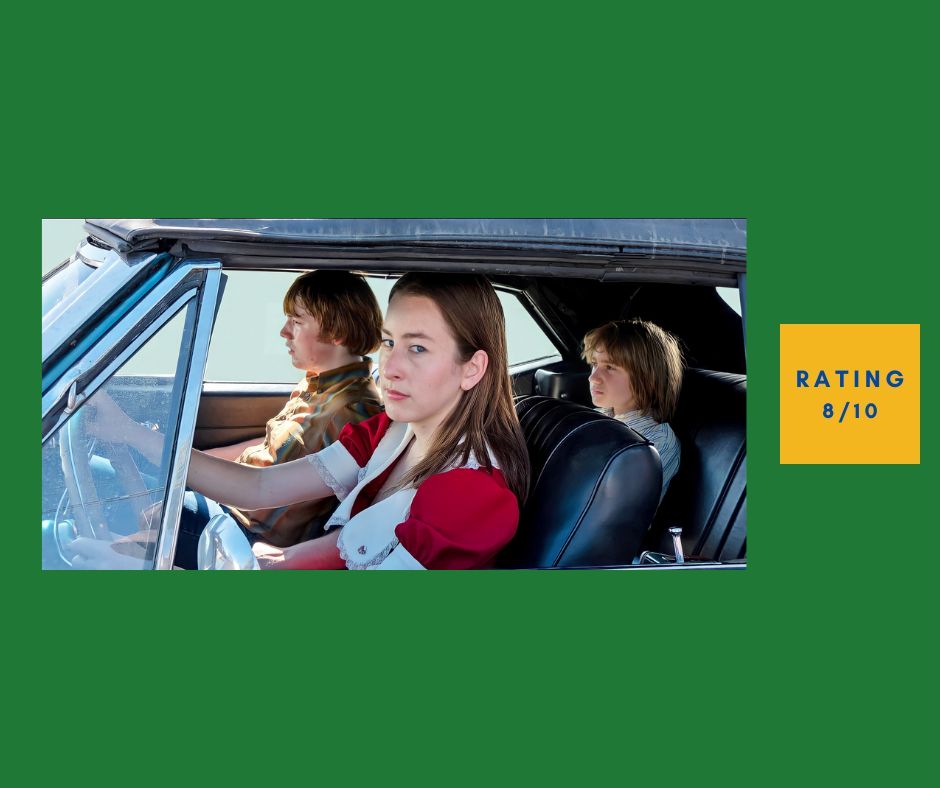
Licorice Pizza by Paul Thomas Anderson [8/10]
Despite his longtime fame, for some reason “Licorice Pizza” is the first of his nine films I’ve seen, and I’m now bereft at missing the other eight, for this is a stunningly evocative, intelligent, funny comedy-fantasy-drama. Set in 1973 and stuffed with that era’s music, some famous, some obscure, and shot with wonderfully resonant-of-those-times cinematography (often tinged with exaggeration just shy of excess), the film’s arc is simple. When child actor Gary, aged 15 (played with aching realism by Cooper Hoffman; I can guarantee you’ve met someone just like Gary in your life), meets 25-year-old Alana, he is smitten. Anderson is simply brilliant in setting up that impelling premise within a couple of minutes of the film’s bouncy opening. Gary is fast-talking, an archetypal American entrepreneur, launching businesses around waterbeds and pinball machines. Alana is a clever, frustrated rebel within her conservative Jewish family in the San Fernando valley. Bemused, Alana resists Gary, and resists him, and resists him, even as the pair deal with wonderfully strange characters hammed up by the likes of Sean Penn and Brad Cooper. Suffused with nostalgic but universal in its storyline, Licorice Pizza is a delight from its kick-off to its unforgettable final scene.
Denizen by James McKenzie Watson [5/10]
Debut novel “Denizen” is a dark, dark, in-depth dive into mental ill-health in the hellish Australia of remote outback towns. I’m unsure if I’ve ever read anything as boldly stark in Australian literature; the closest would be the American novelist, David Vann. The author throws everything at the reader, a torrent of lyricism in or around the head of the first-person narrator, Parker, whom we first meet as a nine-year-old in nowhere-land Colladai with a volatile mother, and then as a young father in Sydney with a baby, and then as a hiker with old friends back home. Parker’s narrative is like his head, ducking back and forth in time, paced fast at the start and then accelerating. This reader rushed to the end, borne along by the fervor and plot, so in one sense, the novel succeeded. I only wish the endless dramas in Parker’s head were more deftly spilled, Denizen containing far too much “voices in the head” dialogue. And the plot twists, shocking as they were, felt as artificial as Parker himself. Recommended (if only to announce a talent) with caveats.