Inside Man [8/10]

Inside Man review

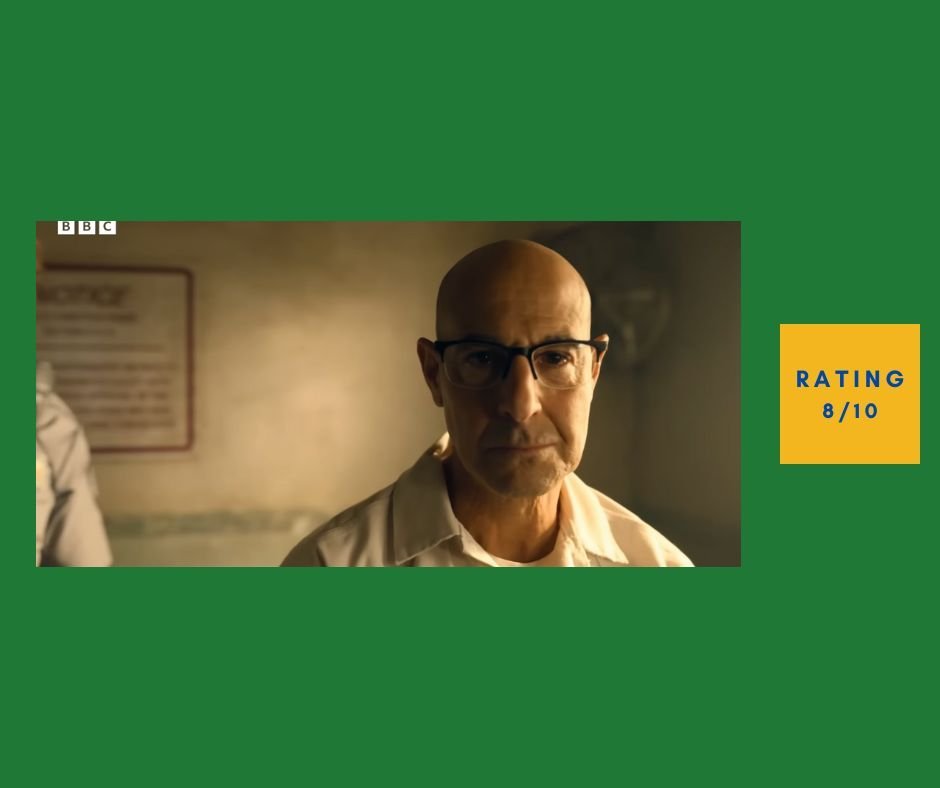
An oddity that flirts with wasting a superb team of actors, “Inside Man” mashes up a Hannibal-Lecter jail inmate with a fraught clock-ticking thriller about a domestic drama gone awry, adding the whimsical complication that the two tales occur in locations separated by an ocean. David Tennant is, as ever, convincing as a vicar in a quiet English village, whose act of compassion leads to a woman bloodied and imprisoned in his cellar. The real star, however, is Stanley Tucci, who plays a Death Row murderer in Texas, with a sideline in solving crimes, Sherlock Holmes style. Tucci’s portrayal of a gently spoken, precise, super-intelligent monster is superb; every one of his scenes is a delight. When a British reporter arrives to interview him, a thin nexus is formed between the two locales and stories. Inside Man is one of those thrillers that delights in plot twists and weird but pleasurable connections, and over its four episodes, on several occasions I shook my head in disbelief. But the sheer imaginativeness of the final episode, with several splendid plot gyrations, eventually overcame those reservations, and I commend the movie to you as lightweight but satisfying thriller fare.

Food for Life by Tim Spector [9/10]

Tim Spector Food for Life review

Reading up on a new dietary regime that I’ve commenced, I stumbled across “Food for Life: The New Science of Eating Well,” by a doctor who has become an epidemiologist and had previously written about the gut biome and common dietary myths. Most mass-market diet books are selling the reader a concept, so they oscillate between explanation and rhetoric. Few indeed are genuinely honest. So Tim Spector’s approach is a refreshing change. His canvas is wide, moving from general dietary issues to a brilliant, fascinating run-through of all the major food sources and food. His approach is always evidence-based (every such book claims this, few deliver, but this one does) and straightforward. The writing style is fresh and clear, pulling the reader through the book. Even where he disagrees with a few aspects of my new diet, I found that I treasured his opinion and read every word carefully. I cannot think of a more useful, more engaging, more philosophically sound modern book on food and what we should eat. Food for Life would make an ideal Christmas gift for many.

The Precipice by Toby Ord [8/10]

Toby Ord The Precipice review

Really, what IS the optimum time for a philosophical/people’s treatise on our ethical responsibilities for future generations and the risks we need to act on now? Although this is not a topic that had been on my radar, having read “The Precipice: Existential Risk and the Future of Humanity,” I would say the optimum time is NOW. British moral philosopher Toby Ord has exhaustively weighed up these weighty issues—he must be a prodigious reader, half the book is notes, references, resources, etc.—and cast a sober, analytical net into the future. Dedicated to the future upside promise for the human race, the book is nonetheless a kaleidoscopic look at the various big risks threatening it, from nuclear weapons to the climate crisis, artificial intelligence to pandemics, asteroids to super volcanoes. The author surveys the risks and even ascribes rough probabilities (something that appeals to an ex-actuary like me), with some surprising results, before positing an ethical stance and then proposing grand strategies and offering individual ways to contribute. Anyone reading The Precipice will surely argue with this risk assessment, that moral standpoint, and even those strategies/tactics, but with its rigor, fluid style and clear-sightedness, this book performs a valuable public service that is bewilderingly enjoyable to read and absorb. Much recommended.

How to Be Broken by Emma Kavanagh [8/10]

Emma Kavanagh How to Be Broken review

A fascinating post-pandemic oddity, “How to Be Broken” is a mixture of trauma psychology briefer (from a psychologist who works in military and police field training) and nakedly honest pandemic memoir. The author never dwells on the fact that she is a thriller writer with half a dozen books on shelves, but from the outset, the reader knows that the storyline and the pacing are in capable hands. Smoothly written and earthed by excellent tales from the annals of trauma, How to Be Broken systematically works through the nature of “being broken,” with specific reference to the terrors of a global pandemic, before offering hope for emergence from the damage. My Covid-19 experience was benign, despite being ensnared in one of the world’s most draconian lockdowns, but even I experienced swathes of disorientation and anxiety, and this book enabled me to discern more clearly what I had been through and how I might even profit, emotionally and psychologically, from the experience. Recommended.

Existential Physics by Sabine Hossenfelder [8/10]

Sabine Hossenfelder Existential Physics review

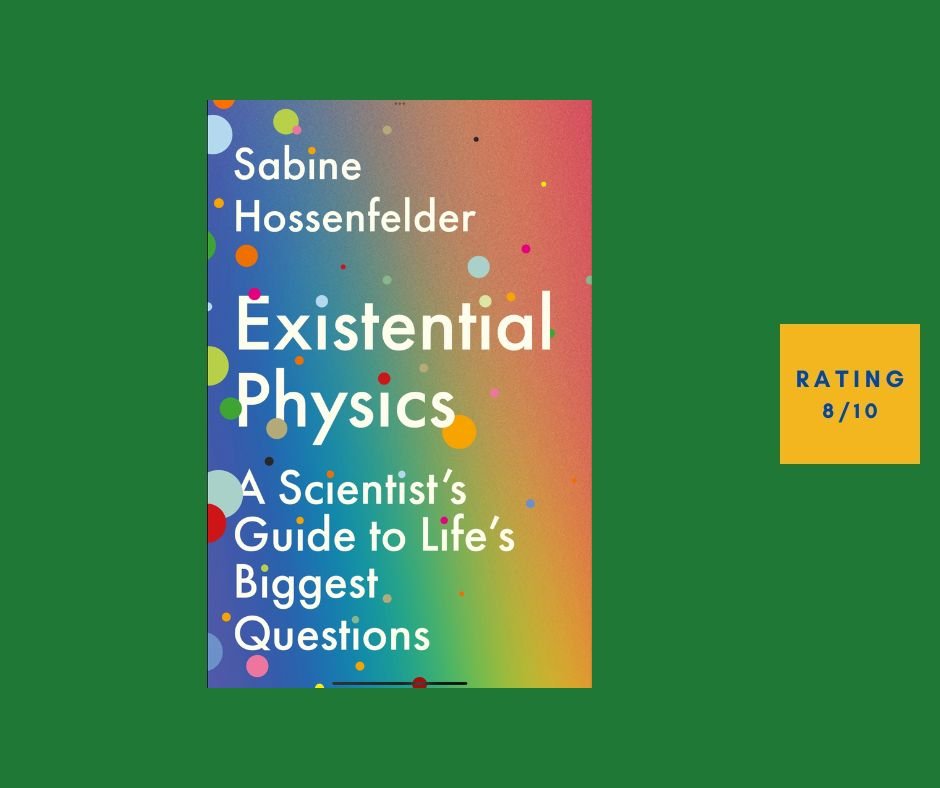
As a failed mathematician who once read about the mysteries of modern physics, I was drawn to “Existential Physics: A Scientist’s Guide to Life’s Biggest Questions” by the promise of life insights from that exalted discipline. And Sabine Hossenfelder, a German theoretical physicist, gets to work from the start with topics I can recall as baffling way back when. Taking great pains to distinguish what science can prove from more philosophical positions (and here it turns out not only religious advocates and philosophers have views but also countless physicists and mathematicians themselves), she resolutely and clearly explains and analyzes and concludes about …. well, about the tricky shit, such as quantum mechanics, the nature of time, multiverses, soul/mind, free will, the Big Bang/end, and more. On one of the key topics, she shifted my view altogether (to be fair, a friend had primed me, but I had not been quite ready), and each fascinating chapter contains elucidations as educative as any I’ve seen. Employing a dazzling, forward style dotted with casual humor, the author teaches, opines, and wraps up. Existential Physics is, plainly, not for everyone, but if it has any appeal at all to you, it will catapult you on an exhilarating journey, that I guarantee. Wonderful.

The Stranger by Thomas M. Wright [9/10]

The Stranger review

Australian actor-turned-writer/director Thomas M. Wright was not familiar to me until I sank into his latest film, ”The Stranger,” but he is now definitely on my must-watch list, for this is a powerful, powerful movie. Not to everyone’s taste, it unwinds a gritty crime tale in relentlessly arthouse fashion, filmed in stark, murky colors, overlain by a soundtrack of unbearable, creaking techno tension. Joel Edgerton offers a career-best depiction of an undercover cop—intense and troubled—in Western Australia trying to get close to a murder suspect by enfolding him in an intricate, fake web of a new crime gang. The murder of the child, years earlier, is brilliantly woven into the storyline. Sean Harris, however, is the real star of the show: his turn as the bearded, asthma-puffer-wielding suspect, has to be seen to be believed. Alternately anxiously shambling and Manson-reminiscent terrifying, Harris’s portrayal had me literally looking over my shoulder. Thomas Wright eschews all of film’s standard devices of flashbacks, tidy explanatory scenes, and easily dramatic scenes, opting instead for a relentless, documentary-style unfolding interspersed with unexplained dreams and eerie portents of terror. Many will find it too far outside the standard crime thriller genre, but I was swept away. Will The Stranger snap up the awards it deserves? Probably not. But you, dear viewer, should fall under its dark spell.

Little Fires Everywhere [8/10]

Little Fires Everywhere review

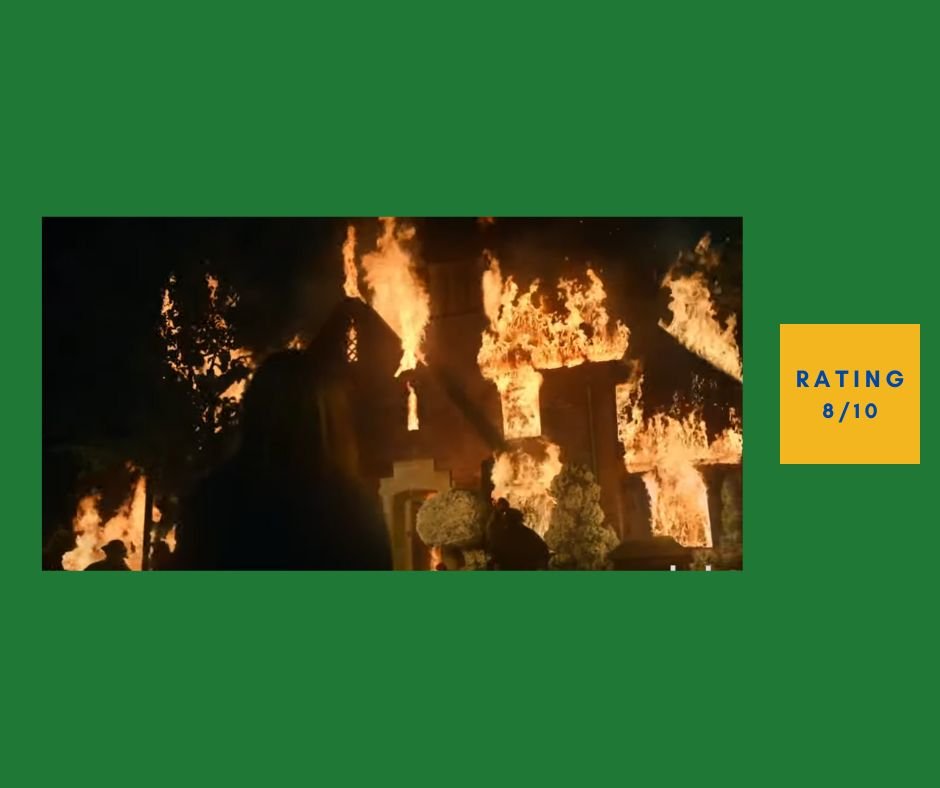
Little Fires Everywhere,” based on Celeste Ng’s 2017 novel, is a slowly warming powder keg of an eight-part series that examines motherhood in racially torn America. Set in a self-righteous white suburb of Cleveland, Ohio, in the late Nineties, it pits two fiery women and their families against each other (although at first they join as allies): an “appearances are everything” bossy, workaholic white mother (played with steely precision by Reece Witherspoon) and a nomadic black artist (I was at first less convinced by Kerry Washington but her performance accelerated after the first couple of episodes). Four white teenage children, running the gamut from a seemingly perfect achiever who aspires to Harvard, through two very different boys, to the youngest and most rebellious, connect in complex spirals with one black teenage daughter. All five teenagers are more than ably portrayed by a fine cast. The plotline permutes the five (and the two main women and a husband, plus an illegal immigrant who abandoned her child to be adopted by another white woman) into a tapestry illustrating (occasionally with a heavier hand) themes such as racism, biracial sexuality, abortion, transracial adoption, and family secrecy. The final two episodes explode with passion and tension, and the climax works on a number of levels. Little Fires Everywhere is a splendid, tight family drama series.

The Scorpion’s Fire by Frank Kennedy [7/10]

Frank Kennedy The Scorpion's Fire review

A hugely ambitious space opera series approaches its grand climax. The eighth in the Beyond the Impossible ennealogy (that’s a nine-part sequence; I had to look it up), “The Scorpion’s Fire” sees author Frank Kennedy marshalling his capacious cast of characters—the varied military leaders, some immortal, the diplomats, the politicians, the second-universe villains, the god-in-waiting Royal—for the closing book’s fireworks. The author is as deft and readable as ever, this time circling around the main players, atmospherically using dialogue and interaction to provide a flavor of the complex negotiations underlying unity as the People’s Collectorate prepares for a war to end all wars What little battle action occurs in this book is, as in the previous seven books, thrillingly depicted. What impressed me most as I read was the breadth of the canvas and the clarity with which it was woven into the story. If you have been following the series upon my recommendations, The Scorpion’s Fire will leave you breathless with anticipation for the finale.

Everything Everywhere All at Once by the Daniels [10/10]

Everywhere Everywhere All at Once review

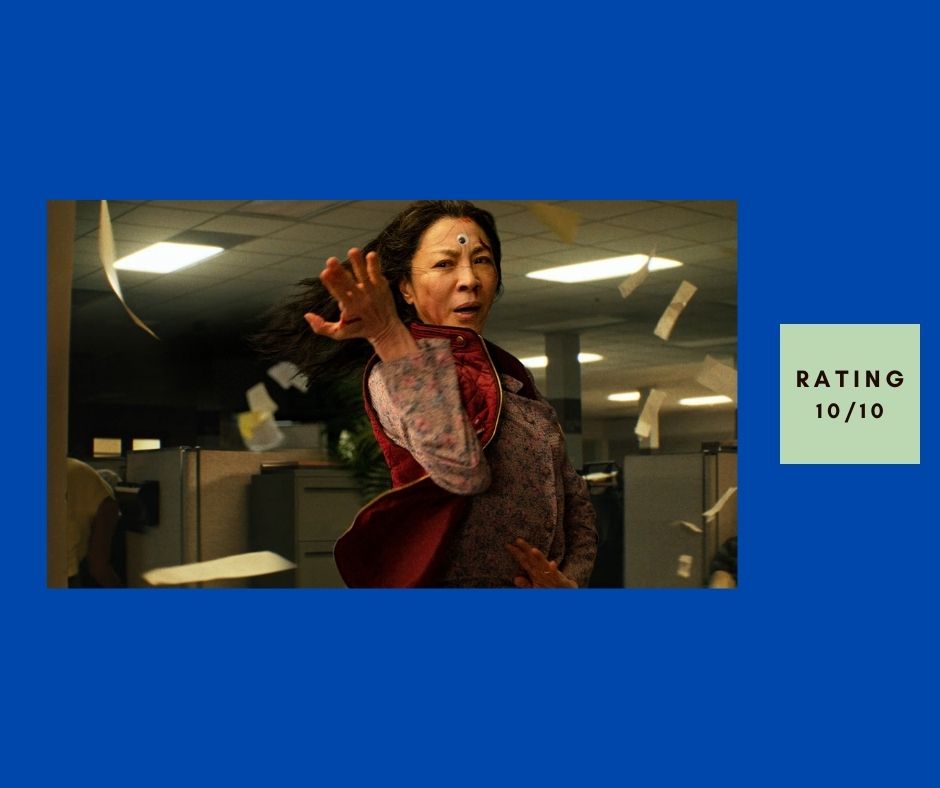
Everything Everywhere All at Once,” the hugely idiosyncratic creation of the Daniels (Dan Kwan and Daniel Scheinert), is a riot of invention, emotion, cinematography, and something unique that only movies can offer. Michelle Yeoh triumphs in the hugely demanding role of Evelyn, burnt-out, crabby owner of a laundromat, who is thrust into the role of saving all the universes of a world of many, through a series of escalating fantabulous adventures. The key support actors of Stephanie Hsu (Evelyn’s daughter Joy), Ke Huy Quan (husband Waymond), and Jamie Lee Curtis (a tax collector among other roles) are also superb. The way-out-there plotline is massively smart and ambitious, the cinematography is sublime, the action scenes scorch typical Marvel/Disney pyrotechnics, and the attention to detail is woozily fabulous. Not a moment of the running time of two-and-a-quarter hours feels slow or too fast. All in all, Everything Everywhere All at Once is not something I can recommend to many around me, with their circumscribed palates, but for me it is hands down the most powerful, intelligent film of this year. At its core, it addresses the issues we existentialists exult in and fret about every day. And so many scenes are laugh-out-loud funny but, even when theoretically stooopid, are delivered respectfully. Cinematically unique, something I cannot process yet but will do so over repeated viewings, it vies for 2022’s crown.

Wildlife in the Balance by Simon Mustoe [8/10]

Simon Mustoe Wildlife in the Balance review

An ode to the unbreakable ecological links between the human species and the profusion of animal species threatened by humanity’s global footprint, “Wildlife in the Balance: Why Animals Are Humanity’s Best Hope” is a riot of stories, observations, and ideas. The book careens all over the place, but its central core—the notion that if we drive animals to extinction, we surely shall follow them—is never far away. An eloquent stylist, Simon Mustoe pours his heart out into a plea for a deeper understanding of our essential coexistence with animals and a new path forward. The final two chapters comprise a fervent eight-step “blueprint for human survival” and an animal-focused impact statement. Readers who think they understand concepts such as conservation and biodiversity would do well to enjoy, as I did, Wildlife in the Balance.