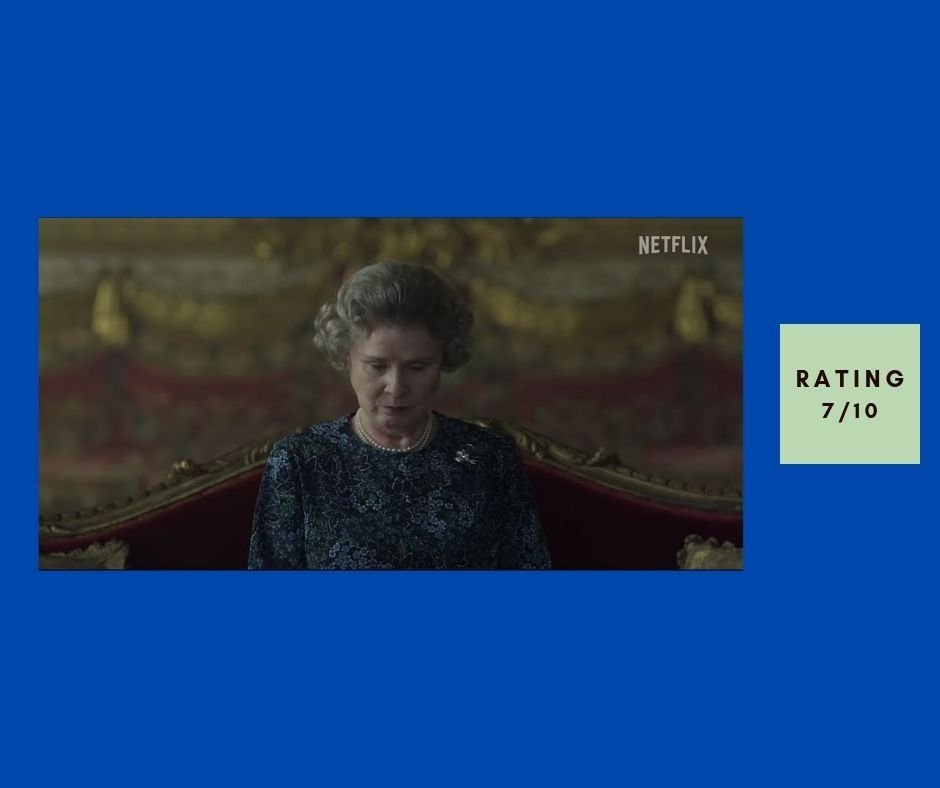
Peter Morgan has tied up hours of my life, entertaining me with his exquisite talent at storytelling, while telling a story that revolts me, that of the British royal family. “The Crown” has been stellar viewing, with perfect casting and fine acting, with dramatic stories ripping the best out of the royal saga, with soaring cinematography. The earliest seasons were the most dramatic, enriched by the emergence of Great Britain out of WWII into the Cold War, but recent seasons have entertained (my reviews of Season 3 and Season 4). And Season 5, the most controversial one so far because it messes with the unknown truths behind the recent decades of regal turmoil? I see this season as a mixed bag, with a couple of mildly intriguing standalone episodes, a brilliant story about the Russian Revolution and Yeltsin, and a multi-episode, slow burn dramatizing Diana’s schism with the Queen and family. Elizabeth Debicki does a splendid job as Diana but the abiding issue is that Diana herself was largely vacuous, so two episodes dragged. That said, Episode 9, the culmination of that narrative strand, is vintage Peter Morgan, stately and tense. Overall, Season 5 works well enough but rarely lifts above highly competent and watchable.
Kalev by Olev Musting [7/10]
“Kalev” is, for this son of Estonian wartime refugees, a fascinating drama set in Tallinn and Russia just as the Soviet Union was collapsing in 1991, mere months before Estonia regained independence after half a century under the yoke of Stalin and his successors. Kalev is the official name of the country’s basketball team and here they wrestle with their political responsibilities as they partake in the last of the Soviet-wide games. Eschewing a single hero, the camera lens documents the games, the practice dramas, and moments in the lives of some players, but mostly the team itself is the protagonist. The backdrop of dreary Soviet-ness amidst news footage of turmoil captures the era well, the action cinematography is sprightly and dramatic, but a certain flatness pervades the story as a whole. Normal story arcs are left stranded or abandoned and the key figure of the coach, a gum-chewing, harsh-talking but ethical mastermind, never becomes fully explored. Overall, Kalev is a wonderfully entertaining and revealing period piece but misses chances to be much more.
What’s Love Got to Do with It? by Richard Curtis [3/10]
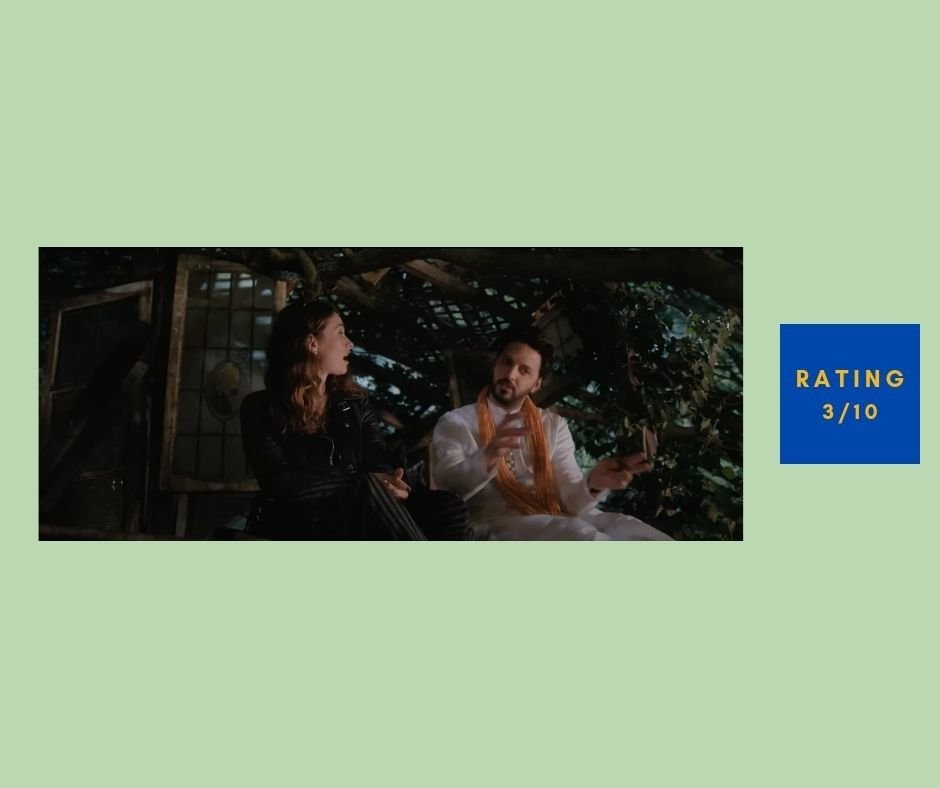
Rom-coms and I have never coexisted comfortably. To truly enjoy a rom-com, you need belief in romantic ideals and a sense of humor, neither of which I possess. That said, a quality rom-com can exhibit a snappy script, intelligence imbuing the material, and stellar acting. Regrettably, “What’s Love Got to Do with It?” bombs out on all three. I barely need to relate the storyline, that of a modern British doctor voluntarily submitting to an arranged entwining back in his family’s home of Pakistan, while his childhood friend, plagued by poor boyfriend choices, puts her documentary filmmaking career on the line by following him around during the process. Love will, of course, ensue. Although the underlying subject matter, the role of arranged marriages in the modern world, offers plenty of scope, the scripted narrative is not only banal, it insults the intelligence of those on either side of the “are arranged marriages okay” debate. If there were any cool, alert dialogue-driven scenes, I missed them. Neither of the two leads, Shazad Latif and Lily James, suits the role and neither convinces. And the sight of Emma Thompson hamming up a so-called comedic routine as our heroine’s mother is cringeworthy. Richard Curtis is one classy filmmaker but What’s Love Got to Do with It? is a glaring misstep.
Day’s End by Garry Disher [8/10]
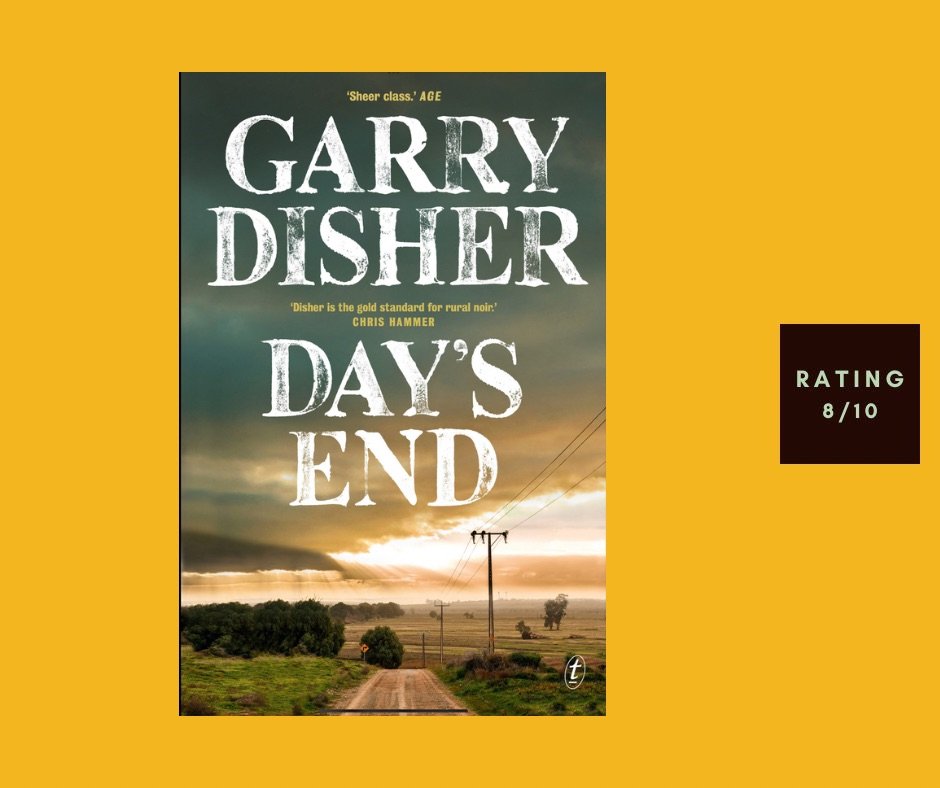
The fourth atmospheric police procedural (if that’s what you call tales from one policeman’s daily routines) featuring country cop Paul “Hirsch” Hirschhausen, ”Day’s End” is as comfortable a crime read as they come. Yet the domesticity of the deeply described rural setting in South Australia belies sudden lurches into terror and horror. Hirsch is as beguiling a character as Garry Disher has created in his celebrated history, an honest, steady policeman striving to stay on top of his job and help out others, and in Day’s End he finds himself tested by a missing backpacker sought by the mother, a burnt body in a suitcase, drugs, bullies, despair… A slow burn build-up towards a frantic finale is ample reward for any reader. Another Garry Disher triumph.
The Insect Crisis by Oliver Milman [8/10]
I recommend you use “The Insect Crisis: The Fall of the Tiny Empires that Run the World” as half of a one-two combo of vital, depressing reading. I read Silent Earth: Averting the Insect Apocalypse (my review) first, and I recommend that sequence, for British scientist Dave Goulson balances his gloominess with odes of joy to his six-legged loves. Goulson is one of the myriad scientists interviewed by journalist Oliver Milman for his sparkling, comprehensive panorama of the insect crisis/apocalypse/whatever, but Milman is unafraid to express his own views and does so with wonderful elegance. Scientist and journalist agree: insects are in deep trouble (over half of all insect species declining at 1-2% annually) and virtually no one cares. The author commences with an imagining of a world where insect pollinators are gone and mass starvation wracks humanity, and then carefully dissects the underlying causes, notably habitat loss (especially of corridors allowing insects to move), insecticides, and climate change. Two detailed chapters, covering bees and Monarch butterflies, are fascinating. The author offers some hope in the closing chapter, hope for humans opening up room for insects to survive, but the prospects of any success at all seem slim. The Insect Crisis will end up much-thumbed in the hands of many a young person, and therein lies some possibility of real action.
Nomad Century by Gaia Vince [8/10]
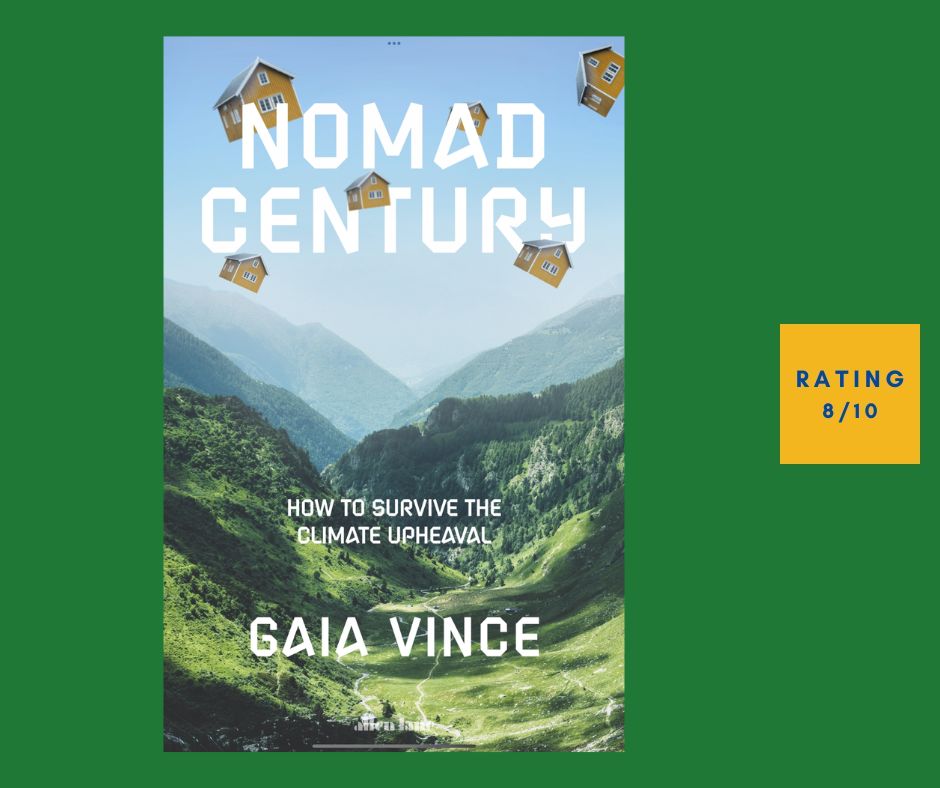
“Nomad Century: How to Survive the Climate Upheaval” is a kaleidoscopic mixture of hard-headed prognostication and dreamy futurism. To Gaia Vince, a journalist with huge experience on climate matters and an amazing trove of internalised data (referencing is sparse and the book is all the better for that), migration has been an engine of human growth and will be so again in the Anthropocene. We need to welcome migration, plan for it, and guide it through policy. According to her, a better world awaits if we harness migration rather than wait for climate-change-driven exoduses to render the world chaotic.
The ambitiousness of Vince’s thinking is often apparent, for example: “Migration will remake the world in the coming century whether by accident or design. Far better the latter. Developing a radical plan for humanity to survive a 3–4°C-hotter world includes building vast new cities in the far north while abandoning huge areas of the tropics, and relying on new forms of agriculture. It involves adapting to a changed planet and our rapidly changing demography.” Am I convinced? Hardly. But the beauty of this book is that it challenges existing narratives and spurs new ones. For example, a fascinating chapter “Migrant Homes” covers the policy ingredients to make new migrant cities or cities taking in migrants blossom (to the extent they can).
This optimism produces assertions the reader can question, for example: “Most people will transition to a plant-based diet over the next decade with little effort or conscious decision-making on their part, given the right nudges.” (I’m vegan and can see little evidence of my cohort moving towards plant-based foods.) A predilection for high-tech futuristic solutions to everything from decarbonization and geoengineering to habitat restoration can be expected from a journalist accustomed to hunting for news, and of course it can be scoffed at, but I enjoyed musing over her buoyant futuristic views.
Overall, Nomad Century is unlike any climate change book I’ve read recently (and I’ve read tons). Written with verve and style, it challenges, provokes, and informs, and I think any reader will end up, as I was, the better for the read.
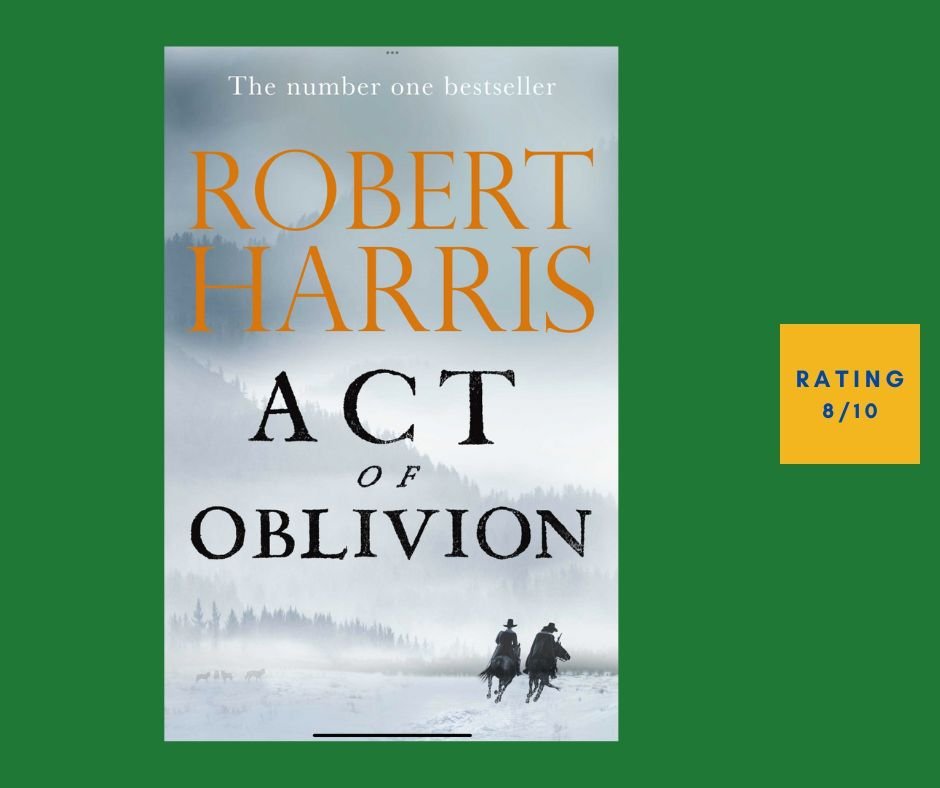
Act of Oblivion by Robert Harris [8/10]
”Act of Oblivion” is another of Robert Harris’s wonderful literary thrillers that entertain even as they plunge the reader into little-told history. This time he tackles the aftermath of Oliver Cromwell’s republican rule of Great Britain in the 1660s and the birth of a new nation across the Atlantic. Two Puritan officers who had taken part in the execution of King Charles I are now hunted by a driven revenger, and Harris expertly drives up tension as the pair try to vanish in the new world of America. Not as propulsive as some of the author’s intelligent thrillers, Act of Oblivion nevertheless thoroughly captivates by twinning the religious fervors of both pursuer and pursued. The build-up to the finale absorbed a long night of reading. Recommended.
Portable Magic by Emma Smith [8/10]
For anyone with even a passing interest in books as objects and (less so) repositories of creativity, “Portable Magic: A History of Books and Their Readers” is sure to delight. Indeed, as someone who has migrated wholesale to ebooks and still reads a dozen a month, I have to say that I disagree with her central thesis, that books are as potent in their physical form as they are in their content, but I still found this historical and conceptual journey an absolute treat. What distinguishes Portable Magic is the gloriousness of the author’s prose, the cadences and rhythms, the wry humor, the embodiment of wonder. It often seems like every page contains a gem of style or sparkling content. I waited until the closing chapters for Emma Smith’s views on the ebook and was gratified by the wise observation: “Until ebooks develop their own particular communicative rhetoric, design, and features, they seem to be shadows or supplements of the physical book, rather than its opposite.” Heartily recommended.”
The Last of the Seven by Steven Hartov [7/10]
“The Last of the Seven” is a historical WWII war adventure, that, despite inheriting the deathly tag of “based on a true story,” provides rattling action and Middle East/Italy atmosphere, while dabbling in lyricism that only occasionally misfires. The tale of a German-born Jew who thirsts for revenge against the Nazis, recruited to head up a band of similarly rage-consumed soldiers asked to exfiltrate a scientist from a missile base, is not afraid to dwell on the gaps of time between the horrific wartime action. The author is no Ondaatje (I was reminded of The English Patient) but is often a captivating stylist. As befits such a boy’s-own story, I read The Last of the Seven in a single sitting and can commend it.
Euromissiles by Susan Colbourn [8/10]
“Euromissiles: The Nuclear Weapons That Nearly Destroyed NATO” sounds like an arcane topic but in the hands of a superb, engaging American historian proves to be an engrossing delight. It is the story of the 1960s-1980s intermediate-range nuclear weapons—the SS-20s, the Pershing-2s, the cruise missiles, titles that resonate with my memories but might mean little to younger readers—that were touted for the defense/offence of Europe at the “second” height of the Cold War (assuming the Cuban Missile Crisis represented the apogee). Weaving in an astonishing array of archival and other sources, the author relates how a strategy of “flexible response” drove European nations and the United States to develop new missiles; how this galvanized Europeans (and not only Europeans, I remember enlisting in the peace movement in Australia in the early 1980s) to protest; how the new missiles began to be deployed just as Gorbachev entered the scene; and how he and Reagan and later Bush ended up agreeing to junk the lot of them. The author conveys both the inner workings of NATO and the two superpowers over this period, and the on-the-ground political chaos in Europe. Written in a rhythmic, digestible style, and effortlessly ducking back and forth in time amidst the complexity, she has written one of those rare books: a robust history that will stand as a reference book and also an accessible drama for us normal readers. A chapter called “The Year of the Missile” is as riveting as a thriller. Euromissiles is a triumph.