Himalaya by John Keay [9/10]

John Keay Himalaya review

I had never read any of redoubtable historian/writer John Keay’s previous, lauded works, so I came to Himalaya: Exploring the Roof of the World with both enthusiasm and hesitation. My intrinsic interest in the region of the Himalayas (apparently it is pronounced him-aaah-lay-ah) has always been cursory, but I’m planning an adventure in Nepal, nestling as a thin rectangle just south of the enormous mountain ranges, midway between the extremes, so my read was both dutiful and, at first, tardy. I need not have worried: the most wonderful features of the book are the author’s soaring, often caustic style and his perfect control of gyrating plot lines between ages and themes. He tackles the region’s geology (orogeny is a term he informed me of, being the formation of mountains through huge underground forces), wildlife, human presence, religions, colonial battles, geographical puzzles (explorers spent decades seeking the headwaters of the major rivers through India/Pakistan/etc.), geopolitics (always ending with China effectively now subsuming Tibet) and mountaineering. By roaming over so many aspects of the young (yes, that surprised me also) but towering Himalayan ranges, while focusing on detailed historical and archival material, John Keay offers in Himalaya a magisterial, idiosyncratic “biography” that is a sheer delight.

Infinity Gate by M. R. Carey [6/10]

M. R. Carey Infinity Gate review

Oh, how I salivated during the long wait for Infinity Gate by M. R. Carey, the brilliant author of The Rampart Trilogy! Even when I held the book in my hands, I deferred the read, because surely it would be magnificent. Well, I can report that while this wonderful author’s sure-footed writing style and plotting control are as fine as ever, Infinity Gate is over stuffed with inventiveness and world-building, to the detriment of immersion. The overarching premise is copious, if time honored: the world is a million-fold world of multiverses presided over by an autocratic Pandominium. Into the Pandominium blunders a brilliant scientist seeking to escape her dying planet, and crashing separately into the Pandominium is a contrasting multiverse of worlds run by Artificial Intelligences. A war and an interposing individual … in the meantime, the author inserts a beleaguered no-hoper and an enterprising rabbit, whose adventures catapult the universe into chaos and potential end times. M. R. Carey builds this ever-so-ambitious world with huge verve and elan, yet with such enthusiasm that the overall plot can seem lost. And plot detours sidetrack the reader down canyons of wild (if brilliantly portrayed) multiverse fantasia. The end result of reading Infinity Gate was to be bewildered and impressed, without any payout (as yet) in terms of emotional attachment, so the inevitable cliffhanger climax, pointing to the second volume in a duology, leaves me waiting for Number Two, due partway through 2024.

The Real Work by Adam Gopnik [8/10]

Adam Gopnik The Real Work review

Two reading pleasures intertwine with The Real Work: On the Mystery of Mastery: the superb, muscular yet careful prose of Adam Gopnik, long one of my favorite essayists; and the book’s storyline of Gopnik investigating the mysteries of mastery, both through research and through learning various new crafts and activities. He goes to art classes, he learns to drive, he deeply investigates the work of magicians, he takes up dancing. His overall thesis on mastery is refreshingly complex, and I’m not sure I really grasped it, but what I took away is a few notions: mastery comes from deep practice of simple subsidiary tasks, i.e. learning scales; it’s okay to aim for less than perfection (I’m familiar with this, readily calling myself a “bad birdwatcher,” even after years of effort); the attempt at mastery is the real pleasure; and true mastery efforts are raw and physical, rather than over-thought. The Real Work is an unlikely book that might struggle to find an audience, but if you are curious and enjoy fine reading, I commend it to you.

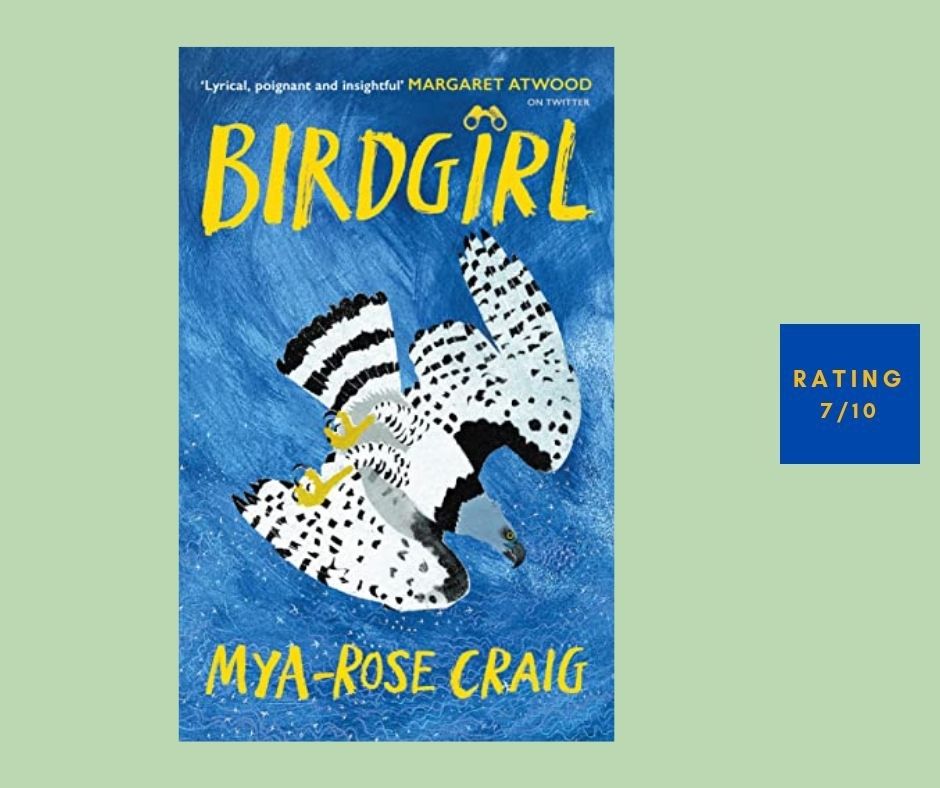
Birdgirl by Myra-Rose Craig [7/10]

Mya-Rose Craig Birdgirl review

Birdgirl, written by birding (aka birdwatching) prodigy Myra-Rose Craig, who ticked 5,000 species (my count is under a thousand!) by her mid teens, who has scoured all seven continents (she adds Madagascar as an “eighth continent”), and whose Birdgirl blog underpins this memoir, is an interesting life account that deserves a greater readership than I suspect it will obtain. The author manages with aplomb the task of hailing birdwatching as a holy activity at the same time as unfolding her complex, fraught life with a bipolar mother, and she writes smoothly (if perhaps with not enough flair). Birders like me will relish the incredible stories of amazing species sightings (at such a young age!), and I personally enjoyed reading about her increasing awareness of her ability to carve out an advocacy role for non-white representation in birding and environmentalism. Non-birders should heed my advice and try Birdgirl, perhaps viewing it as a window into a different, radiant kind of obsession.

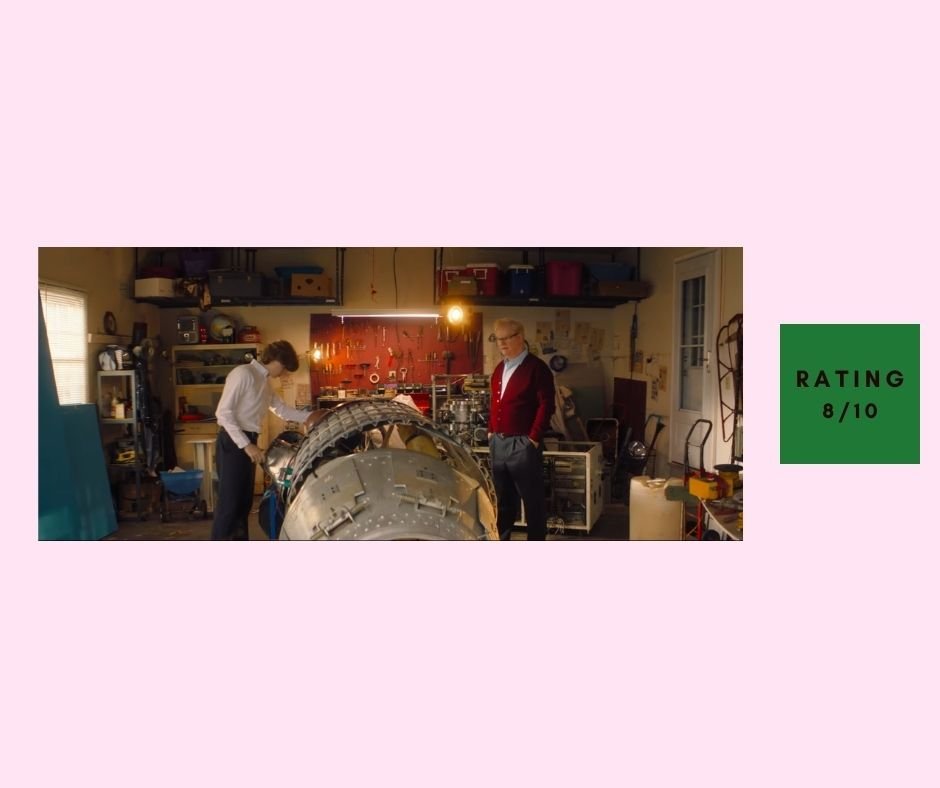
Linoleum by Colin West [8/10]

Linoleum review

A quirky film redolent, in my mind, of American Beauty, Linoleum barely caused a ripple in Australia. It is well worth seeking out and renting/buying. A very personal project of writer/director Colin West, it revolves around a middle-aged host of a failing science show, who pursues his childhood dream of becoming an astronaut by commencing to build a spaceship in his garage, amidst an escalating series of weird events. Jim Gaffingham is perfect in the leading role, all hesitancy but obdurate perseverance, and the actors portraying his baffled family, their own flailing lives swirling around his strange reality, are equally impressive. Such a film comes with a mandatory finale twist and the one in Linoleum is simultaneously apposite and ludicrous. In the end, it is not worth dissecting Linoleum; just treasure its shining mood of sunlit hope and space dreams.

Ego: The Michael Gudinski Story by Paul Goldman [9/10]

Ego review

I knew little about Michael Gudinski, the man who bestrode Mushroom Records, a constant feature of the post-60s Australian music scene and, significantly, my coming of age. I knew he was influential but discounted him as a marketer. Two aspects of Ego: The Michael Gudinski Story stand out. Firstly, it is a fulsome summation of a remarkable life, of a person with incredibly drive and musical appreciation, who is rightly seen as foundational for Australian rock music maturing onto the world stage. Secondly, and more importantly, director/writer Paul Goldman’s telling of the story, which could have been wooden and sequential, is, instead, metronomic, stylish, nuanced, and suffused with intelligence. Using a vast trove of archival footage and talking-heads material, Goldman weaves a compelling tale that amounts to more than a remarkable biography. Watching Ego, we find ourselves wondering: how could one person have so much intelligent energy, and, also, why was he so driven? Ego: The Paul Gudinski Story is possibly the best local documentary of 2023.

No Meat Required by Alicia Kennedy [6/10]

Alicia Kennedy No Meat Required review

Food writer and former bakery owner, once a vegan but now a vegetarian, Alicia Kennedy has penned a rollicking combination of polemic and cultural/political analysis. No Meat Required: The Cultural History and Culinary Future of Plant-Based Eating. Being a recent convert in the opposite direction, from vegetarianism to veganism, and being intensely interested in the politics and economics of meat eating versus non-meat eating, I came to this book ripe for discovery, and mostly I savored the read. The author takes us on a journey of U.S. non-meat-eating history, dissecting the currents and sub-currents of vegetarianism/veganism over the twentieth century up to the present, a swirling river of shifting attitudes revolving around ethics, health considerations, and (lately) carbon footprints. The contrast between pre-hippy times and feminism from the hippy decades onwards, was fascinating, as is her current perspective on the modern fake burgers of Beyond and Impossible. As she puts it: “But the world of the conscientious omnivore and happy vegetarian living in harmony is no longer presented as an option. It’s an anachronism, apparently. Now we have two perspectives on the future being presented to us: continue with factory farming and monocropped GMO corn and soy, or surrender to the world of tech meat where we replace those with pea and oat.” Her dissections/arguments turned out, I felt, to ramble a bit in an unfocused way, but overall, No Meat Required adds to an important global discussion and will interest anyone interested in food politics and culture in the Anthropocene Era.

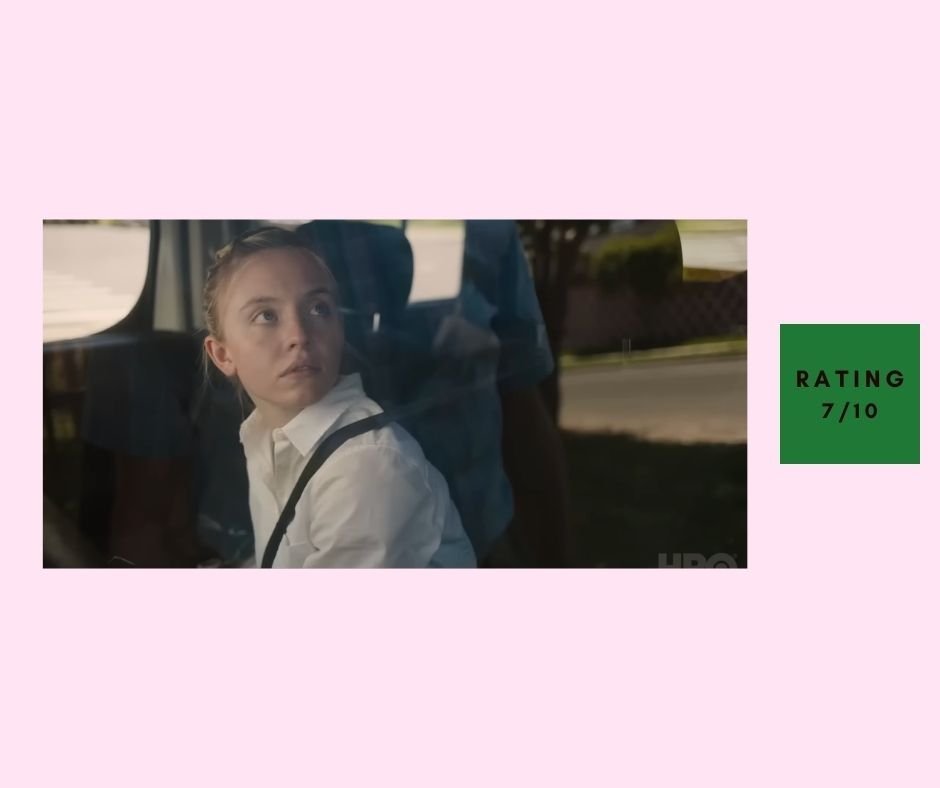
Reality by Tina Satter [7/10]

Reality review

A modest film tackling a theme of huge import, namely the role of whistleblowers, “Reality” has that title because it describes the FBI interrogation, in her home, of Reality Leigh Winner, an airforce veteran working as translator for the NSA. Fascinatingly, all the dialogue in the film comes verbatim from transcripts, requiring fancy cinematographic effects to blank out the blacked-out redacted segments. The veteran was being grilled because of a report on Russian hacking of the 2016 U.S. election outcome being leaked to the press. Sydney Sweeney is fabulous in the lead role, conveying the slow buildup of terror as she realizes what she has courted. Josh Hamilton and Marchant Davis are also moment-by-moment brilliant as the FBI investigators. The moral dimensions of a “good” person taunted beyond resistance by evil uncovered but not publicized are subtly drawn out. Reality does strike one as an oddity but a most welcome one.

The Bear Season 2 [10/10]

The Bear Season 2 review

Season 1 of The Bear was a rambunctious revelation (see my review). What staggers me is that Season 2 surpasses it in every respect and must count as this year’s most outstanding TV show, even ahead of the final season of Succession. You all know the idea behind Season 1: Carmen “Carmy” Berzatto (played in transcendent style by Jeremy Allen White) (I’m told young folks think he’s amazingly sexy in his hangdog way) returns from New York, where he was a top chef, to run the family Chicago sandwich joint (“The Beef”) after his brother suicides. Season 1 is profane, relentless chaos. Well, Season 2 uses its ten episodes (two more than Season 1’s) to tell a slightly different story, how Carmy and Syd, that is, Sydney his sou-chef (also wonderfully played by Ayo Edebiri), team up and extract an uncle’s capital to launch a fine dining restaurant, one they hope to be of Michelin star level. The season sees a countdown toward launch night, mostly a series of disasters or obstacles. The food scenes and menus, no doubt heavily influenced the show’s “culinary producer,” Christopher Storer’s sister, Courtney, are presented in loving glory. Christopher Storey is not afraid to slow down and, for example, spend a full hour (most episodes are half that length) on an explosive family flashback scene. Each scene counts down, with screeching tension, toward the climax of opening night, and the final scene … no spoilers, but it shocks and startles and concludes in true fashion. This viewer, who is decidedly unsentimental, began to view Season 2 as a paean to obsessive, magnificent achievement, and my tears flowed throughout but so, so freely in Episode 10. You heard it: The Bear is this year’s go-to season.

The Passion of Private White by Don Watson [9/10]

Don Watson The Passion of Private White review

Don Watson, a writer of rare clarity and expressiveness, has penned his master work with The Passion of Private White. It relates the story of Neville White, an anthropologist (and mate of Watson), who in 1974 begins working in a non-urban indigenous community in harsh Arnhem Land country. Watson frames the tale as the PTSD-style blowback from White’s Vietnam War combat stints, as a way for the anthropologist to channel his huge energy and perfectionism and his “passion” for his indigenous friends. Over nearly half a century since, the community of Donydji has waxed and waned, and changed, and throughout, White has been there recording their lives, their language, their stories of Country, but also advocating for them and providing assistance. A core step in the narrative is when White assembles teams of his war veteran friends to make annual pilgrimages to Donydji to build and clean and grow, in other words, to be of service to the community. The author lovingly sets out the entire history of colonisation of Arnhem Land, the arc of ups and downs of Neville White’s efforts, amidst a period when Aboriginal/indigenous affairs underwent huge political shifts. We, the reader, get to know Tom, the community’s leader, and Christopher, the wrecker, and Ricky the apprentice mechanic, plus a cast of dozens. We witness the rank incompetence of all forms of oversight, from the missions to the miners to the bureaucrats. Throughout, the author provides cogent, intellectual coverage of the issues, at the same time as building a nuanced portrayal of White, a hero by any other name. Important and brilliant … read The Passion of Private White, please.