Scientist-journalist Akshat Rathi performs a vital public service as we near the middle of the 2020s, unfurling Climate Capitalism: Winning the Global Race to Zero Emissions. There are plenty of advocates and apologists for the view that the climate crisis will be solved by technical improvements inevitably generated by global businesses. Under this view, those calling for the sundering of capitalism, or at least the softening of it, are mistaken. Neither side can convince me at present but I was keen to read a status report and Bloomberg journalist Rathi’s concise, clearly told survey is just the ticket. Nearly a dozen chapters cover the near miracles of EV and battery improvements/cost reductions; India’s role wedged between the West and China; the turnaround of the International Energy Agency; Bill Gates’s role (call me skeptical but Rathi does his best); the fiasco (Rathi does not call it that) of carbon capture; an oil company making a real or imagined shift toward renewables; Denmark’s remarkable wind turbine story; business-oriented UK climate activism; and a global manufacturing client going green (again call me dubious). Throughout, just enough detail is provided without excessive padding. Throughout, the author’s tone is level. All in all, Climate Capitalism is very much worth a read.
The Tusks of Extinction by Ray Nayler [7/10]
Ray Nayler, a poet among other attributes, is an expressive, stylish writer versed in modern environmental issues. I missed his signature novel, 2022’s The Mountain and the Sea, but was determined to catch this new novella. The Tusks of Extinction knits together three character strands on an earth a century hence, when elephants are extinct and the mammoth has been genetically de-extincted to roam Siberia. An uploaded ex-elephant expert inhabits the mind of the leader of a mammoth pack, a young mammoth poacher rebels against the slaughter of his trade, and a bounty hunter’s husband questions his spouse’s hunting ardor. Nayler tersely brings the reader into this complex narrative world but inevitably in a book just over a hundred pages long, the very act of worldbuilding mitigates against a highly effective plot. But the scenes of the disembodied human scientist in the wild, inside a mammoth’s head, are evocatively executed. The Tusks of Extinction could have, methinks should have, formed a strong, long epic novel. At this length, it is a fine read but a morsel, not a full meal.
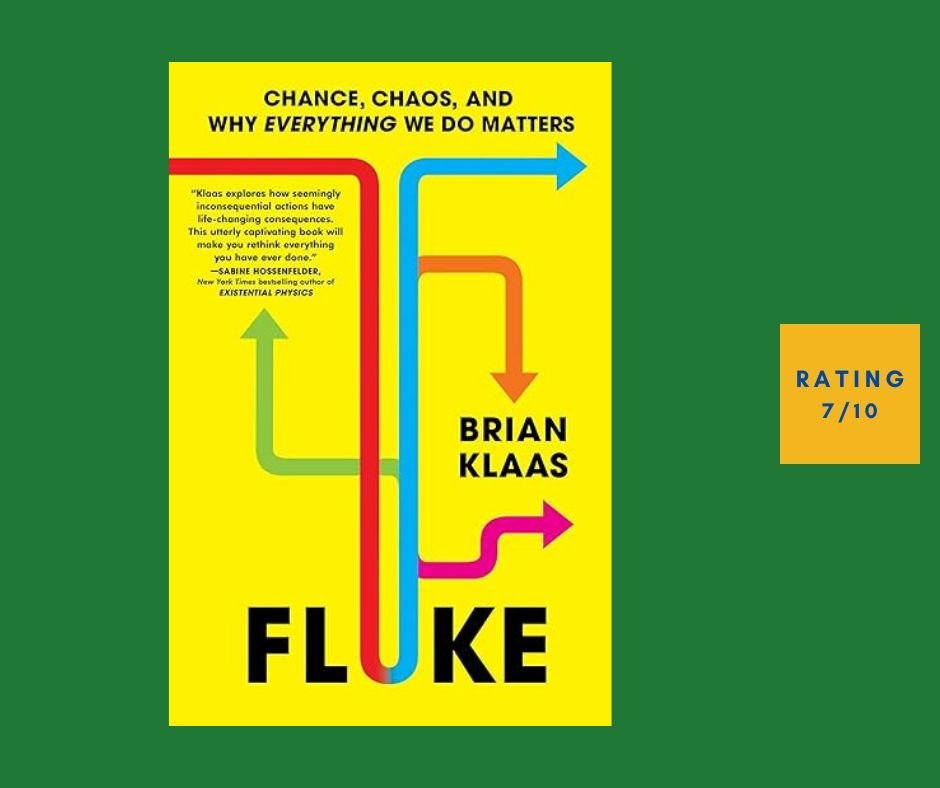
Fluke by Brian Klaas [7/10]
Political commentator and author Brian Klaas has put out one of the genuinely intriguing titles of 2024, Fluke: Chance, Chaos, and Why Everything We Do Matters. The title itself attracts. With little expectation of what to uncover, I was drawn in by the author’s spirited, smooth, well-orchestrated exploration of the role of chance (versus predestiny or fate or “force of history” or whatever term you might use to describe how we normally see the world as logical and subject to analysis). Essentially the author sees the world as a magical canvas sprinkled with “flukes,” startling coincidences or fragments of fortune (forgive me if I pay his thesis short, I simply relay what I got from my intrigued read). Klaas reminds me of Simon Winchester, with a similar penchant for, and tendency towards, story and story after story, so that occasionally the thrust of the logic can feel swamped by yet another amazing tale, but he always comes out the other end with a wrap-up. The final push towards his conclusion is muddied by a detour into the issue of free will versus determinism, something that is fascinating but worthy of a more nuanced exploration, but his climax, in which he suggests the somewhat capricious universe he describes is a sparkling one, seemed a fitting end. Fluke is a bucking journey of strange stories and concepts that not only entertains, it titillates the mind.
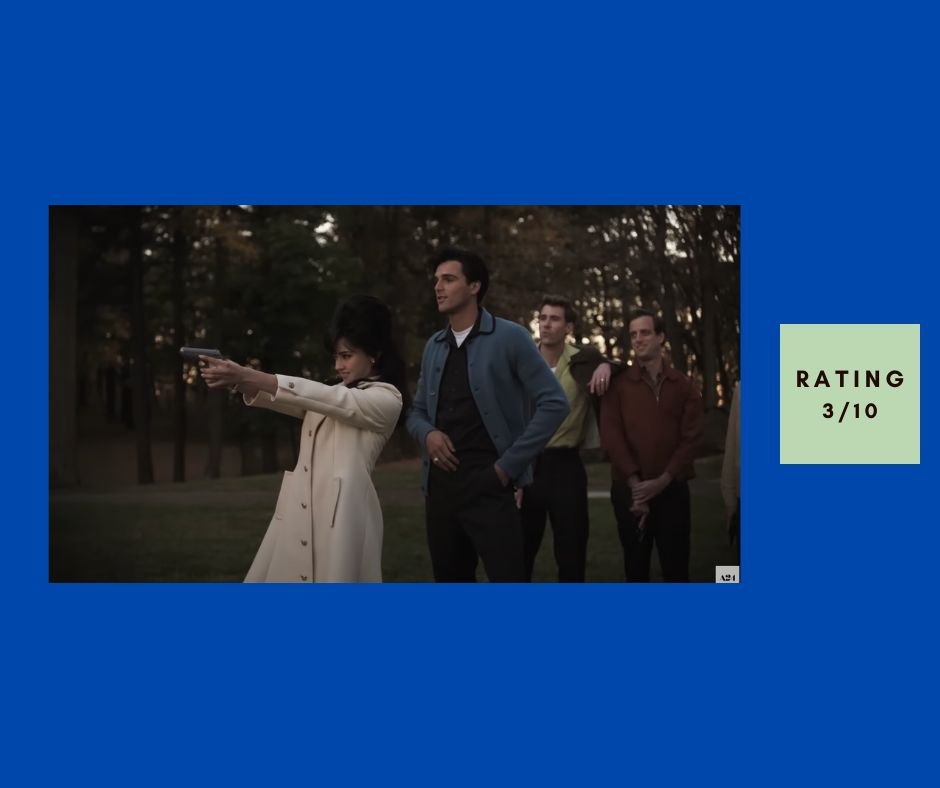
Priscilla by Sofia Coppola [3/10]
Anything by Sofia Coppola is well worth watching … at least that was the dictum before Priscilla. A tale of Elvis Presley’s ultra young bride, told from her viewpoint, the movie portrays a one-sided relationship from its commencement at a German army base, a relationship that continues without logic until Priscilla walks out on Elvis in decline. A story of much intrinsic interest, yet this treatment fails on every count. The two key actors are badly cast and neither evokes any emotion; not that they could, the script being stilted and episodic. The cinematography is featureless and the sound is muddy. After a dull cinema experience, I could not recall a single effective scene. The only bright feature is the careful 60s and 70s scene setting. Overall, Priscilla is an execrable non-event.
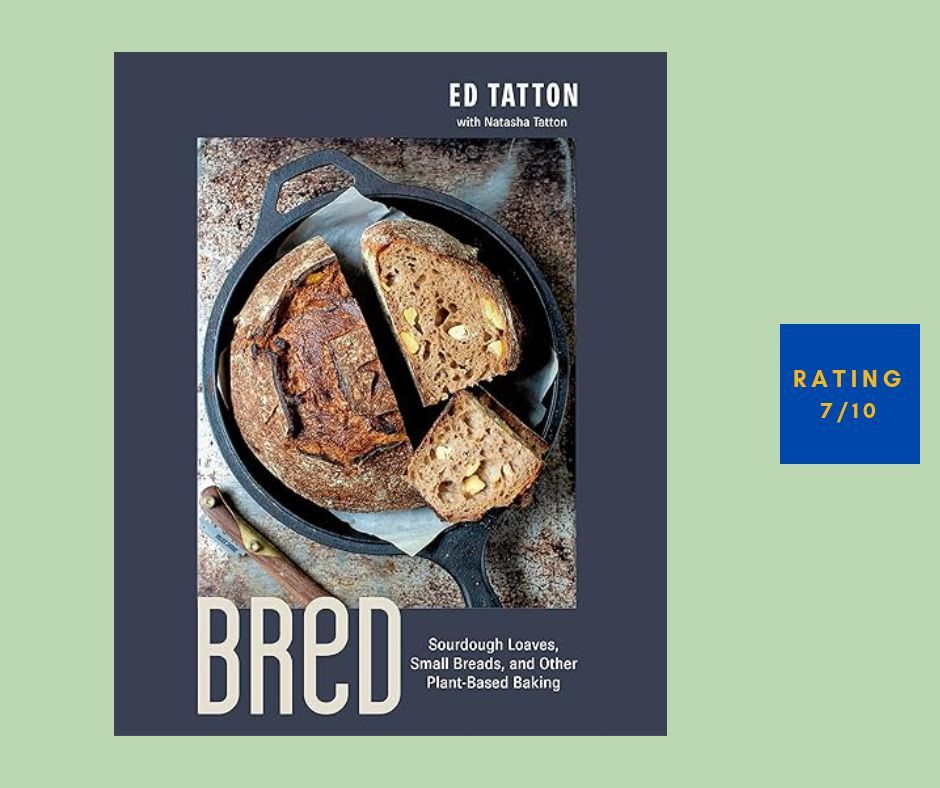
BReD by Ed Tatton [7/10]
A desire to bake sourdough loaves of quality but with outstanding purity of ingredients (just flour and water) brought me to BReD: Sourdough Loaves, Small Breads, and Other Plant-Based Baking by Ed Tatton, an English baker in Canada, and his wife. This is not a book for everyone, because it is detailed and fussy and a labor of love, but I can heartily recommend it for those with the baking bug. It is an artisan’s loving presentation (the imagery and typography are stunning) of vegan versions of loaves, from the basics (which turn out to be complex) of looking after a sourdough starter, and then on to incorporating a starter in a mixture with flour, water, and other ingredients, and then on to mixing, proofing, shaping, and baking. The loaf I made was magnificent and I was hooked. The author/baker progresses to different loaves, boules, buns … even pizza and flatbreads. From there one climbs the summit to muffins, brioches, hot cross buns, even cakes and scones. All 100% vegan, not that you’d know it from the taste. BReD is a wonderful resource and companion.
Orbital by Samantha Harvey [8/10]
This is my season of nuggety treats, a series of short novels of novella size or slightly longer. At 138 pages, Orbital can be read of an evening, and its subject matter is as brief. A lyrical coverage of one Earth-bound day in the life of six astronauts (actually two of them are Russians, strictly cosmonauts) circling our planet sixteen times. Nothing much happens—this is no Martian-style thriller—but nothing much is meant to happen, just the meditative flux of view after view of the glorious planet, its moon, and space, alongside the thoughts, habits, dreams, and wishes of the floating crew. What is remarkable is the sinuous, glorious prose wrapping around the sweeping, ever-changing portraits of the planet below/above/whatever. Magnificence alternates with mundanity, blankness with grandiosity, existential grandiloquence with thought-bound specificity. Orbital is a sweeping, rapturous feast for the senses and the mind.
The Anniversary by Stephanie Bishop [7/10]
Having admired 2015’s The Other Side of the World, I had high expectations for Stephanie Bishop’s recent, fourth novel, The Anniversary. When a female writer, married to an older and more successful literary lion, embarks on a luxury cruise with him, a terrible storm sends the husband to his death in the seas, and the novel becomes a quasi thriller about her involvement, and a studied, forensic recollection of their lives together. A novel of love, ambitions, thwarted creativity, and guilt, The Anniversary is solidly, almost portentously written, most immersive, but it never quite lives up to its “literary thriller” billing, if only because the eventual climax is an echo of other mysteries/thrillers, literary or genre. Nonetheless, this is a solid, entertaining read that burrows down into the heart of the creative impulse.
Scarcity Brain by Michael Easter [6/10]
Michael Easter is a how-to writer focusing on certain aspects of human psychology and how to tackle life, and his area of expertise was signaled by his first book, The Comfort Crisis: Embrace Discomfort To Reclaim Your Wild, Happy, Healthy Self, from 2021. His new book, Scarcity Brain: Fix Your Craving Mindset and Rewire Your Habits to Thrive with Enough, investigates the same sphere of hormesis (discomfort resulting in benefits). The author writes compellingly: “A scarcity cue is a piece of information that fires on what researchers call our scarcity mindset. It leads us to believe we don’t have enough. We then instinctually fixate on attaining or doing that one thing we think will solve our problem and make us feel whole.” The scarcity loop now “lives” in social media, email, shopping, personal finance, mobile gambling, TV, health, dating, video games, gig work, news. “We can shift scarcity loops into abundance loops.” Much of Scarcity Brain can feel a trifle underwhelming, and Easter’s journalistic style of expanding his personal narratives can feel repetitive, but this is a perky perspective on life that will appeal to many.
Women Talking by Sarah Polley [9/10]
Canadian writer-director Sarah Polley’s striking, imaginative adaptation of a 2018 Miriam Toews novel, Women Talking, does not hesitate for a second. A colony of isolated Mennonite women finally catch their men raping all and sundry with the aid of horse tranquilizer, and during a brief few days of possibility, delegate a crucial decision to a dozen women who meet in a hay loft. Should they do nothing, fight, or leave? The movie is doubly shocking for only showing memory glimpses of the horrific violence they have endured, and doubly intelligent for revolving around the debate itself, not any fraught aftermath. The hay loft debate, minuted by a gentle young male community member (played with such restrained emotion by Ben Whishaw that he crowns a litany of starring performances), has the air of a stage show debate, but is saved from tedium by a script alternatively deep, light, and even humorous. One can only marvel at the star turns of Clare Foy, Rooney Mara, and Jessie Buckley. The subtle music score by Hildur Guðnadóttir complements the urgent debating. Without a trace of sentimentality, Women Talking builds into an overpowering, tragic yet heroic quest. A stunner.
Attention Span by Gloria Mark [6/10]
Over the past few years, a number of books have been published that deal with the issue of the changing world of the data surrounding us and how we attend to it. Some are How-Tos, some are technical treatises. Attention Span: Finding Focus for a Fulfilling Life, by working computer scientist and researcher Gloria Mark, tackles the science of attention, an empirical story, but with an overlay of practical suggestions. The author is a cogent explainer, the subject matter is familiar but well worth revisiting, with informative wrinkles: multitasking (something I used to swear by) mostly fails; Twitter saps attention; there is nuance in attending to the world. I was intrigued to note that she doesn’t find blocking software at all effective, finding that this does not train our attention muscles. She covers different types of attention, including the controversial issue of “flow.” Algorithms work, not in our favor. Declining attention spans are real but fixable. Chapter 13 is titled “Achieving focus, rhythm and balance.” and she espouses learning to observe one’s social media behavior, moving on to planning in advance, and then to conscious self-regulation. All in all, Attention Span is handy and fun to read.