Latif Nasser, a Ph.D. who has carved out a career of wide-eyed wonder in a radio show, now showcases his brand of science explication in the six-part “Connected: The Hidden Science of Everything.” The show bears his signature throughout, riffing on conceptual connectedness between subjects rarely linked. The most fascinating episode tracks dust from the vast Saharan Desert tracts across different parts of the globe. Another episode exults in clouds, both atmospheric and the Internet’s figurative version. The one topic I’m familiar with, nuclear explosions, makes interesting points but with less surety. As a host, Nasser is perennially “wow,” a whippet-thin bundle of energized curiosity, which is both the show’s strength and, sometimes, its sole source of tedium; I found him as fascinating as the arc of his mind. For science geeks and ordinary folks alike, Connected is recommended.
Walk the Wire by David Baldacci [4/10]
David Baldacci, writer extraordinaire of airport thrillers, introduced his policeman/detective hero, Amos Decker, in 2015 and has pumped out one such every year since. The sixth, “Walk the Wire,” launches speedily, with Decker (gifted with perfect memory and synesthesia) travelling to North Dakota with a colleague, charged with investigating a gruesome murder in the snow. A seemingly routine, if intriguing, murder inquiry soon explodes into a fiendishly complex plot involving fracking (interestingly portrayed), a military base, and shadowy forces from Washington. Decker is an appealing, bluff, troubled character, and the author employs a well-etched cast of characters. The savage ice-bound environment of the Badlands is brought to life. Baldacci can write fluently with subtlety. All well and good, one might say, and I was looking forward to a pacy read to match the enjoyable, well-crafted Decker debut of “Memory Man,” but from the halfway point, “Walk the Wire” turns sour. Extravagant plot flourishes escalate, an assassin (star of another Baldacci series) enters the fray, and the action turns cartoonish. Plot twist after silly plot twist mars the capable execution. The finale will appeal to James Patterson fans but, in my opinion, lacks narrative depth. A disappointment.
Sideways to New Italy by Rolling Blackouts Coastal Fever [6/10]
After their unexpectedly successful debut Hope Downs, “Sideways to New Italy” is both another splash of rushing indie rock from Rolling Blackouts Coastal Fever, and quite different in feel. With three singer-songwriters steeped in 80s Australian rock and pop, with breezy vocals, with jaunty lyrics, with a rhythm section both driving and somehow calm, the early songs hark back to Hope Downs. “The Second of the First” bursts into life with an instrumental flurry, picks up urgent vocals, then morphs and grows wonderfully. “Falling Thunder” brims with lightness (“is it any wonder?”) over a rock-steady foundation. “She’s There,” a classic breakup rant, mixes lovely guitar figures and chart-ready call-and-response vocals. Then the album shifts into something more subdued, and occasionally less inspired, covering a range of pop/rock references, before the closing track “The Cool Change” lands us back in the 90s with a blissed-out confections. Sideways to New Italy is a feel-good antidote to lockdown Melbourne winter.
The Virus in the Age of Madness by Bernard-Henri Levy [5/10]
In his pell-mell, inevitably too early discourse on the Coronavirus pandemic, “The Virus in the Age of Madness,” philosopher Bernard-Henri Levy has a go at dissecting the true nature and hidden meanings of this moment. Those more technically philosophically inclined and trained will do this book more justice than a layperson like me, but I found it both highly interesting (a very different take than other early writerly musings) and baffling. Baffling because it seems to me that Levy is always careful to adhere to the “risk management” ethos of pandemic response (that is, with unknown mortality/morbidity risk of a virulent virus, let’s show extreme care and save lives), while at the same time eviscerating careless memes that have arisen. “It is the epidemic of fear,” he asserts at the beginning of the book, “not only of Covid-19, that has descended upon the world.” He takes aim at sloppy logic: health professionals are not always worth revering; the virus does not intrinsically possess hidden virtues; Covid-19 need not be delivering a special message; it was not inevitable; it is not a judgment of God; the dichotomy between “life” and “the economy” might be false; lockdown should not be “basked in”; “stay at home” rebuffs centuries of philosophical lessons and “we will have to muster our courage and go for real life”; and it is not true that “the world is made for us to huddle up in, say King Corona.” I used the word “baffling” above and I mean it, no narrative thread of logic seems to be employed. Nonetheless, Levy is a spirited, polymath orator and The Virus in the Age of Madness is well worth reading, if only to reinforce the need to keep questioning every step in our 2020 world.
The Speed Cubers by Sue Kim [7/10]
Clocking in at 39 minutes, who could imagine that “The Speed Cubers,” a documentary about a Rubik’s Cube championship, would compel? Yet that is exactly what Sue Kim achieves. Artfully switching between the two titans of the sport, handsome Feliks Zemdegs and autistic Max Park, Kim quickly gets to the nub of the skill and the contest, and then builds up suspense around the relationship between the pair. Unobtrusive, intelligent cinematography nails every scene, the various “talking head” interviewees are terrific, and the director’s control of pacing is exemplary. The final scenes carry considerable emotional heft. A fascinating subject accorded an exemplary treatment … recommended.
A Short Philosophy of Birds by Philippe J. Dubois & Elise Rousseau [4/10]
If you’re like me and use birding as a portal into our real Earth, “A Short Philosophy of Birds” could well appeal to you. An ornithologist and philosopher combine forces to offer 22 short and deep observations of birds in the wild, and to draw out “the secret lessons that birds can teach us about how to live.” For example, watching larks elicits: “Knowing how not to worry – perhaps that is the beginning of happiness.” The authors are engaging writers and the book is a graceful, short trip through the pleasures of observing birds, and that aspect I can recommend to any birding reader. But, reader beware: the philosophical conclusions quickly emerge as nonsensical. I guffawed at the very notion that observing the miracle of bird migration contains any lessons at all for us humans, and certainly that it might compel us “to learn our own truth” defies any reasoning. So … perhaps you might be partial to such illogicality; even if not, you could well enjoy bird observations well penned.
When One Person Dies, The Whole World Is Over by Mandy Ord [6/10]
“When One Person Dies, The Whole World Is Over” is a full-length comic book that extends the form into new territory. Four panels sketch out each of 365 days in an entire recent year. Cartoonist and teacher Mandy Ord is an idiosyncratic, powerful sketcher of moments and each of the 1,460 panels is a visual black-and-white treat. The plot (and it might surprise you to hear there is a highly intelligent story arc) covers the quotidian life of the author, in her work, her marriage, family, and friends, while the events of the world hover in the background. Various storylines, plonked down now and then with a single panel, build up into emotional intensity. I was intrigued (I’m no comic reader, normally), then drawn in, then emotionally swept up. A climax comes: “This is it. The moment underprepared for. ” An immersive, powerful read.
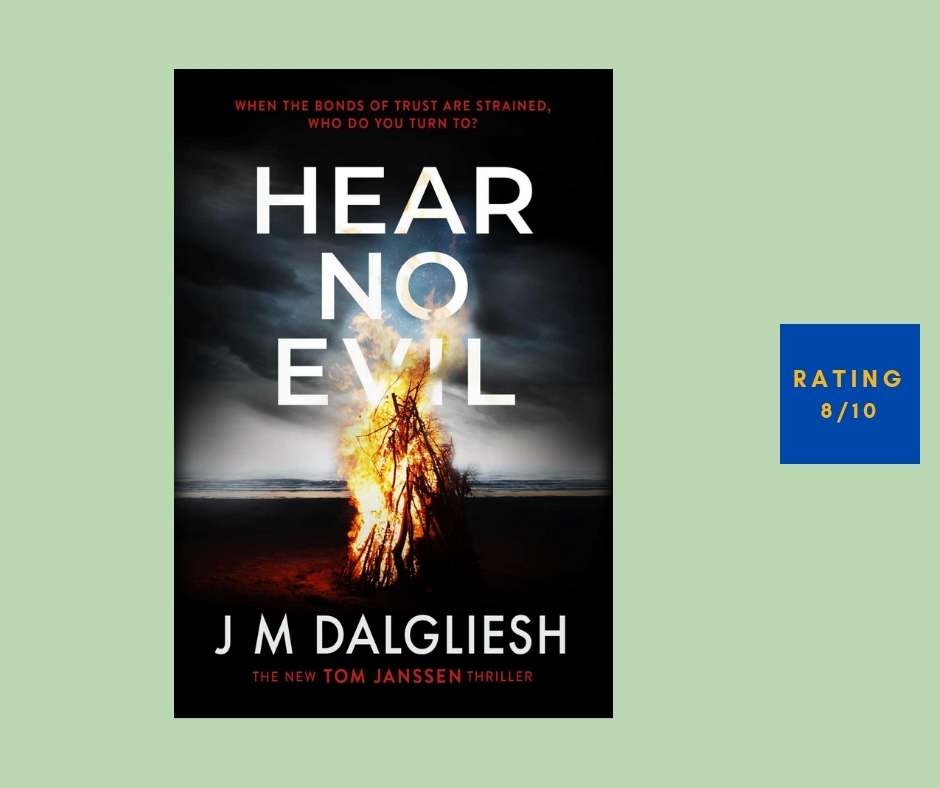
Hear No Evil by J M Dalgliesh [8/10]
“Hear No Evil” is the fifth in the Hidden Norfolk mystery series, and it’s the best one yet, a cracker. When a respected local man dies in a ghastly public scene, redoubtable Detective-Inspector Tom Janssen has to peel off layers and layers of deception amongst a tightly knit cadre of ex-military men. Janssen is one of the new breed of heroes of procedurals, upstanding and devoid of tics and vices, but from the very first book in the series, he has been quietly impressive of mind and intuition. Hear No Evil showcases Janssen at his best: relentless, rapier sharp, and resourceful. Add in his fellow police detectives, an appealing mix of individuals, and J M Dalgliesh serves up a classic crime fiction treat. The pacing is superb, the Norfolk settings wonderfully drawn, and the prose is tidy and sharp. A highly recommended stamp for this one and may the next follow swiftly.
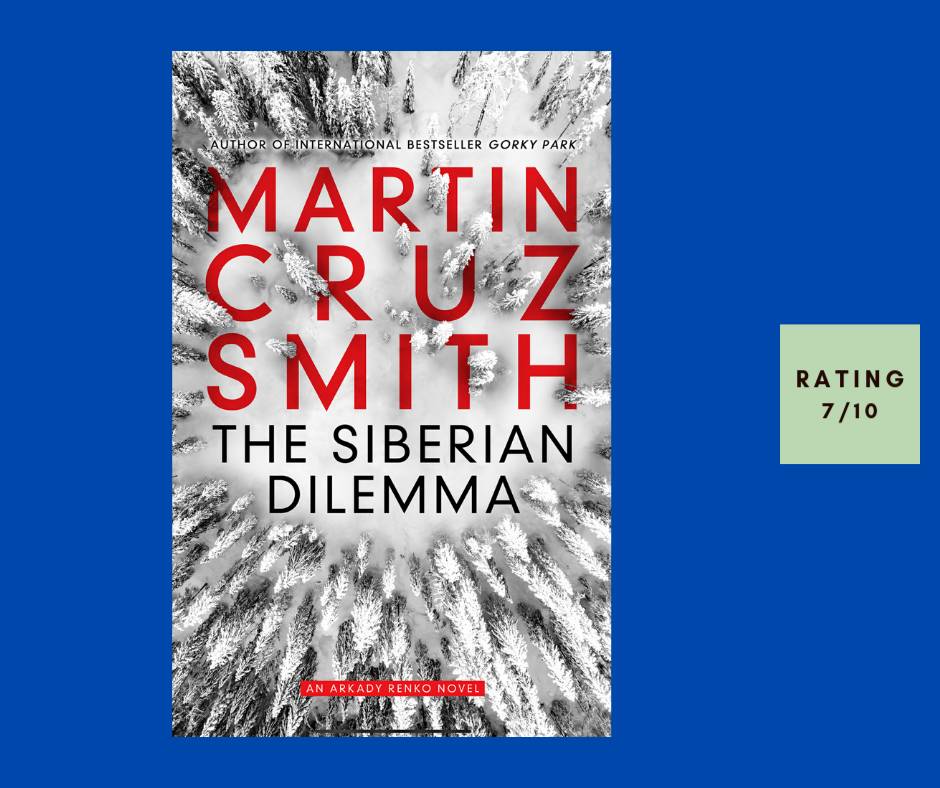
The Siberian Dilemma by Martin Cruz Smith [7/10]
A defining pleasure of the past four decades has been Arkady Renko, who, ever since Martin Cruz Smith swept the world with ”Gorky Park“ in 1981, has beguiled us as a Moscow investigator. Renko is ethical, cynical, and brilliant, a perfect vehicle for exploring first the Soviet Union and now Russia. I have such vivid memories of each Renko novel that I was surprised to discover that “The Siberian Dilemma” is only his eighth outing. This time, in the corrupt world of Putin and the oligarchs, Renko heads out east into the Siberian tundra and snow, to attempt to rescue the new love of his life, journalist Tatiana. Martin Cruz Smith is an exquisite stylist, using a pared down palette of evocative dialogue, spot-on descriptions, and Renko’s febrile thoughts. The action escalates towards an amazing series of scenes in far eastern Russian taiga and beyond, and then the reader is treated to Renko’s Poirot-esque unravelling of the strands of mystery. It’s an intoxicating brew, marred only by brevity that I’m sure wasn’t present in the first few Renko instalments, and is best devoured in a single setting.
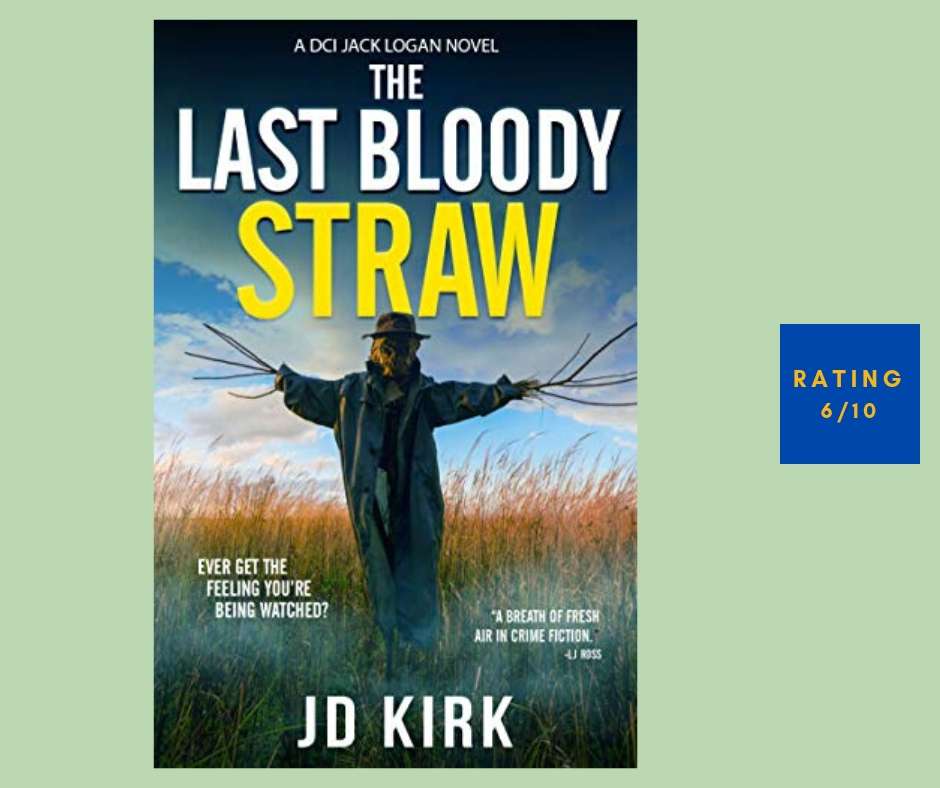
The Last Straw by JD Kirk [6/10]
“The Last Bloody Straw” is the fifth procedural starring Detective Chief Inspector Jack Logan, a quintessential bluff thinker and finder. I gather the series is all set in the highlands of Scotland or other remote places; this one certainly is, the murder taking place on Canna, a bleak island of a few dozen people off the west coast. When a despised local drunken woman is brutally murdered, Logan finds himself virtually marooned on the island, with everyone a suspect, accompanied only by his classic foil, plodding DC Neish. Tightly plotted, evoking that part of the world well, and leavened throughout by savage hilarity, “The Last Bloody Straw” is a fine example of modern detective fiction.