System Collapse by Martha Wells [10/10]
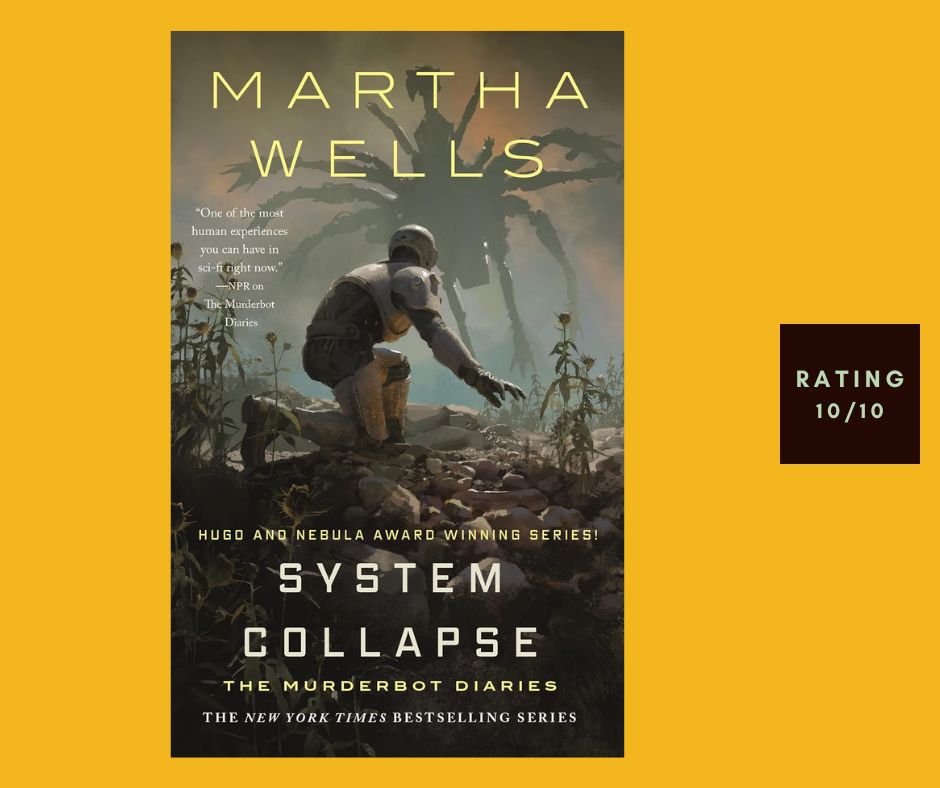
Martha Wells Systems Collapse review

In order to reach this stellar novel, I poured through one prior novel and five prior novellas, basking in what is surely one of the most lovely, profound examinations of non-human life in the science fiction canon. System Collapse Is a meaty addition to the ongoing saga of Murderbot, a Secbot (a cyborg adept at killing to protect humans) who (should I say “what”? Ah, that’s one deep theme throughout) has “hacked its governor module” to attain free will. The Murderbot Diaries, as Martha Wells’s acclaimed collection is called, is told in a close-up first-person style that demands readerly work, for Murderbot thinks in a programmatic way that resembles both our classic impression of robots and the brain of a possibly neurodivergent human. Free will, emotions, loyalties, relationships with humans … all these are explored with subtlety amid action. The storyline of System Collapse is typical of this series, a complex politically-infused drama pitting Murderbot, a semi-sentient spaceship, and human allies (masters?) against an evil corporation on a distant planet. Much of the “action” is not violence but exploration and diplomacy, and when real action occurs, Martha Wells is typically masterful in building and releasing tension. Oh, and did I say that the Murderbot Diaries is hilarious at the same time as thrilling and emotionally rich; the droll voice of Murderbot has to be read to be credited. I cannot believe I ignored this series for eight years! Is System Collapse the highlight? No, all seven instalments, novel or novella, are equally compelling, but System Collapse is nonetheless a 2025 must-read.

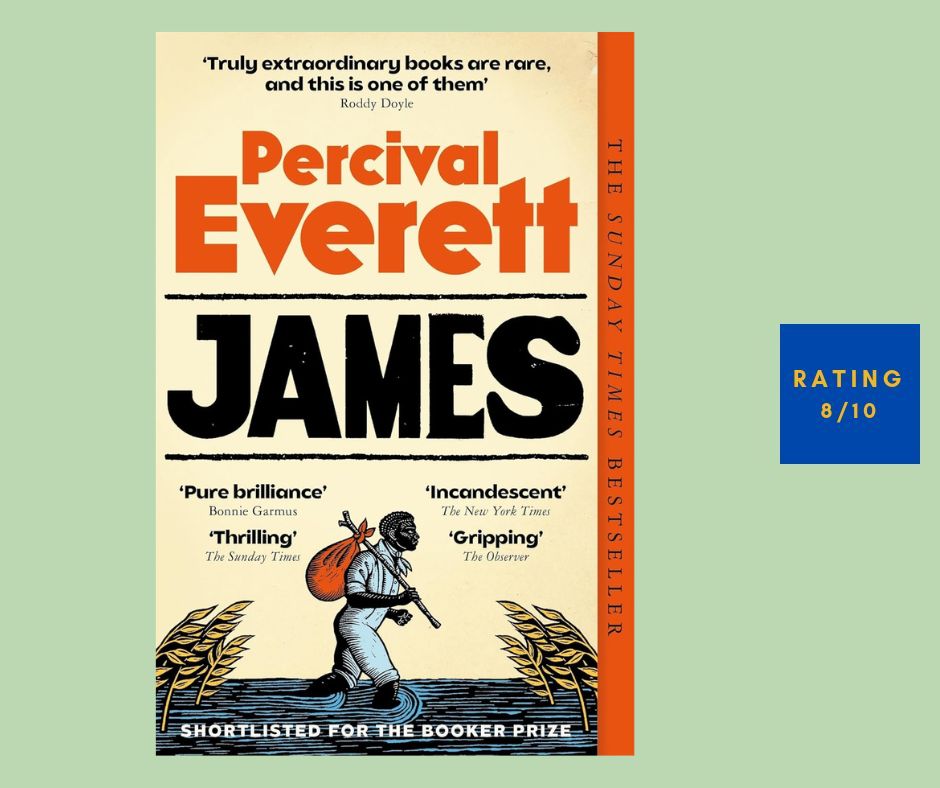
James by Percival Everett [8/10]

Percival Everett James review

As my first sampling of Percival Everett’s eclectic, adventurous output, his 2024 novel James is a scintillating introduction. Daringly retelling some of the exploits of Mark Twain’s Huckleberry Finn from the point of view of the slave Jim, the book is immediately memorable as you realize that James/Jim is a literate intellectual who hides, along with his relatives, behind the slave lingo. This conceit is executed brilliantly, often with humor. But all the humor nestles behind the raw horror of the vicious, murderous treatment of the black slaves. Everett’s storyline tracks Twain’s, involving a part adventure, part desperate flight up the Mississippi River of the 1860s civil war time. As Huck and James roam, often hungry, often tossed into the hands of capricious white men, the author provides an unblinking view of a world in flux, a world of inhumanity, a world of hope. Comedy mixes with philosophical musings. The author’s style is cool and light and learned, a pleasure to read on the page. For a non-American, the tale can start to feel a little baroque and random, but Everett brings the book to a cathartic, emotional climax. James is brilliant and a pleasure to read.

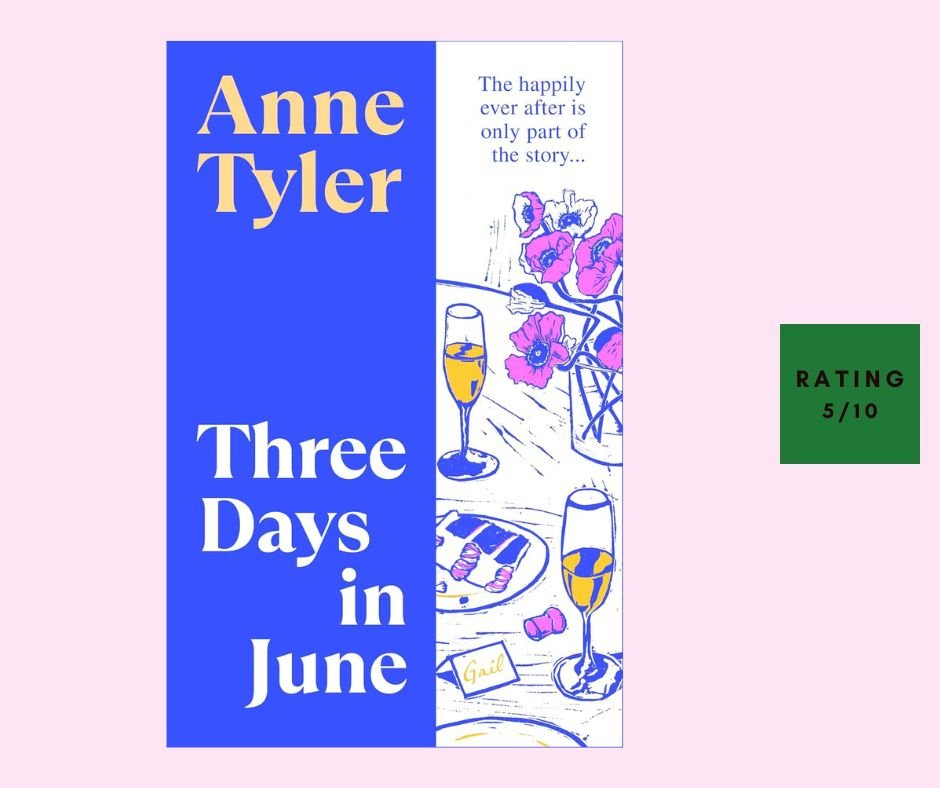
Three Days in June by Anne Tyler [5/10]

Anne Tyler Three Days in June review

Beloved novelist of quotidian days in Baltimore, Anne Tyler cannot be resisted, always parses smoothly, but increasingly has become insubstantial. In Three Days in June, deputy principal Gail, a fastidious, locked-up personality with a heart of gold well hidden, wrangles the world on the day before her sole daughter’s wedding (assailed by the arrival of her messy, friendly ex-husband Max), during the wedding, and on the day after. The novel starts encouragingly and inserts shocks as we realize the underlying theme is marital infidelity, but then the author seems to run out of puff. The chaotic wedding, viewed satirically, becomes tedious and just when the aftermath day picks up speed, Three Days in June climaxes with a genteel twist that might not ring true (at least it didn’t to this reader). Tyler’s twenty-fifth novel is, at 176 pages, short and slight.

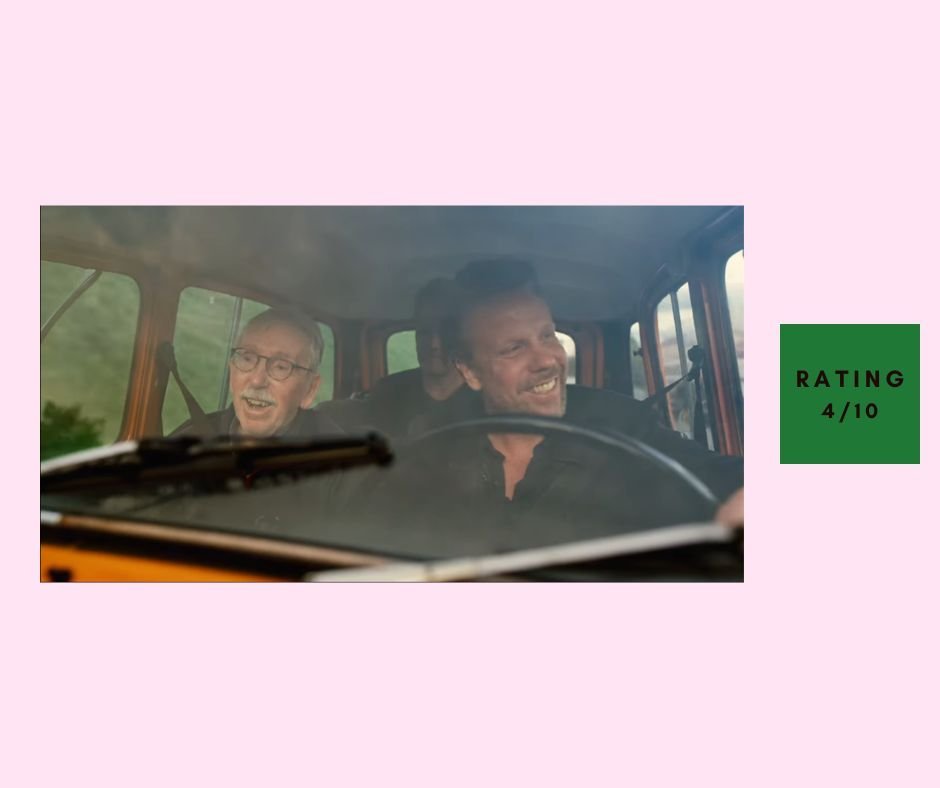
The Last Journey by Filip Hammar & Fredrik Wikingsson [4/10]

The Last Journey review

A documentary of the reality show type, The Last Journey sees Filip Hammar organizing a trip for his 80-year-old infirm, passive father to the beloved French seaside town the family once went to regularly. For the road trip, Filip buys a clunky old Citroen and takes along his best friend Fredrik (apparently Filip and Fredrik are a comedy success duo in Sweden). The film becomes a series of staged attempts to perk up the father, who shuffles along on his walking frame. The Last Journey has some laudable strengths: Filip’s love for his father comes through loud and clear, and is touching; a couple of scenes are indeed almost as funny as the film’s billing; and some of the sentimentality actually works. But overall the pacing is slow, the soundtrack jars, and there is a regrettable sense of taking advantage of the infirm dad. A miss.

The Newsreader Season 3 [10/10]

The Newsreader Season 3 review

With the final season of Australian drama series The Newsreader wrapped up, take my advice and begin at Season 1, which was excellent without being outstanding, rush to Season 2 (outstanding), and finally tackle this season, which will undoubtedly figure as one of my very top movies/shows of 2025. It is sublime. All the key characters continue. Let me mention the three I see as pivotal: the award-winning nightly news anchor Dale, terrified of being outed as gay (we are talking about 1989, okay?); current affairs anchor Helen, battling longstanding mental health issues; and TV station head Lindsay, a gross, misogynistic, venal villain. Respectively, Sam Reid, Anna Torv, and William McInnes are even more memorable in those three roles than in the previous seasons. A dozen other actors are superb playing key secondary characters. The real life backdrops for the episodes (Tiananmen Square and the Berlin Wall fall being the most iconic) continue to fascinate and rise from the screen. In this final season, both Dale and Helen skirt or court disaster, and toward the end of the six seasons, a question arises: how on earth can the scriptwriters and directors rustle up some form of coherent, let alone happy, ending. Suffice to say Season 3 of The Newsreader soars in the last two episodes, a triumph of storytelling. A must-see.

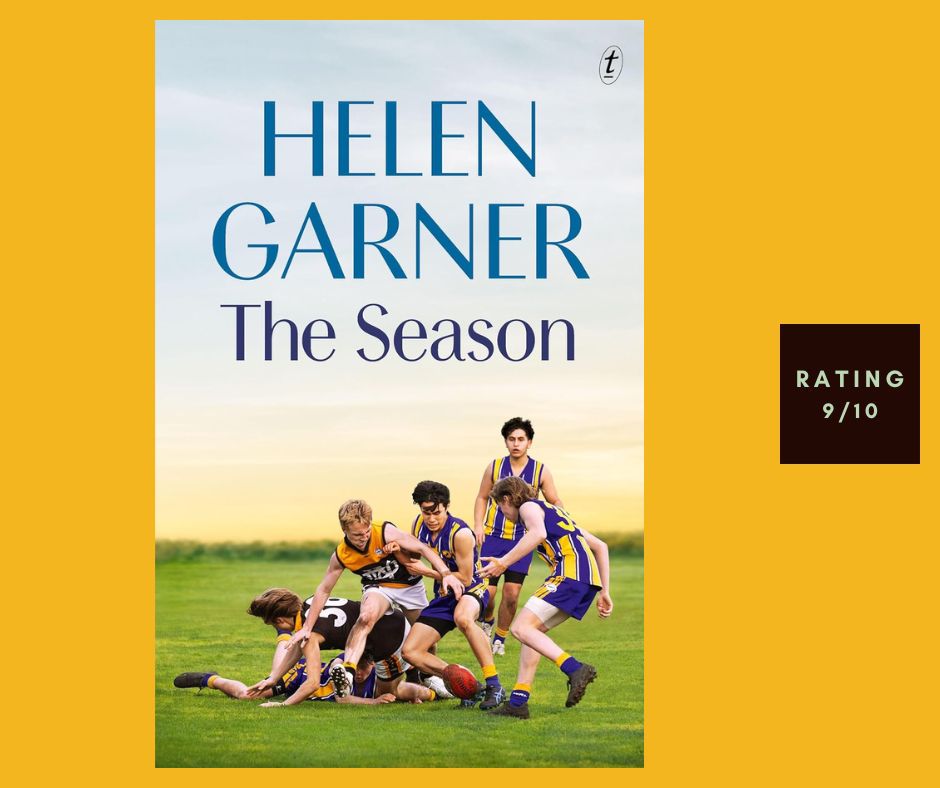
The Season by Helen Garner [9/10]

Helen Garner The Season review

There are legions of Helen Garner fans. We hang out for her muscular, part lyrical, part blunt, prose and for her unsparing look at the world behind its appearances. The Season is her gentlest outing yet, as well it should be in her eighties: she sets out to follow her teenage grandson’s year playing in the local Under 16 football (Australian rules football, not soccer) team. She hangs out during training, completely invisible with her notebook. She watches her favorite professional team. She travels to matches and, in one memorable scene, issues oranges to the players during their breaks. She writes of the exquisite joy and terror of being a grandmother able to witness this coming of age, knowing there might be few witnessings ahead. The Season is at once a paean to suburban ordinariness; a celebration of Homeric sport; the chronicles of an old woman; and an intimate journal of love. It is a book to be read for insights and experiences, but also a book in which each sentence and paragraph is enjoyed for its craft. It is, in short, a triumph.

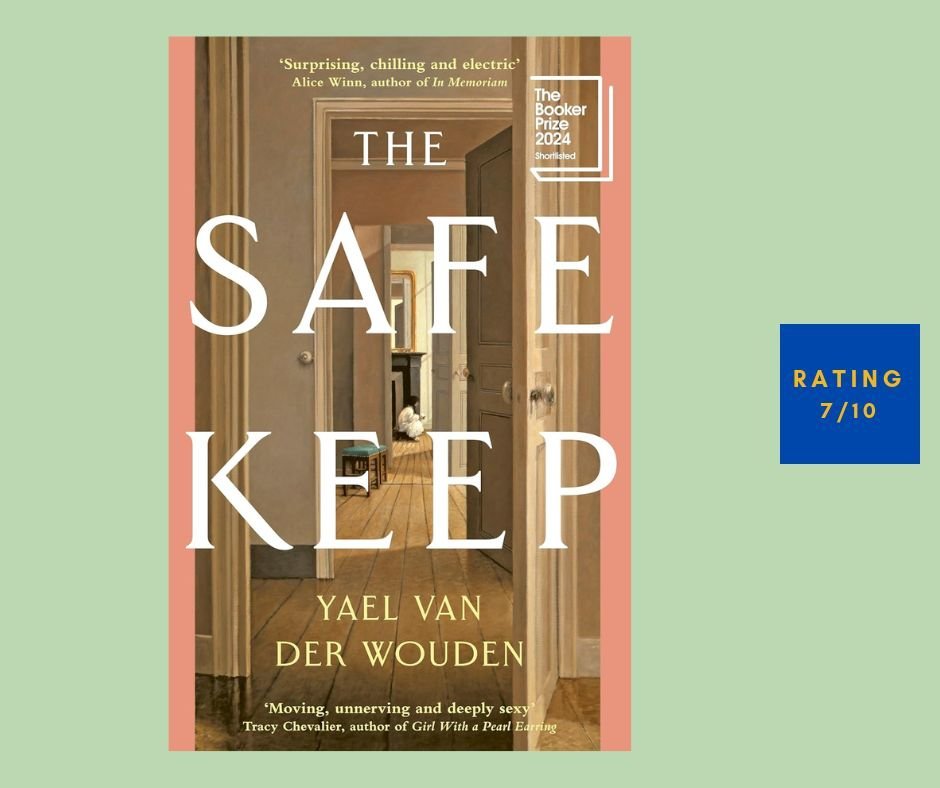
The Safekeep by Yael van der Wouden [7/10]

Yael van der Wouden The Safekeep review

Dutch novelist Yael van der Wouden’s debut, The Safekeep, is a claustrophobic, festering novel set in 1960s’ Netherlands, a country still scorched by Nazi occupation a decade and a half earlier. The story sets out to be an account of an antisocial young woman living in her deceased mother’s house, attended regularly by her two dissimilar brothers. When a brother’s girlfriend is dumped to live temporarily in the house, the story expands to one of lust and longing, and then, unexpectedly, veers into Holocaust reckoning. The author has fashioned a deeply intimate examination of the protagonist, written in dramatic prose, and her plotting is assuredly tight. The florid love affair at the heart of the book slows down the core revelations but overall, The Safekeep is a fiery, poised novel.

Asura by Hirokazu Kore-eda [9/10]

Asura review

Hirokazu Kore-eda makes movies that feel intensely Japanese, uncomfortably different, whilst applying honesty and intelligence to genuinely human stories. Asura is a seven-episode family drama about four wildly dissimilar sisters, their lives swirling around each other with familiar love, resentment, competition, and protectiveness. We have: the happily married wife of a Japanese businessman (who seems to absent himself now and then) and mother of teenage children; the professional flower arranger, a widow ensnarled in a romance with a married man; the insecure girlfriend of a boxing wannabe; and the cloistered librarian seemingly destined to remain a spinster. When their retired father is found to have a mistress and secret son, the drama of the series commences, swirling outwards with unpredictable outcomes. To this viewer, the first two episodes, with the slightly exaggerated Japanese acting, the chintzy music, the plain cinematography, and the matter-of-fact direction, were baffling, but quickly Kore-eda’s magic sets in and we are entranced by the characters and their realism. By season’s end (and I do certainly yearn for Season 2), all the characters are indelibly stamped over their stories and humanity’s messiness is portrayed with rare accuracy. A gem.

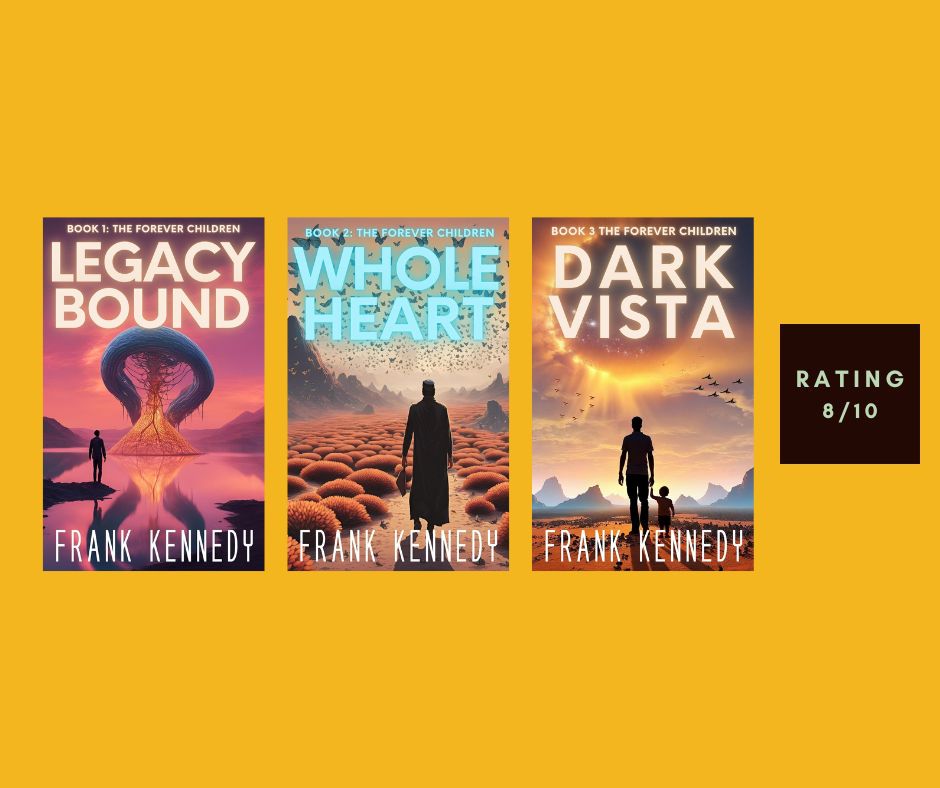
Legacy Bound & Whole Heart & Dark Vista by Frank Kennedy [8/10]

Frank Kennedy series

The first three (short) books in The Forever Children trilogy, Legacy Bound and Whole Heart reprise one of the appealing characters in Frank Kennedy’s Collectorate universe, the principled, immortal soldier Exeter (aka X). In the first book, X seeks peace on the artifical world of Aeterna, home to the immortals, but is sucked back into mortal and high-stakes action when his spouse dives into a lake to find the mythical Jewels and the former super immortal Michael Cooper’s son attempts to bring father back to life. The second book boosts the stakes and increases the mystery and the third escalates external threats, inserts a wonderful character from another of the author’s series, and deepens the Jewel-led weirdness. Throughout, the writing is tight, immersive, and propulsive, and the characters shine. Another winner of a series from this author and I’m hanging out for the remaining instalments of this series.

Apple Cider Vinegar by Samantha Strauss & Jeffrey Walker [9/10]

Apple Cider Vinegar review

The story of fake online wellness guru Belle Gibson is a familiar one: fake, found out, justice. But Apple Cider Vinegar, a six-episode rendition based (howsoever loosely) on a journalistic expose, is turned by Samantha Strauss’s sparky, imaginative script (backed by superbly tight and watchable direction from Jeffrey Walker) into something special. We know the arc but the pleasure is in how the tale unfolds, how the goodies and baddies operate, and indeed in the depth of human understanding shown to all the characters, even the super villainess herself. All the actors are beautifully cast, with Kaitlyn Dever riveting in the Belle role, and Mark Cole Smith and Ashley Zuckerman quietly magnificent in two of the key male roles. Each of the six episodes packs a punch, and the series is bold in its use of time jumps and quirky voiceovers or actor intrusions. The thundering plotline manages to illuminate important themes, such as conventional versus alternative medicines, the ghastly potential for influencers to falsify, and the human desire for connection when unwell. From dramatic start to apt ending, Apple Cider Vinegar is magical.