Not quite short enough to be a novella, at 190 pages The Burrow is condensed and freighted with wise emotion on every page. When a grieving couple buy a pet bunny for their teenage daughter, little do they realize that the creature will begin to dominate their slow recovery. When the wife’s mother, herself pivotal in the underlying tragedy, arrives to stay after an injury, the new suburban home of the rabbit becomes a roiling bed of change and crisis. This spare, unsentimental, detailed novel asks: will recovery begin or is this just another crisis? Melanie Cheng is a pinpoint stylist adept at cycling through the four sufferers, adept at manipulating plot in the service of emotional revelations. This reader found the first three quarters of The Burrow to be riveting; if the final quarter lost some intensity, nevertheless the overall journey was a touching, rewarding one.
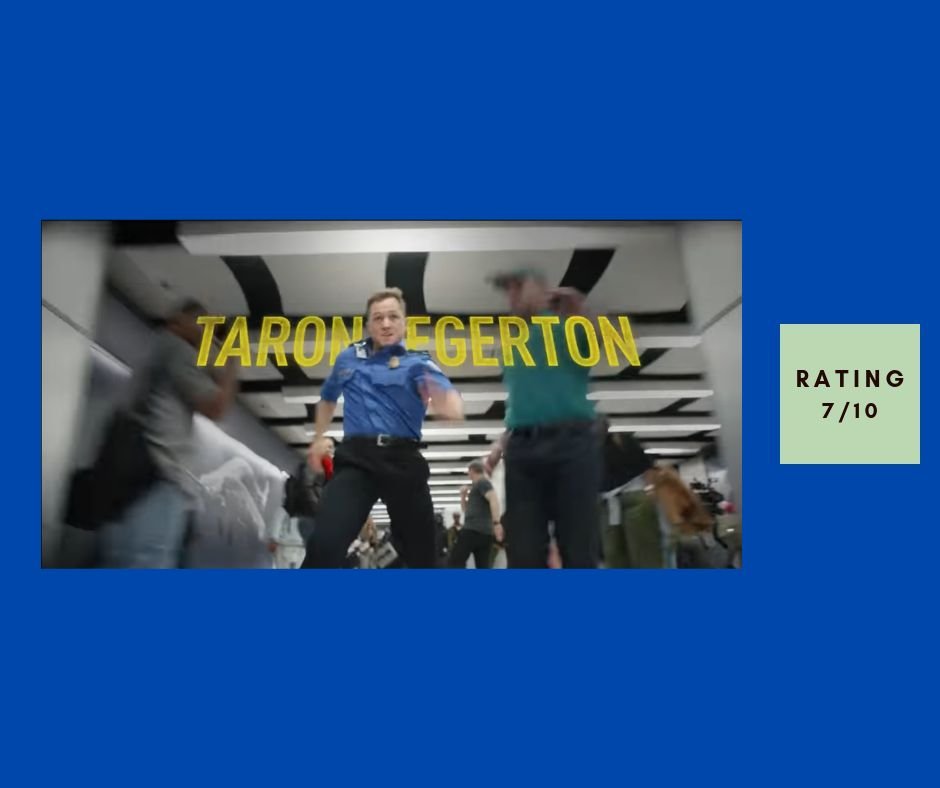
Carry-On [7/10]
The disposable-thriller sub-genre is real and one that Netflix excels at. A typical, stalwart example is Carry-On, an airport thriller with a wonderful premise. If a young TSA agent fails to let a catastrophic suitcase through security, his wife (also working in the airport) dies. And it is Christmas Eve. The premise is milked for all it is worth and milked well: the script by T.J. Fishman is contrived but gripping, and Jaume Collett-Serra’s direction is kinetic and immersive. However, what plucks Carry-On from the ruck is the performance of the two stars: Taron Egerton, as the victim, is refreshingly gauche yet smart (and of course physically effective), while Jason Bateman is hatefully indestructible as the genius villain. Anyone casting about for a brief jolt of adrenaline after a bruising day would be well satisfied by Carry-On.
A Complete Unknown by James Mangold [9/10]
Based on a ten-year-old part-bio, Dylan Goes Electric!, by Elijah Wald, and brilliantly refashioned by eclectic writer/director James Mangold, A Complete Unknown is, of course, about Bob. Dylan. Bob Dylan, the genius singer/songwriter who is the only lyricist to have won the Nobel Prize. Perhaps its greatest strength is that it only relates a segment of Dylan’s life, from when he arrived in New York at the start of the mighty Sixties, penniless, unknown, and a mystery, until he upended the American folk scene by “going electric” at the Newport Folk Festival. Timothée Chalamet stuns as the young Bob, nailing his voice, his singing, his arrogance, his self-certainty, and he is backed up by Ed Norton note-perfect as Bob Seeger, Elle Fanning wonderful as the discarded girlfriend, and Monica Barbero immersive as Joan Baez. The cinematography is excellent, especially in the raucous clubs and on the various stages, the plot zings without concession to the viewer, and the 60s settings are a pleasure in themselves. To my mind, A Complete Unknown remakes the genre of the music bio. Go see it.
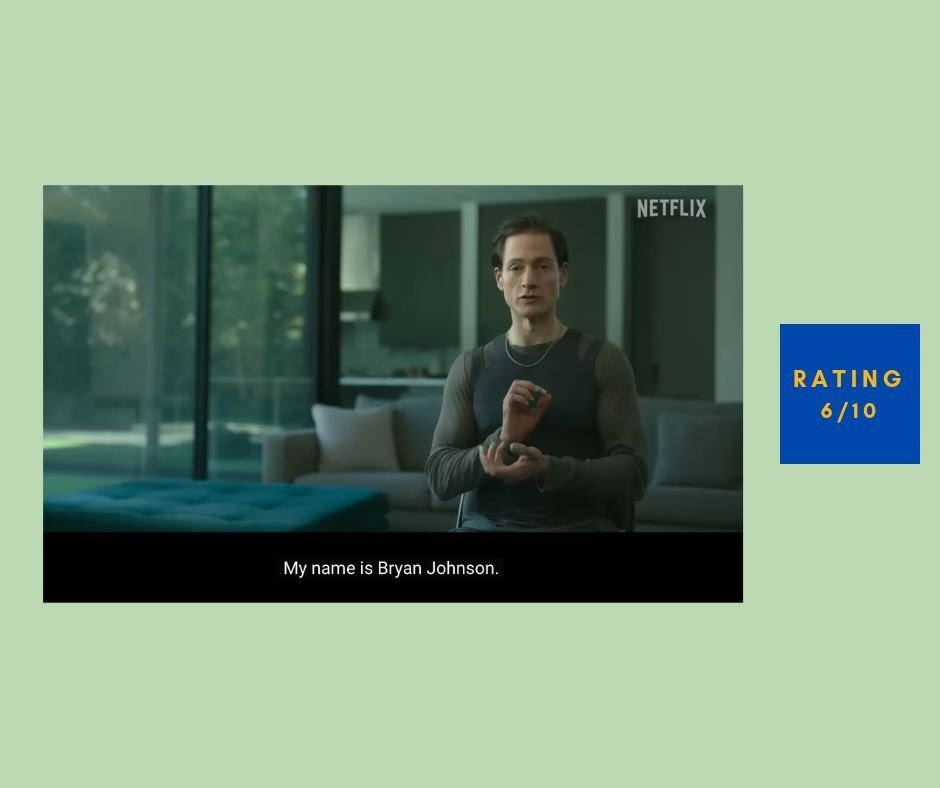
Don’t Die by Chris Smith [6/10]
A documentary definitely not for everyone, but very much in my wheelhouse, Don’t Die: The Man Who Wants to Live Forever profiles Bryan Johnson, the multimillionaire publicly doing a one-on-one experiment on himself with the aim of living forever. If I tell you he finishes eating for the day at 11 AM, eschews alcohol, eschews most social life, eats precisely weighed and planned meals, volunteers for offshore gene therapy, and consumes a hundred pills a day (that number varies every time I read about him) … well, you’d be entitled to dismiss him as a nut. Yet this documentary portrays him (over sympathetically, I must admit) as a likeable, almost vulnerable soul of great obsessiveness. He is, in a word, interesting, and that alone makes Don’t Die quite an intriguing watch. Plot overlays are his love for one of his children (the others are estranged) and his online exhibitionism and business hawking, both of which deepen our appreciation for someone hard to comprehend. Well paced, simply shot, Don’t Die is worth a look, especially if longevity appeals as a topic.
The Remarkable Life of Ibelin by Benjamin Ree [9/10]
Seemingly unassuming as it starts, The Remarkable Life of Ibelin gently kicks into gear with the documentary tale of a Norwegian sufferer of a muscular degenerative disease, Mats, and his death at age 25. Then the bombshell: his parents discover hidden on his computer (we’ve already seen significant footage of him curled up in a wheelchair, playing video games using special gear allowing him to work the games with just a finger or two, we’ve heard his parents bemoan his wasted time gaming) a community of gamers who swirled around him in a second life on World of Warcraft (I have a friend who spent years on this multiplayer online game, so I know how addictive/rewarding it is). From there writer/director Benjamin Ree plots out a fresh biography (using animated resconstructions of game action plus actual text conversation discovered in Mats’s gaming archives) of Ibelin (Mats’s game name), full of intrigue and emotion and even love. We see some of Ibelin’s closest online friends, face to face in interview, and we begin to marvel at the courage and humanity of Mats/Ibelin. The Remarkable Life of Ibelin is a touching, unsentimental story of the powers of friendship and love in the most difficult of physical circumstances, and the last quarter is truly moving.
Earth by John Boyne [8/10]
In his quartet of novellas loosely organized geographically around a remote Irish island and organized (it seems) around modern issues of abuse and misogyny, John Boyne’s second instalment is Earth (see my review of the first, Water). At the end of Water, we witnessed a secondary character, a troubled seventeen-year-old youth, fleeing the island, and it is he, Evan, who now stars in Earth. Without preamble, the author deftly inserts us into a court case accusing Evan, now a soccer star, of abetting in a rape, the other accused being his teammate. Then Boyne switches us to and fro, between courtroom scenes and his fraught past since leaving the island. For Evan is damaged, a caring soul plunged into darkness, and the novel soon becomes an examination of his morals under pressure. As always, John Boyne’s writing is free flowing and acute, the dialogue a treat, the ancillary characters all quickly and deeply introduced and then developed. The 168 pages unwind in a pleasing blur, a blur that sinks the reader into the darkness of misogyny and rape, fully up to date in 2025. Not quite as riveting as Water, Earth nonetheless is a sterling, thought-provoking read.
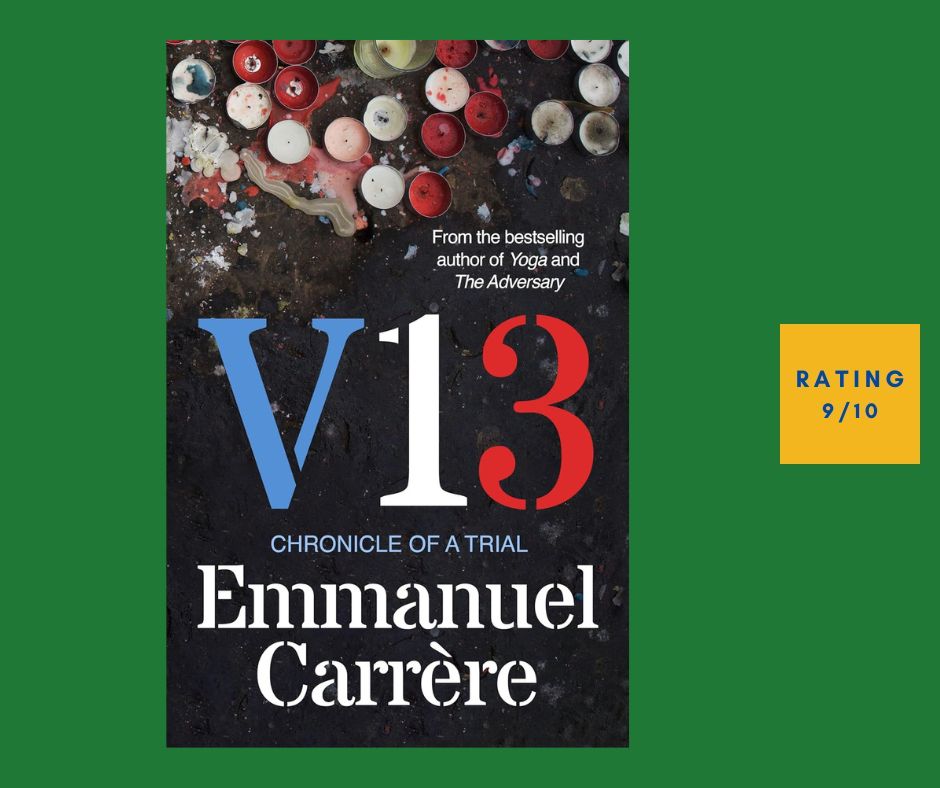
V13: Chronicle of a Trial by Emmanuel Carrère [9/10]
My first Emmanuel Carrère book, V13: Chronicle of a Trial, has made me an instant convert. The esteemed author asked to be commissioned to write weekly about the sensational, grueling nine-month-long 2021-2022 trial in Paris of fourteen defendants of the horrific multi-location terrorist attack in 2015 that killed 130 and maimed hundreds. He missed very few days of the court sessions and grew to know many of the plaintiffs, lawyers, and even defendants. At the start of the book, the author’s plain, smooth, open-hearted style suggests the book will miss something vital about the case’s dramas or themes but great skill is at play. The reader becomes drawn in, until the feeling is of sitting on the author’s shoulder. Whilst never downplaying the dumb savagery of the attackers’ motives and tactics, he manages to draw each of the fourteen as an individual. Tragedies upon tragedies, either for survivors or families of the dead, are sketched with wonderful empathy. As we approach the climax of the judge’s verdicts and sentences, washes of emotion flood the court, including Carrère, who writes that what he anticipated as a “vain, colossal judicial spectacle,” instead morphed into something much more: “No: this was something else: a unique experience of horror, pity, proximity and presence.” V13: Chronicle of a Trial is a gently riveting and brave nonfiction chronicle that reminded me of Helen Garner at her best; I can offer no greater recommendation.
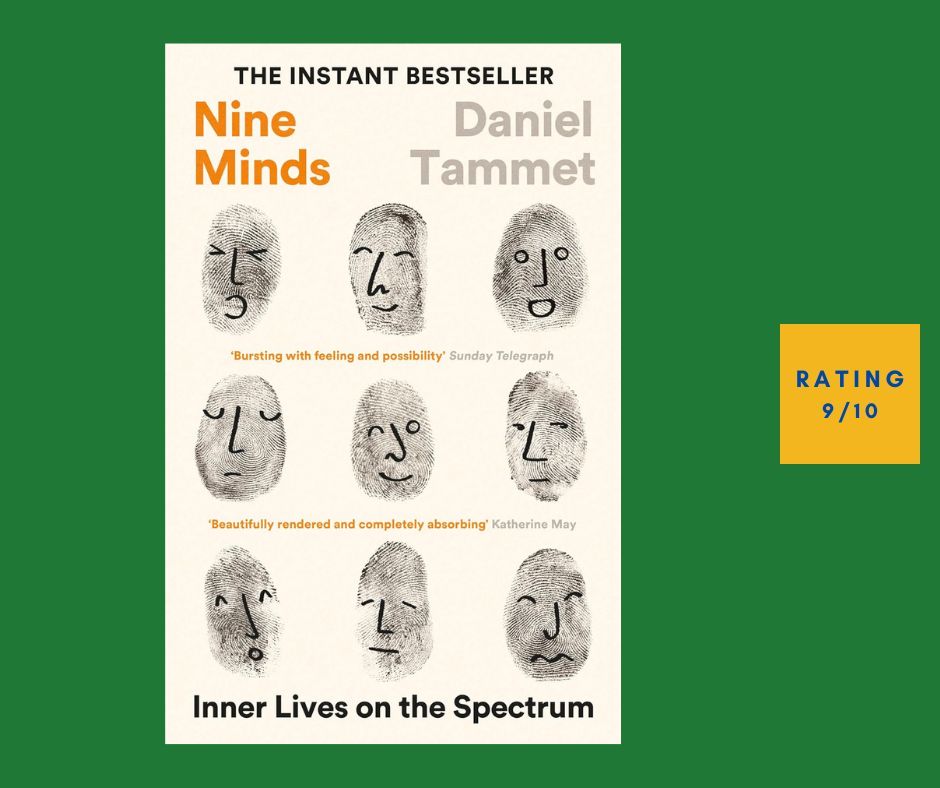
Nine Minds by Daniel Tammet [9/10]
In his extraordinary ode to neurodivergence, Nine Minds: Inner Lives on the Spectrum, Daniel Tammet, neurodivergent himself, plies language in the service of nine very different minds. Eschewing direct quotation, he gently (often oh so gently) retells their experiences (relying on copious interviews of and around his subjects) now and in the past, happy and sad, showing us innermost fears and joys while sketching the public personas involved. Some of the “minds” are super functioning in the way we imagine for autistic savants: a hand and wrist surgeon of international repute who nonetheless cannot remember faces; freakish comedian Dan Ackroyd, so different in humor and in life from an early age; a “murder detective” with an uncanny ability to solve crimes others give up on; a freakishly talented mathematician; a blind woman attuned to famous Australian poet Les Murray, himself autistic: a nonverbal man reared with extraordinary love by his mother. Never preaching, never even teaching, Tammet is a deeply sympathetic stylist whose nine stories all differ but all reinforce the central message of universality of love and connection and hope. Nine Minds is a special read, one I commend.
Joy [9/10]
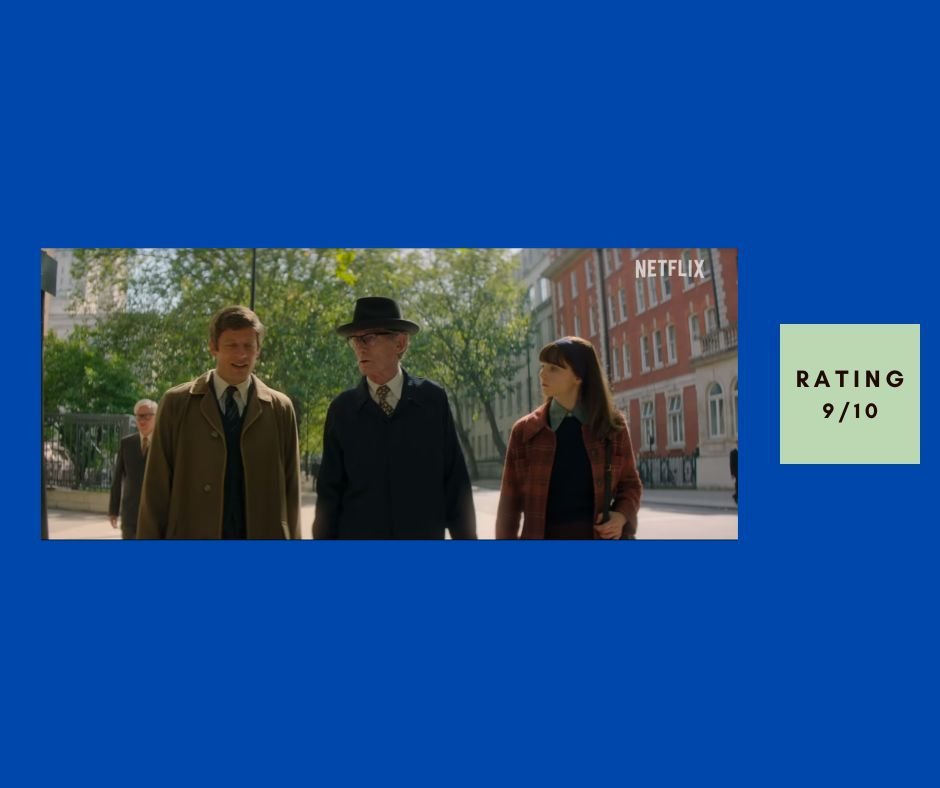
A most English movie replete with restrained acting performances and muted drama and lush countryside and old-school laboratories, Joy recounts the story of the birth of Louise Brown, the world’s first IVF baby, in 1978. Spanning a decade, the movie revolves around the trio of maverick biologist Robert Edwards (a wonderful slightly neurodivergent performance by James Norton), obstetrician Patrick Steptoe (with Bill Nighy perfectly cast: dry-witted, fustily elegant, morally strong), and embryologist nurse Jean Purdy (a sparkling subtle portrayal by Thomasin McKenzie). It might be difficult for a young person of today to comprehend the controversial nature of their long, difficult journey and the reactionary bile thrown at the trio … but no, we still see the same demonization occurring in the U.S. abortion battles. Jack Thorne’s script is clean and builds gradually to the climactic birth scene, retaining suspense throughout, and the sentimentality that creeps in feels entirely justified. Biopic-style movies like this often discard vibrant story techniques but Joy works quietly yet beautifully, producing a minor triumph.
Conclave [9/10]
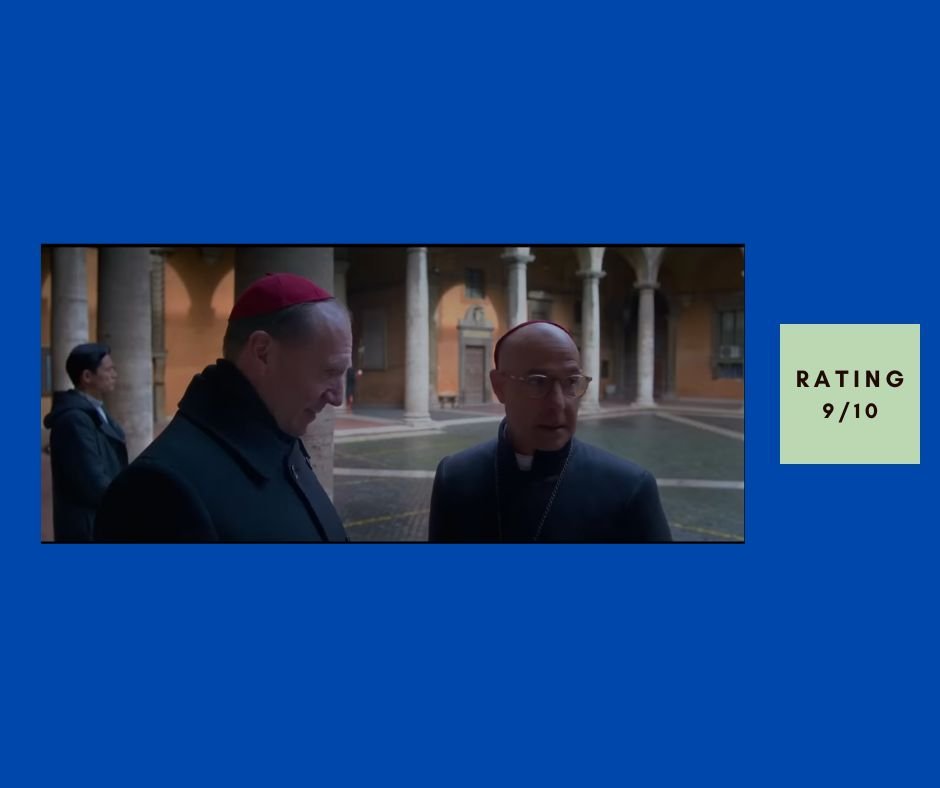
One of the highlights of novelist Robert Harris’s career is undoubtedly the 2016 Vatican election thriller Conclave. Now, nearly a decade later, it has come to the big screen and wow, has it ever come big… Conclave, directed by Edward Berger, is lush with the opulence and somberness of the Vatican, enriched by the intense, close-up cinematography of Stéphane Fontaine and a memorable soundtrack. The plot, in which we become rapidly immersed, is simple: the Pope has died and a cardinal (played with awesome veracity and force by Ralph Fiennes) must manage a complicated, sequestered process of all the cardinals voting for a new pope, iteration after iteration until a 75% majority agrees. It turns out there is as much or more intrigue and deceit among the holy cardinals as in a mafia movie, and Robert Harris’s book, and this film, unwind the plot twists with consummate care. Besides Fiennes, the actors are superb, with a special mention going to Carlos Diehz as a somewhat mystifying late entrant cardinal. Conclave is a memorable two-hour-long viewing experience.