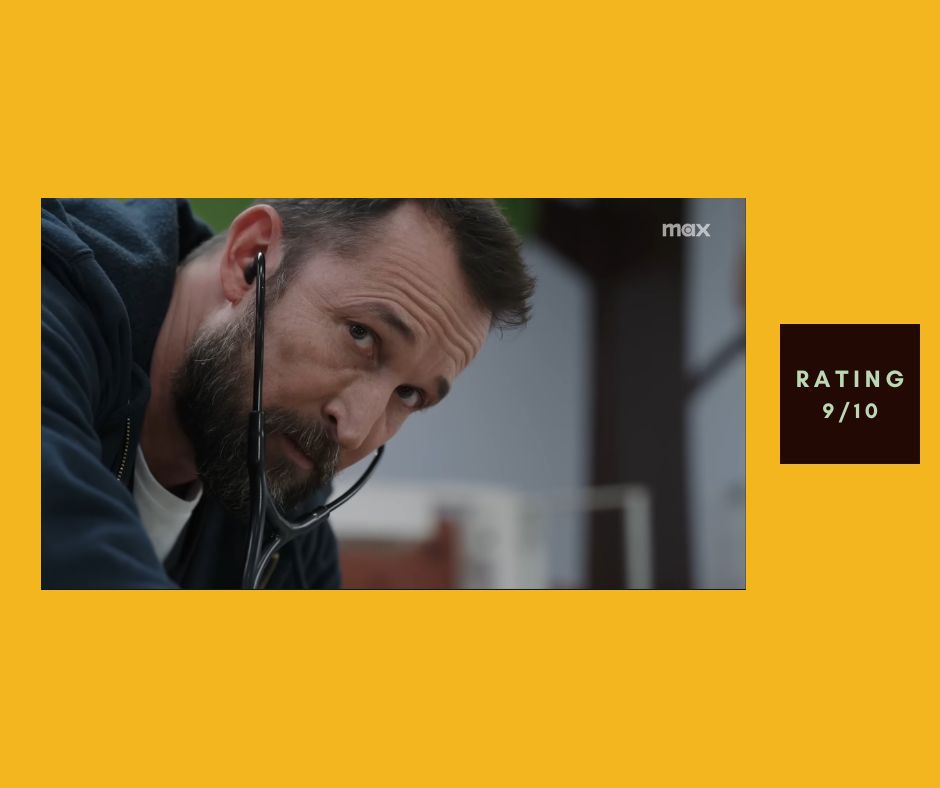
There are those who adore medical movies and shows. Not me. I’m not only squeamish but medical arcana bores. So I came to The Pitt, a fifteen-episode (one episode per hour in a day) show about an emergency department in Pittsburgh, with reluctance. It only took one episode to blast away my concerns, for this is very much medical, medical, medical, but only as an excuse for slice-of-life drama of the highest order. Following a team of trauma doctors, including a handful of first-day student doctors, the show’s mechanics involves, as expected, a constantly shifting camera illuminated a wide variety of medical emergencies, with plenty of close-up views, plus the doctors’ individual stories, plus the high drama of medicine in poorly serviced America. What distinguishes the show is superb storytelling paced perfectly. Solid acting buttresses the show, with the lynchpin being Noah Wyle, excellent as Doctor Robby, head of the shift. Do we really need fifteen hours? Maybe not, but The Pitt entertains and enriches for every one of its fifteen. Recommended.
The Bear Season 4 [10/10]
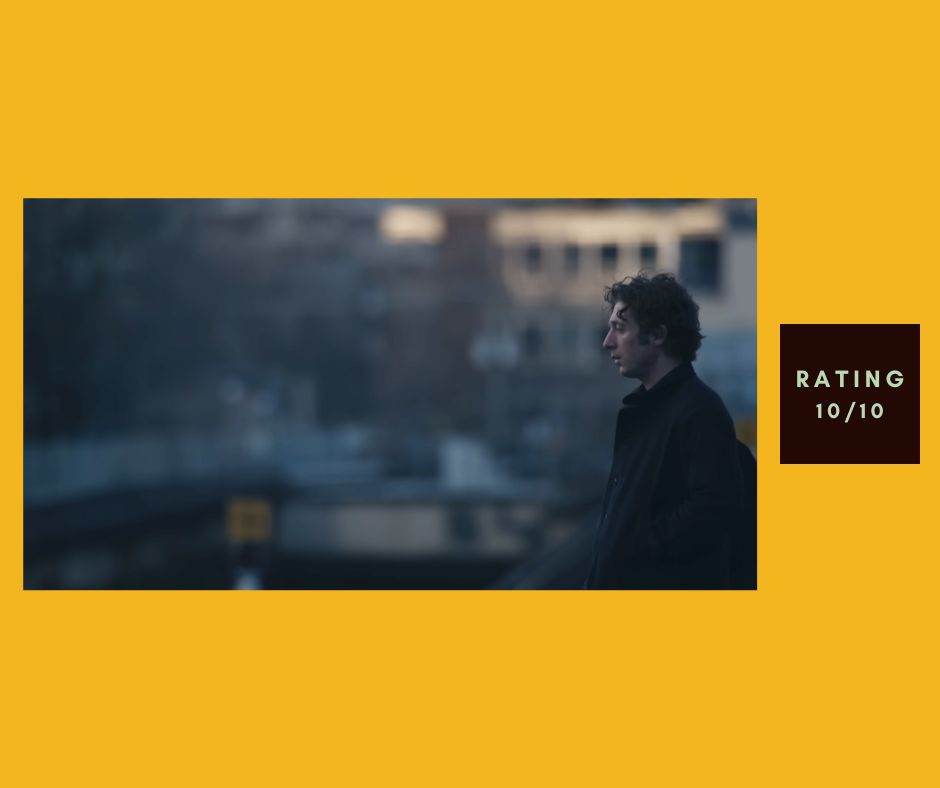
The slow but shouty and intense restaurant drama of The Bear seems to repel some viewers but this reviewer has been entranced since the opening episode (check out my reviews of Season 1, Season 2, and Season 3). The story of a restaurant named for its chef is the story of Carmy (The Bear), a laconic Chicagoan obsessed with becoming the best of the best in his trade, a man hiding from his tumultuous family (many of whom work at The Bear) and from his own uncertainties. Stunted in his personal development, he returns to Chicago upon the suicide of his blustery brother and converts the family beef joint into a Michelin aspirant. Plenty of creators would tackle this dual chef-restaurant tale over the course of a movie but the show’s creator and core writer/director Christopher Storer lingers in order to spotlight the milieu of high-end cuisine and to hunker down into the lives of his large assemblage of characters. It veers from comedy to tragedy to farce to high art, often within individual episodes, and Storer is never afraid to experiment (Season 3 angered some fans with its strange episodes). The acting is as good as any I’ve seen this year (and the previous three years), with so many superlative performances one cannot do them justice. Needless to say, Jeremy Allen White is magnetic as Carmy. In Season 4, Carmen wrestles with his life as his creation hauls itself out of disaster after a mediocre review, while Carmen’s offsider Syd is tempted by an outside offer. Each of the ten episodes is strong and real, and Storer has again fielded one extra-long tumultuous episode showcasing the Berzatto family in all its chaotic variety. Perhaps signaling an approaching end to the series, some of the plot outcomes are touchingly sappy. Overall, Season 4 is another example of Golden Age perfection.
The Director by Daniel Kehlmann [9/10]
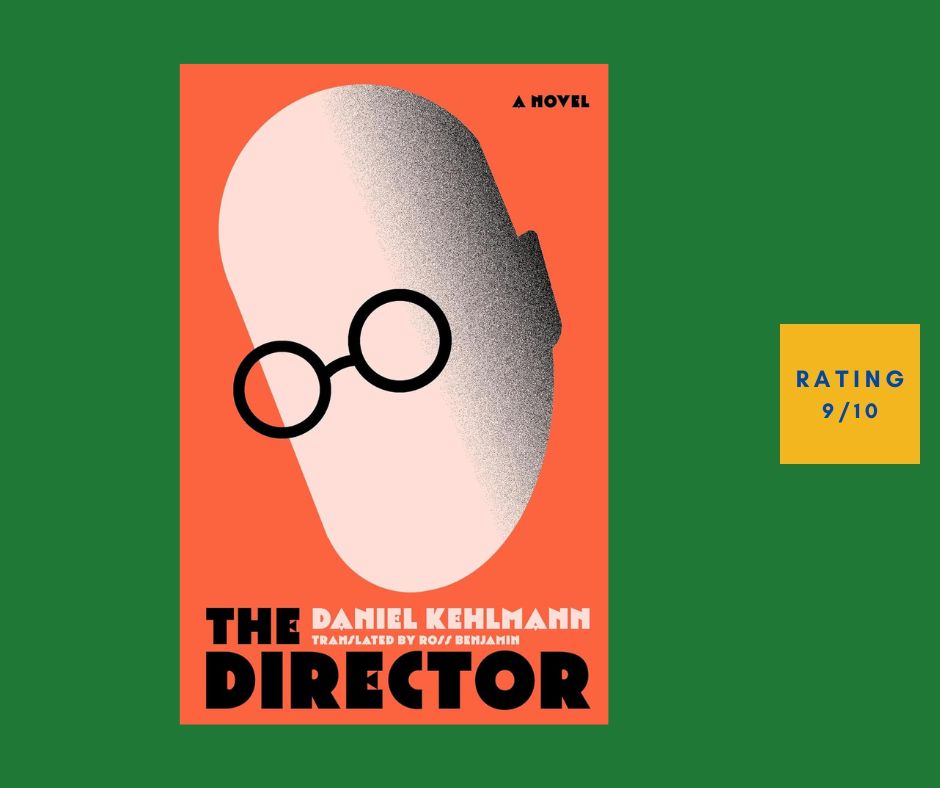
Author of the impressive 2017 novel Tyll, among many novels, German author Daniel Kehlmann tackles, in The Director, the story of mid-20th-Century film director G.W. Pabst, who flees the Nazis in the early stages of World War II but then, through happenstance, ends up back in Austria just before Germany conquers and closes borders. Pabst resists but no one can resist Goebbels, who needs skilled movie practitioners to produce Nazi propaganda movie, and soon Pabst is on a slippery descent into hellish complicity. Adding fictional elements into a true skeleton of a story, the author creates a rattling tale that never eases, from before the war until well after. Kehlmann is a master at filmic (dare I say) switches of scene and character, and individual scenes are all varied and brilliant. An exploration of art and love amidst evil, the book is also a dark satire of tyranny and human failings. A final plot twist struck this reader as astonishingly startling and apt. The Director is a tour de force of a literary novel that reads like a thriller filled with foreboding.
Last Bullet by Guillaume Pierret [6/10]
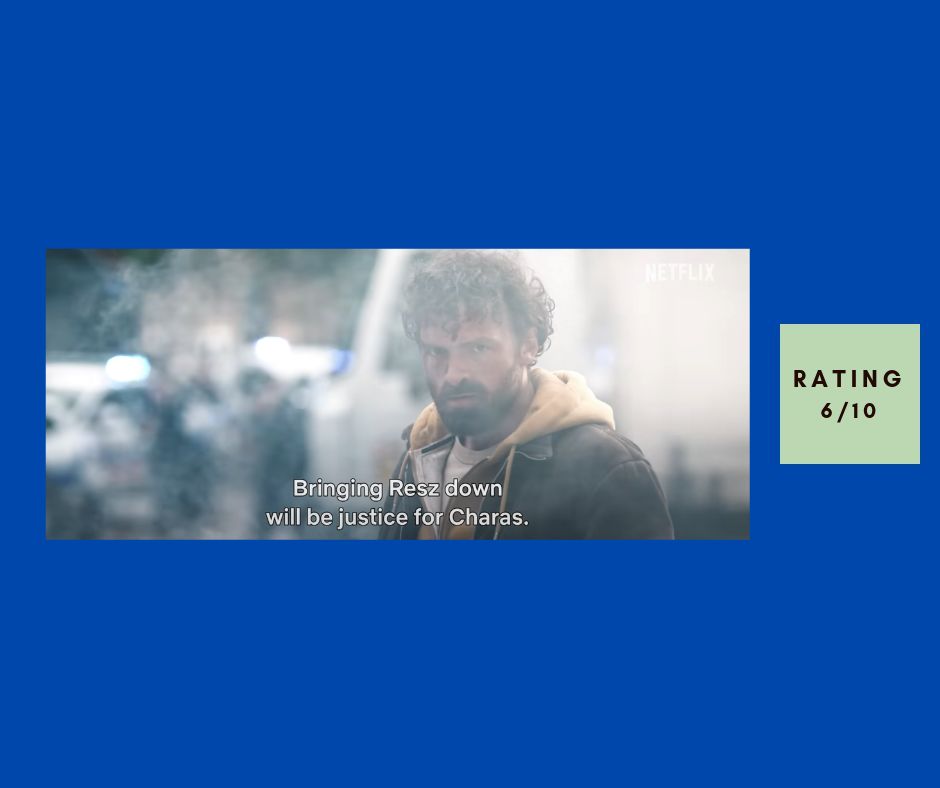
I hate the Fast & Furious franchise, so why do I find Guillaume Pierret’s Lost Bullet trilogy, similarly just car chase thrillers, mildly compelling? It has to do with the execution and the ambience. Lost Bullet came out in 2020, Lost Bullet 2: Back for More in 2022, now we have Last Bullet. By now the plotlines have become convoluted, and hero Lino, hiding away, is lured back into trying to exact revenge against a murderous ex-colleague and a corrupt senior cop. Double cross follows double cross, car chase and car crash follow car chase and car crash, and it becomes quite clear early on that the characters and their motivations are just props for the action. Stuntman Alban Renoir, who plays Lino, remains a wooden, obdurate hulk, and the other actors are no better. Why then does Last Bullet offer easy watching? The answer, of course, lies in the rubbishy-but-fun car mayhem. Director/writer Pierret lovingly sticks cameras right in the action or at dramatically low or high angles, so that the movie is a shallow, visual confection.
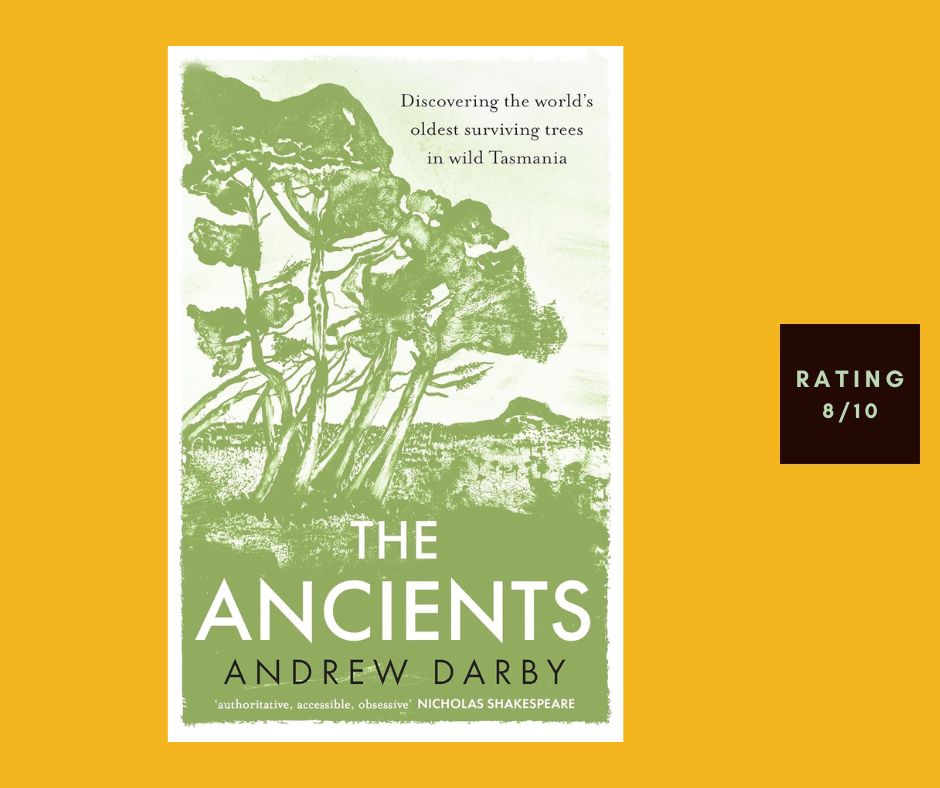
The Ancients by Andrew Darby [8/10]
Australian journalist Andrew Darby, a veteran of the battles for the Tasmanian forests, nearly died and then decided to spend a couple of years bushwalking through areas of Tasmania in order to see, hear, touch, and feel remote trees millennia old, often hard to reach in the depths of remote valleys or on mountaintops besieged by the island’s harsh weather. Adding a layer of difficulty, he taught himself to trek in the wild at age seventy and he insisted he walk alone, all the better to experience the trees. The result is The Ancients: Discovering the World’s Oldest Surviving Trees in Wild Tasmania, a lovely, elegantly written paean to the grandeur and diversity of nature. The book’s chapters encompass his pursuit of King’s Lomatia (maybe the oldest surviving single tree in the world), King Billy Pines, Pencil Pines, Huon Pines, and more. Throughout, the author decries the butchery of gold diggers, miners, and the state’s logging arm. If you have hiked or walked any of Tasmania’s punishing woods, slopes, and gullies, The Ancients will bring back memories galore, but even if bushwalking is not your hobby, this will stiffen your resolve to protect what little wilderness remains on our Earth.
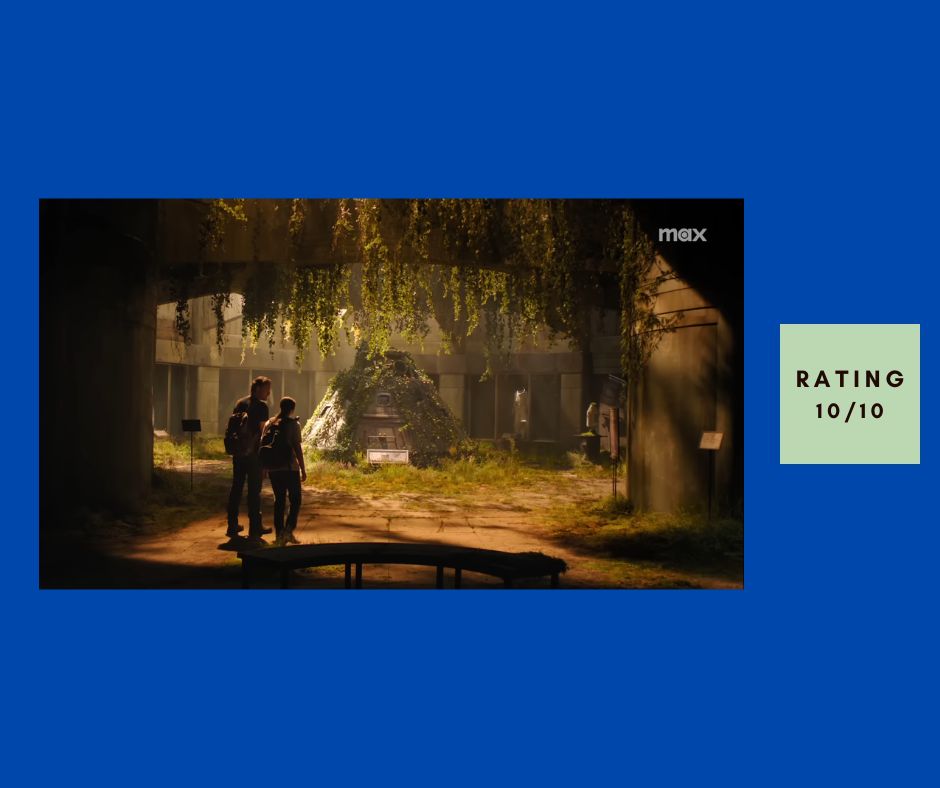
The Last of Us Season 2 [10/10]
The first season of 2023’sThe Last of Us, fashioned by wonderful auteur Craig Mazin and Neil Druckmann (who created the namesake video game a decade earlier), was a revelation (see my review). Who would believe a dystopian video game based on the cliche of zombies threatening to take over the world might work at the character level? Yet it did, proving to be a visceral, nuanced narrative following Joel, a grizzly zombie-war veteran, and Ellie, a fourteen-year-old holding a secret hope for humanity. Now Season 2 of the series is upon us and it is a stunner. It kicks off five years after the dramatic closer of Season 1, with Joel and Ellie embedded in a walled city survivalist community in the snow of Wyoming, guarding against the hordes of zombies outside the walls. Joel is worn down and hesitant in his kind-of-fathering role with Ellie, while Ellie is a troubled near-adult, rebellious as heck. In these two pivotal roles, Pedro Pascal and Bella Ramsey are sublime. Two new main characters enter the fray as action segues between the zombies and human conflicts: Kaitlyn Dever as a vengeful northerner and Isabela Merced as Ellie’s best friend; both portrayals are excellent. As ever, Mazin’s byzantine and stunning plot twists and devious time flits work perfectly,, the action scenes are fearsome, and the cinematography is lush or claustrophobic (where is the zombie?) as needed. Season 2 of The Last of Us, seven episodes long, is a highlight of this reviewer’s 2025 viewing.
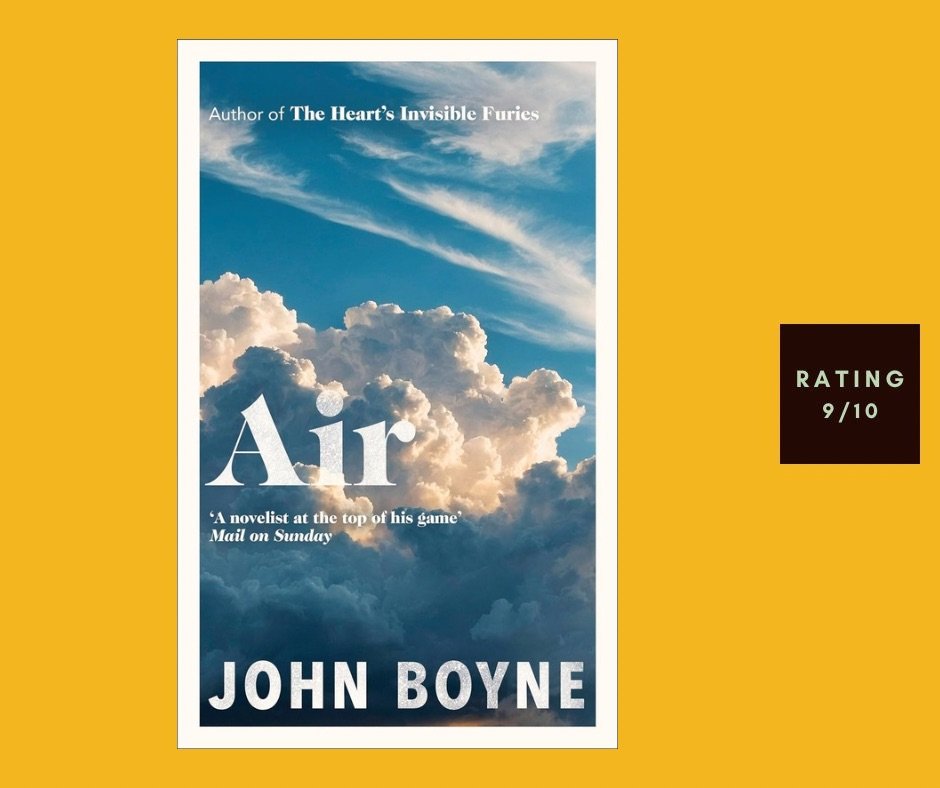
Air by John Boyne [9/10]
So it surges to an end. What is forecast to be bundled into a long novel titled The Elements, to be published in September, a quartet of four novellas (see my review of Water; my review of Earth; my review of Fire), concludes with Air. Whereas the first three novellas tackled increasingly grim tales of sexual abuse, Air seems to offer the balm of resolution. Incorporating characters from all the prior novellas, the plot of Air commences with little drama: a father sits next to his teenage son on a plane heading to an unspecified meeting overseas, a journey the father must use to redeem himself and unite with his boy. As ever, Boyne has superb control of his material and the first half of the novel is a slow, hypnotic burn that peels away the abuses of the past. The author’s measured, calibrated style is on full display and the second half of Air is a wondrous journey leaping from the past to the future, a fitting and triumphant conclusion to a riveting series.
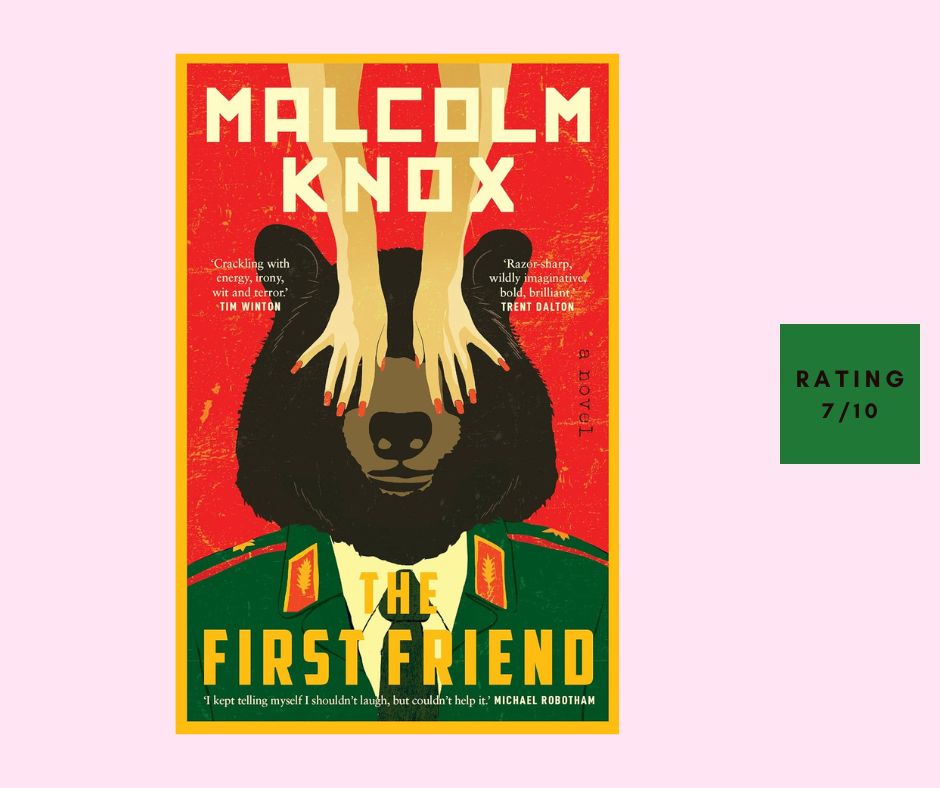
The First Friend by Malcolm Knox [7/10]
Australian author Malcolm Knox is nothing if not daring, and The First Friend is dramatically audacious, tackling as it does one of the evildoers of the Twentieth Century, Stalin’s secret police chief, Lavrentiy Beria. Knox uses the time-honored device of narrating The First Friend through the eyes of Beria’s fictional childhood friend, Vasil Murtov. Set in 1938, just before Beria’s ascendancy to the near top of Stalin’s pyramid, it follows Murtov as he ferries Beria around and provides a foil for the megalomaniac sadist’s ego, all the while desperate to protect his family. The plot hinges on a proposed grand Black Sea visit by the dictator and the reader knows from the start that all will go wrong and blood will flow. Savagely satirical and laced with wit so sharp one shifts from laughter to horror and back, the novel is, as such satires tend to be, full of wordy dialogue and readily identifiable as an outsider’s spoof, so it only barely renders Murtov’s fate as tragic. I think the novel’s closest relative is Armando Iannucci’s 2017 satirical film The Death of Stalin. Viewed as such, and especially if you know little about Stalin’s horrific reign, The First Friend is a crackling, adventurous riot.
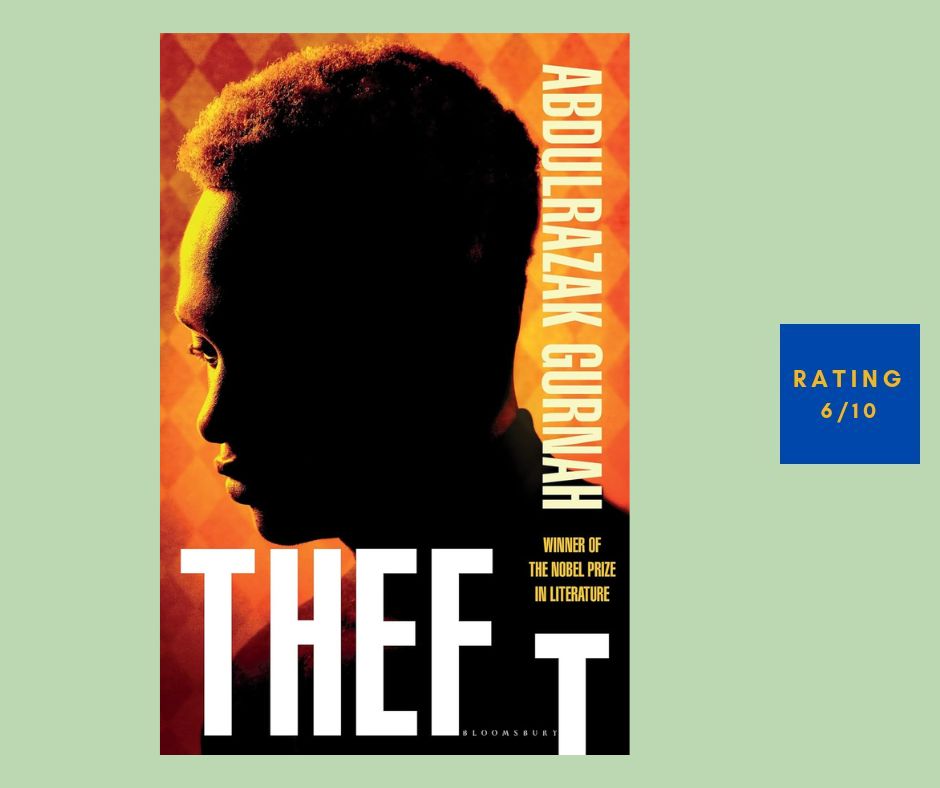
Theft by Abdulrazak Gurnah [6/10]
The eleventh novel of Tanzanian-born, British-domiciled writer Abdulrazak Gumah, who won the Nobel Prize for Literature four years ago, Theft is a sashaying coming-of-age story set in the aftermath of the African revolution that created Tanzania in the 1960s, a revolution that we barely glimpse as backdrop. Actually, we witness three children become teenagers, then adults: handsome and clever Karim, abandoned (initially at least) by his mother, who ends up shuttling between birthplace island Zanzibar and the nation’s capital, Dar es Salaam; Fauzia, an intelligent but anxious girl who falls for Karim; and, as the fulcrum of the novel, Badar, a destitute servant boy who ends up under Karim’s wing. The intertwined dramas of these three, woven around complicated family stories, contain plenty of narrative meat for a rousing literary melodrama, and the African backdrop with its various milieus is fascinating, but the novel is somehow leached of drama. Perhaps it’s the author’s easygoing storytelling style, which makes for quick reading, that dials down Theft, but the end result is an intriguing read that never ignites.
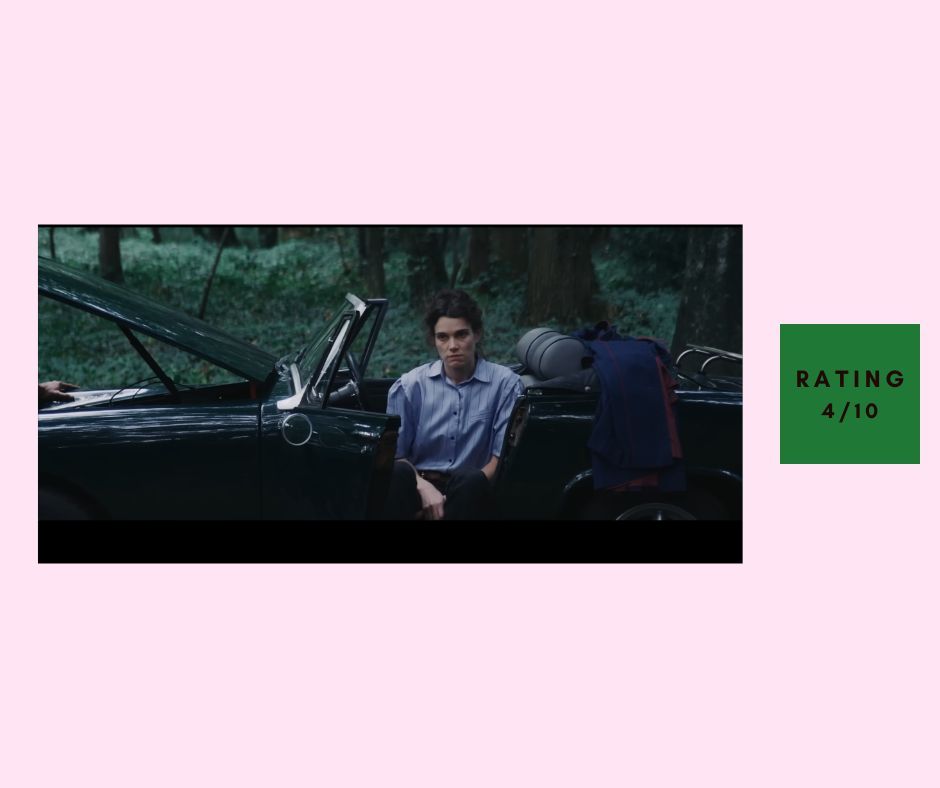
Jane Austen Wrecked My Life by Laura Piani [4/10]
Jane Austen Wrecked My Life is a traditional rom-com movie subverted by a modern setting and oblique references to that author. Laura Piani writes and directs this small-scale romantic comedy about a young woman working in a Paris bookshop, writing Austen-like rom-com material on the side, and pining for love. Awkward in some respects, passionately graceful in other contexts, Agathe is invited to a Jane Austen residency in rural England where she meets a brooding young Englishman who begins to compete for her affections against her bookshop male friend. The film offers a pleasant mix of evocative scenery and music, and the plotline contains much nuance, but the execution is slow, haphazard, and sometimes clunky. A number of scenes stand out for being seemingly purposeless. Camille Rutherford inhabits the character of Agathe well, but the two male leads make little impression in spite of a serviceable script. Little tension drives the story forward to a rom-com climax and the finale fails to land a closing blow. An opportunity missed is how I would describe Jane Austen Wrecked My Life.