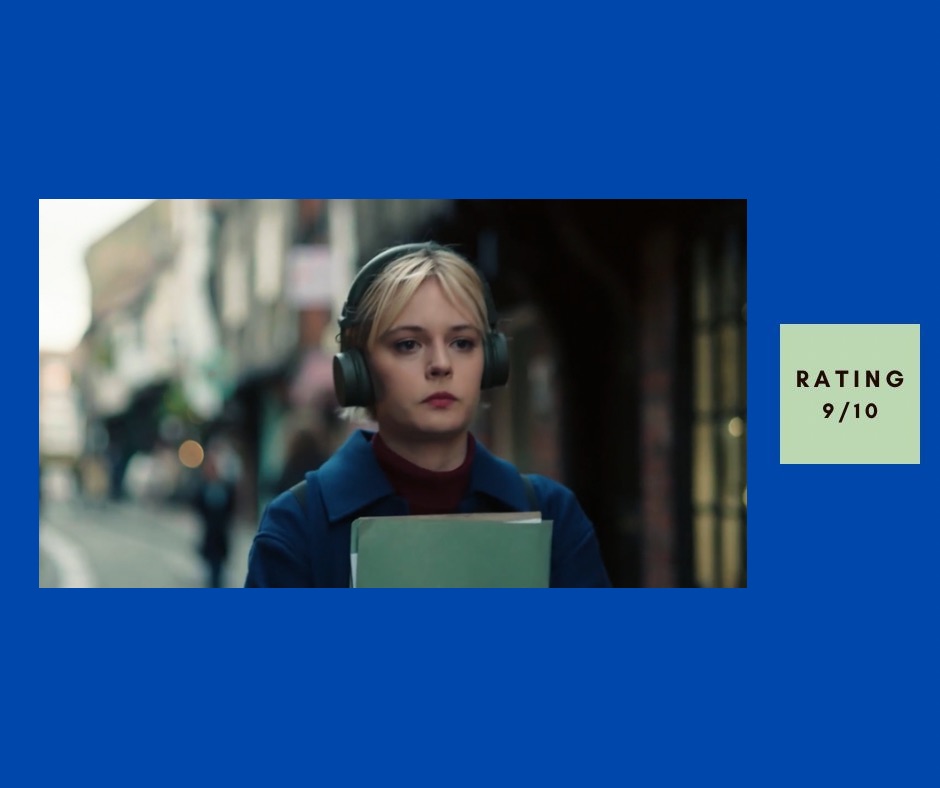
Flavor of the month is cinematic police procedurals starring neurodivergent investigators and the British six-episode series set in Yorkshire, Patience, is one of the best. A precarious, self-contained, precocious archivist in the police records department, Patience Evans (stunningly acted by Ella Maisy Purvis), has obsessively turned herself into a consummate amateur crime investigator. When Detective Inspector Bea Metcalf (played with subtlety and flair by Laura Fraser) stumbles upon Patience, a slow burning friendship and professional partnership emerges, punctuated by all the complexities of Patience’s character. An intriguing plot involving drug-induced suicides kicks off Season 1 and two other decent murder puzzles work well. Well paced and directed, splendidly filmed, and backed by decent supporting casts, Patience entertains while adding moving emotional depth.
Long Way Home [6/10]
A gentle, two-blokes-on-a-motorbike, travelogue concept, the Long Way shows have unfurled with four series over two decades, starting as tough-travel drama with Long Way Round. The fourth, Long Way Home, is the least ambitious, reflecting the aging of buddies Ewan McGregor and Charlie Boorman (who in particular has had horrendous off-show bike crashes), and chronicles a loop from Scotland up through Scandinavia to the Arctic Circle and back home via the Baltic States. With a consistent set of producers and directors (and support vehicle guys and cameramen), these shows have a pleasing familiarity to them. We see the two chatting on good bike days and bad bike days, we experience moments of drama, there is plenty of “interesting tourist stuff,” and the cinematography is superb (increasingly, of course, enriched through the use of drones). The ten episodes of Long Way Home hit few stirring pinnacles but are instead warm and fascinating. Comfort watching.
Prime Target [6/10]
A thriller about the trials of a gawky, geeky mathematician who might be able to ruin modern cryptography? Bring it on! Prime Target offers a pleasing plot unfurled (perhaps in a slightly leisurely manner) over eight episodes, workmanlike acting (Leo Woodall “works” as the squinty, hapless “genius” maths guy but fails to spark, while the other star, Quintessa Swindell, is sparkier as the super hacker), plenty of touristy eye candy from around the world, and enough plot twists to hold attention. If the music is insipid, if the depiction of the central mathematics ideas is overegged … well, we can’t have everything. Prime Target is “meh” television that plays the role it seeks, and if the central idea holds any appeal to you, I can cautiously recommend it.
Exhibit by R. O Kwong [6/10]
A South Korean/American novelist with a poet’s passion for language, R. O. Kwong’s second, slim novel, Exhibit, is a transgressive tale of desire, creativity, and freedom. When a talented young Korean photographer, married to an Argentinian-born film producer, meets a magnetic Korean super ballerina somehow injured, she quickly becomes enraptured, firstly in the field of ambitious ideas, then physically. Overlaying this tableau is the ghostly presence of a long-ago Korean courtesan who might wield a curse. Dealing with sadomasochism and the presence of spirits, and eschewing easy plot progression, the novel stands or falls on the inferiority of the photographer, on the never-ending, inventive lyricism, and on its spotlight on freedom of expression. The net effect for this reader was admiration of the author, gasps of recognition at some of the language, and befuddlement about the climax and themes. Exhibit is bold and baffling.
We Are Eating the Earth by Michael Grunwald [9/10]
Books addressing the contribution of humanity’s food systems to the climate crisis have been pouring in over recent years. After reading a few, I grew saturated with information and advice, and began to skip new tomes, but We Are Eating the Earth: The Race to Fix Our Food System and Save Our Climate, by renowned journalist/author Michael Grunwald, drew me back in. Grunwald has an investigative journalist’s tenacity and thoroughness, and in podcast after podcast, has demonstrated a perceptive bird’s-eye view that appeals to my analytical side. To understand, one must condense and conclude. Anyway, such was my thinking when I commenced this recent book, and from the very first page, it was clear that I had alighted upon a wonderful contribution to Anthropocene understanding. By following a genius climate rationalist, lawyer Tim Searchinger, Grunwald finds the perfect anchor for a depressing tale. The global food system is responsible for about a third of global emissions and no traction at all has occurred in reducing that. The largest impact, it turns out, is due to land use and clearing, with agricultural land ruining the globe. The author pours scorn on biofuels, biomass, and regenerative agriculture (all of them result in more land clearing, at a time when we need to feed evermore people with less land), and charts the wild rise-and-fall market stories of fake meat and lab-cultivated meat. Grunwald finds hope in some high-tech possibilities but none of them cheered me up at all. The author is a feisty, clever stylist and We Are Eating the Earth is a charging bull of a story even as it ultimately depresses. A must-read.
The Friend by Scott McGehee & David Siegel [5/10]
Based on one of Sigrid Nunez’s lauded novels, The Friend is a meandering ode to friendship, human and canine. When the acclaimed writer and best friend of Iris (played with poise by Naomi Watts) commits suicide, Iris, a blocked solitary writer, has to deal with memories, questions, and the writer’s three wives and his daughter. And she becomes lumbered with the writer’s real best friend, his doleful but magnificent Great Dane (a stellar performance by Bing). The first two thirds of the film unfurls Iris’s gradual embrace of the dog’s faithful friendship, accompanied by wonderful cinematic scenes of woman and monster dog weaving through Manhattan. All well and good, if destined to be sentimental, but then the climax shifts gear into psychoanalytic dreams exploring grief and anger toward the dead writer, followed by a naked polemic for the joy of a dog. Bill Murray, wonderful as the suicide, is accorded too little time, and the other acting performances are realistic but uninspired. Overall, The Friend feels like an ebbing and flowing, reflective novel perhaps best left on the page.
Murderbot Season 1 by Chris & Paul Weitz [9/10]
Martha Wells’s eight novellas/novels in the Murderbot Diaries series, published over the past nine years, are already regarded as classic science-fiction. A groundbreaking examination of the emerging sentient life of a security robot who has “hacked its governor module,” it is an emotional, funny, quirky, thrilling series, and one not easily packaged onto a screen. Amazingly then, Season 1 of Murderbot, directed and written by brothers Chris and Paul Weitz, is a resounding triumph. Anchored by a brilliant acting performance from Alexander Skarsgård as the deadly, confused, alien-thinking security robot (called SecUnit by the humans in this tale, named Murderbot by himself/itself), the ten-episode series closely tracks Wells’s Book 1, All Systems Red, but leans much more toward examining the awkward interplays between SecUnit and a bumbling, idealistic spaceship crew that begins to “adopt” him/it. The series especially plays up the hilarious inner dialogue of SecUnit as it continually retreats into watching a terrible human soap opera, The Rise and Fall of Sanctuary Moon. The show is paced superbly, supported by wonderful acting (I especially appreciated Noma Dumezweni as the hapless crew’s leader, Akshay Khanna as an especially naive but loving scientist, and David Dastmalchian as a cynical augmented human), enlivened by splendid action scenes, and blessed with terrific world building and cinematography. Imbued with a different vibe than the book, this first season of Murderbot (may there be many more!) nonetheless does just as impressive a job of relating a thrilling tale of robotic sentience with a genuinely moving arc. Brilliant.
Hotel Ukraine by Martin Cruz Smith [7/10]
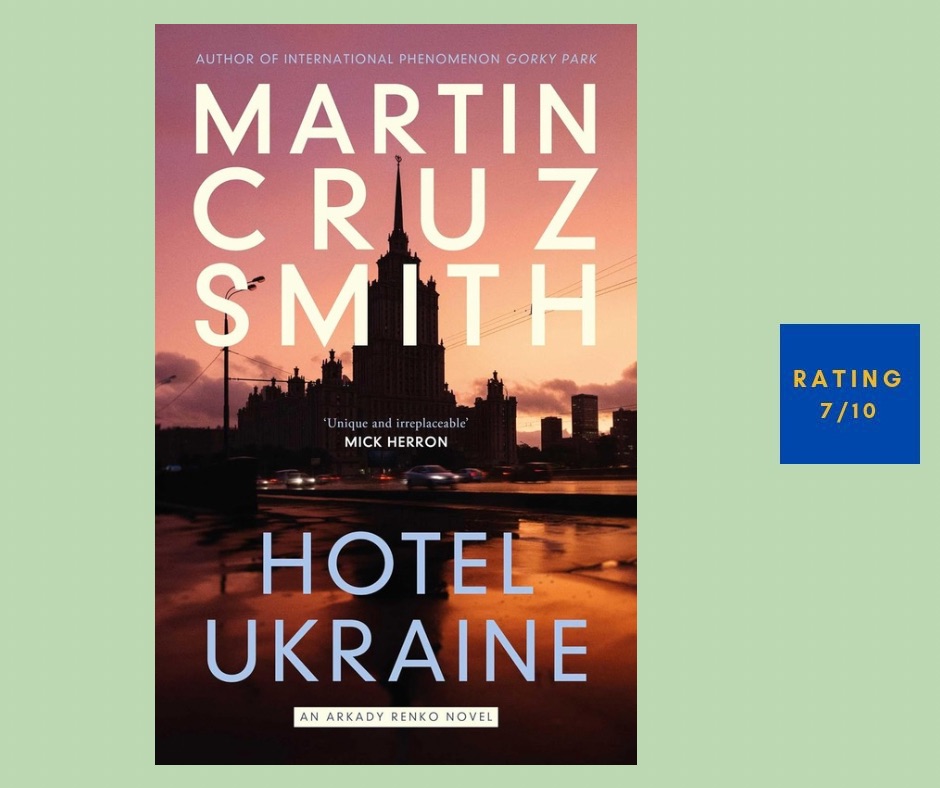
Soon before he died, after a long period of suffering from Parkinson’s disease, Martin Cruz Smith published his final and eleventh mystery starring dogged, brilliant Moscow investigator Arkady Renko, Hotel Ukraine. By now Renko is afflicted with Parkinson’s and in this farewell performance, the brutal hotel room murder of a Russian official sets Renko off on a quixotic, baffling investigation. With his nation having just invaded Ukraine and Putin cracking down on any dissidence, Renko faces obstacles in addition to his illness and the facts of the case, including threats to his journalist wife and his son. Over the years, the author’s plots have grown more epic, in the usual sense of the word (by which I imply, with no real criticism, the plots became less twisty and more confrontational), and his style, never florid, has turned even more spare. The result is a quietly satisfying, fascinating mystery that caps a stellar, forty-four-years-old series.
A Marriage at Sea by Sophie Elmhirst [7/10]
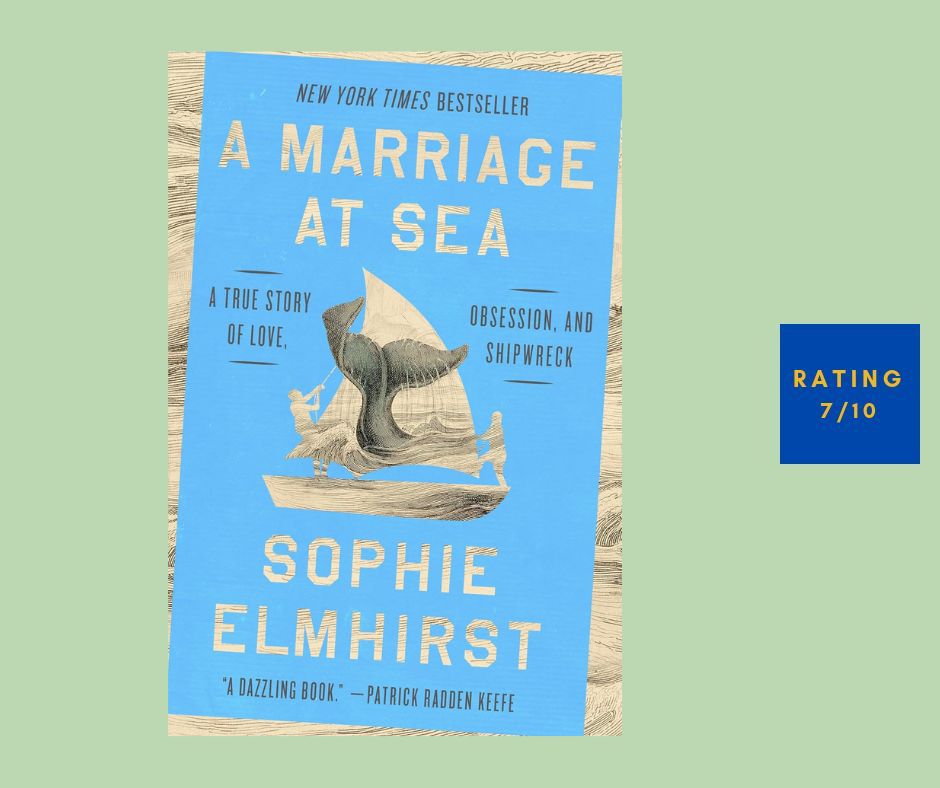
Journalist and author Sophie Elmhirst stumbled upon an amazing true story largely set in the early 1970s and has turned it into a fascinating book. A Marriage at Sea: A True Story of Love, Obsession, and Shipwreck relates how a “odd couple”—Maurice, the difficult, particular loner and practical, questing Maralyn—decide to abandon their humdrum lives in England and fling their life savings into a small boat they use to sail toward New Zealand. A year in, a dying whale sinks their vessel and they find themselves adrift on a teeny dinghy tethered to a life raft. What ensues is a horrendous, yet (in the hands of such a wonderful writer) rousing ordeal that tests every fiber of their bodies, as well as their relationship. At the time, their story was huge news for a long time, and both Maurice and Maralyn wrote copiously about their lives, so the author’s task does not want for material, rather her achievement in A Marriage at Sea is a stylish, ruminative curation of two lives under stress. This is a page-turning, wise book that will, I suspect, end up in many a Christmas stocking and rightly so.
Dept. Q by Scott Frank [10/10]
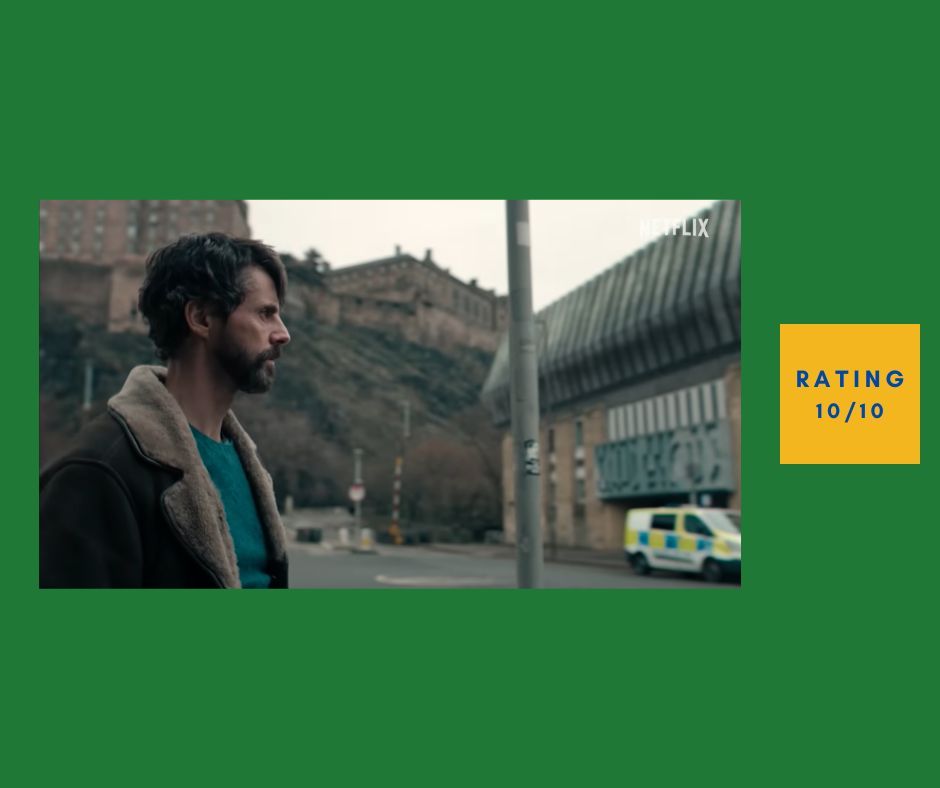
Writer/director Scott Frank has alighted upon a winner, a spellbinding series of ten crime fiction novels by Danish author Jussi Adler-Olsson, and his first nine-episode season of Dept. Q is clearly wondrous from the very opening scene. Matthew Goode is riveting as Carl Morck, a maverick, obnoxious homicide detective returning to work after being shot. Assigned to a new cold cases department in a musty basement, his first case is the mysterious disappearance four years earlier of a public prosecutor (also portrayed perfectly by Chloe Pirrie). Scott Frank directs and cowrites most of the episodes and you can see his impeccable footprint in every superbly staged scene. The plotline, featuring twist after twist, is one feature of this series that keeps the viewer on tenterhooks for nearly seven hours, but other exemplary aspects are razor-sharp, funny dialogue, and wonderful acting throughout (hats off to Alexej Manvelov and Leah Byrne as Morck’s happenstance sidekicks), scything cinematography. Dept. Q never falters in quality and pace, and will be a 2025 highlight for any sane viewer.