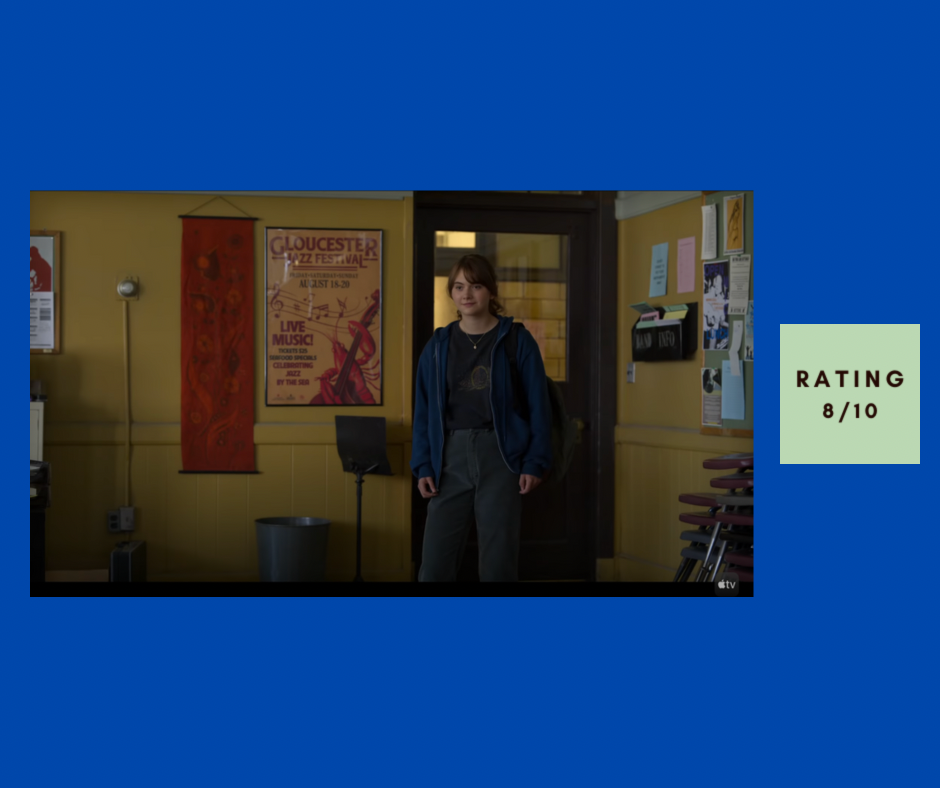
An English-language remake of that rousing, funny French film, La Famille Belier, “CODA” hews closely to the original but still strikes a fresh chord. CODA stands for Child of Deaf Adults, and in this telling, Ruby is the only hearing member of a four-person fishing family in Massachusetts. The three deaf family members are superbly played: the seemingly gruff father, the insular mother, the rebellious son. But it is Ruby’s movie, her love of family clashing with an instinctive love of music that finds expression with her untutored voice. Eugenio Derbez is pitch perfect as the new music teacher who takes Ruby under his wing. Of course a movie like has a familiar trajectory, and the ending is calculated to wring out a tear, but Sian Heder’s screenplay and direction are strong and intelligent enough to make it all work. In a pandemic world, CODA is an antidote, a reminder that dreams can be real.
Sweet Morning EP by Teleman [7/10]
Such a crime that British band Teleman is not better known. I labelled their previous release, Family of Aliens, as a career highlight. Since then they have slimmed down to a three-piece, and their sound has simplified as a result, with both positive and slightly negative results. “Sweet Morning EP” features stark, almost simplistic arrangements that can at first seem primitive, but repeated listening to the six tracks reveals that the band’s essence—Thomas Sanders’s ringing, pure, semi-falsetto voice allied to gorgeous melodies— is now fully on display. The result is magical catchiness deepened by poetic, immersive lyrics. Sweet Morning is a byway, not a new road, but it is well worth checking out. Listen to that high voice laid over a boppy, light tune on “Right As Rain,” or the bell-like chorus on “Free Birds” as Sanders sings a song of childhood, “kicking a tin can and dreaming.” Wonderful.
Snow Country by Sebastian Faulks [5/10]
Sebastian Faulks’s fifteenth novel, “Snow Country,” is like Wedgewood china, all poise and no life. Set mainly in Vienna and an Austrian psychiatric clinic in the mountains, and ranging from just before the hell of World War I up until just before World War II, the novel revolves around two characters, Anton, a young man determined to become a journalist, and Lena, dirt-poor and isolated in a rural village. Anton finds and loses love, Lena lurches from disaster to disaster until she ends up employed at the psych clinic, where, as we expected, she eventually meets Anton. Faulks is a wonderful stylist, able to evoke the times and the places, and the novel hums with ideas, both intellectual and poetic, but Snow Country offers a staccato plot with little tension. This reader found Lena to be a poorly scoped character, inconsistent and even silly, and although Anton looms more realistically off the page, there is little drama to his story. Overall, I estimate I have read a third of the author’s prodigious output, and Snow Country is the only one to have disappointed me.
Don’t Look Up by Adam McKay & David Sirota [7/10]
A courageous, take-no-prisoners, madcap satire on climate change, “Don’t Look Up” kicks off brilliantly from the outset, resetting the frame to something even more certain than our current climate emergency. When astronomer Randall Mindy (played convincingly by Leonardo DiCaprio) and his student, Kate Dibiasky (another strong performance from Jennifer Lawrence) observe a planet-destroying comet six months out from taking out Earth, they sound the alarm. Thrust into a world of vacuous cable news hosts (played with glee by Tyler Perry and Cate Blanchett), a Trumpesque president (Meryl Street nails this role), and a tech billionaire (Mark Rylance), the pair encounters ever means of deflection and inaction that our climate scientist heroes have faced for over two decades. Adam McKay’s direction is brisk and sure-handed, the cinematography works well, and the ending has some nice, quasi-sentimental touches that try to lift the film out of crazy mode. Don’t Look Up has much to offer and is salutary, easy viewing for anyone with a brain and a heart in 2021. I just wish the jokes amused me more and the antics were more intelligently focused. Overall: worth watching but a missed opportunity.
The Chestnut Man [8/10]
“The Chestnut Man” is a Danish serial killer mystery with oodles of atmosphere and a cracking, baffling plotline. In other words, Netflix has another winner on its hands. After a gory prologue, the case opens with an experienced female detective taking on a last case, a gruesome murder of a woman. Chestnuts are everywhere. Add the imposition of an unwanted male detective who seems incompetent, and a seemingly unconnected subplot of a Danish minister returning to work after her daughter was abducted, and we know we’re in for a ride. The two lead actors, Danica Curcic and Mikkel Boe Folsgaard fully inhabit their roles, and there is not a single misstep with the rest of the cast. The serpentine plot unfolds with tremendous narrative skill, and each of the six episodes closes at a peak of tension. For mystery novel lovers, but also for general viewers, The Chestnut Man hits all the right buttons with flair and drama.
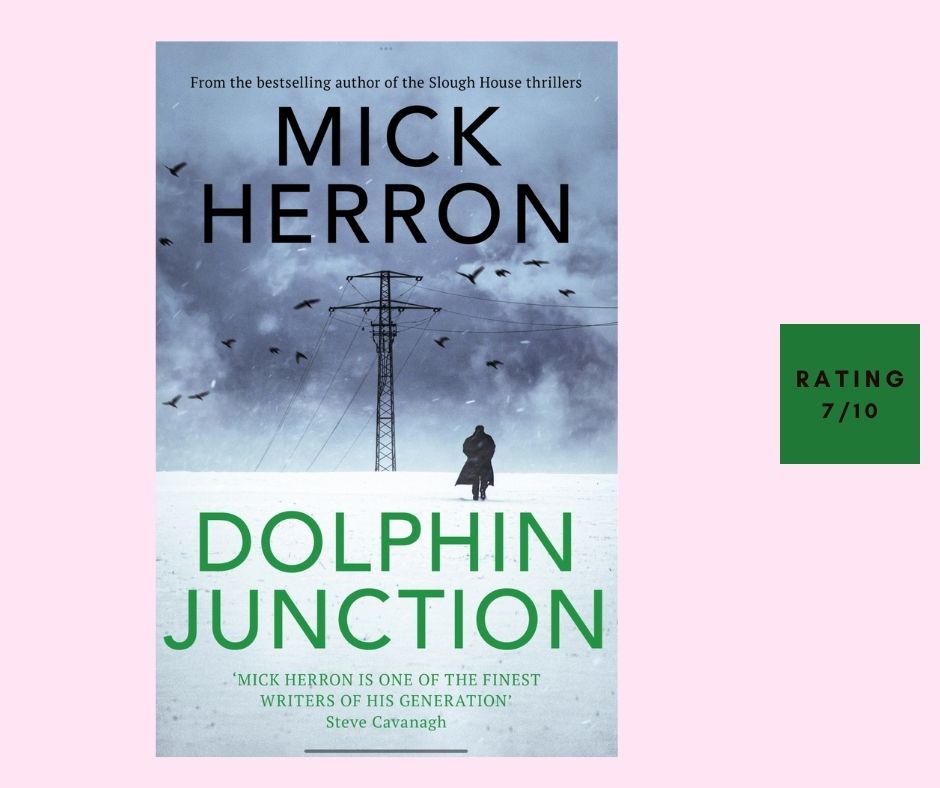
Dolphin Junction by Mick Herron [7/10]
Any new release from Mick Herron, a supremely gifted stylist, should be devoured immediately. Certainly, his Slough House spy thriller series is a genre modern classic (I raved about his previous two novels here and here). Now we are blessed with “Dolphin Junction,” a collection of eleven short stories previously found mostly in mystery magazines. The highlight is “The Last Dead Letter,” a wonderfully atmospheric tale featuring (of course) Slough House’s Jackson Lamb. Four stories star a detective duo from another Herron series, Zoë Boehm and Joe Silvermann, and these feature delightful twists as the pair deal with a stalker, a porn video, a seemingly haunted writer, and a psychotherapist’s couch. The rest are more of a mixed bag, seemingly training runs before his run of novels took off, but they all feature cunning plot revelations that will come as no surprise to Slough House fans. All up, Dolphin Junction is a clever, superior collection of crime fiction tales.
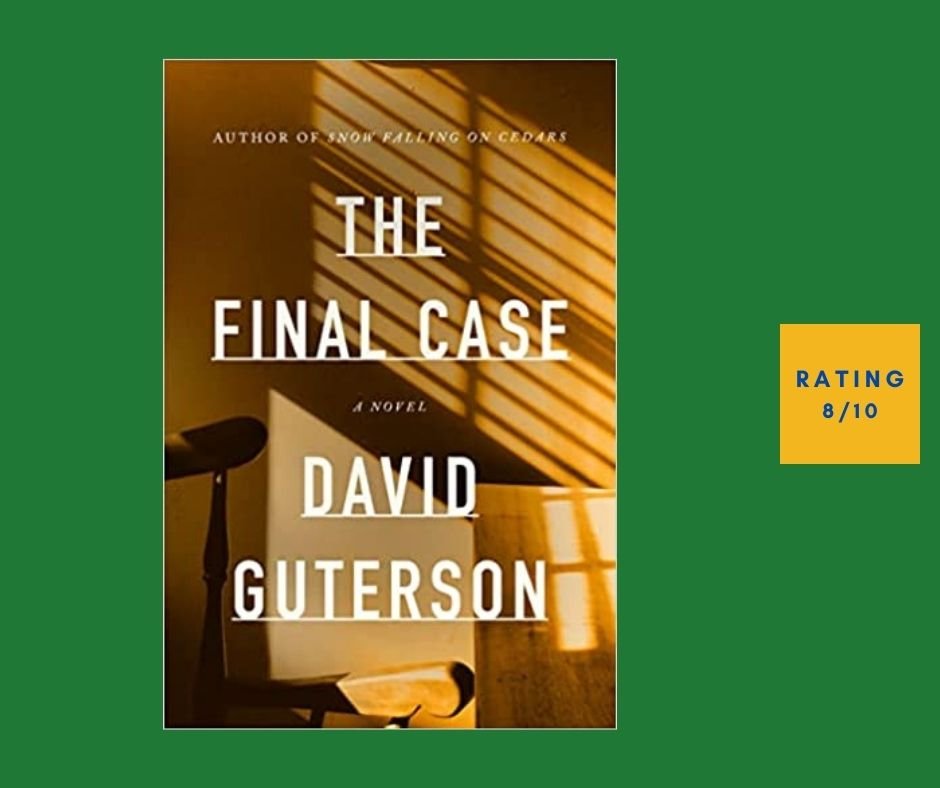
The Final Case by David Guterson [8/10]
“The Final Case” is a huge departure for esteemed novelist David Guterson, marketed as a literary courtroom thriller. Plotwise, that may well be accurate, but this novel is something else entirely, a discursive, emotional journey through evil and the love of a son for his father. When a writer adrift assists his ancient lawyer father defend two conservative religious fanatics, accused of killing an Ethiopian adoptee, at first the reader sashays along with Oregon intellectual minutiae and rituals, but soon the novel heats up into a coruscating depiction of humanity’s barbarity towards itself, all the while tenderly exploring the father-son dynamics. I’m not sure I’ve ever read a novel quite like this (and I’ve read more courtroom dramas and father-son dramas than I care to remember) and it took me a while to orient my thinking, but once I was in the grip of Guterson’s spell, well, I was utterly transfixed. The writing is almost leisurely, fully happy to dwell on testimony, a setting, the Seattle ambience, our hero’s inner life, yet the urgency of the story makes for a rapid, memorable read that has stuck in my craw ever since. The Final Case is unique, essential reading.
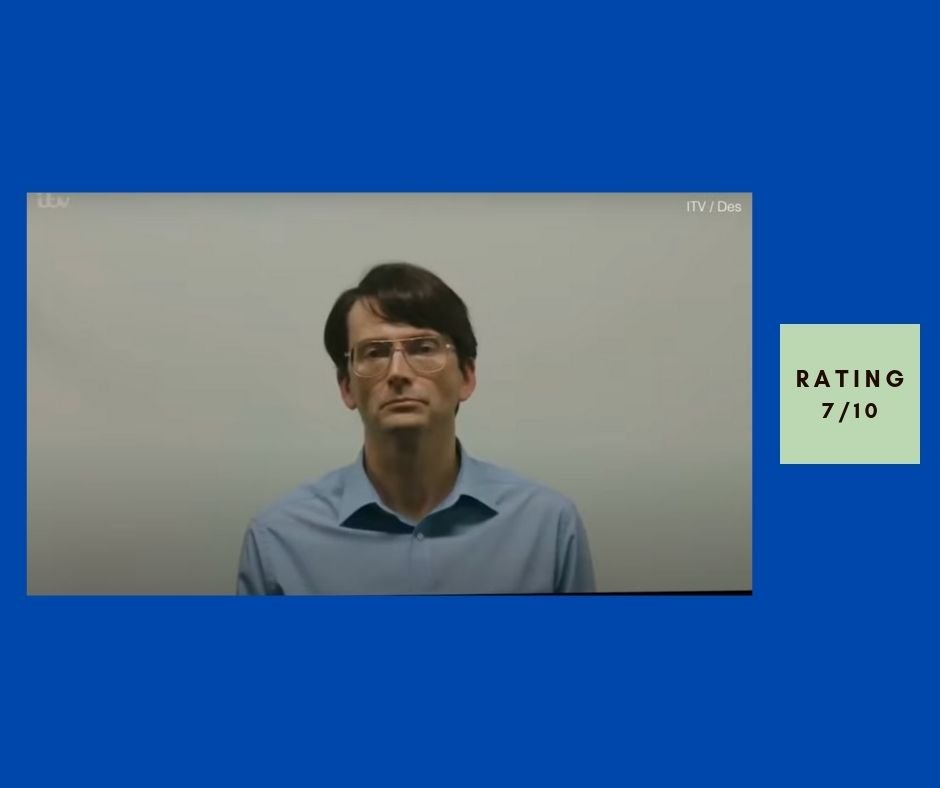
Des [7/10]
True crime dramatisations are generally tedious, but “Des,” directed and part written by Lewis Arnold, is a welcome exception. The three-part series jumps straight in, plunging a London homicide detective (played flawlessly by Daniel Mays) into a serial killing crime scene. A seemingly mild-mannered man has complained about blocked drains, which quickly are found to be jammed with body parts. The man, Dennis Nilsen, AKA Des, quickly confesses, although he never finally reveals if he murdered (and bizarrely treated and regaled post-death) just a dozen men or more. Given that we know the killer within minutes, what is remarkable about Des is the ratcheting tension, aided by a mood of grim horror, but mainly driven by the detectives obsession with finding all the victims’ bodies. And what allows Des to shine is the superlative, controlled, freaky-deaky performance of David Tennant as the serial killer. This is not refreshing viewing but Tennant’s performance lingers after the final frame.
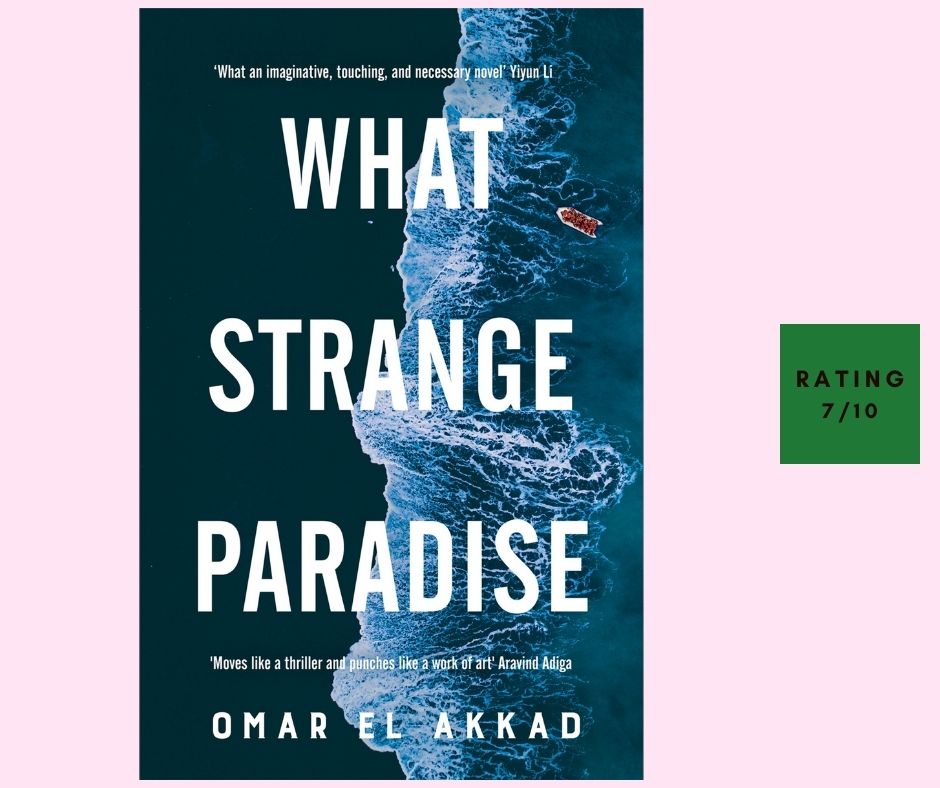
What Strange Paradise by Omar El Akkad [7/10]
“What Strange Paradise” is a lyrically written tale of a nine-year-old Syrian boy washed up on the shore of a Western European island (Greece? Sweden?), the only survivor of a typically hapless refugee boat, and his fraught rescue, from the clutches of vicious local police, by an outsider teenage girl. The author provides a nuanced, panoramic, and ultimately heartbreaking portrait of the travails of modern-day refugees. The cat-and-mouse struggle to escape to freedom from the island made for tense reading, and although I found a backtracking narrative of the boy’s flight and voyage less compelling, this strand boosted what I had thought was a fairly good understanding of refugee chaos. The author is a superb stylist. The son of war refugees, I was ripe for What Strange Paradise and recommend it highly.
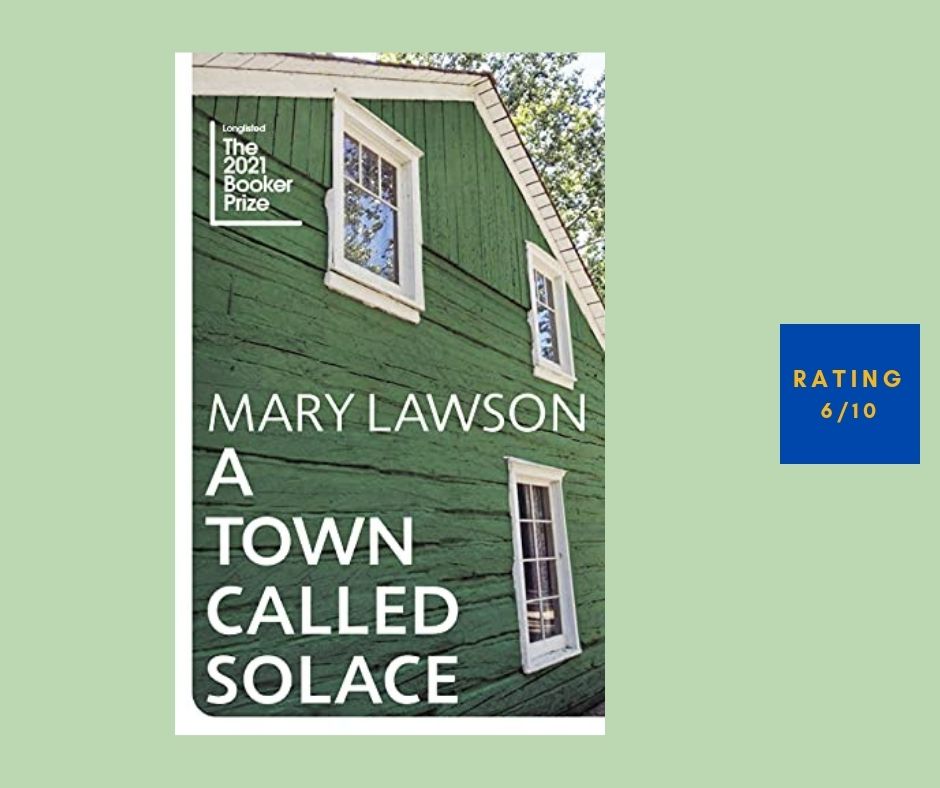
A Town Called Solace by Mary Lawson [6/10]
Set in cold northern Canada, ”A Town Called Solace” intertwines the tales of Clara, a seven-year-old bereft at the disappearance of her teenage sister; newly divorced and jobless Liam, new to the town of Solace after being unexpectedly bequeathed the house next door to Clara; and Elizabeth, winding down her life in a nursing home. The novel is a gentle but forensic domestic drama, told without great urgency but in a quiet style that reveals. I found the story of Elizabeth a tad prosaic until a wonderful reveal towards the end, but Liam and Clara are unveiled with authority, and there are many enjoyable moments of subtle comedy. In the end, I felt A Town Called Solace illuminated grief and restoration. Well worth reading.