Amidst a boom in indie-published UK crime fiction of high quality, Andrew Lowe’s series featuring homicide cop Jake Sawyer ranks at the apex. Sawyer is a mythically appealing protagonist, super smart yet unconventional, a martial arts devotee yet wracked by traumas from a terrible family past. In “Cruel Summer,” the seventh in the series, our hero finds himself seconded, after barely escaping sacking in his Peak District domicile, to London, to assist the Met with a baffling series of truly horrific murders. The author is a superb stylist, fluid, pacey, and atmospheric, with an ear for sharp dialogue, and in this book is at the height of his prowess. The book powers along relentlessly and the denouement is a wonderment of adept wrap-up. Throughout this main plot trickles a subplot of various groupings of evildoers intent on bringing Sawyer down, a continuing thread in the series, and at least in this novel, this diversions feels a little like that, a diversion, but I take it on trust that in the next volume or so, all will intersect gratifyingly. Cruel Summer is a rocket of a mystery, best consumed in one armchair sitting.
Seeking the Bomb by Vipin Narang [8/10]
Primarily intended for an academic/policy wonk audience, “Seeking the Bomb: Strategies of Nuclear Proliferation” is a stunning surprise. Books on proliferation, arms control, etc., are by definition dense with facts and analysis, yet Vipin Narang, an MIT political scientist, cuts through the thicket with stark, clear prose laced with insight, to the point where I believe some general readers would benefit from diving in. This terrain is crowded with analysts seeking to understand why certain countries (beyond the original quintet of the United States, the Soviet Union, the United Kingdom, France, and China) have pursued nuclear weapons, sometimes to the point of becoming irrevocably nuclear-armed (here we’re talking about India, Israel, Pakistan, and North Korea), more often turning around (or being turned around) before then. Narang’s brilliant idea is to conceptualize not WHY but HOW, that is, what strategies were (or are) being employed. He deftly distinguishes between hedging, sprinting, sheltered pursuit, and hiding, and anyone familiar with proliferation will immediately be able to line up bomb pursuers and those four labels. Narang unfolds a multi-factorial blueprint for why some states pursue one acquisition strategy, while others proceed differently, and mostly his theory seems borne out in history. More importantly from my perspective, this work on understanding HOW then sharpens our understanding of WHY. The case studies analyzed, in depth but with great clarity, are brilliantly presented, with just the right mix of detail or summation. All in all, Seeking the Bomb is an indispensable tool for us to ensure that the number of nuclear weapons states never enters double figures.
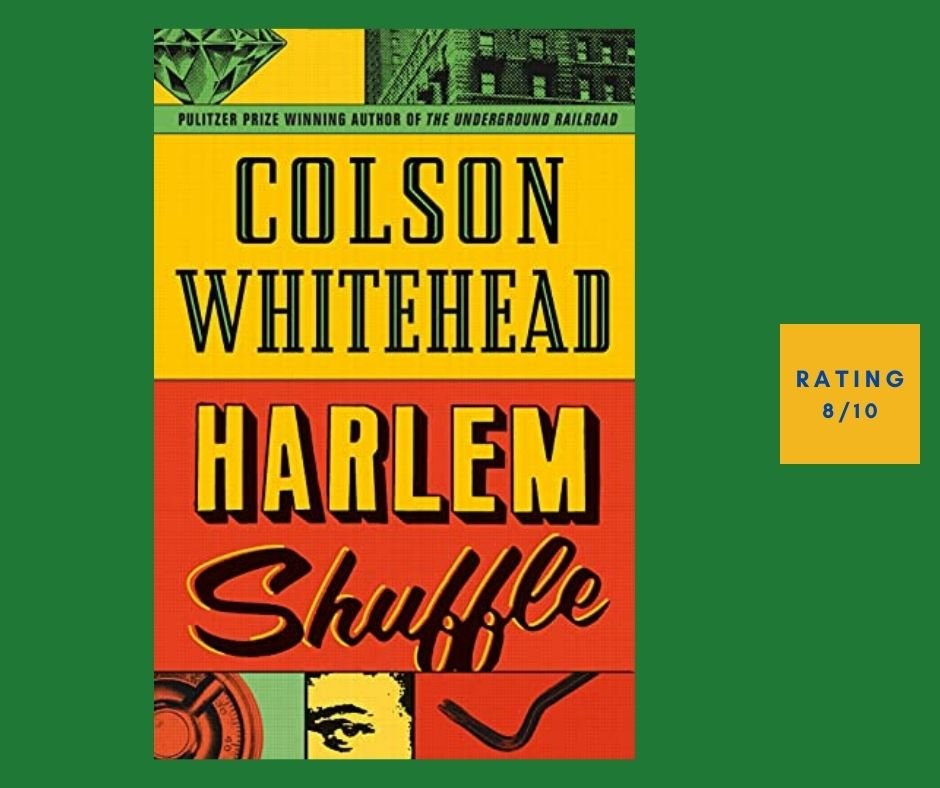
Harlem Shuffle by Colson Whitehead [8/10]
“Harlem Shuffle,” although nothing like Colson Whitehead’s other weighty novels and superficially shallow, is actually an ambitious, highly literate tour de force. Our hero is Ray Carney, a black owner of a furniture store in Harlem, seemingly conventional but, under the surface, a self-rescued son of a mobster and smart as all hell. This is Harlem of the early 1960s, just as the civil rights saga is taking off, and the author’s grandiloquent aim is to pay homage to not only the place but the time, digging into the hidden structures of America. When Ray’s criminal cousin drops him into a heist, Ray is forced to confront his past, which is also his present, and try to survive and resume his desperate quest for legitimacy and prosperity. Using a dense, rhythmic style that demands close reading, the author builds on the tropes of crime thrillers to lay bare Ray’s hopes and dreams. Wry humor pervades every scene. Three adventures, each of them deviously complex, beset Ray, and I, for one, followed each with rapt glee. Harlem Shuffle manages somehow to entertain and simultaneously dig deep, deep, deep.
Munich: The Edge of War [6/10]
Robert Harris’s Munich, published five years ago, is a Harris-typical stylish, entertaining (and also informing) thriller, which posits a young man involved in spy stuff during Chamberlain’s ill-fated trip to Hitler in Berlin. The book ached for a movie treatment, and now here we have it: “Munich: The Edge of War.” Certainly, there is much to appreciate from Ben Power’s well-paced script and Christian Schwochow’s steady direction: the reenactment of the times is wonderful and the atmosphere of Nazi spookiness in Munich is tangible. The spying sequences unroll smoothly. Yet something is missing. The Harris novel thrilled with its clever juxtaposition of imagination and reality, while the movie entertains without generating real tension. The two younger leads—George MacKay and Jannis Niewöhner—are miscast, that is, earnest but flat, while Jeremy Irons rolls out a reasonably interesting portrait of Chamberlain without any underlying passion. If you’re a Robert Harris fan, by all means enjoy Munich: The Edge of War as one of his lesser screen adaptations, and if you’re new to Harris, feel free to check this out as an atmospheric, if humdrum, modern history dramatisation.
All the Secrets of the World by Steve Almond [8/10]
A careening drama of American rich and poor crashing together in the 1980s, “All the Secrets of the World” is an intoxicating read. When a poor teenage girl, brilliant, bookish, and tough, is unexpectedly injected into a rich southern family riven by dysfunction, dangerous currents mix and then explode leaving a scientist missing, a drug dealer in prison, an outsider cop reluctantly quixotic, and our teenage heroine plunged into a cross-country odyssey. Throw in cameo appearances by Barbara Bush and you can see that this is no standardized drama. All the Secrets of the World harnesses the redoubtable writing chops of a prolific short story and nonfiction writer, and this debut is exuberantly, buoyantly penned with a complex plotline masterfully controlled. The amazing thing about the debut novel is that it sounds like it should be a “difficult” literary novel. Instead it is an immersive, entertaining read that also illuminates our human world. A must-read for 2022.
Parallel Mothers by Pedro Almodovar [5/10]
Pedro Almodovar’s latest stylish outing, “Parallel Mothers,” tackles a couple of themes close to his heart: feminist women taking charge of their lives; and the restoration of truth to the fates of unrecognized victims of the epochal Spanish Civil War. The first plotline follows a forty-year-old woman (played with great emotional resonance by Penelope Cruz) who unexpectedly falls pregnant at the age of forty and has a baby at the same time as a confused youngster (a star turn from Milena Smit), following their lives thereafter. It is a tale of heartbreak, joy, and paternity tests. Filmed with Almodovar’s customary care and rich lighting, this story takes up most of the film and seems to be building up to a dramatic conclusion. But the other plotline, the exhuming of our hero’s great-grandfather’s body from a village field, bookends the movie, and not only develops little heat but saps the mothers’ tale of resolution. Parallel Mothers is a warmly conceived and constructed film that falters just as it should be gearing up.
All the Bright Coins by Simone Felice [8/10]
Hear the plaintive, wise voice of Simone Felice in the opening song, “Year Around the Sun,” sing “What does it mean to be a child, It means you’re lost out here in the wild,” and maybe, just maybe, you’ll weep like I did. “All the Bright Coins,” Felice’s new release, is strummed, sung, or spoken magic, the essence of this hugely talented songwriter pared down to the essentials. The album is evidently a passage through his early years, a hardscrabble indie troubadour reincarnating, and the songs are wispy, elegiac trips into a character’s thoughts. This is not the impassioned, thumping Felice Brothers but a record so quiet it may escape notice but what a tragedy that would be! Check out the spoken poetry over piano of “The World’s Fair”; the oh-so-sad reflections (“drag your sorrows on the road”) amidst the stately background of “Puppet”; and the ode to hope “in our hour of trial and pain” on the simple “After the Rain.” Introspective and strangely demanding, All the Bright Coins is a keeper.
The Beauty of Dusk by Frank Bruni [9/10]
Four years ago, seasoned journalist and author, Frank Bruni of New York, aged 53, woke with heavily blurred vision in his right eye. Turned out, he’d had a stroke of sorts and there was a chance that he would lose left eye vision as well. At first bereft, Bruni flailed, trying experimental treatments, watching his partner walk away, harboring desolation… Then his journalistic and authorial instincts cut in and he began to both investigate the worlds of his diminishment and those of others (many of severity much greater than his) and to recalibrate his life philosophies. The result is “The Beauty of Dusk: On Vision Lost and Found,” a beautifully written, generously researched, and deeply examined memoir of his recent years. Instead of continuing to flounder, the author discovers a largely invisible world of sufferers and existential adventurers, a world that inspired him to remake his own existential underpinnings. Peppered with wonderful stories of courageous souls, The Beauty of Dusk is not a soppy self-help Instagram pitch. Rather, it is a deeply and wise journey told humbly and with flowing, almost poetic prose. As someone poleaxed by almost trivial harbingers of mortality, I sank in, riveted by the flowing narrative, blessed by the close counsel. An uncommonly graceful and profound memoir, The Beauty of Dusk will surely figure in 2022 Best Of lists.
Raise the Roof by Robert Plant & Alison Krauss [7/10]
A decade and a half after Raising Sand, a seemingly unlikely but wonderfully realized collaboration of covers by metal idol Robert Plant and bluegrass-country diva Alison Krauss, the pair have returned with “Raise the Roof.” Time has not diminished the magic. Once more, Plant alternates between a tense, gravelly croon and a manacled bluesy violence. Once more, Krauss is the perfect innocently-voiced foil or an ethereal ghost. And, significantly, T Bone Burnett has again assembled a crack ensemble and created a smooth yet robust sound. The dozen tracks, all unknown to me, range across American and British folk, country, and blues, and there is not a dud amongst them. My highlights include “Quattro (World Drifts In),” a Calexico folk-rock windswept song that kicks off with banjo and piano twinkling, then lurches into restrained passion; “Go Your Way,” which begins with Plant’s divine space-filling raspy whisper, over melodic guitar, then settles into an ear-worm farewell plea of release, like Led Zep hushed; and the busy, foot-stomping “Somebody Was Watching Over Me.”
Race for Tomorrow by Simon Mundy [9/10]
I have read more than a few eyewitness-to-climate-change books over the last decade. It is no exaggeration to say that “Race for Tomorrow: Survival, Innovation and Profit on the Front Lines of the Climate Crisis” is the most engrossing and revelatory. Simon Mundy, a Financial Times journalist, has used his august newspaper’s cachet to roam the world over two years and tell human stories that encapsulate the terror and hope of these climate crisis times. Mundy walks over melting, collapsing Siberian steppes, talks to citizens of the Maldives and the Solomon Islands dealing with washed-away residences, chats with front-line inventors, investigates the illegal Amazon forest clearers and their victims, hears from reinsurers, travels through drying-up Ethiopia, views Greenland’s retreating glaciers, and talks to Chilean winemakers tweaking vineyard locations. Six continents and twenty-six countries, and dozens of interlocked narratives. Mundy is an exuberant, precise stylist who renders every chapter an investigative triumph, and his special talent is for finding people-oriented stories that not only enthrall or appall but are very, very human. Race for Tomorrow is spellbinding, essential reading at the beginning of our most crucial decade.