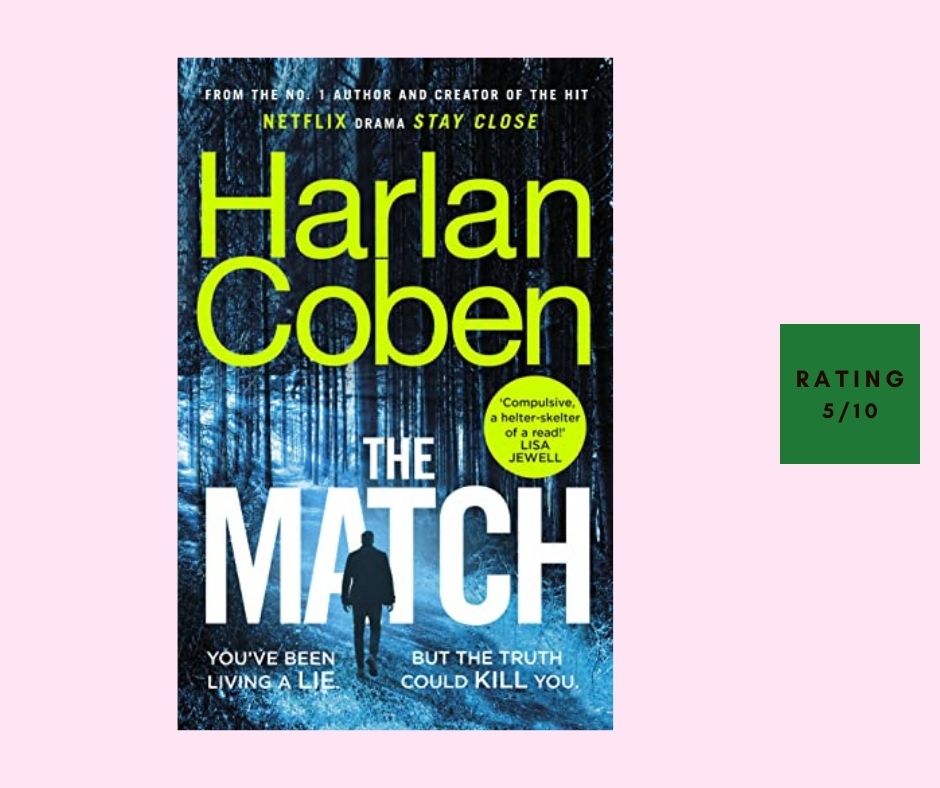
Harlan Coben is a legend among thriller writers, penning 31 books by now, starting with his wonderful Myron Bolitar series and lately triumphing with one-offs that have spawned five successful Netflix series. He is a polished writer in the school of “less is more,” with an entertaining turn in sardonic dialogue, and his plotting is nonpareil. All those strengths are on full display in “The Match“. It is the second book to feature Wilde, “the boy from the woods,” an accomplished ex-soldier who prefers to reside in the wilderness. In this outing, Wilde follows up leads toward his unknown parents, at the same time as an altruistic hacker group targeting vicious trolls attracts a serial killer. The Match is a rocket of a read, and in time-honored fashion, the author provides plot twist upon plot twist until a denouement that wraps up all the loose ends. So, yes, a fun read, but this reader parsed the final para and looked back on the careening plot and wondered, “what was the point?” Marrying DNA, social media trolling, hacking, and a cast revolving around unknowable Wilde … all these plot elements served to mystify but never cohered with any overarching logic. The characters disappeared into a warm bath of baffling turns of logic. Reader, I was disappointed, but I turned the pages.
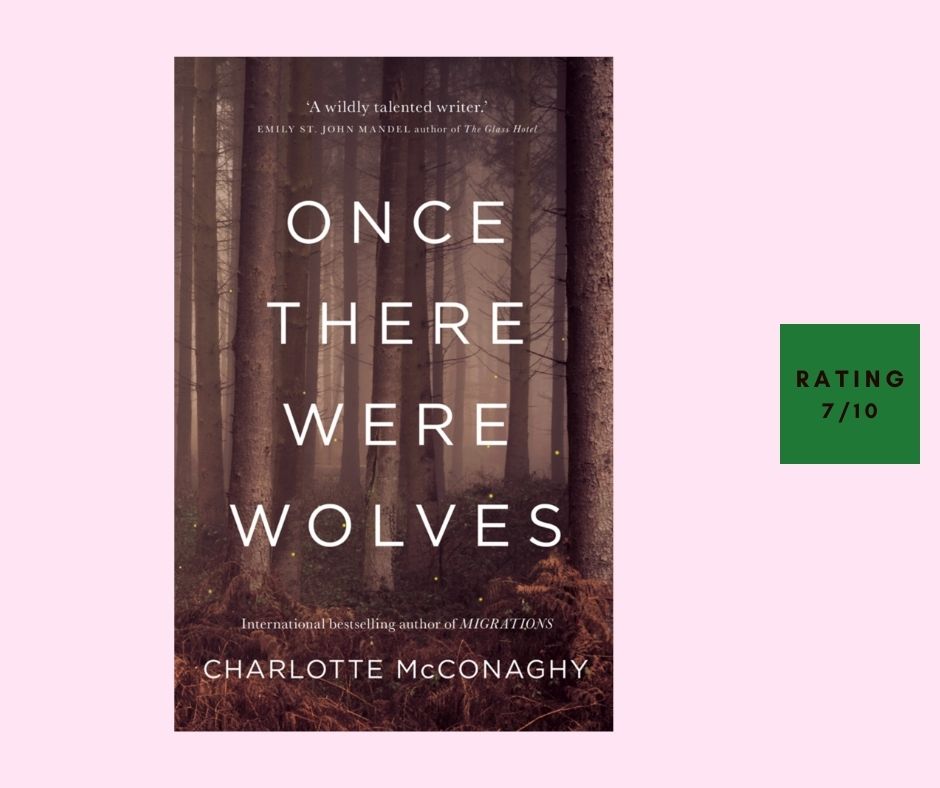
Once There Were Wolves by Charlotte McConaghy [7/10]
“Once There Were Wolves” follows hot on the heels of Charlotte McConaghy’s lyrical, propulsive Migrations (my review here) and has a similar mix of dramatic plot, conservation backdrop, and natural world depiction. The hero is Inti Flynn, part of a team of visionaries reintroducing over a dozen wolves into remote Scottish wilderness. Battling opposing locals, venturing into love, and protecting her battered twin sister, Inti’s overweening focus is the wolves and the precarity of their fate. The author is a beautiful stylist and I sank into the wonderfully portrayed scenes of wolves in the wild, bumping into the ravenous world of humans. The feverish plot is less successful, IMHO, perhaps too wild in pace and extent, but that storyline meshes well into the thematic one. The central character of Inti is brilliantly portrayed. Snap up Once There Were Wolves, I’m sure it will figure in the awards season.
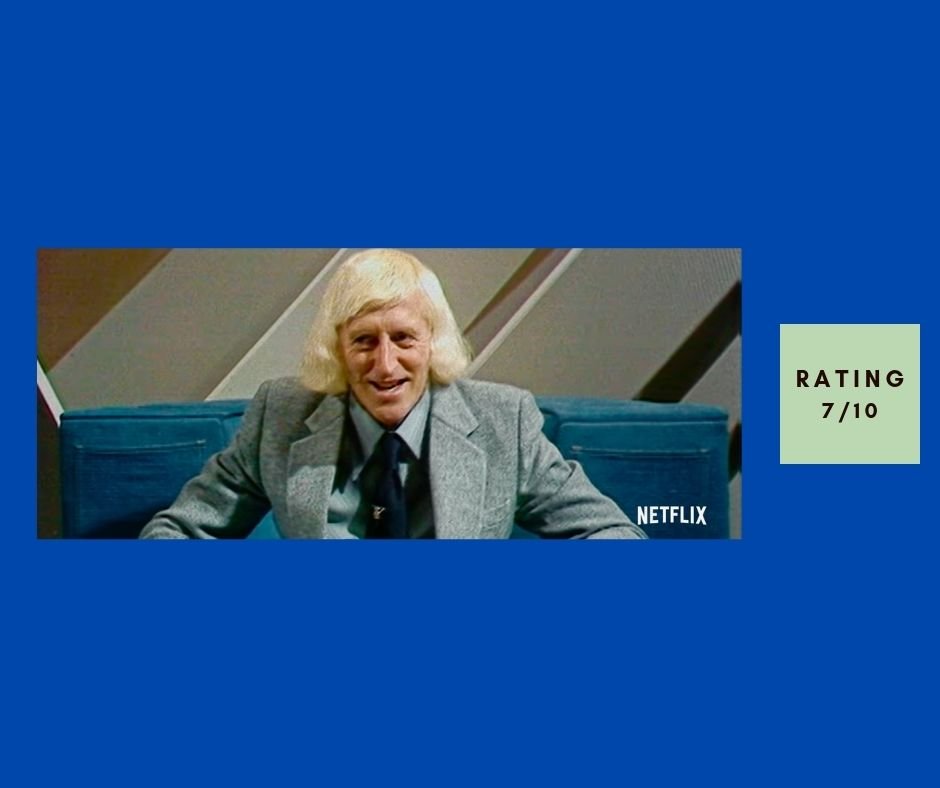
Jimmy Savile: A British Horror Story [7/10]
Over two ninety-minute episodes, the documentary “Jimmy Savile: A British Horror Story,” portrays exactly what its sub-title portends, the triumph of an odd but talented showman to reach the heights of British society (aka a knighthood) over nearly five decades, followed by sickening revelations, hundreds of them, of sexual abuse at his hands. That the rout of the Jimmy Savile legend did not take place until after his death is a blot on British society. Director Rowan Deacon is not showy but patiently choreographs archival footage with the testimony of Savile’s work-based acquaintances and dogged reporters. An intriguing subplot, as it were, seems to be that the monster revealed himself in public footage time and again, while cleverly deflecting real revelation. One can only watch so many true crime documentaries depicting humanity’s capacity for evil but Jimmy Savile, grindingly dispiriting as it is, is probably essential viewing.
The Books of Jacob by Olga Tokarczuk [8/10]
“The Books of Jacob,” a 2014 novel recently and superbly translated by Jennifer Croft, is not for the faint-hearted. Over its thousand-plus pages teeming with hundreds of names and places, set in 18th-century Poland, Austria, and Turkey, in boggy towns and lush cities, Nobel laureate Olga Tokarczuk adopts a presidential omniscient stance but feels free to use letters, snippets, a ghost, different tenses, and so on and so on. Sometimes it seems like every page is just too dense to carry on, but after early slowness, I warmed to the sheer flood of detail and poetic descriptions. The Jacob of the title is Jacob Frank (although he ends up using many names), a charismatic prophet who seems to want to unite the region’s disparate religions—Jewish, Muslim, and Catholic—into a pantheistic mishmash of portent and vagueness. And Jacob Frank is no Christ wannabe, he’s a handsome, gnarly, trickster character echoing all those cult leaders we have come to know over history. Like many of them, he uses charisma and sex and human nature to dominate his flocks, which in some years grow into mobs. Over the decades of his surprisingly long life, the prophet morphs and relocates, ducks and weaves, always using up his disciples. After my initial bafflement, I learned to relax into the compendious, earthy yet intellectual detail, and by the end, I was quite moved by a sense of having participated in something approaching holiness (even as Frank’s grubby behavior obviously disqualified such an emotion). The Books of Jacob is a welcome avalanche of a book, definitely worth the reading effort.
The Matchmaker by Paul Vidich [7/10]
Set in Berlin just as the Wall was coming down in 1989, “The Matchmaker: A Spy in Berlin” has a classic plotline made for those in the John le Carré tradition, a plotline tightly unwound in a gripping manner. When the piano tuner husband of an American translator vanishes, she discovers he was an East German agent runner. What’s more, by dint of good luck, she ends up being the key to tracking down his handler, a super spy, and what began as a tragedy quickly morphs into a claustrophobic cat-and-mouse thriller. Paul Vidich is a stylist with skills a cut above the regular modern spy thriller aspirant, and the plot, characterization, and end-of-Cold-War atmospherics are superb. The Matchmaker is the author’s fifth spy thriller outing and I’ll be reaching into his back catalogue, so impressed was I by this intelligent yet gripping novel.
The Island by Adrian McKinty [8/10]
Adrian McKinty has always been revered by crime fiction aficionados for bringing touches of literary styling, and great intelligence, to superior genre plots. Then he became famous for the brilliant thriller, The Chain (my review), and now, with “The Island,” he seems set for thriller stardom. Drawing on his time in Melbourne, McKinty brings a slab of Deliverance to the Victorian coastline, imagining a tiny island dominated by a redneck family. When a family of four impulsively ferries across, tragedy strikes and suddenly meek Rachel faces down existential crisis after crisis, as she strives to keep them all alive against the odds. As I said, McKinty is an inspired plotter, twisting events into skeins at once logical and unexpected. The pace is breakneck, the writing is pitch-perfect, and the climax is fraught. The Island is a humdinger thriller, snap it up.
Fight Night by Miriam Toews [8/10]
“Fight Night” is my belated introduction to the brilliance of Canadian nine-novel-strong author Miriam Toews, and what an intro it is. Told from the pen of eight-year-old Swiv, a girl of wide-ranging mind and little tolerance for cant, the novel is a breathless journey over days of decline of her ailing, magnificent Grandma and final days of pregnancy of Mom, herself a volatile package. Swiv is suspended from school and is a beguiling mix of utter cynic and devotee of her mother and grandmother. The days are a blur of regular activity, until Grandma spontaneously books a flight from Toronto to California, and Swiv accompanies her on a chaotic journey of last rites. And the end approaches … The author is an utterly immersive stylist, forcing this reader to fall quite in love with brave young Swiv, and toward the end, the tension is as fierce as with a thriller. Fight Night is a blast of high-octane literary fiction that brings the essence of life into our hearts.
Black Cake by Charmaine Wilkerson [4/10]
“Black Cake” is an exuberant panorama of tale after tale of tragedy, immigration, love, and secrets. Byron and Benny, either estranged or disconnected from their mother Eleanor, are stunned when after Eleanor’s death in California, her taped message to them unfurls barely creditable revelation after revelation. Ranging over decades and from a Caribbean island to England to America, this is a classic storyline wrought from seemingly neverending character stories of stupefying (to this reader) complexity. The author spills forth scenes of seeming virtuosity but over the course of the novel, the central characters discard all readerly identification, swamped by the multitude of hoary documentary-style biographies. I sense that many readers may enjoy the tapestry of fated lives, revolving around the recipe of the “black cake,” but this reader found Black Cake to be a modestly enjoyable yawn.
A Bit of Previous by Belle and Sebastian [8/10]
An oddity in the rock/pop pantheon, Belle and Sebastian are quintessentially British in a very modern but regressive way, bouncy yet plaintive, quotidian in lyrics but also profound (bandleader and singer Stuart Murdoch is a Buddhist), straddling genres in the same way that Mike Scott does. “A Bit of Previous,” their tenth and first in seven years, was apparently recorded fully in their native Glasgow, thanks to Covid, and perhaps that explains a pleasing unity to the album’s dozen songs. Skating all over the place amongst their varied influences, the music ranges from violin-led folk, to synth-pop, to pastoral. Murdoch’s lyrical concerns are, as ever, razor-sharp yet thrillingly domestic. There’s nary a dud track on “A Bit of Previous” and if you’ve shied away from the quirkiness, it is a wonderful entry point to the band. Check out the lovely violin intro over a bouncy beat on “Young and Stupid,” delighting in its ridiculously melodic chorus; the deep, beautiful choir backing vocals at the end of the band’s paean to survival, “If They’re Shooting at You”; and Sarah Martin’s sweet-but-angry vocals on the rageful “Reclaim the Night.”
We by Arcade Fire [9/10]
Arcade Fire is a wonderfully strange band, a capable ensemble band revolving around Win Butler, a brilliant songwriter who is also instantly recognizable when singing. Combining elements of alt rock, pomp rock, and synth-pop, it retains cult status. Call it sensitive, theme-based music writ large in front of stadiums. If you are an Arcade Fire fan, you cry with their songs, songs that talk of existential threats and questions, of apartness and togetherness. The last couple of albums have seemed weighed down by themes and over-baroque musical clamour, but “We,” their sixth album, dropped a half decade after the last one, is simply superb, quite as fine as their classics, The Suburbs and Neon Bible. Butler’s songwriting tackles social media, modern anxiety, our desire for transcendence, and much more. The songs, none of them excessively long for once, burst with imagination and melody, and Butler’s voice, after all this time, still shifts something inside me. Highlights include “Age of Anxiety I,” with its winning, repeated chorus; the full-synth earworm “Lightning I & II”; and the quintessential Arcade-Fire-vibe of “Rabbit Hole.” We is my top listen for this year so far, hands down.