Who can forget the lucid, humane 2014 memoir Do No Harm: Stories of Life, Death and Brain Surgery by esteemed but self-deprecating neurosurgeon Henry Marsh? I wept at the documentary The English Surgeon, covering his work in Ukraine. His 2017 volume Admissions: A life in Brain Surgery was equally impressive. Now comes the (perhaps) ultimate instalment: “And Finally: Matters of Life and Death.” Marsh is superbly erudite yet honest and modest as he recounts how he discovers he has advanced cancer in his eighth decade. A natural storyteller, he weaves amongst the tale of his diagnosis and treatment a huge assortment of fascinating topics, from recollections of surgery, through the topic of consciousness, through euthanasia, to the highly imaginative tales he Facetime’d his granddaughters with during Covid lockdown. Throughout, he remains brutally frank and humane. And Finally is an exemplary missive to humanity from an exemplary human being.
Invisible Friends by Jake M. Robinson [7/10]
“Invisible Friends: How Microbes Shape Our Lives and the World Around Us,” written by a microbial ecologist, tackles a topic of our day, the new understanding that our worlds—the earth, our bodies, everything around us—are filled with uncountable numbers of “invisible friends,” namely bacteria, viruses, and other microbes. Nothing on Earth, not even us, stands alone and apart from a vast equilibrium/disequilibrium of microbes. Jake Robinson is a cogent, conversational stylist with admirable clarity of expression and as he delineates how microbes can both harm (Covid-19, say) and preponderantly aid us, it feels like a shifting of consicuosness. Even if you rebel against notions of “Gaia” and “deep ecology,” the author’s patient work depicting our “old friends” battling against antibiotics, aiding our health and longevity, buttressing our soils, forests, and crops, and providing new insights in fields as diverse as forensics and space exploration … all his patient labor presents a new, inescapable worldview. More than a fascinating, engaging read, Invisible Friends should be required reading for current and upcoming generations.
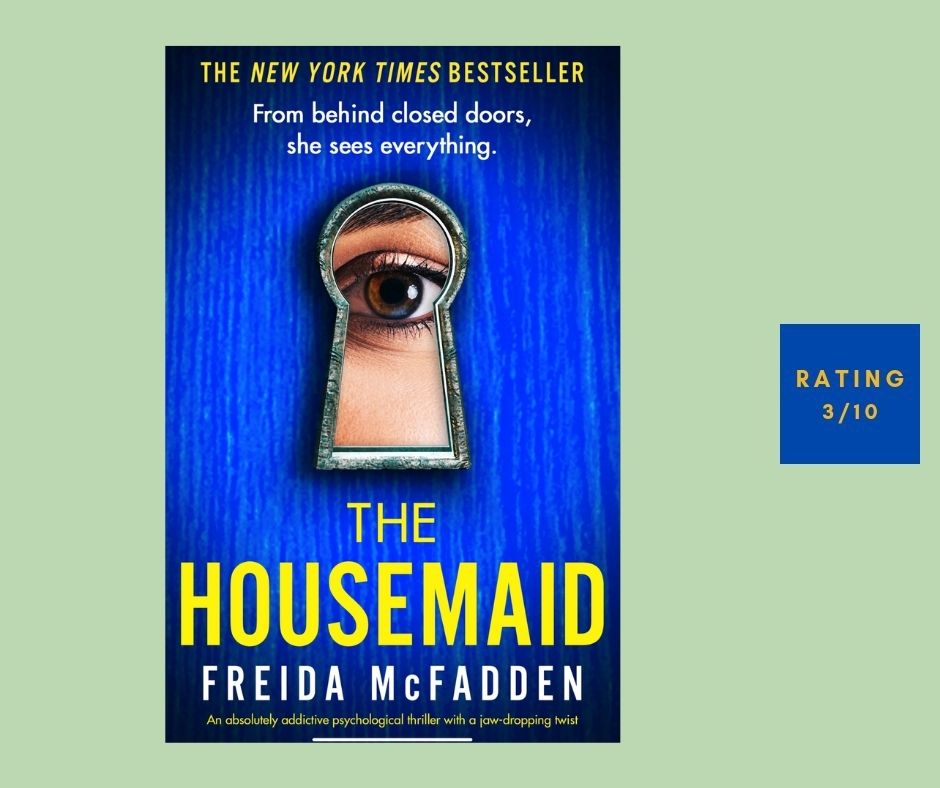
The Housemaid by Freida McFadden [3/10]
Sales success in any fiction genre seems to sprout dozens of copycat novels with similarly pitched covers. The domestic mystery/thriller, exploring a family’s twisted interactions with an interloper, is a favored trope, and “The Housemaid” both rings true to its sub-genre and, alas, fails badly at the basics of storytelling. When a young woman with a mysterious past joins a household as a live-in maid, the seemingly frayed wife and seemingly perfect husband come under the microscope. The signals about “unseen depths” are so strong that this reader was surprised not at all at the early twists, the mid-novel twists, and the final twists. Written in that breathless, close-up, first-person style that works only when wielded with skill and a distinctive voice, The Housemaid is a messy yawn from start to finish.
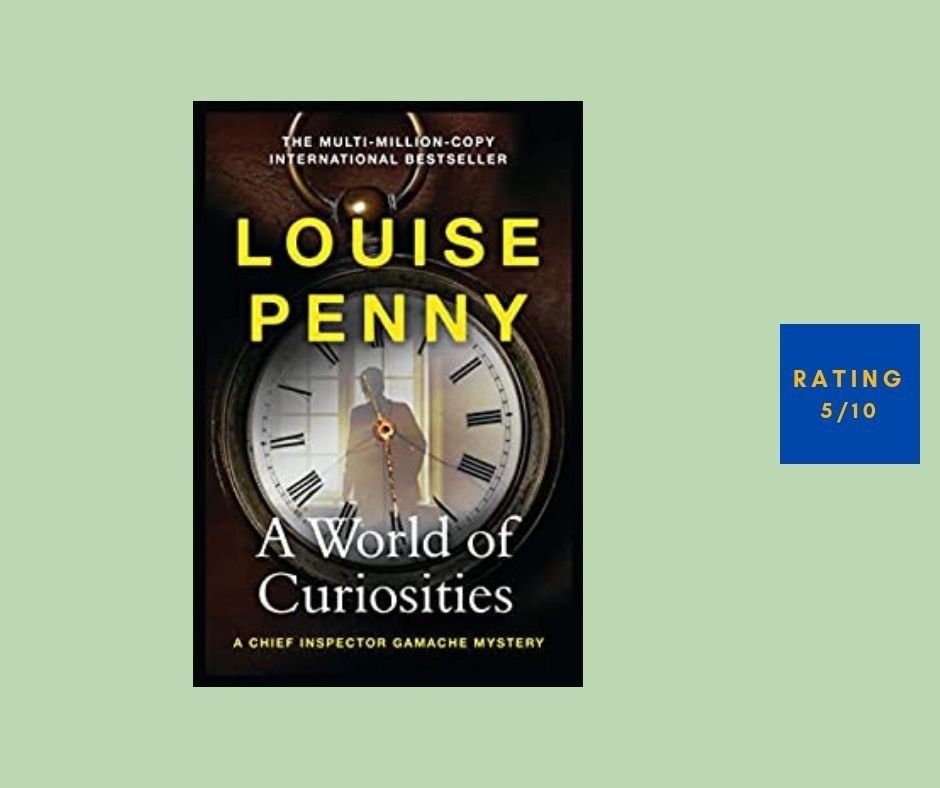
A World of Curiosities by Louise Penny [5/10]
Instalment eighteen of an illustrious police procedural series, starring Chief Inspector Armand Gamache, Chief Inspector of the Sûreté du Québec, “A World of Curiosities” showcases the nimble storytelling gymnastics of Louise Penny in the service of a twisty, dark plot. Into Gamache’s bucolic home village of Three Pines come two young adults whom he rescued, years ago, from their mother’s murder. Are they healed or warped, Gamache ponders, as an inexplicable mystery, a painting of the “world of curiosities” of the title, is discovered, unfolding an escalating series of portentous messages. Penny is an adept stylist, taking the reader between the points of view of Gamache, his police offsider, and various other characters, and the first half of the book mightily impressed me. But then the burden of seventeen earlier unread mysteries began to weigh down on the plot, the inevitable freight of an ever-expanding cast of characters clogging the tale, until an evil echo from a prior book suddenly popped up unbidden. The final third of the novel became increasingly baroque and over-dramatised, and, not for the first time, I finished A World of Curiosities reflecting that mystery writers with long series eventually lose themselves in relationship tapestries that sap all tension.
A Wing and a Prayer by Anders & Beverly Gyllenhaal [8/10]
Seasoned environmental reporters Anders and Beverly Gyllenhaal set off at the start of 2021 on a 40,000-kilometer camper trailer odyssey around America, with detours to South America and Hawai’i, a feverish close-up look at how desperate humans from different branches of society—science, birdwatching, conservation, philanthropy—are scrabbling to protect our fellow winged beings. Their story, chronicled with directness, grace, and humility, is told in “A Wing and a Prayer: The Race to Save Our Vanishing Birds.” As it becomes ever clearer that we are flirting with cascading species extinctions over coming decades, if there is one book you need to grasp the urgency, this is it. Their chapter “Vanishing by the billions” is alone worth the price of the book, dramatizing as it does the 2019 publication of a joint paper revealing that a quarter of American birds have died in the last half century. Even the paper’s authors were shattered by their findings. The authors provide riveting examples of bird rescue attempts, new technologies (audio, radar, satellite, eBird community science), and last-ditch efforts (such as releasing hordes of lab mosquitoes into Hawaiian skies or clonal resurrection work). Throughout, Anders and Beverly remain upbeat and in awe of the ambitions and hearts of the heroes they portray, but this reader, turning the final page, wept. A Wing and a Prayer is a 2023 must-read.
How Big Things Get Done by Bent Flyvbjerg & Dan Gardner [9/10]
If you self-style yourself as the “world’s top project manager,” and then write a book, you had better deliver. Bent Flyvbjerg certainly does that with “How Big Things Get Done: Lessons from the World’s Top Project Manager,” a fascinating and highly readable look at projects (mostly very big, but occasionally individual-sized): why they typically vastly overrun their deadlines and cost far, far more than promised at the start. Backed by a huge database of project statistics and brilliantly chosen case studies, Flyvbjerg has allied with a polished writer of business/how-to bestsellers, Dan Gardner. The fusion of those two professionals, one a project manager, one a writer/researcher, proves to be magical. In this review, I refrain from plot spoilers, but be assured that the underlying chapter-by-chapter thesis on how to hit deadlines and budgets, to the benefit of society (and companies/individuals), is compelling. Even if you are far removed from major projects, arm yourself with How Big Things Get Done and as an informed member of the public, help judge the grandiose plans of politicians and companies, all for the betterment of all of us. In summary, if this superb read fails to win awards in its categories, I will be most disappointed.
Sweet As by Jub Clerc [6/10]
A coming of age tale featuring an indigenous teenager being sent on a photography-based therapeutic bus tour of remote Wester Australia, “Sweet As” has plenty to recommend itself. The cast is solid, with special mention needed of Shantae Cowan-Brown in the lead role and Carlos Sanson, Jr. as the photographer-leader. The story solidly tackles the film’s core themes of indigenous cyclic family toxicity, the traditional rite of passage,, and the healing power of creativity. The scenery intoxicates. But highlights are few. The plot is predictable, none of the actors shines out with intensity, and the cinematography, while neanced, sometimes fails to show the land’s true grandeur. This is a time for watching indigenous Australian films, and Sweet As can be recommended as a solid piece of entertainment, but one can’t help but wish for more.
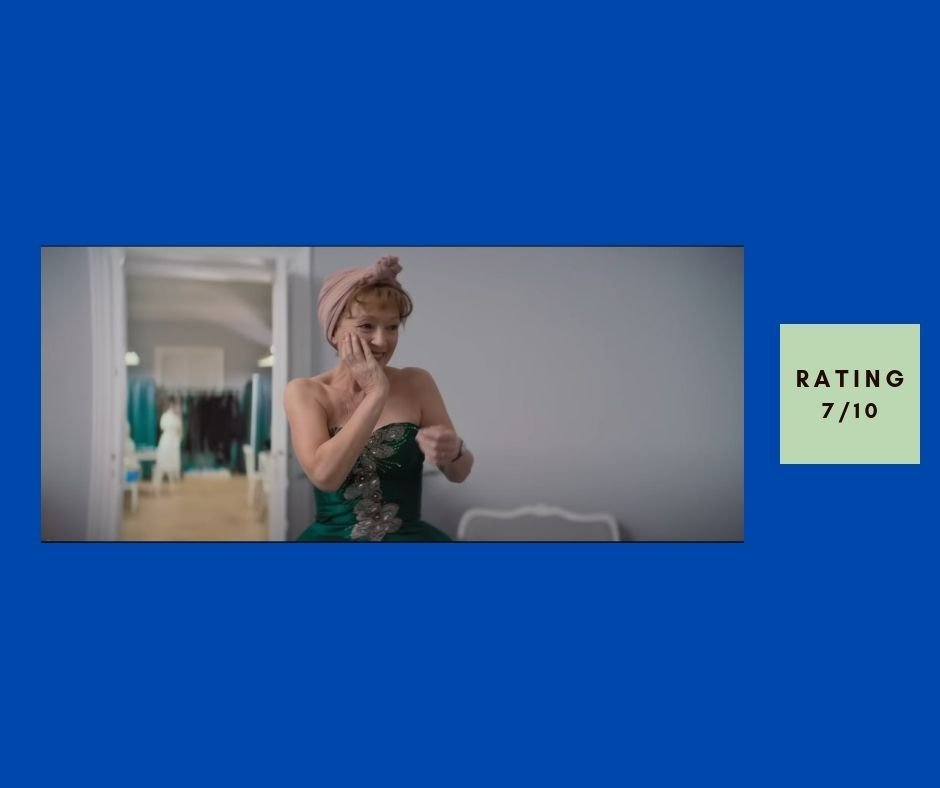
Mrs. Harris Goes to Paris by Anthony Fabian [7/10]
Can a movie “feel” like the book it is based upon? My memory of Paul Gallico’s underlying novel is faint, but I was amazed to find that, yes, “Mrs. Harris Goes to Paris” has all the wholesome but spirited atmosphere of the 1958 classic. A simple tale of a British house cleaner following her dream to fly to Paris in search of a frightfully expensive, lavish Dior dress. There the uncultured, accented woman imposes herself upon the ultra-chic world o of high fashion, with chuckle-worthy consequences and an outcome that is, strangely enough, not predictable. Lesley Manville is superb in the starring role, instantly lovable, and the ensemble cast in both London and Paris is not far behind. Anthony Fabian’s direction accentuates the almost goofy fairy-tale atmosphere, employing cliche scenes in a fresh manner. Mrs. Harris Goes to Paris could have been a twee mess but somehow it retains a vivacity throughout. A sweet viewing from the good old days.
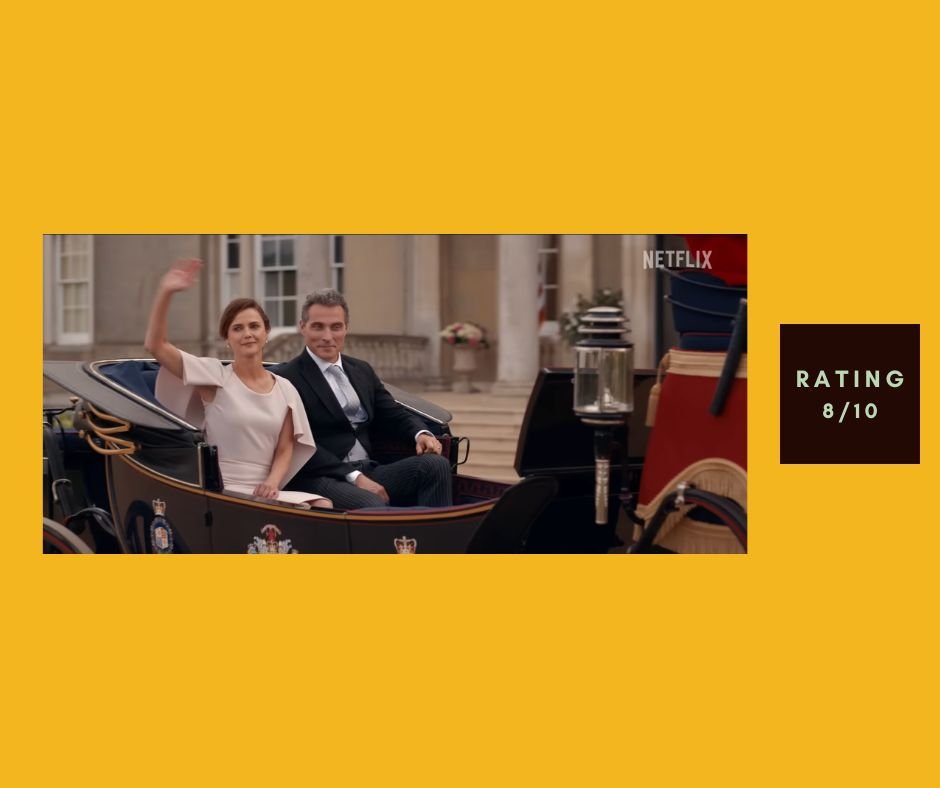
The Diplomat [8/10]
The super-smart Deborah Cahn is showrunner for “The Diplomat,” a slick political thriller series, and her skills with plot and dialogue shine out. The show’s premise is sweet: a highly experienced field diplomat is rushed to become the new ambassador to England, finds herself immediately enmeshed in a ship explosion with mysterious origins, and needs to navigate her two worlds while coping with a charismatic, devious husband who has been more senior, including an ambassador’s posting himself. The plot is suitably byzantine, the scenes are immaculately unfurled, and the tension is tangible. Ordinarily, we would expect this to be a routine Netflix thriller, that is, entertaining and proficient, but what distinguishes The Diplomat from most others is the roster of actors. All the many key characters are wonderfully cast and employed, but the standout is Keri Russell in the star role. She is flawlessly magnetic, making the most of a snappy script with terrific dialogue. Hopefully Season 2 will follow apace.
Flyways by Randall Wood [9/10]
A documentary that might be hard to source or watch, “Flyways: The Untold Story of Migratory Shorebirds” is an undiluted journey of astonishment. At one level a simple documentary about the miracle of long-distance bird migration over long-established aerial flyways, the movie transcends the usual wildlife documentary with superb, simple storytelling, astounding cinematography, impeccable pacing and control, and just-so narration. I was especially impressed with how the decision to follow three bird species, the Curlew, the Knot, and the Godwit up the three major flyways (Australia across Asia, north of Africa and then west across Russia, and South America up through the United States to Alaska), for the first time educating me on this amazing annual globe-straddling phenomenon. Artfully segueing between the three birds/flyways by following scientists and volunteers trying to track and understand the birds, and doing so composedly but capturing the ardor of these heroes, Randall Wood transcends the immediate “lesson about nature” to plea for a new consciousness in humans. In watching, one is amazed, then transported, then moved, and finally angered. Flyways is remarkable and deserves a much wider audience than it is likely to get.