On the spectrum of commentators/analysts/writers dealing with the climate crisis, I read everyone from extreme doomsters to blithe “abundance” gurus, Oxford data scientist Hannah Ritchie lies firmly on the side of the optimists. She is everywhere on her patch, which is the application of solid numeric data to Anthropocene policy issues and options. Now, just a year after her debut book, Not the End of the World: How We Can Be the First Generation to Build a Sustainable Planet, both enlightened and frustrated me, she is back with a more nuanced book, Clearing the Air: A Hopeful Guide to Solving Climate Change — in 50 Questions and Answers. This is the book everyone needs to read in order to navigate the sewers of online discourse on the subject. Much of the book is spent quashing bad-faith arguments spread by malicious foes of decarbonisation, such as the supposed evils of renewables and petty arguments against EVs. Throughout, Ritchie writes with clarity of prose and numeracy, and she has an engaging style. If we feel unease at the positivity (after all, emissions continue to skyrocket, temperatures still rise), we can find plenty of voices of more sober mien. In any event, Clearing the Air is a cudgel of reason to seize and wield.
Eden by Mark Brandi [8/10]
Noir books do not need to be thick and, at 211 pages, Melbourne author Mark Brandi’s Eden, his fifth novel, is perfectly sized. When Tom Blackburn hits the streets of town after a long spell in prison, life seems bleak, sprinkled with morsels of hope. When he lucks upon a dream job at a heart-of-the-city cemetery, it seems he might finally face a better future. But rosy futures are not noir futures, and Tom stumbles into a mire of personal, moral quandaries. The author adopts a pared down, present-tense style that reflects the simple character of his protagonist, a style dotted with evocative descriptions that bring inner Melbourne to life, and Tom quickly wriggles into the reader’s heart. Foreboding quickly appears and swells, and the plot is excellent. If the climax offers few resolutions, Eden is a taut, atmospheric noir tale that this reader, for one, will remember for a long time.
2025 Top 10 Books
After 2024 seemed to be a year of reading constriction, 2025 saw even less reading. This was good news for my own work but could have proven to depress this obsessive reader. Instead, I ended up with many fine novels and a number of rewarding nonfiction books. Only two of the Top 10 ended up being nonfiction and theyare nothing like each other. Five outstanding genre books were balanced by three literary fiction gems.
I present ten books of outstanding merit (the links are to my reviews, which themselves contain links to information about each book):
- Author Mick Herron had a bumper year on the screen but his fans know he is best appreciated in print. Number nine in the Slow Horses/Slough House/Jackson Lamb series is Clown Town and it is a ripper, constructed in two parts with the second half unexpectedly dark.
- Probably the most low-key offering ever from wonderful scribe Helen Garner is her sublime look at suburban football, The Season.
- No doubt many of you know full well the magic of Irish novelist Niall Williams. He was new to me, however, and I was surprised to swoon at his immersive, love-filled Time of the Child.
- Is stylistic artistry genetic? Nick Harkaway’s Karla’s Choice, penned by the son of the deceased master of spy fiction, John Le Carre, offers up a new tale of superspy George Smiley, and it reads as if written by the father.
- 2025 saw plenty of splendid sci-fi on the screen, less so on the page, but the latest Murderbot book, System Collapse, is magnificent.
- Daniel Kehlmann’s multi-viewpoint novel of Nazi collusion, The Director, seems apt for our age.
- Australian crime fiction master Garry Discher keeps pumping out his outback noir series featuring smalltown policeman Hirsch. Mischance Creek is gradual and low-stakes until … until it’s not. An especially skillful plot and rich characterization.
- I’m new to British crime writer Simon Morgan’s “mismatched duo” procedural series. The latest, A Voice in the Night, is a 2025 standout in this genre.
- Roisin O’Donnell’s novel featuring a struggling mother beset by a misogynist, Nesting, stuns due to its bewitching voice.
- We Are Eating the Earth: The Race to Fix Our Food System and Save Our Climate, by renowned journalist/author Michael Grunwald, is mandatory 2025 reading, both for its revelatory and horrifying message, and for its superb storytelling.
2025 Top 10 Movies/Shows
Another glorious year of cinematic joy. Four fresh seasons of great shows, two indie-style movies, a rough-but-brilliant self-funded doco, nuclear Armageddon, and more … behind these ten are a couple of dozen films or streaming shows I would love to extol, if only Top 10 meant Top 30.
- After Season 3 played with style and form, Season 4 of The Bear reverted to solid, kinetic drama. We watch breathless as Carmie battles the world and himself. Another triumph of cinema.
- Claire Keegan’s novel, Small Things Like These, was slim and highly moving. The movie adaptation stars Cillian Murphy and, by necessity, strikes a different register, but it is just as emotional and true.
- A free YouTube documentary of a birdwatching road trip sounds as unpromising as they come, but Listers: A Glimpse into Extreme Birdwatching is both hilarious and awe inspiring.
- Season 3 of The Newsreader is the streaming show’s final outing. IMHO the best Australian drama in years.
- The second season of the grand sci-fi dystopian Silo is plotted slower than the first firestorm season but, rest assured, it is as skilled and wonderful.
- The niche crime sub-genre of “on the spectrum investigator” is experiencing a boom at present. The first season of Dept. Q, an adaptation of the first book in a Danish series, is whip smart and unusually impactful.
- A four-episode examination of a young male mess-up, told four different ways, Adolescence wrenches and grips.
- The second season of The Last of Us, another dystopian (zombie, even) series, offers startling plot twists but remains true to its high standards and emotional core.
- How to dramatise the risk of nuclear Armageddon? Only Kathryn Bigelow could contemplate doing it with integrity, veracity, tension, and imaginative plotting. A House of Dynamite is essential 2025 viewing.
- The most arthouse cinema on this list, The Ballad of Wallis Island is quirky, superbly acted, and profound. Funny, too.
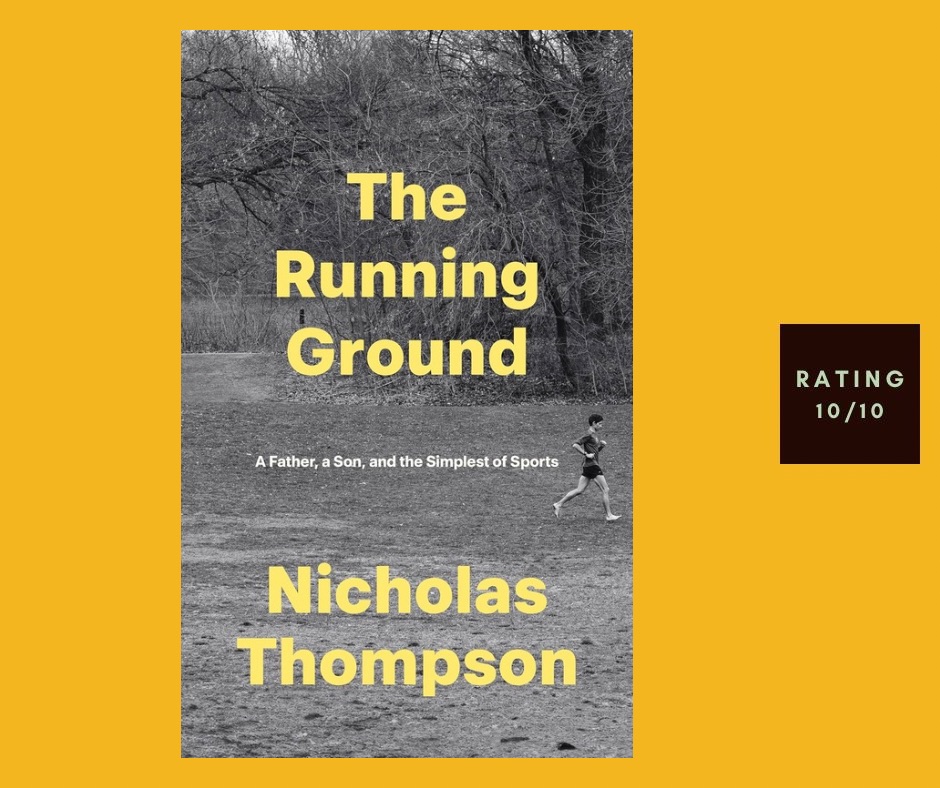
The Running Ground by Nicholas Thompson [10/10]
A memoir can impart wisdom without preaching, even as it entertains, and Nicholas Thompson’s The Running Ground: A Father, A Son and the Simplest of Sports exemplifies this art. Thompson, CEO of The Atlantic, melds the chaotic and eventually tragicomic story of his father with a recounting of his own running career. from promising youngster to has-been to rejuvenated mature-age record holder. The author’s style is gentle and precise, yet imbued with yearning and lyricism. I won’t spoil the wild plot of the father’s later years, other than to say the author’s forbearance, derived from love, is magnificent. But it is the running life that fascinates, with Thompson constantly testing himself amid pain and musing about life and familial inheritance. The Running Ground is a lovely father/son/family memoir in its own right, but if you have ever experienced the sweet, sweet joy of running (I call it jogging, so slow and lumbering is my “running”), Thompson will once more inspire you to push aside aging and tighten up the running shoes.
What We Can Know by Ian McEwan [6/10]
That Ian McEwan is a master literary craftsman, I have never doubted, and I’ve marvelled at many of his novels, in different voices and registers. From the moment I saw that his latest outing, What We Can Know, tackles the pursuit of an academic in dystopian 2119 England of a lost, apparently wonderful 2014 poem, I longed the read it. And to be fair, What We Can Know is smoothly written, artfully constructed, and fascinating in its worldbuilding. McEwan has hypothesized a semi-calamitous future with the diligence that only he can. The future academic burrows into the stored digital life of the long-dead poet and others at a party where the feted (but lost) poem was read in honour of his wife, and the plot is handled assuredly enough. The author’s voice is solid and assertive, almost academic, suiting his plot. Yet What We Can Know runs aground (at least to this reader) on shoals familiar to anyone reading literary titans tackling genre fiction: they’re just not adept at the unfamiliar genres. This novel is half science fiction, and the author’s worldbuilding holds intellectual interest rather than unfolding in a compelling manner; we read and nod, but we are not swept up. And the novel is half a thriller, with a plot that is executed stolidly but without flair; I guessed the climax (with its typically McEwan-style abrupt ending) early on. The net result is What We Can Know is worth reading—for who can resist Ian McEwan?—but never sparks into life.
Down Cemetery Road [8/10]
Before his phenomenal Slow Horses/Jackson Lamb spy thriller series, Mick Herron wrote four mysteries/thrillers of a decidedly different nature. They starred Zoë Boehm, a smart, shit-kicking female private eye who becomes ensnarled in oblique thriller dramas featuring a bevy of ultra nasty villains. Now Down Cemetery Road, the first, arrives as a six-episode delight built upon the trusty Herron plot engine and two superlative performances by Emma Thompson (her Zoë is a pleasure to sink into in every scene) and Ruth Wilson (as a hapless married woman thrust into a quest to save a missing girl). When a suburban home explodes and the girl vanishes from hospital, terrible events click into place in the name of national security, and the dangerous pursuits of the two heroes accelerate to climax together. Perhaps this is not quite the sublime pleasure of Slow Horses, but Down Cemetery Road is a breath of fresh air, a quirky but ultra tense thriller ride.
Slow Horses Season 5 [9/10]
The first four series of Slow Horses streamed on Apple TV were faithful, spellbinding adaptations of the first four novels in Mick Herron’s sequence of spy thrillers (now nine books strong). If Mick Herron creates, for his readers, a memorable picture of Jackson Lamb, head of the spy rejects’ Slough House, Gary Oldman exaggerates his many (often disgusting) habits but also deepens his intrinsic appeal as the maestro spy wanting to be left alone but deeply protective of his flock of no-hopers. The cast of characters orbiting Lamb, from wannabe-007 River Cartwright to ice queen “real” spy head Diana Taverner, is wonderfully cast and scripted. In Season 5, repulsive but hypnotic uber-hacker Roddy Ho startles the slow horses by acquiring a stunning girlfriend but then narrowly escapes assassination, at the same time as a shadowy group of terrorists subjects London to a weird set of atrocities. The spiralling plot is a delight (even if, for the first time, elements of the book’s arc are adjusted), the dialogue snaps with savage humor, and the direction of the six episodes is as well-orchestrated as ever. Can the expanding series sustain this excellence? On the basis of Season 5, the answer is a robust “yes.”
A House of Dynamite by Kathryn Bigelow [10/10]
Kathryn Bigelow excels at imparting messages wrapped in exquisitely directed and acted dramas. A House of Dynamite wrestles with one of the toughest challenges faced by twenty-first century creators: how to convey the prospect of nuclear Armageddon to a world seemingly inured to the risks we face. And to thrill the viewers at the same time! She succeeds triumphantly, with the tale of an ordinary day in America, shattered by the appearance from nowhere of a single missile seemingly headed into the heart of the nation. The decision becomes one of deciding whether to preemptively strike at an enemy (but which enemy?), whether to escalate or de-escalate, all decisions needed within a stringent, short time period. All the multiple scenes across the gamut of the US nuclear weapons complex, from remote missile watching posts, to war rooms, to missile bunkers, to a presidential limousine, are filmed and directed as if one is viewing a documentary, and the superb cast of actors (highlights for me were Gabriel Basso as a minor adviser, Idris Elba as POTUS ), mean that the drumming tension quickly becomes unbearable. A concentric narrative strategy, as effective as it is ingenious, underpins a wonderful script from Noah Oppenheim. Stark cinematography, an ominous soundtrack, seemingly accurate settings … these are just the icing on the cake of A House of Dynamite, the one movie recommended for every human on earth to watch in 2025 (not 2026).
Mischance Creek by Garry Disher [9/10]
Australian crime fiction maestro Garry Disher has made many fans throughout his 60-book career but his latest series, featuring country policeman Hirsch, stuck in a dusty quiet town in rural South Australia, might not win him new ones, for it is decidedly low key. Mischance Creek, the fifth in the series, offers an especially sedate first half, as Hirsch alternates routine firearm checks with helping a foreign woman investigating the strange death and disappearance of her parents seven years earlier. Disher creates with loving care the setting of a region beset with an unusually savage Australian drought but the pace is a steady acceleration of seemingly humdrum minor crimes intermingled with Hirsch’s itchy life. Then, just as the reader wonders how Mischance Creek slots into the rural crime fiction genre, with the plotting precision of a master, Disher revs up the action into an onslaught of connecting strands, into a classic battle for justice against mysterious monsters. The final quarter of Mischance Creek is a tour de force and a reminder to all Disher’s fans: let us hope Hirsch returns again and again.