Wicked Little Letters [5/10]

Wicked Little Letters review

Please, please save me from any further “based on a true story” films. I have said this before and it remains true: for some reason, the girdle of factuality almost always saps the plotline, script, and dialogue of artistry. So too with Wicked Little Letters, a currently popular, very British, “juicy” (as in the centrality of cussing) comedy. In a classic English town, Littlehampton, poison pen letters full of profane, sexual stupidity arrive in the letterboxes of the prim, proper residents, who, naturally, are shocked. Edith, a repressed spinster under the thumb of a truly bigoted father, is the first to receive the missives, and based on her say-so, the buffoonish police arrest neighbour Rose, a spirited, take-no-prisoners Irish blow-in. From this early plot premise, we follow the only “good cop,” and indeed the first ever female policeman, Gladys, as she hesitantly seeks justice.

Let me give credit to the elements of Wicked Little Letters that work: the village atmosphere is rendered atmospherically. You will hear fulsome praise of Olivia Colman’s expressive portrayal of Edith, of Jessie Buckley’s characteristically true rendering of Rose, Anjana Wasan’s “look at my expressive eyes” turn as Gladys, and also Timothy Spall’s grotesque depiction of the cartoonish father, and yes, all show considerable artistry. But the script they work with turns most scenes into “staged” moments that never convince. The deferred “plot twist” is telegraphed way too early. Worst of all, the copious profanity should send us into fits of laughter but instead sounds like kids playing at swearing. By the time we arrive at the ham-fisted “climax,” boredom has long set in.

Australia’s Sleep Revolution with Michael Mosley [8/10]

Australia's Sleep Revolution review

The title of this three-part documentary, Australia’s Sleep Revolution with Michael Mosley, is unlike to draw in anyone not currently thinking about sleep and its ramifications, but it’s a hidden treasure, one that anyone cursed with insomnia must watch. Mosley, as ever, expertly spins out the storyline of thirty insomniacs (himself included, of course) being tackled by a large multi-disciplinary team of experts at Flinders University, the result being a modestly entertaining watch. But the meat of series is twofold: the unfolding of a method of “retraining” the body and mind to a productive framework whereby roughly 85% of your “bed time” is actual “sleep time” (an added factor not of interest to me is the latest techniques to battle sleep apnoea); and the variety and dramas of the participants, many of whom are engaging characters. I learnt something valuable and am sure any insomniac viewer would do likewise, and for further elucidation, one can, of course, turn to the accompanying Mosley book.

Table for Two by Amor Towles [7/10]

Amor Towles Table for Two review

Following two stunning, warm-hearted novels, A Gentleman in Moscow and The Lincoln Highway, we Towles fans must now be kept patient by Table for Two, comprising six short stories (some presumably written years ago) set in New York and a novella “Eve in Hollywood.” The shorts are a mix of whimsical light pieces and city/domestic dramas. My favorite is “Hasta Luego,” in which a smooth New York consultant bumps into a bluff Californian salesman, resulting in late night drinking and the desperate efforts of one to save the other. I also enjoyed “The Didomenico Fragment,” a wry and spry story of generational inheritance and fine art. “The Bootlegger” starts as one tale—a husband on the trail of a bootlegger at a Carnegie Hall concert—and ends with the wife’s musical revelation. Read about a migrant from the Soviet Union in “The Line” and about antique book forgery in “The Ballad of Timothy Touchett.” But undoubtedly it’s the longish novella, “Eve in Hollywood,” starring sassy, scarred-yet-beautiful Eve from Towles’s earlier novel, Rules of Civility. Here Eve befriends movie star Olivia de Havilland, then deep into production of Gone With the Wind, and when a classic blackmail attempt hits Eve’s friend, she and a small cast of confederates move, in Chandleresque fashion, to sort out the mess. Towles uses a complex noir plot and his lithe, lively prose to craft a lovely mini classic. Overall, I’m unsure if I can recommend Table for Two to Amor Towles neophytes but if you have sunk into his two biggies, it will pleasurably remind you of novelistic pleasures still to come.

The Invisible Fight by Rainer Sarnet [5/10]

The Invisible Fight review

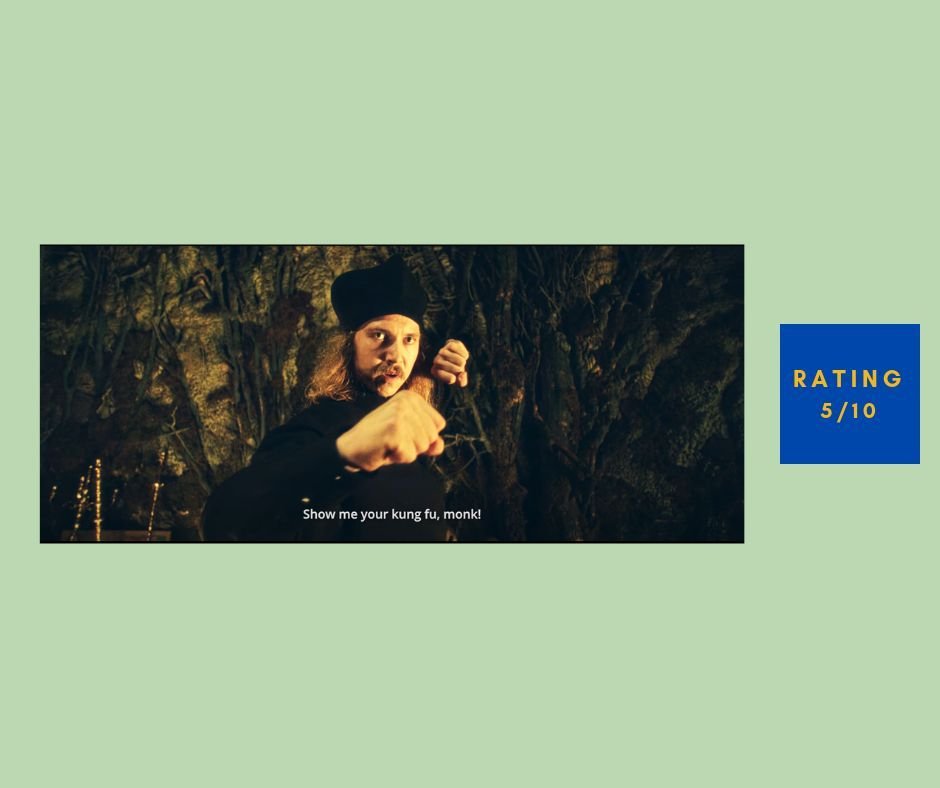
Born of Estonian parents, I was immediately drawn to Rainer Sarnet’s ultra-quirky The Invisible Fight, an energized, silly story of a young martial arts fan (played with huge, attractive brio by moustachioed Ursel Tilk) who journeys to a monastery of adepts. Everyone is hooked on heavy metal music and roaring, lovely music informs most scenes, especially the copious kung-fu fights. Our hero embarks on a path to mastery of his chosen calling and all manner of extravagant battles, choreographed with a love of classic movies, take place, a love interest enters, and much is in place for a thoroughly frisky cinematic experience. Add an element of satire (it is set in the early 1970s, when Estonia was a crushed satellite of the Soviet Union) and there is much to admire. Yet the plotline is a meaningless mess, with no calibration of intensity and no sense of control, and the ending is a bust. I was intended to laugh, I guess, but never did, so watch The Invisible Fight if the allure of a meld of heavy metal, kung-fu, and religion calls to you, but otherwise, it is regrettably difficult to recommend.

Fleet Lane by Richard Smyth [9/10]

Richard Smyth Fleet Lane review

Anything British nature writer/novelist/essayist/cruciverbalist (crossword puzzler constructor) Richard Smyth writes, I read. Fearless, compendious, moral, and prolific he certainly is, but his superpower is a brilliant, sophisticated writing style. Every Richard Smyth page sings. His latest novella/short novel, Fleet Lane, plonks the reader into the Georgian London scene of 1760s medicine. At a fascinating time when medicine was just emerging from semi-witchcraft, upper-class “surgeons” have successfully banned lower-class “barbers” who operate on the sick without supervision. Henry Mendel, a half-Jewish, often drunk barber-surgeon, now rendered illegal, continues to operate with impunity and success, attracting the enmity of Johann Paternoster, powerful head of the official surgeons, who unleashes thugs as deterrence. A rollicking, profane collection of characters revolving around Mendel and Paternoster—Mendel’s brother the poet, a publisher with a “bleeding” beauty of a daughter, and many others—enlivens the central conflict, with an overarching character being richly described London, a London of reek, sewage, and sex. The author’s playful yet dense prose, somehow evoking the times, is a pleasure to experience and never interrupts the surefooted plot. Fleet Lane is a fascinating and delightful read.

Briefly Very Beautiful by Roz Dineen [6/10]

Roz Dineen Briefly Very Beautiful review

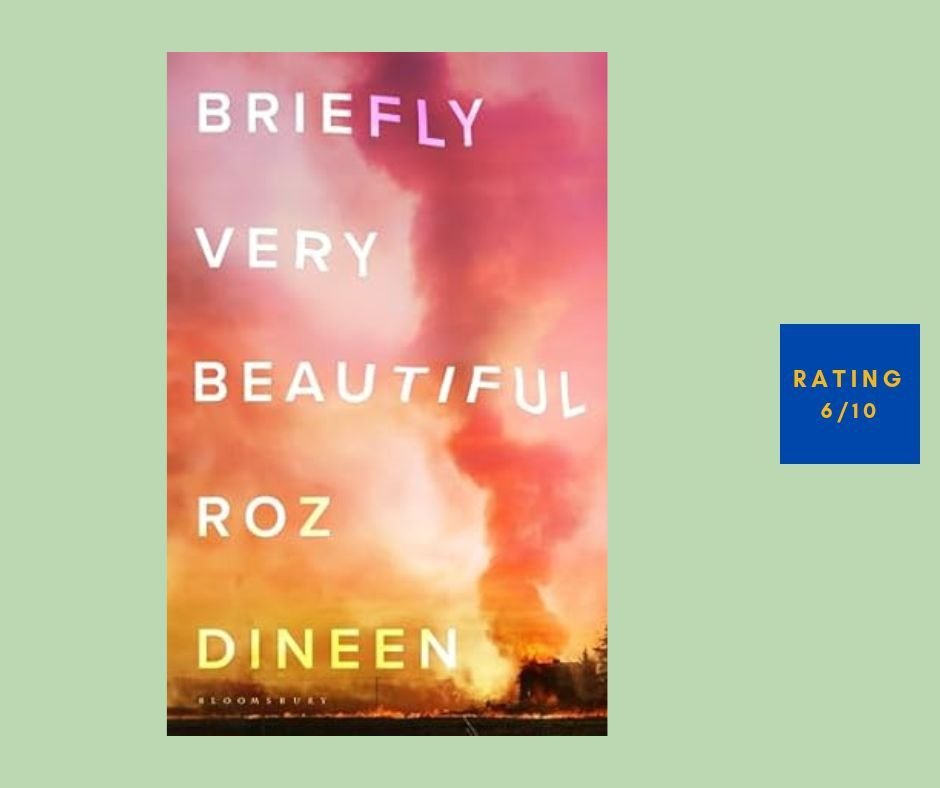
Dystopic fiction is running rampant and logically so. A debut novel, Briefly Very Beautiful is a claustrophobic, intense tale of a young mother with three young children, two of them brought to her by a husband now working as a medic in an overseas war. The world is steadily and catastrophically breaking down, from infrastructure to the American political order, and the air is becoming dire. The author writes heartfelt, close-up prose in support of this narrative of a human world gone mad and awry, told from a dense domestic viewpoint. When her city threatens to become unlivable, the woman sets off with her charges to search for sanctuary with her family-in-law, first in a gated estate, then over a border to a secluded property. Halfway through the engrossing story, the focus shifts to a story of familial dysfunction, hidden evils, and domestic betrayal, and I must confess I found the intricacies of treacherous human groupings and the hero’s responses, to be less fascinating than the background breakdown. Overall, this is an engaging, worthwhile read.

Cahokia Jazz by Francis Spufford [9/10]

Francis Spufford Cahokia Jazz review

A voluptuous stylist with honed storytelling chops and lyrical descriptive skills, Francis Spufford is rightly famed for his two previous novels. Golden Hill and Light Perpetual. His new novel, Cahokia Jazz, is a departure of genre but equally impressive and engrossing. Set in a counter-factual 1922 in which American Indians retained land and some power, in a counter-factual city near St Louis, the book is also a noir gumshoe classic, with a hefty police detective (brilliantly also portrayed as an ex-Jjazz pianist) clumsily pursuing a ritualistic murder. This world is ruled by American Indians, of a type steeped in Inca myths, and the author brilliantly weaves together the strands of the three intertwined groups (whites, Indians, and blacks). Every scene is drenched in the atmosphere of a rich, three-race city setting. I caught echoes of the Chinatown movie and Jonathen Lethem’s Motherless Brooklyn in the roughshod, smart exploits of the appealing detective. The plot can be expected to twist and turn, and so it does, all under effective control. Cahokia Jazz is a complex, engrossing, exhilarating literary/mystery mash-up that catapults towards an ending both startling and totally logical. If you haven’t experienced Spufford magic yet, dive in!

Boy Swallows Universe [9/10]

Boy Swallows Universe review

Based on Trent Dalton’s mega bestselling novel of the same name, Boy Swallows Universe, a lovingly crafted seven-episode streaming show, never flinches from the dark side of the original work. Eli Bell grows up in the harsh light of the bogan drug world of 1980s Brisbane, accompanied by his semi-savant older brother Eli. Even as his parents and stepfather sell and take drugs or alcohol, a naive optimism grips Eli, and both the actors portraying him over a decade, Felix Cameron (especially) and Zax Burgess, convey this superbly. The other actors in a busy ensemble are also superb, with special mention of Simon Baker as Eli’s agoraphobic alcoholic estranged father. The bleak yet somehow lovely background of Brisbane’s grungier suburbs is on full display with lush cinematography and the music score is evocative. The underlying book veered, in my opinion, toward the overly histrionic, but John Collee’s script, and the work of three directors, achieve a powerful balance that marries gritty reality, emotive aspirations, surreal elements, and narrative tension. Boy Swallows Universe is a triumph, definitely the highlight of the 2024 Australian movie/show scene and a worthy aspirant globally.

The Great Escaper [4/10]

The Great Escaper review

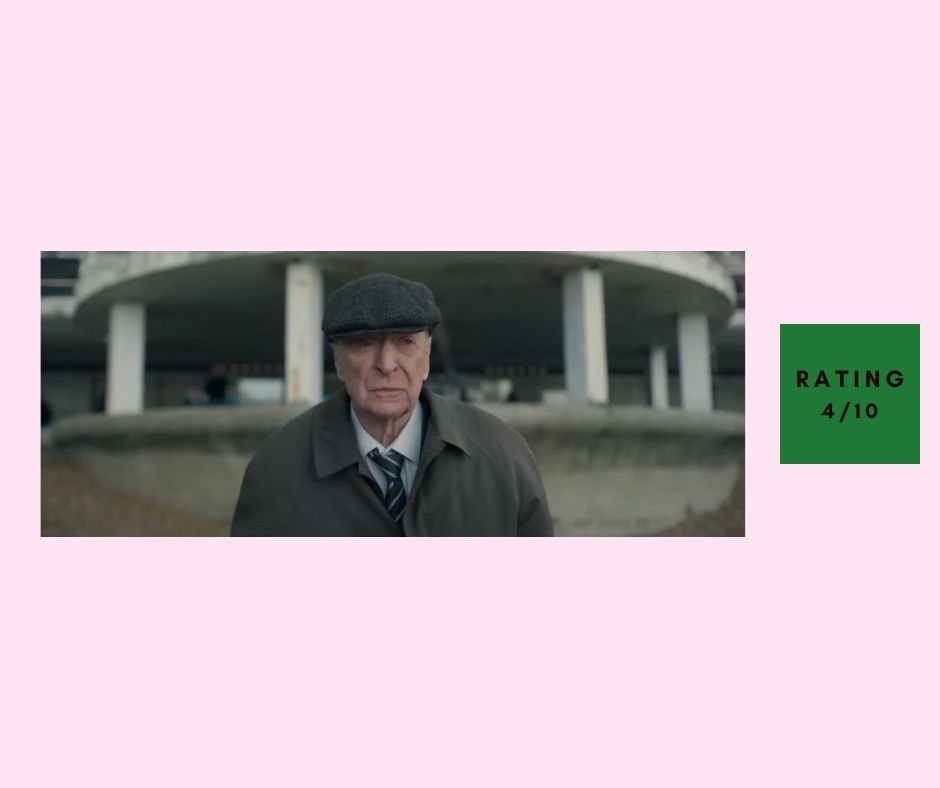
If someone were to pass me a magazine article, say, about a 90-year-old British WWII vet who gatecrashes the 70th anniversary of Dunkirk in France and becomes plastered on the front covers of newspapers … well, I’d read and mutter “interesting.” As a movie, The Great Escaper is a dull, drama-deficient failure. Michael Caine convincingly plays the vet shuffling with his walker but the lines he is given by the pedestrian script blunt his performance. Only toward the end is he allowed to shine a little and display real emotion, but by sticking to veracity the narrative can find no tension or friction. In theory, Glenda Jackson should work well as his wife, the two of them clearly meant to portray what it is like to be very elderly but still bask in seventy years of love, but her performance is all hammy edges and no traction. The music is abominably treacly and the supporting cast adds few sparks. All up, The Great Escaper might make sense if you adore World War II nostalgia but otherwise, skip it.

Annika Season 2 [9/10]

Annika Season 2 review

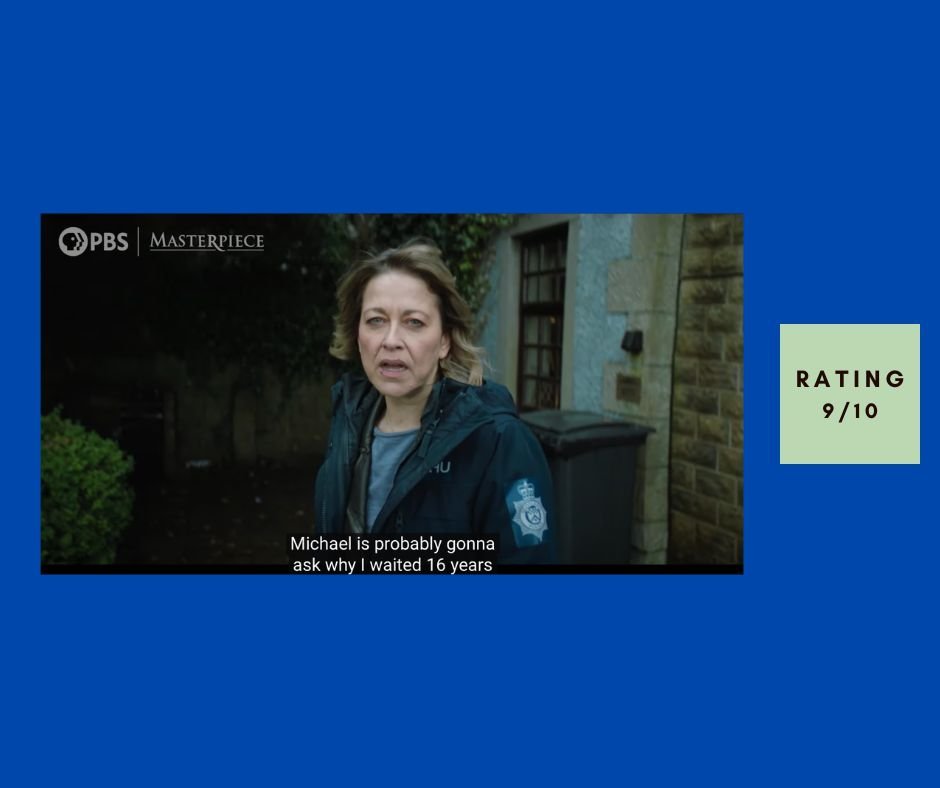
Season 1 of Annika startled me with its narrative device of the main character regularly speaking directly to the viewer, and it took me one and a half episodes to come to grips with the notion. I suspect that in many writers’/directors’/actors’ hands, musings, usually around a cultural or historical theme, and confessions would backfire badly, but in this case, the effect is stunning. Each episode of this procedural series is standalone, with the key Marine Homicide investigator solving a distinct murder, and somehow the chats-to-viewer mesh seamlessly with both the murder case and the evolving lives of the homicide crew. The script crackles with superb dialogue, Directorial control never falters, marrying action and investigation to scenes on and around Scottish waters. And, most important of all, Nicola Walker is brilliant in her portrayal of DI Annika Strandhed. As a bonus, the other bit characters are also portrayed wonderfully well; Jamie Sives is especially absorbing as DS Michael McAndrews, #2 in the unit and someone with longstanding linkages with Annika. Season 1 ended with a brilliant cliffhanger, a climax that spills over into the six episodes of Season 2 with satisfying cohesion, and Season 2 itself does not lack for a fine finale. Overall, Annika has proven to be a welcome surprise package.