The second album from Halifax band The Orielles showcases their off-kilter rhythms and melodies and phrasing. “Disco Volador” sounds like smart, funky style squirrels at work, shifting mid-song from funk to art-rock instrumental asides. Unlike many art-rock aspirants, the constant cleverness seems almost tongue in cheek. Breezy girl-band vocals glisten over the top of the equally commanding arrangements. The ten tracks on “Disco Volador” form a semi-sleepy melange of pop-rock styles that serves equally as work ambience or evening relaxant. Highlights include the jangling, woozy, chorus-rich “Come on down Jupiter,” the dance-cool flurry of “Bobbi’s second world,” and the cheesy cuteness of “Euro Borealis.” A sparkling late summer treat.
Giants of All Sizes by Elbow [7/10]
Elbow songs possess an instantly recognizable signature, the dense instrumentation and Guy Garvey’s expressive poetic voice, but they always startle by varying the emotional palette. “Giants of All Sizes” is, above all, pissed off, and the effect invigorates the band and Garvey’s lyrics. Gone are the more baroque and chunky experiments of recent releases, here we have nine songs that are recognizably brooding pop songs, if dressed in dark colors. The album plays out as a cohesive reflection on the now of Brexit, Grenfell, death, and so one. Opening track “Dexter and Sinister” has a familiar lurching rhythm with keyboard surges, plus piano twinkles, and Garvey is in fine song. “White Noise White Heat” rushes in a fierce outburst of heartfelt rage and sounds like teenagers. “Weightless” is a smooth lament. Elbow hit the heights but not as ascendant as they should have been, but regardless of the past, “Giants of All Sizes” is a splendid creation.
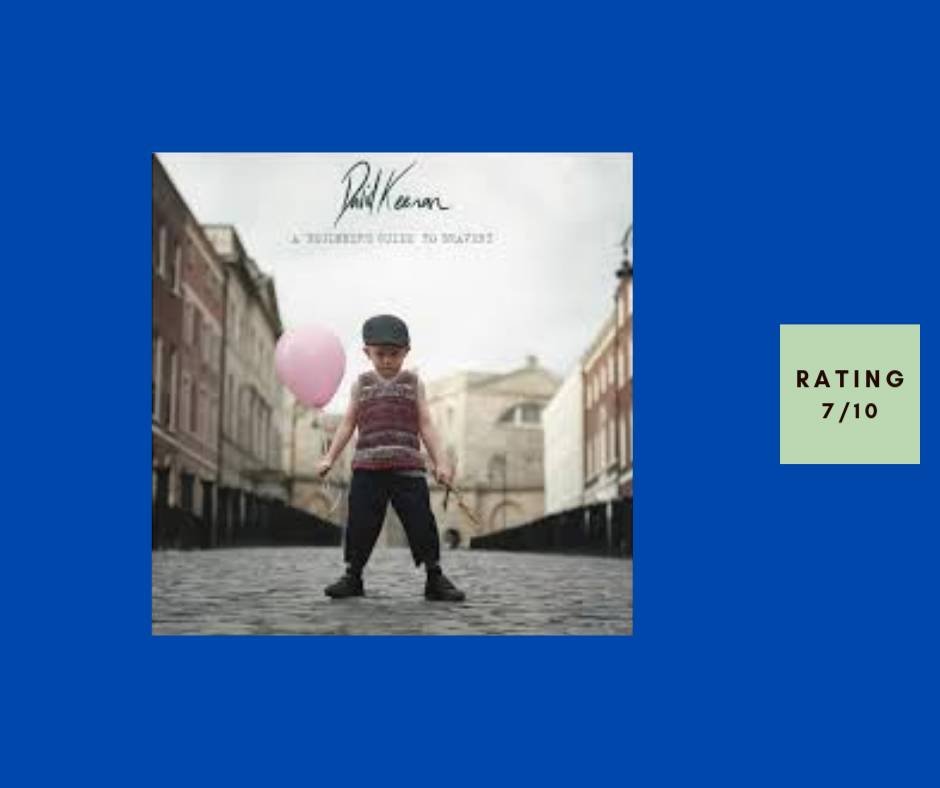
A Beginner’s Guide to Bravery by David Keenan [7/10]
“A Beginner’s Guide to Bravery,” the debut album of an oh-so-Irish elfin bard, inherits a long lineage of wordy, swooping, fiddle-led music, from perhaps even Van Morrison, certainly through Christy Moore, and especially Luka Bloom. A triumph of atmospheric wordiness, relentlessly eccentric, it often seems to substitute variations of instrumentation and rhythm for melodic variety, but over the course of “Bravery,” the listener (at least this one) sinks into the magic of modern Irish folk-rock. Highlights include the name-dropping “James Dean,” the fevered call to action of “The Healing,” and the long, rambling, feverish “Origin of the World.” Mark my words, David Keenan is one to watch out for.
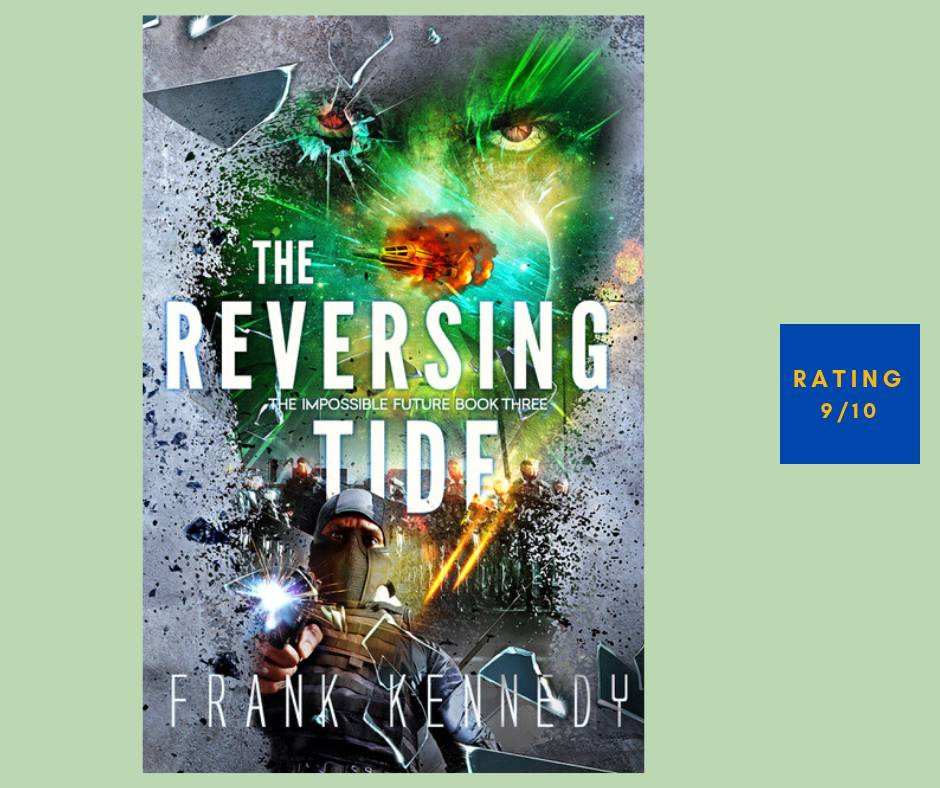
The Reversing Tide by Frank Kennedy [9/10]
There is so much space opera sci-fi out there but few authors can sweep you away like Asimov, for example, once did. Frank Kennedy is three books into his “The Impossible Future” series and “The Reversing Tide” doesn’t just sweep you away, it pummels you and spooks your mind and so much more. If the first two books were fast-moving, “The Impossible Future” is a rocket and you’ll need barely a day or two of engrossed reading to relish the latest high-concept thrills and spills as Samantha, part of the Collectorate nobility, and her lover Michael, irreverent loose cannon, battle the seemingly implacable rise of their former friend James, infused with the power of one of the Jewels. The action scenes are knock-me-down, the dialogue is sharp, the vast Collectorate world is astonishing, and Kennedy is a superb stylist. I particularly enjoyed the twisty, treacherous politics, on a par with the machinations in the novels of John Scalzi. Highly recommended.
The Dark Corners of the Night by Meg Gardiner [6/10]
My first Meg Gardiner serial killer thriller, “The Dark Corners of the Night,” the third in a series featuring FBI behavioral analyst Caitlin Hendrix, lives up to her reputation. This time Caitlin races to catch the Midnight Man, who terrorizes the suburbs of Los Angeles by slaughtering a house’s adults while leaving the children as shattered witnesses. Gardiner has a winner in her protagonist and she is a surefooted writer adept at maintaining pace. The plot journey is murky and fascinating and the extended character set is diverse and well-drawn. If there is a sense of deja vu in the storyline, that seems to matter little over the course of an evening’s breathless reading.
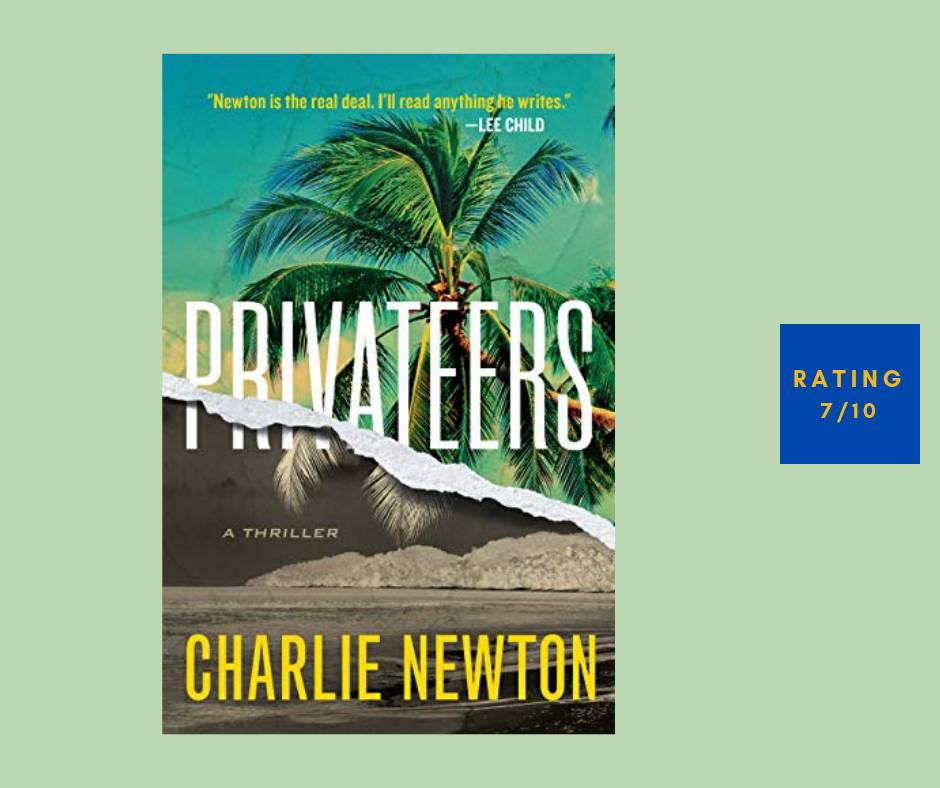
Privateers by Charlie Newton [7/10]
Indiana Jones is alive and well, if more scabrous, and he is in cahoots with two beautiful deadly women … Charlie Newton is one of the most propulsive, immersive thriller writers in town and in “Privateers,” he embraces and updates the mystery quest idea, with wonderful results. Bill Owens, a Chicago hustler of knockdown character and a hidden heart of gold, becomes enmeshed in a quest, using clues from lines of hidden doggerel, to track down a ransom’s fortune of gold looted from Haiti a century ago. A pell-mell plot careens through the Caribbean towards a finale that grows, incredibly, ever more fraught. Newton inhabits his characters, the exotic locales spring to life, and the dialogue is a treat. There is an element of those boys’ own adventures from my childhood but it’s such a pleasure to surrender to the pleasures of “Privateers” for an evening or two. Grab this and hold on for the ride.
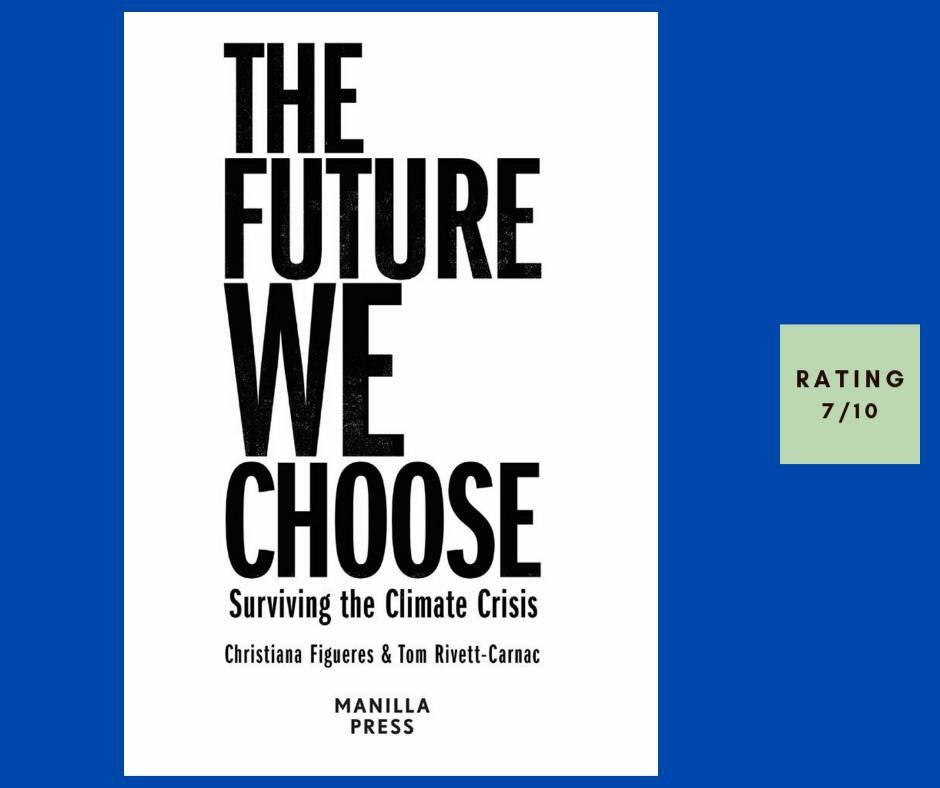
The Future We Choose by Christiana Figueres & Tom Rivett-Carnac [7/10]
What do you read about global warming? More facts and prognostications? For me, definitely yes. Nihilistic doom tomes? Again, yes for me. Rousing calls to action? Yes from me but most such seem to fall limp in my hands. So it is with great delight that I proclaim that “The Future We Choose: Surviving the Climate Crisis” is a heartfelt, well structured polemic that strikes home. Perhaps the reason the book succeeds is the fulsome pedigree of both authors, key architects and on-board managers of the landmark 2015 Paris Agreement. Christina Figureres, with the aid of Tom Rivett-Carnac, were instrumental in succeeding, beyond any expectation, in extracting commitments almost across the globe. They know about despair but they choose hope and they acted towards hope and they made it work, at least for that precarious moment in time. Now, in this book, the two of them present a stark choice over the next decade and then offer three “mindsets” to spur purposeful action and then ten chiming, broad-category actions. “The Future We Choose” is a pulsing froth of exhortation that, at least for me, rings intensely true. A wonderful book for this dark age.
The Boys Episodes 5 to 8 [7/10]
Captivated by Episodes 2 to 4 of “The Boys,” after an opening episode that titillated rather than thrilled, I approached the second half of Season 1 (the second season is on the way) with caution. What I experienced was nothing cathartic but rather a chaotic ride through a careening plot that smacked of impromptu decisions but nonetheless worked really well. Each episode advances the complex tale while developing a few of the characters’ stories. The acting remains consistent throughout and action scenes are spectacular. At the start of the series, the core character was reluctant anti-superhero battler Hughie (acted so well by Jack Quaid), in the middle the story of head vigilante Billy Butcher (Keith Urban in fine, roughshod form) took over, and what surprised me is that the arch villain of the overall tale, the king superhero Homelander (played with icy subtlety by Antony Starr) comes into his own towards the end, revealing subtleties in his character that ensure the climax is spectacular and surprising. Overall, the eight-episode Series is neither slick nor wholly realized, but is a striking, leftfield, adventure-filled ride. Recommended.
Inside Bill’s Brain by Davis Guggenheim [7/10]
Bill Gates the tech pioneer was a fascinating character but now that he’s a billionaire philanthropist, are we interested? “Inside Bill’s Brain: Decoding Bill Gates” makes the best case that yes, Gates continues to not only do stellar thinking work but can make a difference with his philanthropic billions. Documentary maker Guggenheim tells the tale over three episodes, interweaving his own open-ended chats with Gates (including a country ramble), Gates’s childhood, the history of Gates with wife Melinda, and three philanthropic goals – sewage control in third world countries; the eradication of polio; and the development of futuristic small nuclear reactors. I knew quite a bit about Gates and the childhood-Microsoft strand struck me as fully true. What impressed me is how true Gates remains to his geeky self. He still immerses himself in subjects with panoramic, fully in-depth reading, a tactic I like myself. The few moments of revealed emotion are genuinely touching. Overall, Guggenheim tackles a tough subject with digging empathy and intelligent staging, and I believe this documentary will stand the test of time as an insight into one superb geek’s impact over his lifetime.
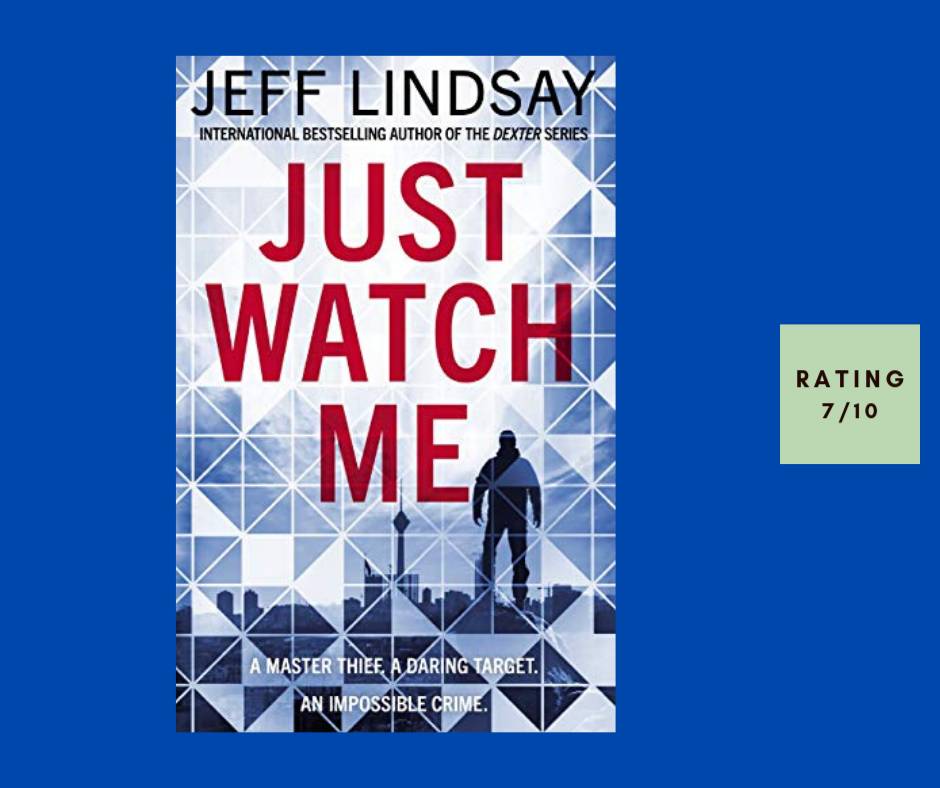
Just Watch Me by Jeff Lindsay [7/10]
Famous for the Dexter series, Jeff Lindsay now turns his attention, beginning with “Just Watch Me,” to a hero as equally unlikely and theoretically repulsive, namely Riley Wolfe, a juggernaut robber, a thief who can parkour across roofs, defeat any security system, and engage in elaborate disguises. In his debut outing, Riley accepts the challenge of heisting a mega jewel on show in New York. Much of the book is the fascinating unraveling of Riley’s tactics. As a counterfoil, we follow in the footsteps of an FBI agent patiently tracking Riley, in particular unpicking his murky past, in scenes welcome for a freshness of perspective. Lindsay is a zesty writer, not afraid to switch points of view and time periods while he presents the unvarnished Riley Wolfe (this man is not, repeat, not nice) in an unhurried fashion that paradoxically aroused this reader’s sympathies. (Is that how Dexter became kind of lovable? I don’t recall the first few books in the series.) The climax of “Just Watch Me” is a frenetic flurry of revelations and triumphs that seems both movie-ready but also subtly clever. Look, if I lay it on the line, this novel can read like pure-James-Patterson-plot-and-nothing-else but it worked at a second level on me, and I’ll be returning for Riley Wolfe #2.