Pitched for those in business, A Story is a Deal: How to Use the Science of Storytelling to Lead, Motivate and Persuade, by British author/journalist Will Storr, is equally a primer for writers and storytellers in general. The author, employing graceful prose and a clear logic, explores the history and nature of the story as it dominates our lives as humans. According to him, humans need stories all the time, for connection, for establishing and maintaining status, and for hope. Examples from all manner of spheres illuminate the book’s message, some of them direct, some of them unexpected. And the final section of A Story Is a Deal offers wisdom about how to start and sustain stories of any kind whatsoever. This is an exceedingly generous, helpful insight into something at the core of our beings. Recommended.
Tina (Mother) by Miki Magasive [3/10]
Tina (Mother), a heartfelt New Zealand drama clearly intended to tug at the heartstrings, hits its high spots in majestic singing scenes. The tale of a choral teacher rendered inactive by her daughter’s death in the 2011 Christchurch earthquake, and then impelled, somehow, to kick off a choir in an elite school … that is a story worth telling. As the choir aspire to winning The Big Sing, an annual inter-school competition, the plotline rapidly veers into Mighty Duck territory, and the film’s understated ambitions prove to be its flaws. Nearly all the characters are clumsy pastiches, the lead actor, Anapela Polataivao, is badly miscast. The final third of the film, intended to crescendo, is instead a subsiding mess. Tina proves to be most disappointing.
Small Things Like These [10/10]
Small Things Like These, directed by Tim Mielants and scripted by Enda Walsh, arrived with such high expectations, based as it is on one of the most superb novels (short enough to be a novella, actually) of the 2020s, the book of the same name by Irish novelist Claire Keegan. I am delighted to affirm this movie as excellence in content and execution. The storyline is simple enough: Bill Furlong, a quiet, hardworking small businessman, the owner and operator of a household coal delivery firm, experiences deep existential, historical agony when he stumbles across an egregious case of inhumanity at the powerful local convent. With five daughters, two of them already being taught at the convent, Bill can hardly afford to rock the boat, but searing memories of his own poor, fragile upbringing, compel him to action. The film both adheres closely to the plotline of the book and presents an entirely different overlay to the book, messing with small but significant plot particularities in ways that enhance and complement the novel. The cinematography, its muted, Irish-foggy colourings and the found sounds of the dingy local town, are beautiful to witness. The flow of the simple story is impeccable. But of course what sets the movie apart from all others I’ve seen so far in 2025 is the coruscating performance of Cillian Murphy as Bill Furlong. We spend most of the film on or close to his tormented, gentle face, and I doubt I’ll ever forget some of the scenes. The rest of the cast is also flawless, especially Emily Watson as the venal convent Mother Superior. Small Things Like These might not suit viewers attuned to superhero action boldness—this is an arthouse, oblique kind of film—but for anyone drawn to cinematic greatness, it is mandatory.
The Residence by Paul William Davies [7/10]
Knives Out was a refreshingly zippy Agatha-Christie-style pastiche film that has spawned a number of mimics. The Residence, its eight episodes all written by Paul William Davies, has a splendid conceit at its core: the chief usher of the White House is murdered during a state banquet and the entire audience is locked up while the super-investigator, in this case birdwatcher Cordelia Cupp (played with brio and nuance by Uzo Aduba), exercises Poirot-style mental gymnastics to tease out the well-hidden culprit. The cinematography is lush and stylised, the cast is admirable, and the dialogue crackles with wit. Can this constrictive dramatic notion sustain eight episodes? I must confess to doubts around episodes three and four, but after the midway point, The Residence takes flight and zooms home to a satisfying climax. First-rate entertainment fare.
Signs of Damage by Diana Reed [4/10]
A debut novel by Australian writer Diana Reed, Signs of Damage mines familiar, rich novelistic territory in exploring family dynamics and the mysteries of the past. When a family head dies, the funeral prompts his wife, two daughters, and various others to look back to a family holiday a decade and a half earlier in a French villa, when a visitor went missing for hours. The burden of epileptic seizures is explored with nuance. Jumping back and forth between present and past is handled deftly, and the characters hold great potential, but the plot labours the various unfolding secrets and the voice of the narrator lurches between people who sound much like each other.
Nesting by Roisin O’Donnell [9/10]
Well-regarded Irish short story writer Roisin O’Donnell’s debut novel Nesting tackles head-on the blight of male domestic violence. Confused and unconfident Ciara flees her Dublin home (for the second time, she returned the first time), with her two young daughters, to escape the relentless emotional bludgeoning and dominance of her husband. A familiar story in these times, and at first, reading the author’s close-up narrative account, I experienced that sense of familiarity as an impost. But the prose is impeccably crafted, full of lovely scene setting detail, and once I settled into the rhythm, the novel acquired the impetus of a thriller. Will Ciara succeed against her husband’s unremitting, cunning campaigns to persuade her to return? By the three-quarter mark, Ciara dons the mantle of a hero with an impossible quest, and the finale is achingly tense. Nesting is a beautiful, important literary work.
The Leopard [7/10]
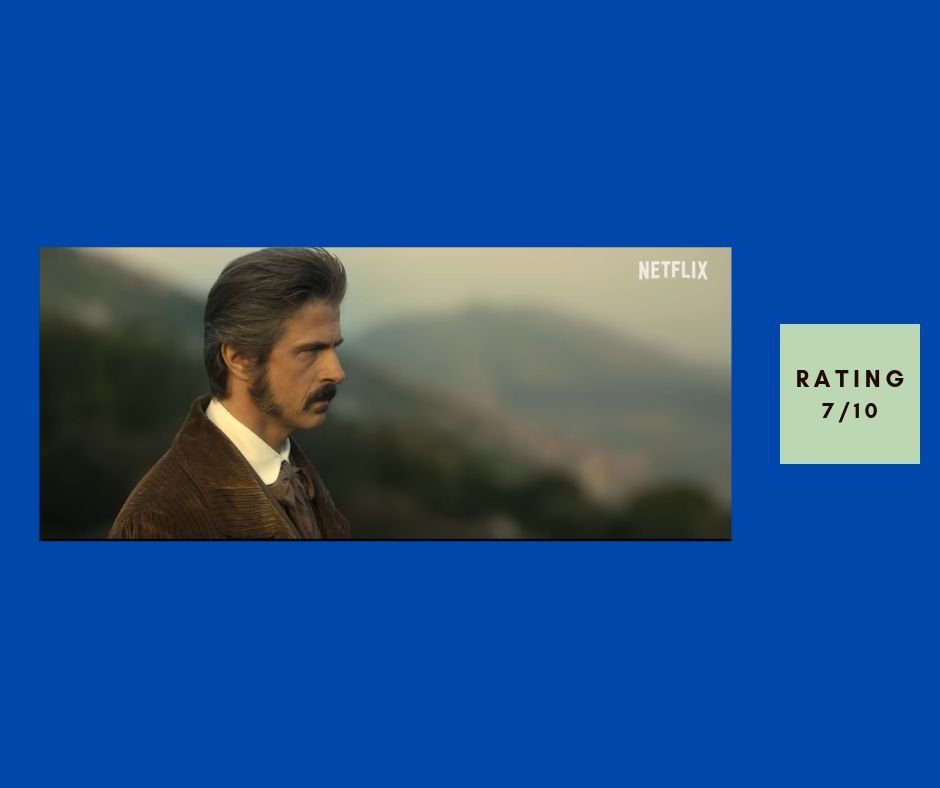
Who can forget the 1958 novel, The Leopard, by Italian writer Giuseppe Tomasi di Lampedusa, assigned to every schoolchild in the 1960s? Well, I for one cannot remember the book’s plot; all I recall is a sense of impending doom as the central Sicilian royal grapples with his loss of power. Now The Leopard hits the streaming screens with a six-episode series largely written by Richard Warlow. A historical drama set in Sicily during the mid-1800s, when Garibaldi united the provinces under the banner of Italy, the series is brilliantly lush in its portrayal of aristocratic opulence and dusty fields of poverty. Accompanying the visual pleasures is a bouncy, classical soundtrack that works, splendid costuming, a workmanlike cast (I enjoyed Kim Rossie Stuart as gravelly-voiced Don Fabrizio, in tandem with Saul Nanni, playing rebel Tancredi), and capable staging of the political complexity underlying the original novel. Against these credits, the underlying love story threatens to swamp the real business of the story and some of the scenes have the look of theatre staging. Overall, The Leopard intrigues and entertains without shining.
A Voice in the Night by Simon Mason [10/10]
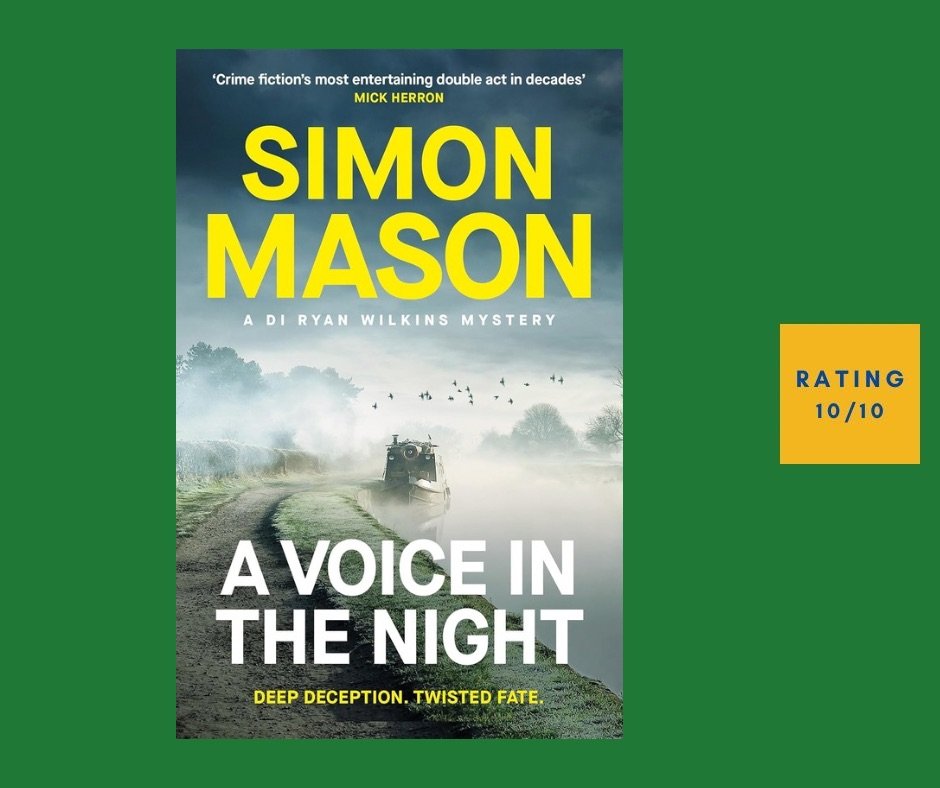
As an early devotee of Mick Herron (of Slow Horses fame), I took note when he praised an earlier instalment in British crime author Simon Mason’s now-four-book-strong DI Wilkins series. This “clashing duo” police procedural series features Detective Inspector Ray Wilkins, a handsome, posh-educated black investigative star, in tandem with and grinding against DI Ryan Wilkins, a trailer-trash opposite with instinctive investigative skills. Ray is smooth and cautious, Ryan brash and crass. Throughout the series, the author makes marvelous hay with the possibilities of this duality, bringing the reader to love both of them, even in opposition, as they often seem to be. The fourth book, A Voice in the Night, sees the Oxford-based pair tackling the baffling murder of an elderly professor in pyjamas, far from home. Unlike many crime writers assembling ongoing series, Simon Mason is utterly unafraid of upending the lives of his heroes, again and again, and in A Voice in the Night, Ryan in particular faces challenges that echo with classical tragedy. The author is an impeccable plotter and the writing, ebbing and flowing between lyrical place digressions, dramatic action scenes, and efficient procedural matter, is wonderful. As a prolific mystery reader, I cannot recall being taken with a book as I was with A Voice in the Night. Get it before Mason achieves fame.
The Ageless Brain by Dale Bredesen [9/10]
How many books on longevity/healthfulness have I read over the past three years, since a health scare prompted selfish interest? I have lost count. Mostly they end up being well-meant exaggerations by doctors or researchers bursting to tell the world the new good news. The Ageless Brain: How to Sharpen and Protect Your Mind for a Lifetime by physician Dale Bredesen can spiral into overkill but it stands above the pack by enunciating clearly the advances in cognitive science over the recent and earlier decades. And the good doctor runs a clinic devoted, apparently successfully, to a protocol that does exactly what the book’s sub-title says. The chapter detailing his protocol (which includes three biomarkers for early identification of cognitive downturn, something I’d never seen before and now intend to pursue) is worth the price of the book alone. But the entire book, expressed clearly (if sometimes breathlessly), is a master class in scientific communication. The Ageless Brain is just the book for you if you have interest (theoretical or self-centered) in how to stave of the cliche of the aging brain.
The Åre Murders [5/10]
Scandi-noir streaming series are a staple for many, and The Åre Murders came highly recommended. A procedural set in stunning Swedish snow territory, it features two mysteries, one of three episodes, one of two. A Stockholm policewoman, sheltering from controversy back home, arrives in this bucolic setting just as a savage murder is discovered, and she inserts herself into the team of a stolid investigator struggling with his home situation. The crucial murder-solving plots are well constructed, with canny McGuffins, so The Åre Murders makes for diverting viewing, but this first season is flawed. The two core actors are solid but perform flatly in emotional scenes, the plot alternates stylish motion with clunky missteps, and flatness pervades chunks of each episode. This may be for you but I found myself shrugging.