Andor Season 2 [9/10]

Andor Season 2 review

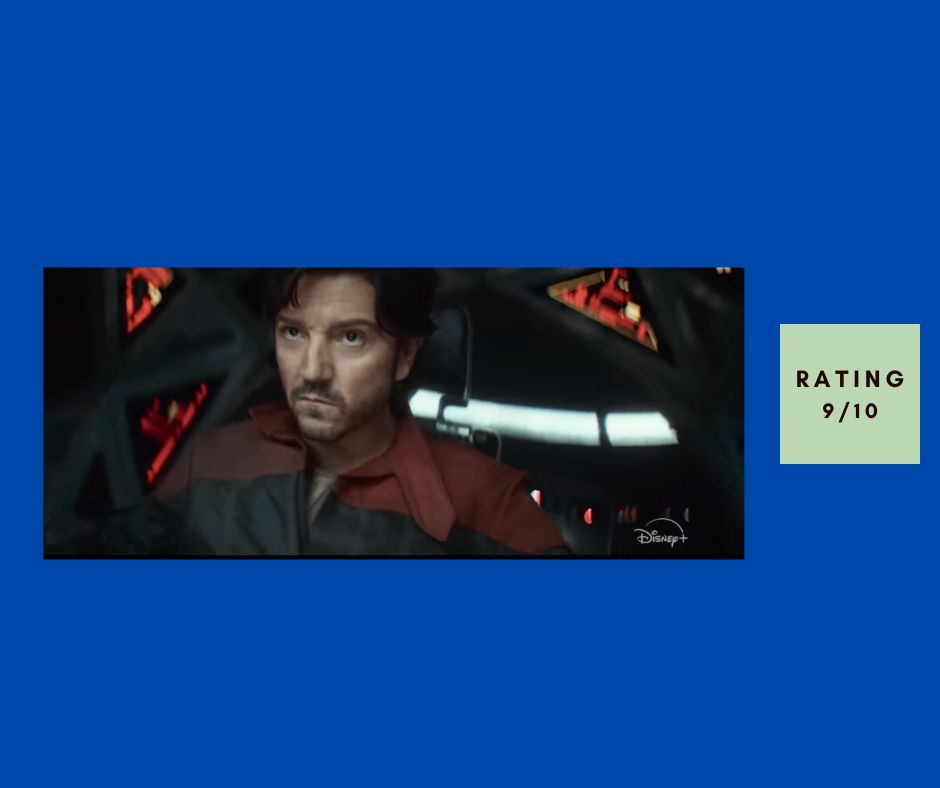
Star War fans are … well, a word would be fanatical. I’m not one and skipped most of the spinoffs, but I enjoyed the Mandalorian offshoot, and now I can report that the two-season Andor (there will be no Season 3) is magnificent. While Season 1 was most impressive (see my review), Season 2 takes full advantage of its length (twelve episodes of just under an hour each) to slowly bake in a plot that cooks and cooks and cooks until the show is clearly not just about Andor the hero (Diego Luna nails the role and will be remembered for it), not just about a particular early episode in the longstanding rebellion against the (evil) Empire, not just a complex concoction of fine character studies, but eventually a rousing call to fight for freedom against tyranny. The current-day echoes are obvious. Season 2 includes some frighteningly tense battle and escape sequences and its plotting and direction are both flawless. Whereas I had minor quibbles about the scenery and music (oh that horrid old-time orchestral swelling nonsense the Star Wars franchise is fond of!) in Season 1, the finale season tempers both those aspects so that the viewing experience, long as it is, flows easily. All up, Andor is a must-see for anyone interested in science fiction complex and deep enough to compete with arthouse movies.

Dusk by Robbie Arnott [8/10]

Robbie Arnott Dusk review

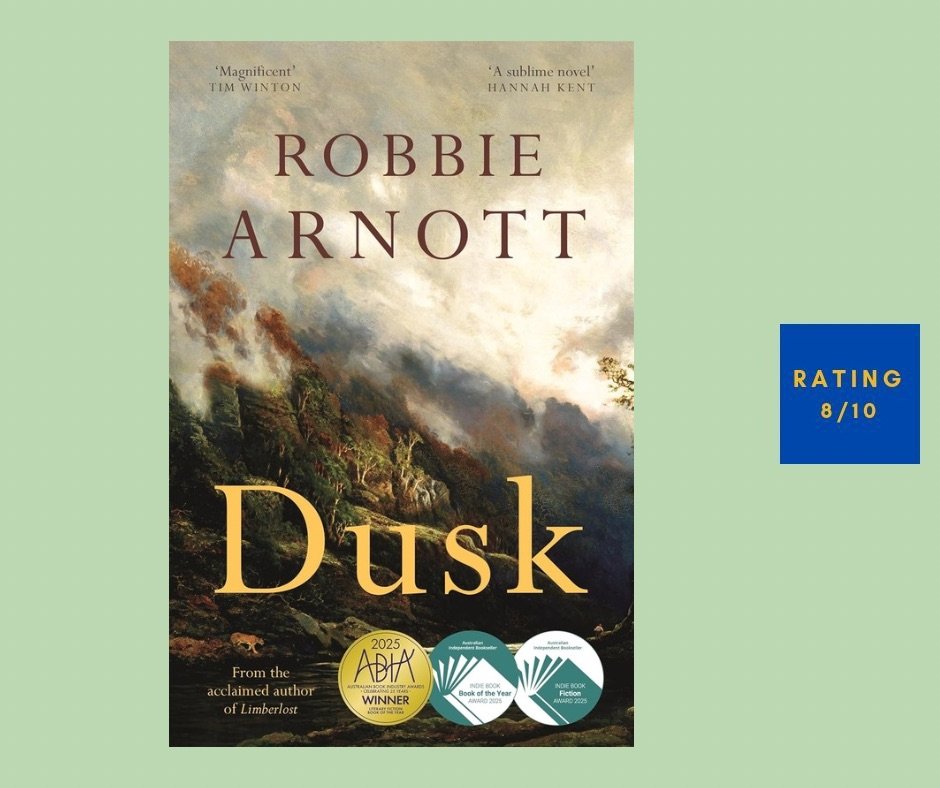
Word of mouth acclaims the lyricism of Tasmanian author Robbie Arnott’s fiction, especially in relation to the natural world. Dusk is my entry point into his oeuvre and I admit I’m smitten. The storyline seems deceptively simplistic: knockabout twins hear about a bounty on a fearsome, rogue puma, and they ride into the mysterious highlands in pursuit of a chance of money. What they encounter, when shaped by a superb novelist like Arnott, is both stunning natural beauty and wildness, and the best and worst of humanity. The author’s luminescent, rhythmic prose (redolent in parts of Cormac McCarthy without his clipped phrasing) lights up every page, and his heartfelt dissection of the characters of the twins, plus a surefooted, twisty plot, drive the reader through a read that only occasionally founders on excessive explanatory rumination. The climax is brilliant, just brilliant. Dusk represents wilderness-centered storytelling at its best.

Fire by John Boyne [7/10]

John Boyne Fire review

One of the most thoughtful and capable novelists of recent times, intent on exploring all manner of aspects of humanity, John Boyne had embarked on a quartet of novellas organized around modern issues of abuse and misogyny, The first, Water, was riveting, the second, Earth, proved to be darker, less involving, but still thoughtful. The third novella, Fire, establishes its baseline plot in Boyne’s customary surefooted way: Gilda, a renowned skin graft surgeon presents a privileged life of high earnings, prestigious house, fancy car, but underneath she leads a terrible, second life, a life perhaps instilled by a dark, dark childhood. The theme is clear: behind the presence of evil, nature or nurture? No plot spoilers here, but this novella’s subject matter is pitch black and although the author’s stylish prose and consummate grasp of timing renders a quick, exciting read, Fire does not have the grip of the earlier two. With all the best will in the world, I was unable to find my way into the character of Gilda, with the result that a certain emptiness reigns at the end. Fire: compelling but distanced, a vital read nonetheless.

The Women by Kristin Hannah [7/10]

Kristin Hannah The Women review

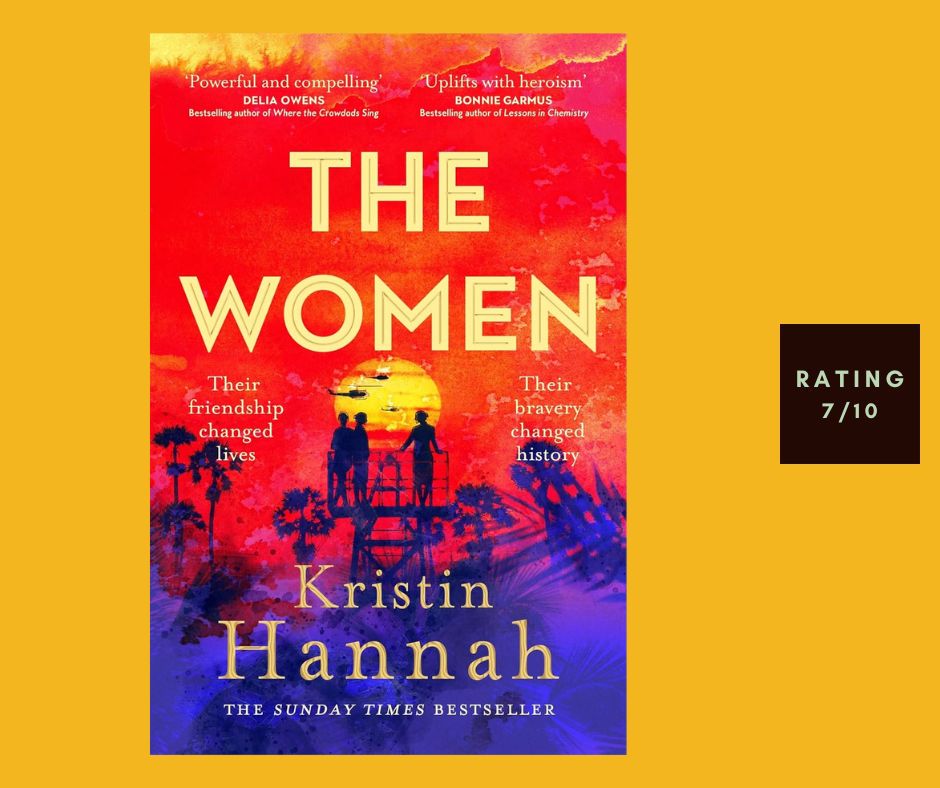
Not having read novelist Kristin Hannah before, I came to The Women because its subject matter, the experience of female combat nurses (in an era when combat nurses were overwhelmingly male) in the Vietnam War, struck me as instructive not only historically but for our present times. Let me be direct: The Women is a novel in two parts. The first half, covering the two-year combat experience of “Frankie” McGrath, a callow upper-class Californian, in two of the Vietnam combat hospitals, one of them in the territory eventually overrun during the 1968 Tet offensive, is thrilling and moving. This half is superbly, graphically written, depicting unadorned the horror of that war and indeed all wars. On the basis of that fifty percent, I recommend The Women wholeheartedly. The second half, recounting a Vietnam veteran’s postwar travails in a home country suddenly against the war (as it should have been), full of tragedies, mistreatment, PTSD, and female comradeship, could have been written by a different author, for it lurches rather than flows and falls into near-romance-category simplification. The author’s plotting holds up to the climax, so the overall read is enjoyable, but at the end, I found myself wishing for a different, much deeper and much more resonant postscript half. By all means, buy and recommend The Women, for this is an important tale; you may find yourself more attuned than I to the author’s late stylistics and emotionality.

Karla’s Choice by Nick Harkaway [10/10]

Nick Harkaway Karla’s Choice review

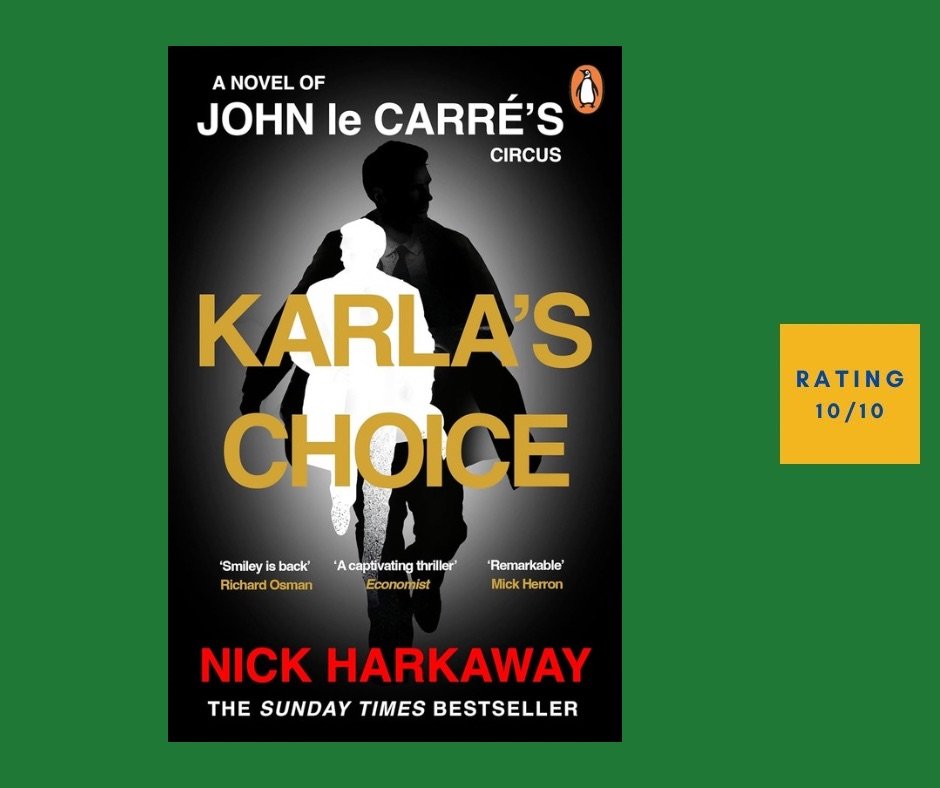
Upon hearing that John le Carré, spy novelist maestro, has a novelist son writing an additional, ninth volume in the George Smiley canon, what is a sensible reaction? I suggest to you most readers would be as skeptical as I was. Yet it only took a few pages of Karla’s Choice to make me gasp with astonishment. Nick Harkaway seems to have stepped right away from his prior seven novels and imbibed his father’s genius. On the page, Harkaway reads like, sounds like, and feels like John le Carré, to an amazing and gratefully received extent. For Karla’s Choice is brilliant. Set at the height of the Cold War in 1963, it stars, of course, George Smiley, rotund, mild-mannered super spy, who has resigned to restore his marriage. Summoned for a quick temporary job when a Soviet killer sent to assassinate a Hungarian emigre in London defects, he plunges in. An intricate game of intricate spying ensues, behind which sits Smiley’s nemesis, and the book’s plot roars along with great gusto. Best of all, Harkaway’s prose is pitch perfect, that rolling deluge of rhythmic, complex paragraphs. That the grand master’s son should produce the best spy novel of 2025 startles me, but don’t take my word for it, run to buy Karla’s Choice.

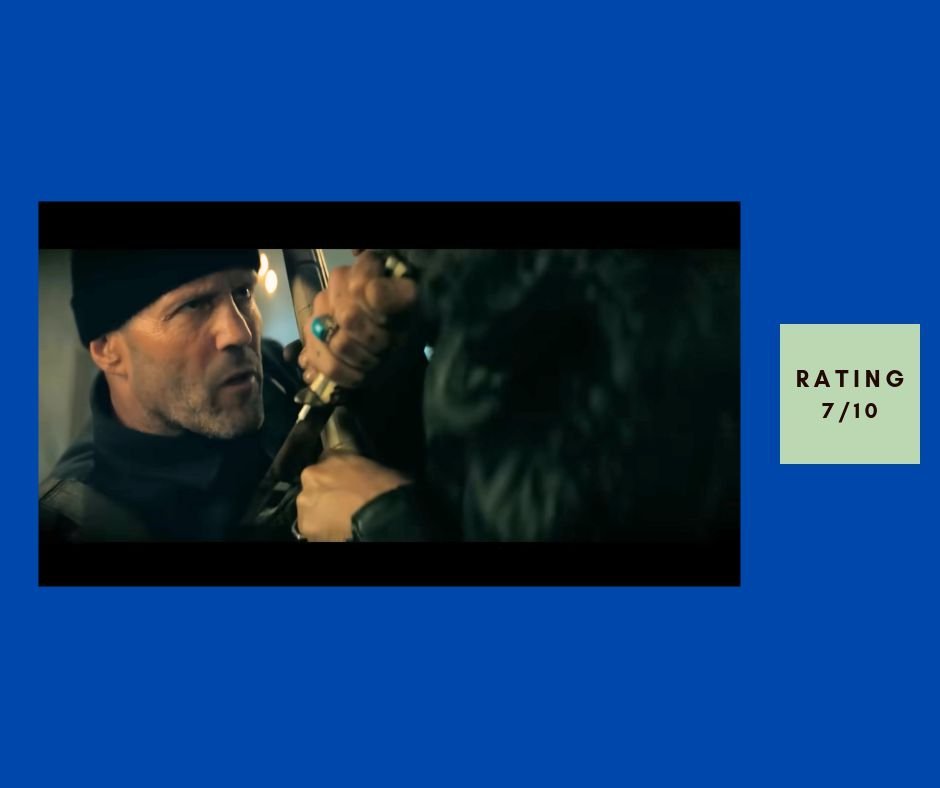
A Working Man [7/10]

A Working Man review

A Jason Statham movie is an action flick of compendious violence, softened a bit by a story of reluctant, emotional heroism. Following the pattern of The Beekeeper, A Working Man situates Statham as an ex-super-soldier now working as a construction site foreman struggling to keep seeing his cute young daughter. When the construction company owner’s angelic daughter is kidnapped by human traffickers allied to Russian mafia, the “working man” is let loose; much choreographed action ensues, much blood is spilled. I make A Working Man sound puerile. Let me say, rather, that if stylized violence in entertaining thrillers does entertain you (as it does me, in small doses), then this is a perfectly acceptable means of whiling away an hour and a half. Go for it…

Twist by Colum McCann [9/10]

Colum McCann Twist review

Colum McCann’s eighth novel, in a sequence of wildly eclectic novels, Twist, presents as some kind of thriller tackling the weird world of undersea cables but is really a most literary, elusive beast. A washed-up journalist travels to South Africa and then up the African coast with a huge ship that repairs breaks, captained by mysterious, super-capable John Conway. From the start we know Conway’s fate but what happens and why? Those mysteries are pursued with slow but graceful, unstoppable pace, the book digging into the journalist’s self-disgust and Conway’s unknowable past and even more unknowable future motivations. Ultimately, the novel is an ode to the riddles of the human heart and mind, but in the telling, it is an engrossing examination of the arcane world of ubiquitous, scanty cables straddling the globe down in the depths of the sea. The author’s style resembles the semi-poetic but precise beauty of his earlier novels but is even more clipped and roughly hewn, so that the read is both smooth and rocky. Only after the end, only after reflection on the questions unanswered, do we appreciate the mastery employed in Twist, and the book’s existential deepness. I cannot recommend Twist to everyone, suspecting some will find it murky and complex, but if you are up for modernity and soul-searching, it will amply reward.

We Do Not Part by Han Kang [8/10]

Han Kang We Do Not Part review

Nobel Prize winning novelists tend to be oblique, highly “literary,” the type of writer we hope to sample and admire but tend to slide past. Thank goodness I did launch into We Do Not Part, the most recent book by the Korean winner of last year’s Nobel. When I say “launch,” perhaps I mean “wade into,” for the book’s introduction is a no-holds-barred, strange section in which the heroine, a novelist with terrible health, flirts with starvation and suicide, all alone. Until she receives a summons from an estranged longtime friend, in hospital with severed fingers… When the writer is bestowed a quest to go rescue the friend’s budgerigar on the remote southeast island of Jejun, the reader is quite unprepared for the phantasmagorical trip to reach the bird and, from there, the real topic of the novel, the unfurling of a documentary film project pursuing the 1948-1950 anti-communist massacres of tens of thousands, including, it turns out, the hospitalized friend’s family. If my description sounds unhinged, the novel does leap from the ordinary to the examination of genocide, yet Han Kang maintains pinpoint plot precision. The writing is lyrical and figurative, the prose lusciously descriptive, the scenes hallucinatory. The net effect is a stunning, angry, inconclusive examination of loyalty, art, morality, and amorality. We Do Not Part is a claustrophobic yet controlled semi-masterpiece.

Culprits [8/10]

Culprits review

An exuberant yet measured thriller, devoted equally to twisty action and characterization, Culprits is largely the child of J Blakeson, a director/screenwriter (I couldn’t find out what the “J” stands for) who has a pedigree in similar shows. The essential story idea is brilliant: a mastermind thief (Dianne Harewood, played with chilling menace and intelligence by Gemma Arterton) assembles a crack burglary team to steal a fortune from a seemingly impregnable fortress; a few years later, the team, living around the world with false identities, finds it is being hunted down (mostly by Ned Dennehy, evil-looking, as the evil Devil). What distinguishes Culprits is that it is told from the viewpoint of Joe (formerly David, codenamed Muscle), played thoughtfully by Nathan Stewart-Jarrett. Joe is about to get married to his boyfriend (with two kids) in America and he provides the sense of humanity in the film, albeit a tenuous one, for Muscle lives up to his name as the eight episodes become steadily more crisply and amorally violent. The film romps around the world in high style, is beautifully filmed, and conforms to a back-and-forth-in-time script that works well. Culprits is, within the genre of the bloodthirsty heist thriller, a refreshingly kinetic and intelligent entry. Most watchable and a bit more than that…

Adolescence by Stephen Graham & Jack Thorne [10/10]

Adolescence review

Fiery, immersive actor Stephen Graham has teamed up with screenwriter extraordinaire Jack Thorne to make Adolescence, a four-episode series revisiting the terrain of Lionel Shriver’s We Need to Talk About Kevin, transplanted into the age of social media. A twelve-year-old boy, Jamie, is arrested for the murder of an older girl. His working-class family suffers. Those two sentences of plot description encompass a semi-thriller (did he do it?), a morality play (what is evil, is it nature or nurture?), and a gritty look at modern adolescent life. To complexify a simple plotline that is anything but simplistic, Adolescence is directed by Philip Barantini, fast becoming famous for single-take long scenes, and each of the four episodes is one seamless, choreographed weaving of the camera between characters. The four episodes (without any spoilers) are diverse, encompassing a murder investigation; a school exploration; a single-room, two-person drama; and a family postscript. All four work well; one is chilling (this viewer experienced nightmares). Throw in superb acting, especially by Owen Cooper as enigmatic teenager Jamie, and Adolescence feels like 2025 cinema at its peak, albeit a most uncomfortable and cryptic peak.