All the Old Knives [5/10]

All the Old Knives review

Olen Steinhauer pens some of the most sparkling, enjoyable modern spy fiction in the genre, and I read the book All the Old Knives some years back, enjoying it. Luckily I could not recall the plot twists, so I came to the movie version, ”All the Old Knives,” with no spoilers and much anticipation. The plot is clever: a spy comes to a posh dinner in California to interview his former love, also a spy, about a terrible hijacking disaster seven years earlier in Vienna. Who was the rogue back then? For the first half, this filmic rendition sparkles: the key leads of Chris Pine as the interrogator, and Thandiwe Newton as the interviewee, work well while the setup and backstory are unfurled. The shady, shabby world of espionage is well conveyed. But the second half flags badly, with a classic twist at the end that I remember being shocked by with the book, but now unfolds so clumsily telegraphed that the climax (both the leads fail here) is a damp squib. Oh, for espionage thrillers to sparkle!

In Moonland by Miles Allinson [6/10]

Miles Allinson In Moonland review

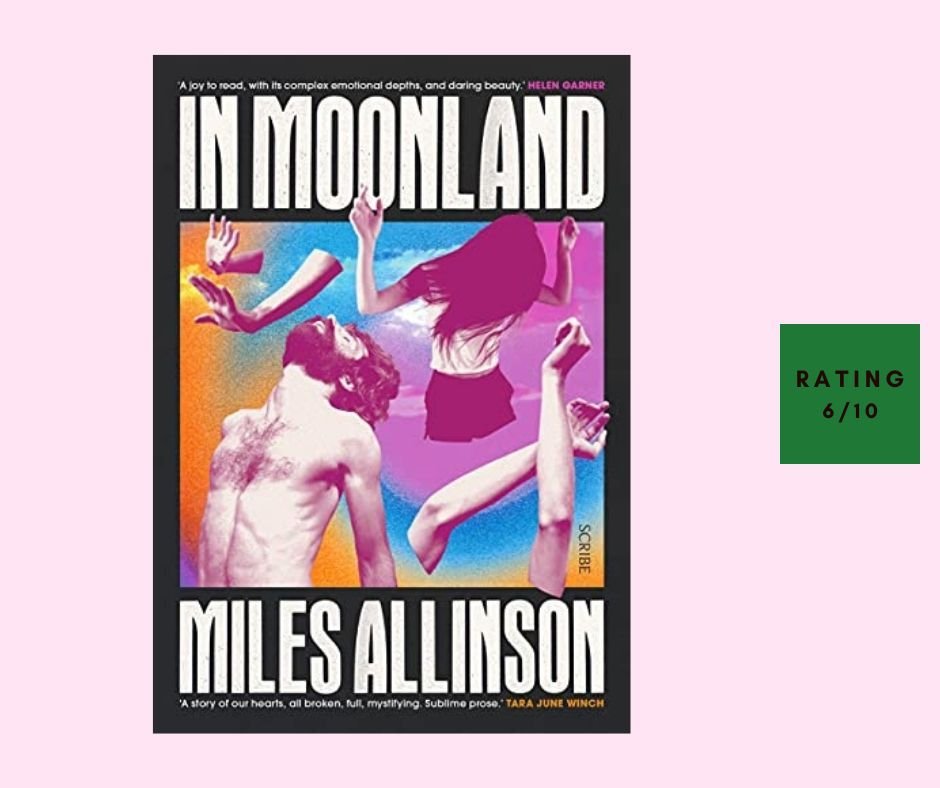
An intriguing novel about three generations in a family, spanning a wannabe hippy in an Indian ashram, his son in present-day Melbourne struggling to find meaning, and the granddaughter in a dystopian near future, “In Moonland” wrestles with family bonds and quests for transcendence. The author is a commanding stylist, inhabiting each of his different characters and their environments with ease, and the writing is precise yet supple.

Superbly written, In Moonland struck me as a tale with little modern-day plot momentum, almost a collection of evocative, yearning short stories. An enjoyable read, it left me unfulfilled at the close, but I’ll be sure to read anything the author tackles, such is his skill.

The Ipcress File [9/10]

The Ipcress File review

Recently bemoaning the dearth of sparkling thrillers, I came to the eight-episode streaming adaptation, ”The Ipcress File,” of Len Deighton’s classic 1962 spy novel (which I had forgotten was, incredibly given its stature now, his debut) with rank trepidation. I need not have fussed, for this rendition, scripted by John Hodges and directed by James Watkins, is superb from the opening scenes. Capturing perfectly the 60s vibe, the Cold War backdrop, the period placement, and Deighton’s exaggerated but oh-so-true-to-the-times plot, it powers along with precision, thrills, and wit. Joe Cole, whom I’m watching in Peaky Blinders in catch-up mode, is vastly distinct as neophyte secret agent Harry Palmer from Michael Caine (who starred as Palmer in three films from 1965) but just as effective, never playing a false note and easily warmed to. The script increases the class aspect of Harry Palmer, a move executed with elegance. Lucy Boynton is stellar as fellow spy Jean, here given a much enhanced role, and Tom Hollander shines as Dalby the meister-spy. The theme music and soundtrack are aptly nuanced and the cinematography is wonderful to watch. Pacing of the six episodes proceeds cleverly, with a rather blithe early mood darkening considerably by the end.

All in all, The Ipcress File deserves to be classic spy movie material and I hope Season 2 can be confirmed soon.

Prey by Dan Trachtenberg [6/10]

Prey review

I never watched the original Predator movies but if “Prey,” a prequel set 300 years ago among a Comanche tribe, is any guide, those thriller/horror movies involved a futuristic killing machine (able, for example, to become invisible) who comes to town to battle the handiest warrior around, with lots of click-click-clicking (its signature sound when unseen) and foulsome roaring and grotequeque mayhem. I am not complaining, for I knew the terrain when I began watching, and I knew that the two narrative levers of the film would be horrid dread and the intellectual puzzle of how the hero would outwit such a capable enemy, and, truth be told, much of Prey is commendable. Amber Midthunder does a credible job as Naru, the female warrior unjustly dismissed by her tribe and indeed the Predator. The cinematography is splendid and atmospheric, conveying an olden-days world. The CGI is splendid and the action scenes rock. What prevented me from moving from mindless enjoyment to genuine respect was an unexpected lack of gasping terror, something I can easily fall into. Quite why the encroaching tension and the ravening monster left me nonplussed is not clear to me, but you may well differ, you may well find Prey a shining example of this genre.

The Responder [9/10]

The Responder review

The Responder,” written by ex-cop Tony Schumacher, follows a car-bound first responder over a few nights, with his life spiraling out of control as he battles what is effectively PTSD. A tableau around the cop, including his family, two drug addicts, a rival cop, a drug dealer friend, and a partner foisted upon him, swirls and builds with a meticulous plotline. But it’s the standout acting performance of Martin Freeman, so gritty and realistic and human, that drives the six-episode series. This is unvarnished reality without melodrama (and featuring accents that almost mandate subtitles), and it works a treat. Over the first four episodes, the dramatic build-up almost becomes unbearable. The camerawork in Liverpool is superb.

A sense of bleakness pervades the series from the outset and it can be grim going in the second and third episodes, but towards the end, a sense of redemption and exhilaration seems to inhabit our hero. The final episode of The Responder is a cracker, and the entire streaming show is highly recommended.

Hothouse Earth by Bill McGuire [7/10]

Bill McGuire Hothouse Earth review

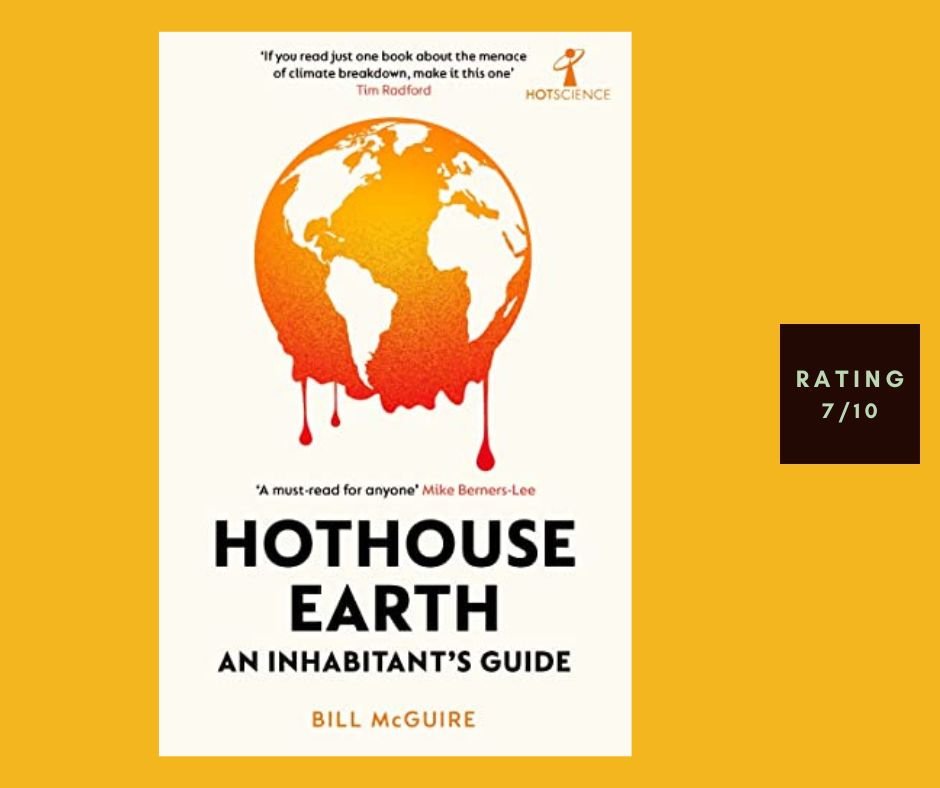
Bill McGuire, a British volcanologist of repute, has, with his “Hothouse Earth: An Inhabitant’s Guide,” written a steely-eyed post-COP26 assessment of Earth’s and humanity’s prospects within the unfolding climate crisis. It is sure to ignite yet another hot debate about the plusses and downsides of doomsaying but the author, although bleak in his worldview, is never less than fair with his judgments. He wastes little time with the denialists, instead laying out the science, including the gaps in climate science and the unknown risks with tipping points, and then walking through the upcoming predictions for heat, floods, fires, storms, famines, diseases, and so on and so on. I expected to be laid low by his confident pessimism (the likelihood of +1.5C are slim and +2C is at risk) but instead came away much better informed (and, given that I read a lot on the subject, that is itself a wonderment with this book) and ready for witnessing and action. Hothouse Earth indeed: you must devour it and weep and gnash teeth and take positive steps.

The Woman in the Library by Sulari Gentill [6/10]

Sulari Gentill The Woman in the Library review

Channeling the gentle mystery authors of the golden years, but with a modern edge, “The Woman in the Library” is a clever puzzle about four strangers seated together in a Boston library when a terrified scream in another room signals a murder. Who dunnit? Add a cunningly crafted meta story encompassing the author of this whodunnit and her mysterious overseas correspondent and you get an entertaining one-sitting mystery that is readily recommended. The author, a prolific historical crime fiction writer, controls plot and pace confidently, with a close-up, easygoing style. I must read too many crimmies, because I found the surprising endings slightly unsatisfying, but that is a minor quibble, one that never stopped me turning the pages rapidly. A mystery author to be followed … and The Woman in the Library is a welcome outing.

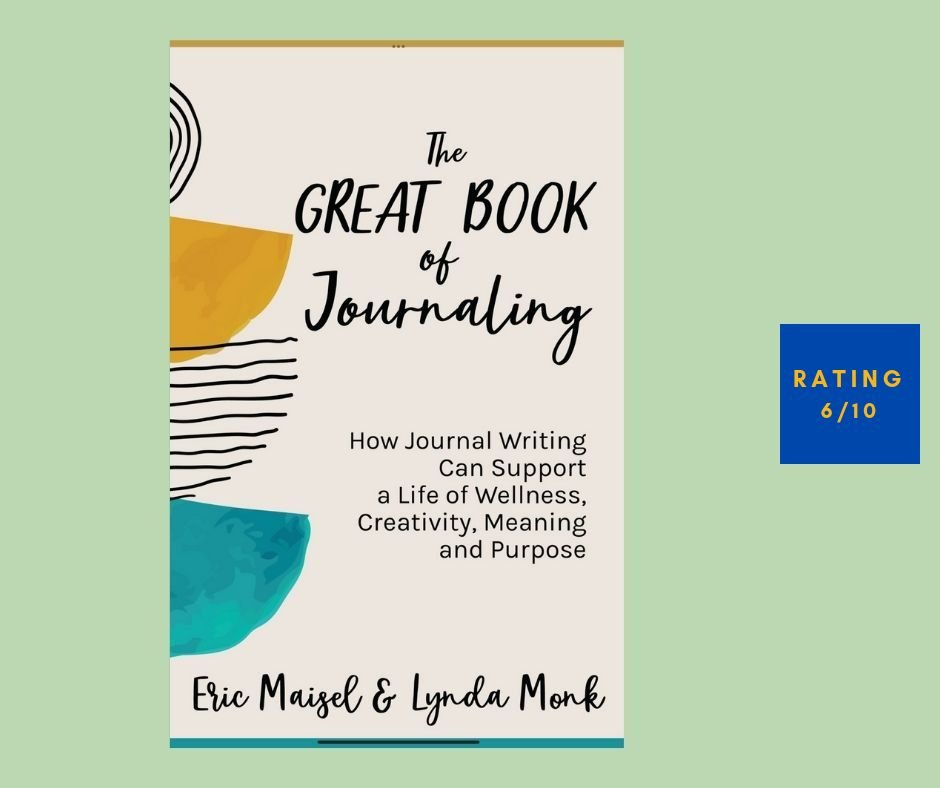
The Great Book of Journaling by Eric Maisel & Lynda Monk [6/10]

Eric Maisel Lynda Monk The Great Book of Journaling review

The Great Book of Journaling: How Journal Writing Can Support a Life of Wellness, Creativity, Meaning and Purpose” is an exuberant potpourri of essays/lessons celebrating and extolling the ancient art of journaling. If, like me, you’re a longtime journal writer, you will be on the lookout for fresh approaches amongst the forty or so contributions. I took away fascinating insights into journaling with children, treating the journal as a legacy, using the journal as a book project springboard (which is in effect what Helen Garner’s magnificent published diaries amount to), specifically tackling life transitions, and the combining of writing with other materials.

If you are pondering introducing a diary/journal into your life … well, this tightly edited collection is packed with inspiration and advice. A few of the pieces struck me as overtly promoting contributors’ own books about their journaling “systems,” but even these held interest. The Great Book of Journaling is a timely, sprightly, inviting compilation put together in a manner to compel attention.

The Untaken Path by Frank Kennedy [8/10]

Frank The Untaken Path review

I can think of few hard science-fiction authors as ambitious as Frank Kennedy, who with ”The Untaken Path” has woven seven books of space operatic magic (the series is called Beyond the Impossible) . And he is not done yet. The series’ plotline has twisted and caromed, ever expanding within an empire of space into alternative universes, and there has not been a moment when the author has not been firmly in control. A truly impressive cast of characters, some as reprehensible as anything in Game of Thrones, has variously been featured in the first six books, and now in The Untaken Path, they all come together, humans and immortals who waged bloody war against each other but now must unite against an even greater danger. The book features a wonderfully realized interstellar unifying conference, its politics as intelligently presented as anything by John Scalzi or Arkady Martine. And in a twist weirder than any yet in the series, yet credibly presented, one of the series’ most memorable characters, the immortal, savage, irascible Royal, finds himself in a world-out-of-time at the center of the universe, playing a part that he cannot comprehend. The Untaken Path is one of my favorite instalments in the series and you should devour it after the previous six, just to be ahead of the author’s upcoming ascent to fame.

Sea of Tranquility by Emily St. John Mandel [8/10]

Emily St. John Mandel Sea of Tranquility review

After the triumph of Station Eleven, anticipation was high for “Sea of Tranquility” and I can confirm it is a gem. If it is not quite the masterpiece I might have anticipated, perhaps a trifle overplotted, perhaps a trifle short for its immense subject matter, nonetheless it is a tour de force of brilliant, mind-twisting plotting and characterization. A 1912 adventurer in Canada, a 2020 woman, a 2203 author, and a 2401 time traveler … their lives and stories intertwine bafflingly until the author miraculously ties all the loose ends together. In essence, this is a classic time-travel sci-fi novel from the 1960s, updated and told with piercing humanity. The novel pulses with a longing for fulfillment, even in the face of pandemics and moon-bound artificial cities. The author is a light-fingered, eloquent stylist, and the book melts the hours away like butter. Wonderful.