2022 Top 10 Books

2022 Top 10 Books

2022 was a year of reading that puzzles in retrospect, although in the thick of things I noticed nothing. It’s not that the amount of quality reading savored diminished in any way. I rated 64 books at my minimum mark of excellence, that is, 8 out of 10. What strikes me now is that many fine novels read during the year failed to excite me enough to elicit the penultimate accolade of 9 out of 10. In 2020, half of my Top 10 was nonfiction. Last year only two Top 10 books were not novels. But this year, eight of the ten most impressive books in terms of style and impact were nonfiction. Only two novels met the cut, one a slim masterpiece, the other a rambunctious space opera thriller. Peering into the results more closely, of the eight nonfiction books, three were about climate change, two were about the natural world (but probably I’m getting more interested in nature as I get on top of the climate crisis in factual terms), two were piercing memoirs, and one cropped up as a result of my mid-year health scare.

What this means is that I cannot commend this annual wrap-up to you, general reader, as heartily as I have in the past. If doomster tomes, nature tutorials, illness memoirs, and a food overview don’t interest you, the list below will be thin gruel indeed. For that I apologize. But hey, superb writing awaits with every one of these books, so if you want to explore new areas, this could be your chance. (The links below take you to my review.)

For the quality of his penmanship and the rigorousness of his righteous investigation, the one book that stood out most was George Monbiot’s Regenesis: Feeding the World without Devouring the Planet (10/10). This might seem like a dour subject to many but trust me, Monbiot turns a devilishly complex issue into a thrilling literary adventure.

The incredibly talented, ardent journalist Ed Yong penned the most informative and fascinating book of the year. An Immense World: How Animal Senses Reveal the Hidden Realms Around Us (10/10) is a must-read for anyone with an ounce of curiosity.

Bedtime Story (10/10) by Chloe Hooper. A short memoir of illness, children, and literature/stories, told in a pacey yet lyrical style that is wondrous to read on every page. Moving and illuminating.

Koala: A Life in Trees (10/10) is a stunning, revelatory examination of the iconic Australian animal, told through a personal journey undertaken by naturalist/author Danielle Clode. Another essential read, especially if you’re not an Aussie.

Food for Life: The New Science of Eating Well (9/10) by Tim Spector is essential for anyone critically examining their own diet. A brilliantly structured and executed excavation of the current state of knowledge, it is also stylishly penned. I didn’t even agree with all of it but still gained immensely from the read.

Barely longer than a novella but packing a dispassionate emotional wallop, Small Things Like These (9/10) should have won Claire Keegan the Booker Prize (says he cheekily, having only read a couple on the shortlist).

Journalist Frank Bruni’s “graceful and profound” memoir of eyesight loss, The Beauty of Dusk (9/10). Very different in style and approach to Chloe Hooper’s memoir, it also lingers long after reading.

Simon Mundey’s eyewitness-to-climate-crisis tour de force, Race for Tomorrow: Survival, Innovation and Profit on the Front Lines of the Climate Crisis (9/10) will lift off any remaining scales from your eyes.

Told from the other side of the trench by an IPCC hero-scientist, and offering more succor than the previous book, Joelle Gergis’s Humanity’s Moment: A Climate Scientist’s Case for Hope (9/10) should also be in the canon of the subject.

Frank Kennedy is unwinding the longest, most complex, most involving space opera saga in years, and the fourth in the series, The Heartless Hinds (9/10), is my favorite so far (believe it or not, four more instalments were published over the rest of the year!). You must begin at Book 1, but treat yourself, why don’t you?
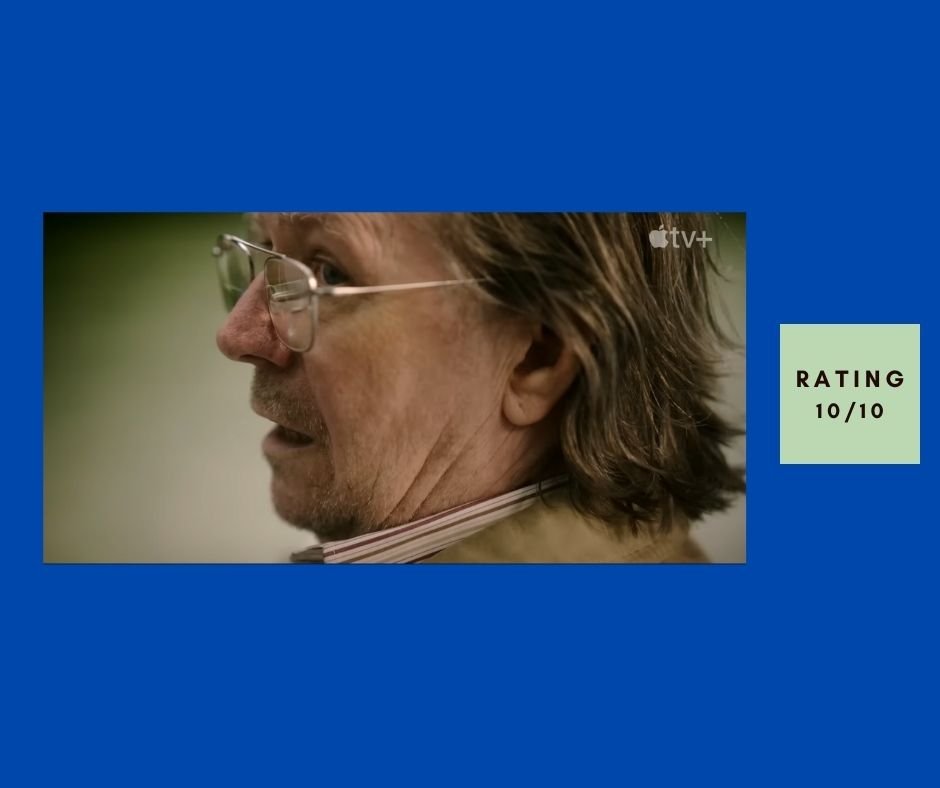
Slow Horses Season 2 [10/10]

Slow Horses Season 2 review

What a heart stopping start to 2023! Season 1 of “Slow Horses” was brilliant (my review), the exact same mix of spy thriller action and stringent humor we encounter in Mick Herron’s underlying books. Season 2 tops the opening season, although I am unsure whether that is due to a stronger novelistic plot or familiarization with the characters. In this labyrinthine episode (one that clever scriptwriting and very tight direction master), Jackson Lamb’s hapless Slow House crew finds itself enmeshed in the death of an old ex-agent that might provide a clue to sleeper Soviet agents still in pastoral Britain. The body count is high, the tension never relents, the ensemble cast are uniformly brilliant, and Gary Oldman revels in his profane portrayal of a Cold War warrior gone decrepit but still deceptively astute and effective. How can Slow Horses Season 3 possibly top this level of outperformance?

The Jay, The Beech and the Limpetshell by Richard Smyth [8/10]

Richard Smyth The Jay The Beech and the Limpetshell review

Nature and wilderness often receive ponderous, dramatized treatment that undercuts the messages. From its very title, ”The Jay, The Beech and the Limpetshell: Finding Wild Things with My Kids” takes another tack. A fluent, intelligent stylist, Richard Smyth opts this time for a gentle, undemonstrative style that matches his framework, his meanderings with his young family through the wilds and not-so-wilds of Yorkshire. Artfully peppering his musings with reflections on the musings of others, the author illuminates key issues in our human connections with nature (especially in a country as far from true wildness as England). The author muses about what his parental focus on wandering in the wild will lead to with his children: “…they’ll figure out, soon enough, what they want to do about it all. Maybe just watch. Maybe just think. Maybe just care. That’s fine too.” Such clear, conversational language conveys so much impact! And do not mistake the pared down language in this book as lack of sophistication; I had to look up a number of strange, most apt words such as “lour” (look angry or sullen). An undercurrent of climate change dread surfaces again and again, yet the author confesses that much of his own behavior is conditioned by his past. As soon as I concluded The Jay, the Beech and the Limpetshell, I diarised a second reading, this is one book that is bound to keep revealing.

Neom by Lavie Tidhar [8/10]

Lavie Tidhar Neom review

Fresh from the triumph of his Ellroyesque crime saga Maror (see my review), ”Neom” is the second book in a loose series called Central Station, set in a distant future in the shifting sands of the Middle East. A lush dreamscape written in Lavie Tidhar’s wonderful prose, the novel brings together a flower seller, a police officer, a laconic, creaky robot, a returning art-terrorist, an orphan gleaning boy, and quite possibly, a legendary golden man. With beautiful precision, the author gathers up the pieces, towards an event bringing the assemblage in futuristic city Neom of ancient warrior machines. Neom is a brilliant feat of imagination and writing that grips from the first page. I commend it to you.

Bloodbath Nation by Paul Auster [8/10]

Paul Auster Bloodbath Nation review

Bloodbath Nation” tackles, with passion and Paul Auster’s impeccable flowing prose, why the United States has seen more than a million and half killings by guns. Photographer Spencer Ostrander travels to gun massacre sites after such events, and composes haunting stills with no humans in them, and these photographs, interspersed regularly through the text, cast an eerie glow over Auster’s words. Auster recounts his own encounters with guns, including the never-ending trauma of his grandmother having shot his grandfather to death. To a non-American, the situation is scarcely credible but the book hammers home the manifest tragedies by spending quite some time on the most horrendous mass shootings. Bloodbath Nation is concise and Auster seems to hold no hope for resolving the societal deadlock on the issue of gun control, but this is a most useful and moving forensic examination of the issue.

Travelin’ Band by Bob Smeaton [6/10]

Travelin Band review

Why are you weeping, man, why? “Travelin’ Band: Creedence Clearwater Revival at the Royal Albert Hall” takes me back, way back, to a callow fifteen-year-old buying his first record, Cosmo’s Factory, and falling hard for rock music. Well, at exactly that time, in April 1970, CCR were at their apogee and playing in the Albert Hall in London. Now director Bob Smeaton has excavated unseen footage of that performance, and, at least for the first half of this documentary, has woven together news footage, goofy interviews, and other contemporary footage, stitched together by the gravelly voice of Jeff Bridges.

Although the second half’s concert footage might be newly unearthed treasure, the actual Albert Hall concert, recorded with a slightly flat effect, the crowd barely audible, shows the band as I recall them, a perfect rendition of the records. In a sweaty crowd, John Fogerty’s incredible shredding voice and plangent guitar stood out, but the drama gets lost onscreen. The footage also illustrates just how pedestrian (if most competent) the other three band members were. But when John brushes his mop of hair back and launches into a super-fast version of “Fortunate Son,” his face pouring out emotion, we forgive all sins, indeed the years fade away and we recall those golden times when we could truly utter the mantra: Music will save us.

Write It All Down by Cathy Rentzenbrink [8/10]

Cathy Rentzenbrink Write It All Down review

I have never read any of Cathy Rentzenbrink’s memoirs or her novel but that deficit needs to be rectified after devouring “Write It All Down: How to Put Your Life on the Page.” For this author is a sweet, readable yet deep stylist and this How-To manual is one of the most engaging and inspirational of the many such guides I have devoured over the years. Indeed, in its sagacity and modesty and nitty-gritty helpfulness, I can’t help comparing it to one of the books that first inspired me to write, Anne Lamott’s Bird by Bird. Four sections offer wisdom on the motivational and preparatory foundations; on banging out a first draft; on the rigor and craft of editing; and on the writer’s working life habits. Always gentle yet brimming with firmly held advice, zooming in and out from sentences on the page to life’s discoveries, elegantly encouraging a writer through dint of elegant stylistics … Write It All Down is highly recommended for anyone aspiring to write or in the trenches of writing, whether in the space of memoir or not.

Desert Star by Michael Connelly [8/10]

Michael Connelly Desert Star review

That Michael Connelly can keep pumping out high quality crime fiction books annually, after more than forty of them, is impressive enough. That his plotting mastery, solid characterization, and economical, honed style have not waned is remarkable. His series featuring iconic ex-homicide detective Harry Bosch working together with driven, smart Renee Ballard had a couple of flat spots in the early 2020s, but his latest, ”Desert Star,” is a masterclass return to full form. Ballard is now in charge of an LA cold case team and when she recruits Bosch on a consulting basis, the two of them tackle two unsolved cases that obsess them: the killing of a family of four, and the cruel murder of a young woman. As ever, Connelly is right on top of modern crime-solving methods and the reader is given the treat with an excellent treatment of the latest genetic linkage methods, including using the many publicly available citizen-generated family trees. Not a word is wasted and the action flows seamlessly from a quiet start to twin dramatic climaxes. Needless to say, I read Desert Star in an evening. Recommended.

Ambulance [8/10]

Ambulance review

A car chase caper married to a heist thriller married to a mismatched-brothers saga, “Ambulance” travels so much familiar ground that the first half hour evokes all those other humdrum, dumb-fuck movies I watch and then swear “never again.” Over two-anbd-a-quarter hours, director Michael Bay amps up the motorized action and multiple-body carnage so much that a recent memory of The Gray Man regurgitated itself. And yet, and yet … what saves this action phantasmagoria is the combination of a genuinely whip-smart screenplay by Chris Fedak, chock full of crackling dialogue, and a trio of actors who bring what could have been cartoonish characters into the daylight of genuine empathy. Jake Gyllenhaal is wonderful as risk-taking, joshing criminal Danny Sharp, Yahya Abdul-Mateen II strikes exactly the right vibes as Danny’s adoptive black brother Will. And Eiza Gonzalez continually threatens to steal the show from those two, in her role as the ambulance paramedic caught in a multimillion-dollar heist-gone-wrong escape. All the bit players are well cast and played, with each of them resonating as real folks. The plotting is superb, Michael Bay’s direction never wavers, and the music rocks. All in all, Ambulance is one genuine positive shock to the system during the closing months of 2022, a thriller that thrills involving people who are people.

Clean by Lachlan Mcleod [6/10]

Clean review

I have often regretted not reading Sarah Krasnostein’s reputedly brilliant The Trauma Cleaner, a creative nonfiction account of the life of Sandra Pankhurst. She ran a business that cleaned up after deaths, hoarding, squalor … anything messy and disgusting. “Clean” is a documentary revisiting Pankhurst and her business half a decade later. Director Lachlan Mcleod stays in the background as he follows the trauma cleaners into horrific situations, then interviews Pankhurst, now a minor celebrity who gives motivational talks. A fascinating tale that turns poignant, Clean offers little drama but is a well-executed peek into a world most of us never knew existed.