Caledonian Road by Andrew O’Hagan [10/10]
Andrew O’Hagan Caledonian Road review

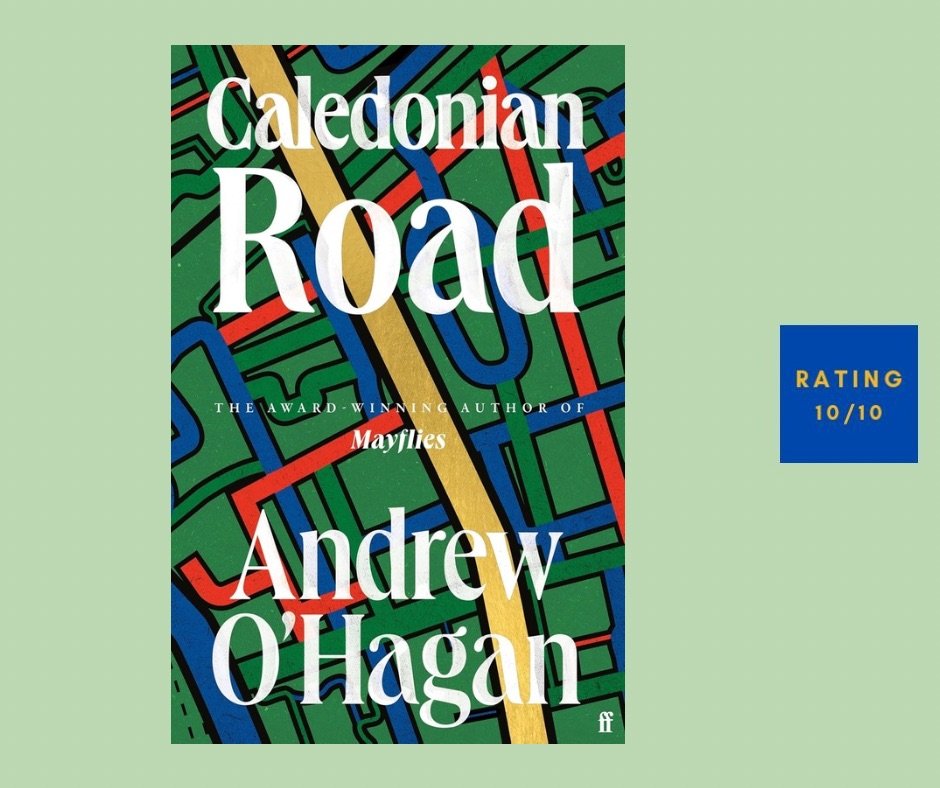
A careening, kaleidoscopic novel told from the point of view of a cast of dozens (the reader is provided a two-page character list), Caledonian Road is Scottish novelist Andrew O’Hagan’s masterpiece. Centering on Campbell Flynn, an art historian who somehow has become a sought-after opinion writer, we see modern Great Britain through the eyes of politicians, rappers, hackers, people smugglers, Russian oligarchs, and dukes. Brilliantly portraying the modern art world amidst money and power, the novel rotates around Campbell as he falls under the spell of an intriguing university student with ideas that resonate, ideas rooted in Campbell’s humble past. From the very start, Campbell’s doom is foretold but how will it happen and why and with what consequences? O’Hagan is a supple, luminous stylist who manages with ease to control the bursting plotline. His dialogue is a treat. There is something old style about this capacious novel yet it smells of today’s headlines and issues, and the overarching preoccupation with Campbell’s existential malaise fills the reader with a sense of awe, tragedy, but also hope. If you read one modern-day novel this year, Caledonian Road should be the one.

The Franchise [9/10]

The Franchise review

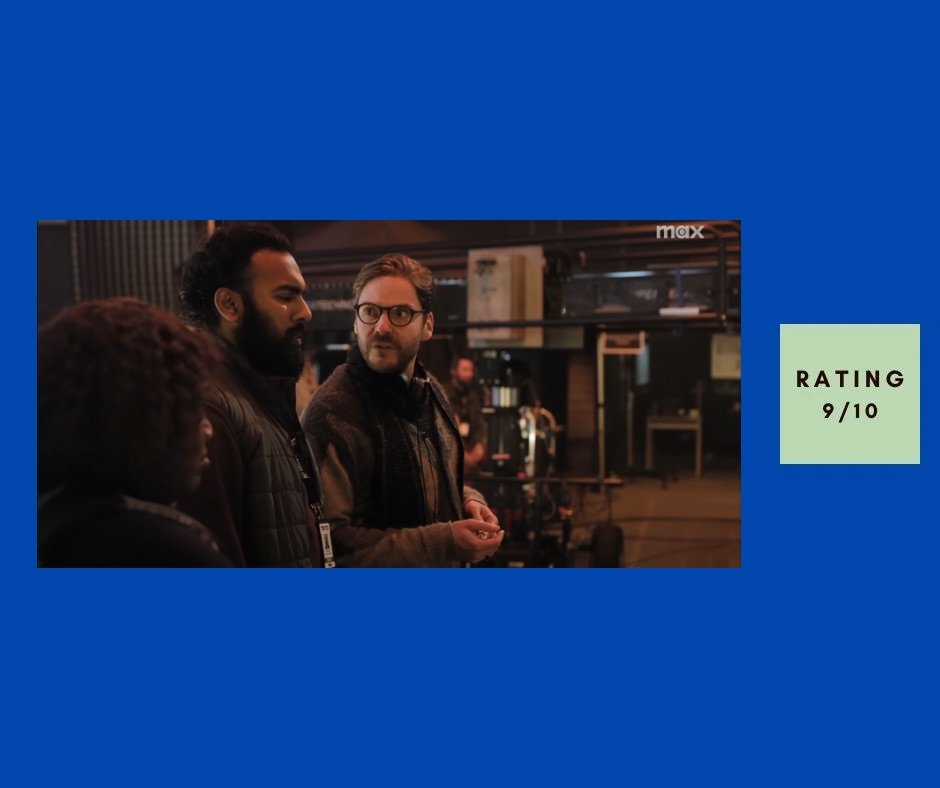
Armando Iannucci possesses a scorching, cynical wit and absolutely no mercy. His footprints are all over the recent eight-episode show, The Franchise, written substantively by Jon Brown. The franchise in this case is a massive, dumb superhero movie universe of films, in this case represented by a meaningless superhero Tecto in a ridiculous tale populated by ridiculous space creatures. The movie skewers every aspect of the on-set production, sparing no one from the main actors to the bit players and the workers on the set. Every episode is full of laugh-out-loud moments (as long as your sense of humor accepts savagery). The cast is wonderful: Billy Magnusson revels in being the super-silly, yearning lead actor; Richard E. Grant is hilarious as “number two star” with a profane tongue; ditto Daniel Brühl as the overweening writer/director and Lolly Adefope as the bantering intern; the brutish franchise manager is wonderfully accelerated by darren Goldstein. The actor who holds together the entire show is the wonderful Himesh Patel playing the assistant director who actually makes things happen and holds together the fractious, volatile crew. Patel is also the emotional core of the show, for savage satire is not enough to create a memorable experience; the AD actually loves the world of superhero movies. The script of The Franchise never misses a beat, the funniness never stops, and the sheer intelligence behind every scene is a joy to behold.

Slow Horses Season 4 [10/10]

Slow Horses Season 4 review

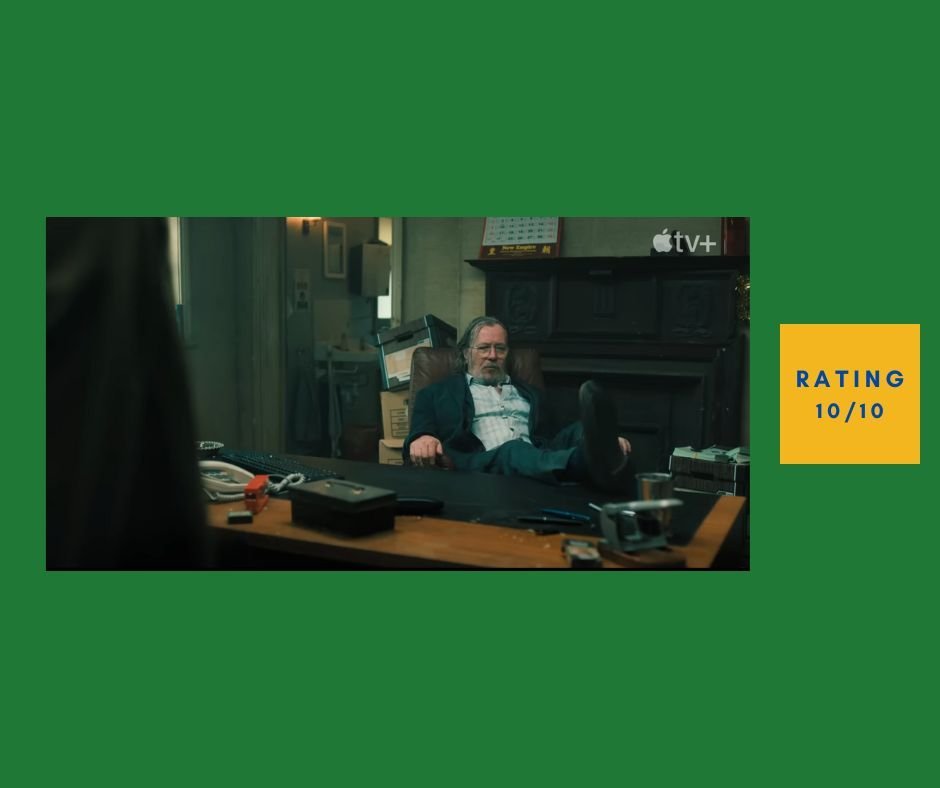
We should be so lucky. That the best spy thriller series in recent years, the Jackson Lamb adventures by Mick Herron, could end up being converted into a spellbinding TV series, goes against all my experience of screen adaptations. Season 1 was a kinetic introduction, Season 2 struck me as perfect, and Season 3 continued the high standard. The fourth season of Slow Horses amends the storyline of one of the best Herron books but retains the heart of that author’s plotting triumph. Gary Oldman continues to live and breathe the obnoxious but formidable spy maestro Lamb, managing to convey (as do Herron’s books) the oafishness and brilliance without drifting into caricature. In this episode, though, Jack Lowden nearly upstages him as the earnest, superhero-wannabe River Cartwright. When River’s old father (formerly a spy eminence) sinks toward dementia and a villain comes calling, River is plunged into an adventure that incorporates a mystifying trip to France, a terrorist bombing back in England, a relentless assassin, and an evil mastermind (played wonderfully by Hugo Weaving). Wonderful plot twists, the continued excellence of the supporting cast of “slow horses,” spot-on music, and gritty cinematography … Season 4 is yet another gold standard for modern series TV.

One Life [8/10]

One Life review

Can one tire of Anthony Hopkins portraying an old man? That was my reaction entering the cinema but One Life reaffirms his craftsmanship. A “true story” narrative of Nicholas Winton, an ordinary stockbroker (perfectly cast as a young Hopkins and played convincingly by Johnny Flynn) who overcomes huge odds to rescue hundreds of young children from Czechoslovakia just prior to Hitler’s invasion at the start of WWII, this film also subverts the sogginess of such tales. Deftly switching between then and the present, and starkly presenting the horrors of wartime chaos on children without treacly sentimentality, the three screenwriters and director James Hawes masterfully create a documentary ambience without leaching tension. The present-day ending could have been badly fluffed, because there is no grand finale, but instead the film closes with grace and genuine empathy. One Life: a quiet triumph.

Revenge of the Tipping Point by Malcolm Gladwell [8/10]

Malcolm Gladwell Revenge of the Tipping Point review

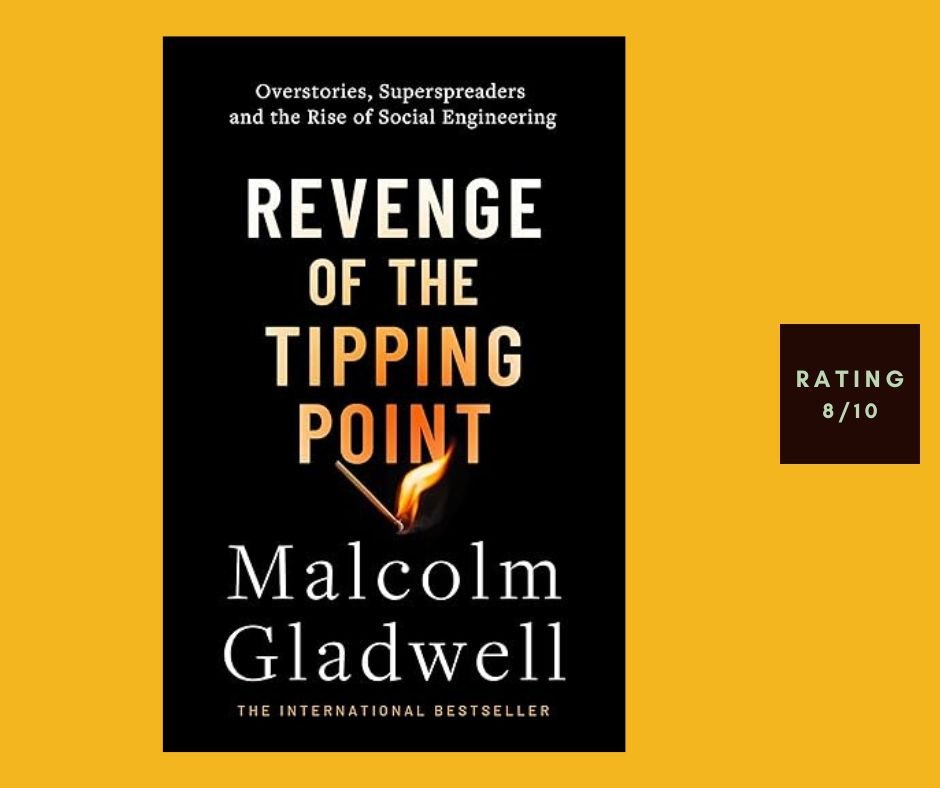
Revenge of the Tipping Point: Overstories, Superspreaders and the Rise of Social Engineering was meant to be prolific author/podcaster Malcolm Gladwell’s twenty-fifth-anniversary reprise of The Tipping Point: How Little Things Can Make a Big Difference, but turned out to be a fundamentally new look at how thinking and ideas and phenomena spread. Gladwell writes as smoothly as river water, his ideas evocatively and precisely laid out. Framing the book with particularities of the crazed opioid crisis of America, he lays out a few key ideas: any two areas of humans can have materially different thinking patterns; often the “law of thirds” seems to apply, whereby a maverick idea or trend takes off when it gains acceptance by around a third of all people; humans can game how trends apply (cue Gladwell’s look at how the big American universities resist diversity); and how sometimes we resist the best ways to tackle our ills because we would need to focus on a few individuals (the superspreaders). And there is more, including the genetic poverty of leopards and our Covid-19 experience. Revenge of the Tipping Point is a ruminative, intoxicating bouquet of ideas, well worth a read.

English Teacher by Brian Jordan Alvarez [6/10]

English Teacher

Comedian Brian Jordan Alvarez has branched out with a bold comedy-drama series, eight twenty-minute-long episodes of English Teacher, in which he plays a teacher in an Austin, Texas school who is gay. The show seeks to marry slapstick humor with an eclectic bunch of teaching staff and education issues, and often it succeeds. He himself is earnest in the lead role and the other key actors succeed to an extent without standing out, the sole exception being Sean Patton as an appealing, bluff sports teacher. The short episodes lend themselves to pithy mini stories, and a few of them work well, but too many are either too didactic or slight. Highlighting the issues the teacher faces as openly gay in the 2020s is clearly important thematically and again, sometimes the scripts illuminate, but sometimes there is too much raunch or too much weightiness. In the end, English Teacher is an engaging couple of hours spread over a week of watching but fails to ignite either as entertainment or meaningful drama.

The Work of Art by Adam Moss [10/10]

Adam Moss The Work of Art review

American magazine and newspaper editor Adam Moss stepped back from the corporate life and, among other things, started to learn to paint. Then he grew curious about the very act of creativity and embarked on a fascinating journey, interviewing over forty creators. The result is the sumptuously designed semi-coffee-table-book-sized The Work of Art: How Something Comes from Nothing. Unlike most such books, Moss was not satisfied with the myths spun by many creators and dug in deep. He also scanned broadly, including not only writers, artists, poets, and filmmakers, but also crossword puzzlers, sand castle builders, designers, and comic creators. The result is the most revelatory and engrossing book of this type I have ever come across. Laid out on the page almost like a magazine, we get in-depth explorations of specific books/poems/sculptures/plays/etc., using fascinating heaps and notebooks of retained early draft materials. Every one of the forty-three chapters can be reread endlessly with profit, but check out in particular choreographer Twyla Sharp, Veep showrunner David Mandel, legendary nonfiction writer Gay Talese, author Michael Cunningham, and David Simon re The Wire. Throughout, the author writes fluidly and with affection, weaving in his own creative efforts and personal reflections on what he and the reader might be concluding about the magic and toil of creativity. The Work of Art will not only be prescribed reading for many courses, it is, indeed, a work of art in its own right, and a rollicking fine read at that.

We Solve Murders by Richard Osman [9/10]

Richard Osman We Solve Murders review

Richard Osman struck fame with his Thursday Murder Club cozy mystery series, now four books’ strong. His new series, in a genre one might call cozy thriller, kicks off with We Solve Murders and it is a treat. A female bodyguard teams up with her ex-cop father-in-law and a famous writer to find out why a series of influencers have been murdered. The new series is as wryly comedic and skillfully written as TMC but differs in being more propulsive plot wise and less concerned with his characters’ non-plot lives, so it has a very different feel. Indeed the plot is preposterous, full of outrageous McGuffins and segues that could derail any normal novelist. Yet somehow Osman keeps delighting with lovely one-liners and deft action. Situating the storyline within the milieu of global money laundering adds spice to the story. As befits its genre, very little explicit violence takes place, but this seems to only add to the adroitness of the writing. Overall, We Solve Murders is another Osman triumph and streets ahead of most humorous thriller fare.

Only Murders in the Building Season 4 [9/10]

Only Murders in the Building Season 4 review

As the seasons have accumulated on the zany, New-York-drenched show Only Murders in the Building, with its chemistry between Steve Martin, Martin Short, and Selena Gomez, I have kept waiting for a downturn, the pivot toward staleness. After the exemplary Season 2 (see my review), would Season 3 dip? Yes but only a fraction (see my review). Surely, however, this new Season 4, which even dares to flit across the continent to LA, would crash? Fortunately for us fans, the answer is resoundingly an affirmation. The three stars retain all their verve, with Martin Short deploying the best lines but Steve Martin also hilarious in many scenes. The remaining actors are superbly cast and perfect in performance, including new cameos from Zach Galifianakis and Eugene Levy. The writing team is adventurous with a ludicrous but delightful Season 4 plot concept and script, and a couple of adventurous directorial departures impart an edgy vibe. As if that were not all enough, there is even a completely unexpected and laugh-out-loud scenic moment involving John McEnroe on a Manhattan street. Another triumph of a season and Season 5 beckons…

The Critic [3/10]

The Critic review

Based on Anthony Quinn’s historical cozy mystery, Curtain Call, the trailer of The Critic bodes well, primarily because it focuses on the hypnotic, reptilian presence of Ian McKellan as the mid-30s London theater critic at the heart of it all. And the first half of the film solidly establishes the swirling character set around the critic, plus the plot hinge (which seems, on checking out the underlying novel, to be very different to the original), namely an arrangement the critic comes to with an aspiring starlet to help him retain his coveted newspaper standing. Yet even then the movie creaks. Gemma Arterton seems miscast as the femme fatale, as does Mark Strong as a repressed newspaper mogul, the pacing seems uneven, the cinematography has a muddy color, and the soundtrack is sleepy. But the second half of The Critic descends into a plotline and scripting mess, McKellan’s acting descends into unemotional hamming, and the conclusion falls with a clunk. A missed opportunity, this one, badly missed.